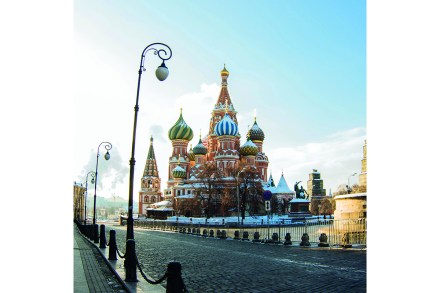
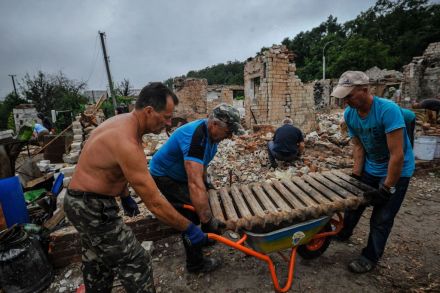
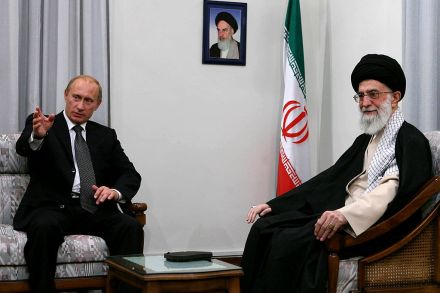
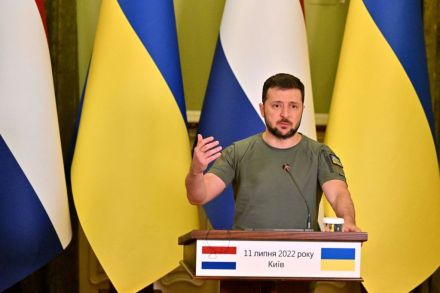
Moscow

The uncertainty principle: The Interpreter’s Secret, by Andrew Rosenheim, reviewed

From our UK edition

You can’t really make this stuff up any more, political reality having long since outpaced fiction, but thank goodness there are people who continue to try. Recent history has supplied more than enough intrigue, misinformation, diplomatic doublespeak and sheer zone-flooding mad shit to challenge even the most inventive writer of political thrillers, but fortunately Andrew Rosenheim is more than up for it.

Chinese puzzle or matryoshka doll – the complexity of Sino-Russia relations

China and Russia are twins. Both are great Asian land empires; both are continental, multi-ethnic powers that expanded by pushing forward their borders rather than by crossing oceans; both have a deep tradition of autocracy that survives to this day; and both (more plausibly in China’s case) believe that their social contract, ideology and system of government is a universal one superior to all others. In Entangled Empires, the German historians Sören Urbansky and Martin Wagner explore the convoluted story of Russo-Chinese relations from the moment in the mid-17th century that roving Cossack bands bumped up against Siberian tribes who owed fealty to Beijing up to the latest performative amity between Vladimir Putin and Xi Jinping.

What Tommy Robinson really sees in Russia

Everyone who is everyone – within a certain political and social fragment – has been in Russia this past week. Conservative American conspiracy theorist Candace Owens; Errol Musk, father of Elon; toxic “manosphere” influencers Andrew and Tristan Tate; and Tommy Robinson, the far-right activist. Robinson told the Guardian that he had traveled to Moscow “to see how this country got itself so well on to the straight and narrow and see the beauty of a civilized society here.” In the process, he was walking a well-trodden path of westerners heading to Russia to see exactly what they want to see. Once it was socialists like Sidney and Beatrice Webb, who found Stalin’s regime “the very opposite of a dictatorship.
The botched coup that presaged the end of the Soviet Union

From our UK edition

The best thing about the Soviet Union – arguably the only good thing – was the manner of its going. Though it lost its European empire when the Berlin Wall came down in 1989, almost nobody predicted that the USSR itself would fall apart so quickly. Most historians, Moscow-based journalists and the world’s espionage agencies thought it would limp on for decades, like the Ottoman empire. Yet the world’s second most powerful state withered away, and not in the classical Marxist sense: it just ceased to exist. As Robert Service shows, the Soviet people destroyed the Soviet Union, not outsiders, and without any significant violence.

A young Englishwoman is caught up in the Russian Revolution

From our UK edition

This vivid account of a young English-woman caught up in the Russian Revolution was first published in 1919 as Under Cossack and Bolshevik, but it’s possibly even more gripping today. Rhoda Power, a political science graduate, was 26 when she was hired as a tutor to a 16-year-old Russian girl, Natasha Sabaroff, living in Rostov-on-Don. Going to Russia had for years been one of her dreams, so off she sailed from Newcastle to Bergen through U-boat-infested seas; and, indeed, future sailings were cancelled after four ships were torpedoed. But she arrived safely in Bergen, where the Cook’s man put her on a train to Petrograd (St Petersburg), which she spent four happy days exploring before taking the three-day train journey on to Rostov.

What are Ukrainian children doing in North Korea?

The regime of North Korea has continued to exploit the war in Ukraine to spread its propaganda. This week we learned that Ukrainian children, abducted by Russia, are being sent to an infamous North Korean summer camp. The children have reportedly been taught to "destroy Japanese imperialists" and heard from North Korean soldiers who destroyed the USS Pueblo, a spy ship captured and sank by North Korea in 1968.  This Ukrainian children have been at the Songdowon International Children’s Camp, located near the port city of Wonsan on the country’s east coast.

Why Putin thinks he’s winning

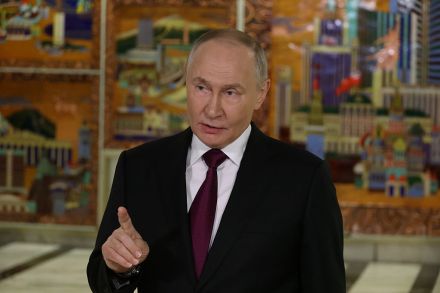
The Kremlin pulled out all the stops for the visit of Donald Trump’s son-in-law Jared Kushner and special envoy Steve Witkoff to Moscow yesterday. Accompanied by Putin’s envoy Kirill Dmitriev, Witkoff and Kushner strolled through crowds on Red Square with minimal security after lunching at a fancy restaurant on Petrovka street. Not coincidentally, Chinese foreign minister Wang Yi was also in town for a meeting with Russian Security Council head Sergei Shoigu, where Russia affirmed its support for Beijing’s One China policy.  It was a sophisticated piece of great power signaling intended to send a multi-part message to Donald Trump.

What hope is there for Syria today?

From our UK edition

Rime Allaf takes the long view of Syria’s descent into hell. Her story begins with President Hafez al Assad, the architect of the socialist Baathist dictatorship that, from 1970 to 2000, immiserated and impoverished an entire nation before his son and successor Bashar utterly destroyed it. It Started in Damascus is part history, part memoir, the story of a people whose hopes for a better life have been consistently strangled by the Assad dynasty for more than half a century. A Syrian-born writer and analyst who comes from a distinguished diplomatic family, Allaf is unflinching when she trains her sights on regime depravity. It makes for disturbing, compulsive and at times heart-in-the-mouth reading.

The reluctant spy: The Predicament, by William Boyd, reviewed

From our UK edition

According to the literary critic Harold Bloom, male writers have daddy issues. So keenly do they feel the oppressive influence of their forefathers that when they take up the pen it is to use it as a sword. To produce something new, they must engage their predecessors in a writerly duel to the death. Bloom’s examples are all very highbrow – Blake vs Milton, Keats vs Shakespeare – but the theory applies across the literary spectrum. When William Boyd sits down to write a new spy novel and, removing his pen from its sheath, looks up to assess the field, it is (among others) the faces of Ian Fleming and John le Carré who stare back. What better way to deal with the anxiety of their influence than to create a spy who is not only reluctant but practically monogamous too.

The spy who came back from retirement: Karla’s Choice, by Nick Harkaway, reviewed

From our UK edition

Publishing is a business. Authors are its brands and books its products. When, as sometimes happens, one of the bigger brands inconveniently dies or retires, there’s an understandable desire to keep the brand going and to attach its lucrative name to new products. And why not? If it’s done well, everyone benefits – publishers, readers and authors’ estates. In the past 60 years, there have been few bigger brands than the late John le Carré, so it’s no surprise to find a posthumous outing with the words ‘A John le Carré novel’ plastered over the cover. Its author, Le Carré’s youngest son Nick Harkaway, is a well-established novelist in his own right, albeit in a different genre. He served his apprenticeship by completing his father’s last book, Silverview (2021).

From Russia with love

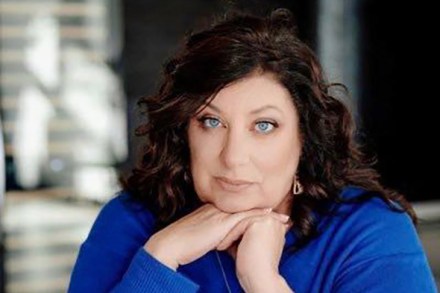
My morning routine is the same. Coffee, feed cats, exercise, walk, read the latest news. Except now I wake up in Moscow. The coffee shop, Skuratov, is Siberian and they roast their own beans. The coffee is strong with a chicory flavor. I meet my colleague from RT International and we discuss all the latest geopolitics and news around town. Later, I take the metro. For less than $5, I am across town. The metro is clean, marble and looks like a museum with beautiful sculptures. Unlike the metro in NYC or Chicago, there are no drunks, no rats and the train is quiet as passengers read their books or phones. No one has to clutch their purse or bag as there is very little petty theft.

tara reade

What will happen in Alaska?

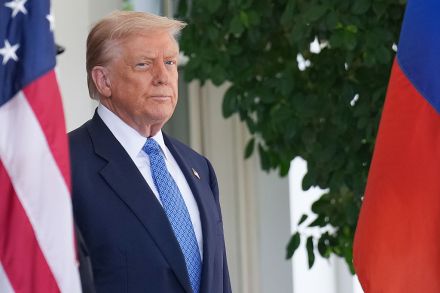
"Alaska," said the mountaineer Jon Krakauer, "is a place that constantly reminds you of just how small you are in the grand scheme of things." I doubt somehow that Vladimir Putin and Donald Trump will echo that sentiment when they meet tomorrow in the Last Frontier to carve up the future between themselves – Plumb-Pudding-in-Danger-style. The two leaders will have each traveled some eight hours over their own mighty lands to see each other. It will be a case of today, Ukraine; tomorrow, ze world.  Yesterday, the Trump administration went to great lengths to assure nervous European leaders and Ukrainian President Volodymyr Zelensky that Trump would not, in their absence, simply roll over for Putin.

I have a bone to pick with Tulsi Gabbard

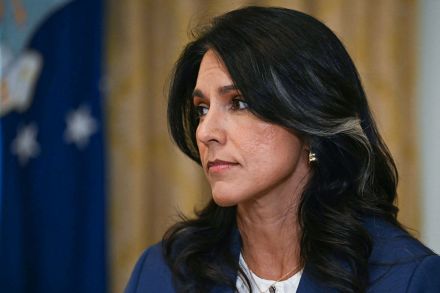
I have a bone to pick with Tulsi Gabbard. I had thought, six months into Donald Trump’s second term, that I could safely say “sayonara” to the Russia Collusion Delusion and all its works. I started to count how many columns I had written about that embarrassing effort to destroy Donald Trump, but gave up. The answer is: many.   I had hoped I had finished with the subject forever. But now the president’s Director of National Intelligence, that same T. Gabbard, has weighed in with what she rightly describes as “historic” evidence of a plot, directed by Barack Obama with various high-ranking lieutenants, to undermine the first Trump administration.  Is there anything new in her evidence? Some say no, not really.

Will Putin help Trump’s Iran deal?

Spectacular. Stunning. Game-changing. These are just three of the adjectives news reporters have used to describe Ukraine’s attack deep within Russia last weekend. There’s no doubt that the “Spiderweb” operation was technologically ingenious, well-concealed and brilliantly executed. Ukraine claimed its 117 drones destroyed or damaged some 41 strategic Russian bombers and caused $7 billion worth of damage to the Russian armed forces. But can an attack really be game-changing if the game doesn’t change? US officials have suggested the strikes hit only 20 Russian aircraft and, while Spiderweb must have shocked Russia’s leadership, the Kremlin is still more than willing and able to continue bombing Ukraine with relative impunity.

Trump

Everyone who was anyone in Russia was spied on – including Stalin

From our UK edition

Vasili Mitrokhin was a KGB colonel smuggled out of Russia by MI6 in the early 1990s with a treasure trove of notes from the KGB’s archive. The resulting 3,500 CI reports (CI meaning counter-intelligence – information about hostile spies) identified 1,000 KGB agents around the world and were shared with 36 countries. The CIA rated it ‘the biggest CI bonanza of the post-war period’, while the FBI described as ‘the most detailed and extensive pool of CI ever received’. The story behind it was as remarkable as the haul itself. Gordon Corera’s fluent narrative draws on many sources, including the magisterial two-volume Mitrokhin Archive compiled by the historian Christopher Andrew and Mitrokhin himself.

Will Putin give peace a chance?

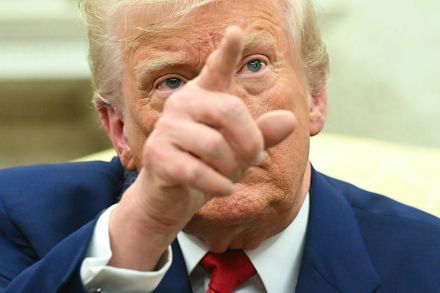
At a summit meeting in Moscow, Ronald Reagan was asked about his basic approach. He famously answered, “Here’s my strategy on the Cold War: we win, they lose.” Vladimir Putin has the same strategy for Ukraine. That is certainly his first response to President Trump’s offer to mediate an end to the war and bring a reluctant Ukraine to the negotiating table. If “we win, they lose” is Putin’s final response, then the war cannot end without Ukraine’s surrender or Russia’s collapse. Putin’s initial reply, filled with his maximalist demands, indicates he is still committed to the conquest of his neighbor, whose independence and sovereignty he has long rejected.

putin

Red-letter days for Gilbert & George

From our UK edition

James Birch is a somewhat mysterious art dealer and curator, whose first great triumph was mounting a Francis Bacon exhibition in Moscow in 1988. He wrote a gripping book about that adventure, Bacon in Moscow, and has now written an even more gripping follow-up, about taking Gilbert and George to Moscow, Beijing and Shanghai. Mounting the Moscow exhibition meant getting drunk every night, but Birch carried it off with aplomb Birch was born ‘circa 1956’, according to Wikipedia, and grew up in Primrose Hill, London. Both his parents were artists and also communists, which he claims was not unusual in the 1960s (though I’d say it was, quite).

Besieged Odesa is still caught in a conflict of identities

From our UK edition

How can you break the mental manacles of an empire that has occupied not only your physical world but also your education, publishing, media, high culture and popular entertainment? In his endearing memoir of Odesa, Undefeatable, Julian Evans quotes the Ukrainian author Viktoria Amelina, who describes growing up in post-Soviet Ukraine surrounded by all things Russian. She attended a Russian school, acted in children’s Russian theatre, listened to Russian rock and prayed in a Russian Orthodox church: ‘There was an entire system in place that aimed to make me believe that Moscow, not Kyiv, was the centre of my universe.’ When she was 15, Amelina felt flattered to be invited to Moscow for a Russian language contest. She was thrilled to be interviewed on state television.

Why Biden should let Ukraine strike Russian targets during the lame-duck period

On the back of President Trump’s victory November 5, the end of the election season will open an interesting eleven-week window. President Biden will assume lame-duck status and be freed from any concern that a more aggressive posture toward Russia might hurt Kamala Harris’s presidential campaign. Biden might also be considering the implication of handing over Ukraine policy to an individual who has repeatedly signaled his pro-Putin views. Both of these factors argue for Biden breaking from his self-imposed restrictions and supporting Ukraine striking targets in Russian territory during this lame-duck period. Imagine a moderately successful Ukraine attack now, after the November 5 election, on a moderately relevant target, such as a railroad terminal fifty miles inside of Russia.

Kyiv

Sarah Rainsford joins the long list of foreign correspondents banned from Russia

From our UK edition

Goodbye to Russia is an elegy for a lost country – the warm, chaotic Russia of unlimited possibility that welcomed the 18-year-old Sarah Rainsford in 1992. She stayed on, studied, worked in an Irish bar in St Petersburg, joined the BBC in 2000 and, after spells in other parts of the world, returned to Moscow as a Russian correspondent from 2014. Her memoir’s 30-year period covers an entire cycle in Russian politics – as Anna Akhmatova might have put it, from vegetarian to carnivore. In August 2021, Rainsford was stopped at the Russian border and refused entry as a ‘threat to national security’. A few weeks later, she was expelled with no right of return, one in a rollcall of foreign journalists banned from Russia.