Milan

Odd man out: The Burning Origin, by Daniele Mencarelli, reviewed

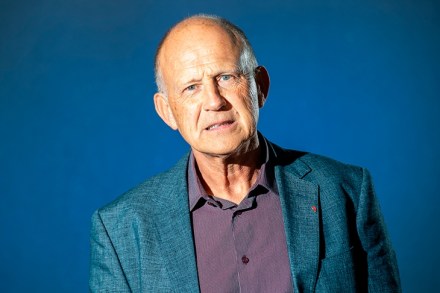
This terse, unsparing novel can be summed up thus: after nearly a decade’s absence, the successful designer Gabriele Bilancini returns home to suburban Rome, where he wrestles with an identity crisis. His family and friends – his intimates before he moved to Milan and raced up the social ladder – feel like shameful reminders of his proletarian origins, which he keeps hidden – in ‘the way you hide a sin’ –  from the Milanese élite he is anxious to fit in with. In Milan, where he works and lives with his girlfriend Camilla, the daughter of his mentor, the celebrity designer Franco Zardi, Gabriele dresses smartly, limits lunch to ‘a salad with full protein’ and purges his speech of any signs of his unsophisticated upbringing.
Inside the gruesome world of the ‘human safari’

From our US edition

“People don’t actually do that, right?” my publisher asked nervously. “No one actually goes on a human safari, do they?” Eight years ago, I didn’t know for sure. There had certainly been rumors for years that wealthy foreigners were traveling to conflict zones to kill civilians at random. Gradually I had concluded that some people were indeed heading off to complete their bucket list of horrors. In my novel To The Lions, I placed the “human safari” in a fictional refugee camp in southern Libya. Concrete proof, however, was almost impossible to find. Several times during my years as an investigative journalist, I heard stories about nightmarish things going on in places where law and order had collapsed.

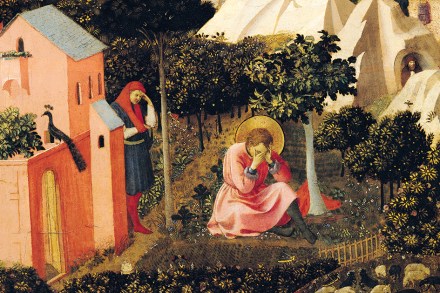
The spiritual journey of St Augustine

When I lived in south London, my Algerian barber used to tell me that he came from Souk Ahras, ‘the home town of Augustine’. I found it strange to hear a forbidding doctor of the early church described as a local boy made good, but Catherine Conybeare shows me that I should not have done. Algerians have remembered what the Church has often overlooked: that Augustine’s thinking owes everything to his birth in 354 in what was then Roman North Africa. Although five million of his words survive, they come to us from the hands of medieval copyists who were more interested in setting out his doctrines than in recording his life. They cut up his sermons and letters, removing irrelevant or cryptic local allusions.

No place is safe: The Brittle Age, by Donatella di Pietrantonio, reviewed

This slim, unsettling novel opens with Lucia trying to navigate the ‘mess’ of her daughter Amanda’s return home to their apartment near Pescara, in Italy’s Abruzzo. Pieces of torn bread, a heaped-up blanket and other strange ‘traces’ are indications of Amanda’s emotional disarray after hastily leaving Milan on the eve of lockdown. But she’d already abandoned her university studies by the time she’d been violently mugged. Lucia attempts to achieve the difficult balance of caring for, but not suffocating, her daughter, resigning herself to Amanda’s ‘unpredictable comings and goings’ while leaving her ‘something nourishing in the fridge in case she skips breakfast’. But she has already spectacularly misjudged this.

Tom Ford is back (without Tom Ford)

From our US edition

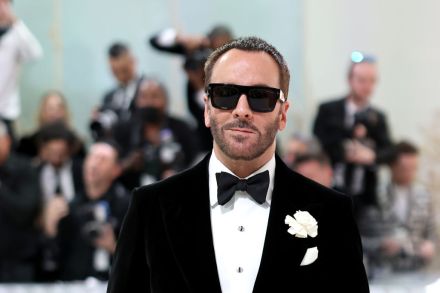
What happens to a fashion brand when the founder leaves? Or, to be more direct, what is Tom Ford without Tom Ford? That was the question hovering over Milan last month as the brand held its first runway show since the famed designer stepped down in April. The man on the marquee wasn't even in attendance; apparently bad weather left him stuck in London (there was a little thunder the day before, so it's plausible, if unconvincing). The House of Ford arrived with an enormous splash in 2006, creating enormous hype through its hyper limited, hyper expensive apparel, which Ford and business partner Domenico de Sole spun into obscenely lucrative accessories and perfume licensing deals.

tom ford

Inside the traditional art revolution

From our US edition

More and more often lately, people are rejecting tired modern art. They often find solace in the art of the past; online accounts admiring “traditional art” have amassed hundreds of thousands of followers, but they act as online repositories for a bittersweet recognition: what once was, no longer is. But the kind of art they seek, involving detail, meaning and skill, still exists, and it is growing. The cultural hegemony of contemporary, abstract art is slowly beginning to crack; through those cracks we can see new art surfacing. As I have become increasingly disillusioned with the state of politics, an observation from Ernst Jünger, the German philosopher and skeptic of the extreme politics of his day, rings true to me.

art revolution Milano Painting Academy

Italy’s Achilles heel: corruption and cronyism

Tim Parks is a seasoned, incisive observer of football, the railways, work, domestication and plenty more in his adoptive country of half a lifetime. What is, what ought to be and the machinations in the delta between provide much of his material. In this tale of two countries in one, bright, hard-working Valeria leaves Basilicata in southern Italy to study communications and marketing at a private university in Milan — shiny subjects in a city of business a long way from home (the same distance could take her to Tunis or Belgrade). She arrives laden with bread, pastries, fruit and wine, given to her by three aunts at railway stations on her journey. Her family and her circle of friends are all from the south, but she wants her life to be in the north.