Mikhail gorbachev

The botched coup that presaged the end of the Soviet Union

The best thing about the Soviet Union – arguably the only good thing – was the manner of its going. Though it lost its European empire when the Berlin Wall came down in 1989, almost nobody predicted that the USSR itself would fall apart so quickly. Most historians, Moscow-based journalists and the world’s espionage agencies thought it would limp on for decades, like the Ottoman empire. Yet the world’s second most powerful state withered away, and not in the classical Marxist sense: it just ceased to exist. As Robert Service shows, the Soviet people destroyed the Soviet Union, not outsiders, and without any significant violence.
When will Ronald Reagan get the recognition he deserves?

The talented military historian Max Boot has published a well-researched life of Ronald Reagan that is fundamentally wrong. First the good parts: he has combed through lots of archives finding new information and has interviewed countless people who worked with or knew Reagan. His style also bears the reader effortlessly along. Yet his claim that Reagan was merely a lightweight pragmatist who had little effect on reviving the American economy, resuscitating the country’s self-esteem or winning the Cold War is absurdly revisionist. It says more about the author’s own rejection of the Republican party than it does about Reagan’s world-historical achievements.

Was Nato expansion worth the risk?

This is an important and topical book. Mary Sarotte traces the difficult course of Russia’s relations with Europe and the United States during the decade which followed the fall of the Berlin wall in 1989, a period which saw Russia’s brief dalliance with democracy and Nato’s advance to the frontiers of the old Soviet Union. The story has been told before, but never so fully or so well. In a remarkable historical coup, Sarotte has persuaded the German foreign ministry to open its archives to her, and the Americans to declassify thousands of documents previously closed to researchers. When Vladimir Putin’s spokesman Dmitry Peskov was moved to denounce so much disclosure of confidential diplomatic material, it became obvious that Sarotte was on to something.

Portrait of the week: Gorbachev dies, Gibraltar becomes a city (again) and Meghan’s Mandela moment

Home Liz Truss, the contender for the Conservative party leadership who is expected to become prime minister next Tuesday, resisted temptations to say what she would do about the national energy price crisis. But she was said to have in her pocket licences for new drilling in the North Sea. Nadhim Zahawi, the Chancellor of the Exchequer for the time being, said that even people earning £45,000 a year would need help with their energy bills this winter. The price cap for energy set by the regulator Ofgem will rise by 80 per cent in October, with electricity going up from 28p per kilowatt hour to 52p and gas from 7p to 15p, making a typical annual energy bill currently £1,971 rise to £3,549.

Will Russians soon realise how remarkable Mikhail Gorbachev was?

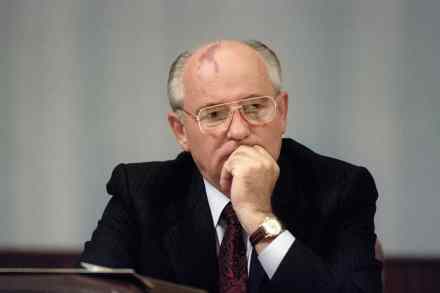
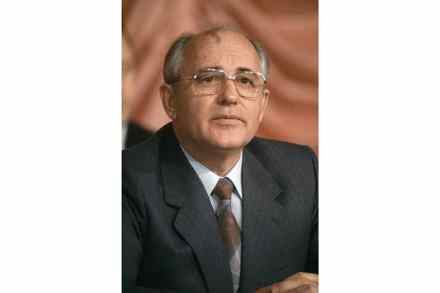
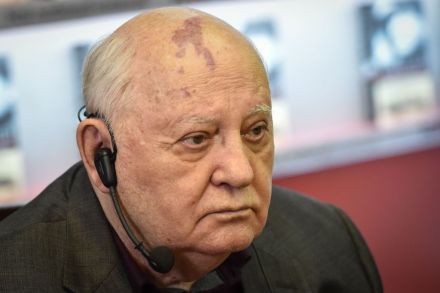
Mikhail Gorbachev, the final president of the Soviet Union who died last night, was remarkable both as an international politician and as a domestic reformer. I first met him when he came to London in December 1984, when Mrs Thatcher said that she liked him and could do business with him. He was open, friendly, and spoke without notes: the opposite of his predecessors. Some of Thatcher’s own officials suspected that he was merely an old-fashioned communist who had learned new tricks, and that his charm was seducing her from her clear view of the Soviet threat. Thatcher was right, and the sceptics were wrong. By that time, the Soviet system was in serious trouble. It could just about keep up with American military technology.

Gorbachev was no saint. But he was a kind of hero

Mikhail Gorbachev is dead at the age of 91, and in a way I feel orphaned. I became fascinated by what was still then the Soviet Union in its late years of sclerosis, when one moribund geriatric at the top of the system succeeded another (the dark joke at the time went as follows: a KGB guard stopped someone at one of the state funerals and asked him if he had a pass – ‘oh,’ came the reply, ‘I’ve got a season ticket’). But my early years as a Russia-watcher were during his time as General Secretary, and if my seniors had become used to the idea that the USSR was a stagnant, unchanging police state, for us, the thought that there could be change, even change for the good, was baked into our assumptions.

Glasnost merely confirmed Russia’s deep-seated suspicion of democracy

Thirty years ago the Soviet Union was guttering to its close. Those of us who were there remember the exhilarating hope, the apprehension, the illusion. For everyone else it is a distant echo. Russia was always likely to lose the Cold War competition with America. It was unmanageably large, too poor and too reliant on too few products. Stalin’s bloody grip had enabled the Soviet Union to defeat the Germans at a terrible cost to his people. When he died in 1953 his system entered a protracted agony. Over the next decade Nikita Khrushchev tinkered with half-baked solutions. They misfired, and he was overthrown by the hard men in the party, the KGB, and the army. His more cautious successors managed to equal America’s military might.

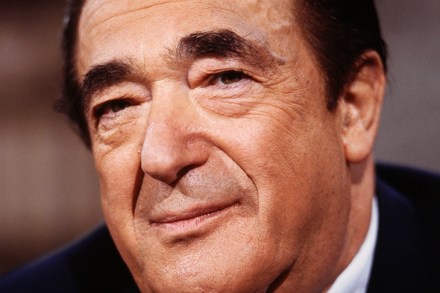
How did Robert Maxwell fool most of the people most of the time?

‘Everyone’s heard of Ghislaine Maxwell,’ says the blurb for Power: The Maxwells, a podcast series launched last month. ‘But there’s a shadowy figure who hangs above her who you likely don’t know: her father, media tycoon Robert Maxwell.’ Blimey. I know that 30 years have passed since his soggy demise, and time like an ever-rolling stream bears all its sons away, but it still comes as a shock to realise that such a preposterously outsize figure can be forgotten. His tumble down the memory hole may explain why this is a book of two halves. When John Preston contacted me in 2018 with a Maxwellian query, he said: ‘I’m not actually doing a biography of Maxwell but focusing on the last 18 months when everything fell apart.