Migrants

The trouble with ‘taking back control’

From our UK edition

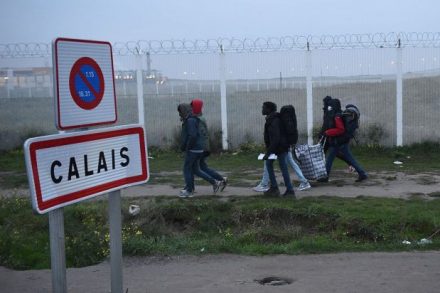
I sympathised with Leave voters who yearned to ‘take back control’ of British borders. After all, if being a country means anything, it surely entails first and foremost a clear understanding of who comes under that country’s protection — and who doesn’t. Otherwise a country is just a patch on a map. Yet I’ve always found Leavers’ high hopes for reduced immigration heartbreaking.
Portrait of the week: Employment falls, exam failures and a roundabout rigmarole

From our UK edition

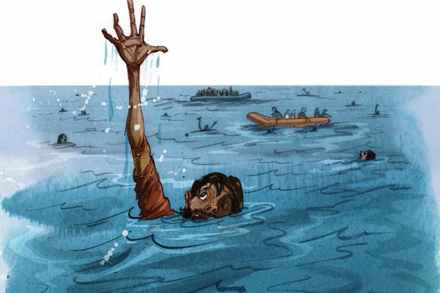
Home In fine weather with calm seas, 565 migrants in four days crossed the Channel in small craft. French officials said that 33 migrants in two boats that got into difficulty had been returned to Calais. In July more than 1,000 migrants crossed the Channel. Priti Patel, the Home Secretary, appointed Dan O’Mahoney as Britain’s Clandestine Channel Threat Commander, tasked with somehow making such voyages ‘unviable’. Employment fell by 220,000 in the three months to June, the biggest quarterly fall since 2009, but unemployment remained at about 3.9 per cent, as millions stayed on the furlough scheme. At the beginning of the week, Sunday 9 August, total deaths from Covid-19 stood at 46,566, with a seven-day average of 53 deaths a day.

How hot does a ‘heatwave’ have to be?

From our UK edition

Some like it hot Are heatwaves becoming a devalued currency? Last year the Met Office defined a heatwave as three consecutive days when maximum temperatures exceed the 90th percentile maximum temperature for mid-July. In London that means when the maximum exceeds 28˚C. For the rest of the south-east, as far west as Hampshire and as far north as Nottinghamshire, the threshold is 27˚C. For Dorset, Somerset, Herefordshire, Shropshire, Cheshire, Derbyshire, South Yorkshire and Lincolnshire it is 26˚C, and everywhere else, including the West Country, most of Wales, the north of England and Scotland it is 25˚C. In places it will mean a heatwave occurring in 30 to 50 per cent of years. Journeys by dinghy How far do migrants have to travel in boats?

Black magic | 21 March 2019

From our UK edition

‘You’re thinking these girls all wrong,’ Miss Mai tells Enid in Winsome Pinnock’s play Leave Taking, adapted from the recent Bush Theatre revival for Radio 3 (and produced by Pauline Harris). ‘They don’t know where they come from.’ Miss Mai continues: ‘These girls got Caribbean souls,’ but they’re living in south London. Viv and Del have been taken to see Miss Mai, known locally as an obeah woman, by their mother Enid for a palm reading, a prediction, or perhaps a casting out of demons. Del has got into bad company, has lost her job at the burger bar for being cheeky, and fears she must be pregnant. Viv was the studious one, her mother’s great hope, but is now beginning to wonder what Shakespeare has to say to her.

The UN’s politically motivated search for human rights abuses in Italy

From our UK edition

When politicians in Europe listen to the people and actually do something to stop uncontrolled immigration, the Holy See of the Global Crusade to Abolish Countries and the White Working Class – a.k.a the United Nations - sends in the thought police. This spring it happened in Britain when Tendayi Achiume, UN 'Special Rapporteur on Contemporary Forms of Racism, Racial Discrimination, Xenophobia and Related Intolerance', turned up to do a fortnight's fieldwork in order to demonstrate what she had already decided: Britain, thanks to Brexit, is a human-rights emergency in the grip of surging racism.

Unhappy returns

From our UK edition

What to do about illegal migration from Africa into Europe? The EU’s repatriation programme seems at first like a great idea. Rather than just watching as desperate people risk their lives in the Med, we persuade them to go back home and help them to remake their lives there. The EU Emergency Trust Fund for Africa has coughed up £125 million for the scheme and about 25,000 migrants have already taken part, most heading home to west and central Africa. The poster boy of the programme is Smart Akawa. Two years ago, Akawa was flown by the EU back to his native Sierra Leone from a detention centre in Libya. With a modest EU grant, he has set up his own street-cleaning business, employing 14 other returnees to give garbage-strewn Freetown a much-needed scrub.

Matteo Salvini’s decision to turn away a migrant rescue ship is an historic moment

From our UK edition

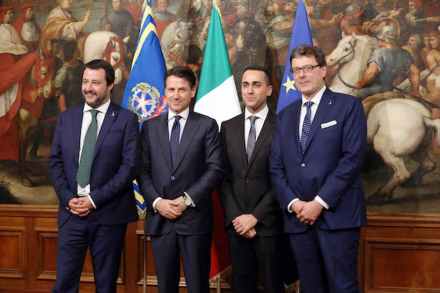
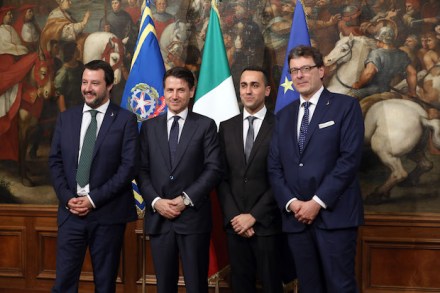
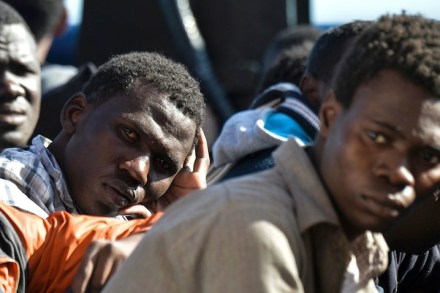
The refusal by Italy’s new 'populist' coalition government of the alt-left Five Star Movement and the hard right Lega to allow an NGO vessel with 629 African migrants on board to dock in Italy is an historic moment. The leader of the Lega Matteo Salvini, now Interior Minister and Deputy Prime Minister, is determined to fulfil his campaign pledge. That is to say: I will stop any more migrants being ferried to Italy by sea from Libya and I will deport all of the 500,000 illegal migrants already arrived from Libya by sea who are not refugees – i.e the lot. Since the first government in western Europe of what are popularly known as populists was installed in Italy 10 days ago, Salvini has talked about nothing else but the migrant crisis.

Matteo Salvini’s decision to turn away a migrant rescue ship is an historic moment | 11 June 2018

From our UK edition

The refusal by Italy’s new 'populist' coalition government of the alt-left Five Star Movement and the hard right Lega to allow an NGO vessel with 629 African migrants on board to dock in Italy is an historic moment. The leader of the Lega Matteo Salvini, now Interior Minister and Deputy Prime Minister, is determined to fulfil his campaign pledge. That is to say: I will stop any more migrants being ferried to Italy by sea from Libya and I will deport all of the 500,000 illegal migrants already arrived from Libya by sea who are not refugees – i.e the lot. Since the first government in western Europe of what are popularly known as populists was installed in Italy 10 days ago, Salvini has talked about nothing else but the migrant crisis.

When worlds collide

From our UK edition

In her keynote lecture for a conference on ‘The Muse and the Market’ in 2015 Aminatta Forna mounted a powerful advocacy for the political novel, challenging the assumption that politics or ‘subject’ undermines literary aesthetic. ‘A political novel can fail as a work of art as much as any other novel,’ she argued, ‘but the fact that it is political does not sentence it to failure.’ Her own approach to fiction is something like Paul Klee’s approach to his art: where Klee talked of taking a line for a walk, she says: ‘When I write a novel it is like taking a thought for a walk.

Letters | 1 February 2018

From our UK edition

Creeping repression Sir: John O’Sullivan is correct to argue that Europe’s centrist establishment often ‘does not really accept the right of its challengers to come to power. And when they do, it casts them as being illegitimate as extremists’ (‘A new Europe’, 27 January). We fear, however, that like a number of our fellow conservatives, Mr O’Sullivan’s enthusiasm to see elites get their come-uppance creates blind spots for creeping authoritarianism. At the end of a second term by its Fidesz government, Hungary performs worse on all of the World Bank’s Worldwide Governance Indicators than it did a decade ago.

Tough love | 23 November 2017

From our UK edition

When Angela Merkel invited refugees to Germany in 2015, tearing up the rules obliging migrants to seek asylum in the first country they arrive in, the consequences were pretty immediate. Over 160,000 went to Sweden, leading to well-publicised disruption. Next door, things were different. Norway took in just 30,000; this year it has accepted just 2,000 so far. To Sylvi Listhaug, the country’s young immigration minister, this might still be a bit too much. ‘We have a big challenge now to integrate those with permission to stay in Norway to make sure they respect Norwegian values,’ she says. ‘Freedom to speak, to write, to believe or not to believe in a god, how to raise your children.’ Also, she says, what not to do.

Paradise lost | 2 November 2017

From our UK edition

Anybody who wants to maintain a strong and untroubled stance against mass migration to Europe should probably avoid BBC2’s Exodus: Our Journey Continues. In theory, the case for limiting the numbers may be more or less unanswerable — but this is a joltingly uncomfortable reminder of what it can mean in practice. Any viewers suspicious of the BBC’s pinko tendencies will presumably have noticed that all the refugees we’ve met so far are completely lovely. Yet, faced with Thursday’s episode, even they might have found it tricky to preserve a steely primacy of head over heart. Or not to notice that these are people very much like us — only a lot unluckier in where and when they were born.

A choice of first novels | 19 October 2017

From our UK edition

Black Rock White City (Melville House, £16.99) is ostensibly about a spate of sinister graffiti in a Melbourne hospital. ‘The Trojan Flea’ is scrawled across X-ray screens; ‘I am so full of your death I can now only breathe your rot’ on a stairwell; and, on a dead body, ‘cut into the flesh with a scalpel, from throat to navel, is the word INSPIRATION’. A.S. Patric grabs his reader’s attention with the riddle of ‘Dr Graffito’s’ identity, while a more subtle mystery unfurls alongside. Jovan, the hospital cleaner — whose job it is to remove the offensive graffiti — has come to Melbourne from Sarajevo, where he was a teacher and ‘used to wake in the mornings with poetry emerging in rhapsodies’.

The Left don’t mind hating immigrants – so long as they’re rich

From our UK edition

It seems a long time ago that Jeremy Corbyn made an impassioned defence of immigration from both within and outside the EU, telling his party that: 'Migrants that have come to this country make an enormous contribution to it. Our conference understands that and Tom Watson put that case very well about the work that migrants have done in the NHS and education and other industries ... we should live with that but also understand the number of British people.' That was last September, yet it seems to sit ill at ease with what he told Andrew Marr recently, that under his rule: 'What there wouldn't be is the wholesale importation of underpaid workers from central Europe in order to destroy conditions, particularly in the construction industry.

The migrant crisis could prove to be Macron’s undoing

From our UK edition

What a forty eight hours it has been for Emmanuel Macron. On Monday, he gave his regal address to the National Assembly at the Palace of Versailles, a grandiose occasion during which the French president rivalled Tony Blair and Barack Obama for swaggering self-confidence. As Jonathan Miller said in the Spectator, it's hard not to be 'cowed by the absolute bravado of the young president'. Then, on Tuesday, Macron's prime minister, Édouard Philippe, presented to the Assembly his government's programme for the next five years. As is the tradition, the MPs were asked at the end of the general policy speech to give the PM their backing.

The rescue racket

From our UK edition

What is happening in the 300-mile stretch of sea between Sicily and Libya, day in and day out — in other words, what ‘we’ are doing there — is beyond reasonable doubt insane. A sane person would assume that the 181,436 migrants (a new record) who made it by sea to Italy last year had done so under their own steam in flimsy fishing boats and dinghies at least some of the way across the Mediterranean. This, after all, is the message aid agencies and governments put out. In fact, every one of those 181,436 was picked up by EU and non-government aid-agency vessels off the Libyan coast just outside the 12-mile territorial limit, then ferried across to Europe.

The camps don’t work

From our UK edition

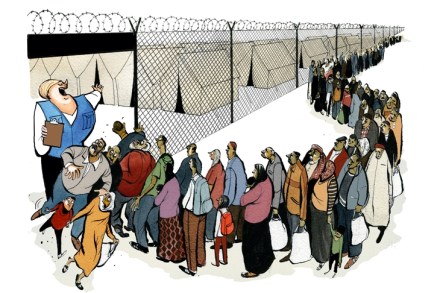
The civil war in Syria, and the resulting displacement of half the population, has been the tragedy of our times. We cannot turn our backs on the ten million people who have been forced to flee their homes. Every decent society knows this and knows that it’s our moral duty to come up with a workable way of helping the refugees. But while the scale of the displacement is substantial, it is not unmanageable. The 21st century should be capable of dealing with such catastrophes and we must prepare ourselves actually to do so. To rise to the challenge, we need to combine the instinctive compassion that mass suffering arouses with the dispassionate analysis necessary to craft an effective response. We need the heart supported by the head.

It’s not only Germany that covers up mass sex attacks by migrant men… Sweden’s record is shameful

From our UK edition

We’re closing 2016 by republishing our ten most-read articles of the year. Here’s No. 5: Ivar Arpi's piece, which was written following the mass sex attacks on women celebrating New Year’s Eve in Cologne. In his article, Arpi says that authorities in Sweden covered up similar incidents involving migrant men    Stockholm It took days for police to acknowledge the extent of the mass attacks on women celebrating New Year’s Eve in Cologne. The Germans were lucky; in Sweden, similar attacks have been taking place for more than a year and the authorities are still playing catch up. Only now is the truth emerging, both about the attacks and the cover-ups.

Exodus from Gambia

From our UK edition

A ticket to paradise comes very cheap in Gambia — as long as you’re headed in the right direction. Thomas Cook charges just £230 for the six-hour flight from Gatwick to West Africa, and in the cheaper hotels along the cream-white palm beaches, a week’s stay costs even less. For the 100,000 Europeans who flock here each year — half of them Brits — it’s a much loved, if slightly tatty, African Benidorm, where donkeys can be found not in the souvenir shops but grazing rubbish on the streets outside. For the equally large numbers of Gambians seeking desperately to go the other way, however, the ticket is far pricier.

Sooner or later, the Calais ‘Jungle’ will be back – and the British left can’t wait

From our UK edition

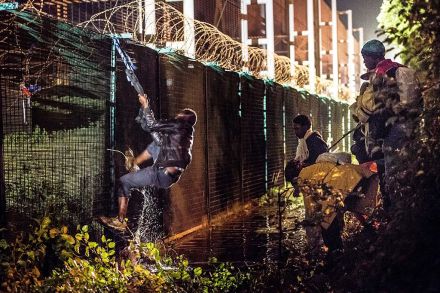
The massive operation by 1,200 French riot police and gendarmes to bus the migrants in the 'Jungle' at Calais to reception centres elsewhere in France and to raze the illegal camp to the ground has begun. Allelujah. You might think that the destruction of this crime-ridden and rat-infested shantytown, where up to 10,000 mainly African and Afghani migrants live in shacks and tents without running water or mains electricity, was good news. At last, those poor migrants will have a decent roof over their heads while they finally get round to applying to the French government for asylum, as nearly all are required to do by the law. But no. Instead, the British left and the French right, joined in unholy alliance, are outraged: How dare François Hollande do such a thing!