Michael o’leary

How private equity changed the world

The 50th birthday of New York private-equity giant Kohlberg Kravis Roberts – founded with $120,000 by the cousins George Roberts and Henry Kravis and now holding $758 billion of assets under management – is a moment to ask whether the modus operandi the firm pioneered has been good or bad for the world. Private-equity buyouts of underperforming public companies have certainly been a catalyst for sharper corporate performance across every western economy. But with what impact on society? Some buyouts also provide cover for ‘sin’ businesses that harm the planet or deny workers’ rights. KKR itself will never live down the book title Barbarians at the Gate, referring to its ruthless 1988 takeover of RJR Nabisco.
In praise of Michael O’Leary

NatWest has returned to full private-sector ownership 17 years after the £46 billion bailout that took it into state hands – and five years after the name swap which reduced the once globally trumpeted Royal Bank of Scotland to a humble north-of-the-border branch network, while promoting its English subsidiary NatWest to become the parent brand. RBS shareholders who were almost wiped out but hung on to what are now NatWest certificates have seen their shares triple in value since 2023, finally surpassing the bailout price. HM Treasury took a £10.5 billion loss on the whole rescue exercise, which required a decade-long series of placements and buybacks to filter the taxpayers’ 84 per cent holding back into the market as the bank’s performance gradually recovered.

Ruthless Ryanair could show us the future of aviation

Aviation, nuclear power and public transport — along with good restaurants, golden retrievers and hand-knitted bed socks — are, as Julie Andrews put it, a few of my favourite things. So in a week when the news is as depressing as I can remember since the dark winter of 1973-4, I might as well write about all of them. I’ll try to find points of light along the way but it’s not going to be easy. First the plight of airlines, now so extreme that it’s hard to foresee any outcome other than nationalisation for many major carriers. Even if the new ban on leisure travel ends, only pre-flight Covid testing and reduced quarantine can boost passenger numbers in the short term, while transatlantic routes will take years to recover.

Who would want to come to Britain for a holiday now?

All logic suggests that the 14-day quarantine for arrivals from abroad really is, as Michael O’Leary of Ryanair put it, ‘a political stunt’. The best explanation is that it was conceived in Downing Street — with minimal consultation, unless someone rang Armando Iannucci, writer of The Thick of It — as a sop to focus-group xenophobia and parental anxiety, as well as a show of grip after the Dominic Cummings debacle. Its absurdity is highlighted by news that the West Indies cricket squad is now quarantined, while 122 high-goal polo players were reported to have beaten the deadline by slipping in last Saturday on a charter flight from Buenos Aires via the Covid cauldron that is São Paulo in Brazil.

Now is not the time to throw money at airlines

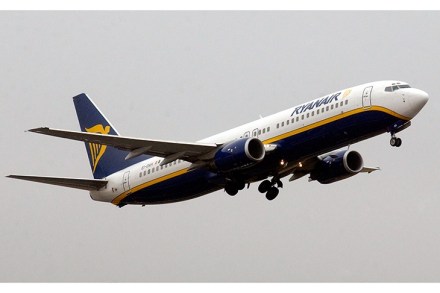
British Airways warns of 12,000 redundancies. Ryanair announces 3,000 job losses as ‘a minimum to survive the next 12 months’; Virgin Atlantic adds 3,000 more. The aero engine makers Rolls-Royce and GE talk of more than 20,000 job losses between them. Of all the sectors hard hit by pandemic, aviation is one whose prospects look blighted as far as the horizon. What should governments do about it? Global trade will return to pre-crisis levels, but business travel may never do so: why would companies bear the risk and expense when video-conferencing is so cheap and efficient? Even if vaccines against Covid-19 are available by next year, international travel will be constrained by fear of the next virus.