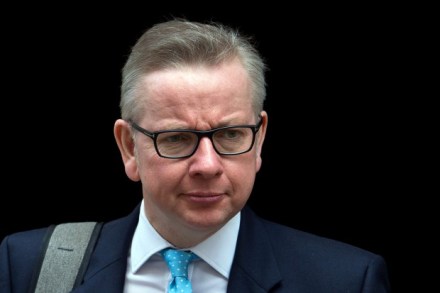
Michael gove

The leap

From our UK edition

This week the Prime Minister devoted a speech to what he regarded as six lies being told by his opponents in the EU referendum campaign. He later confessed that the idea for the speech had come to him while watching the news at 9 p.m. the previous evening. It would have been better if he had contented himself with shouting at the television, rather than adding yet more rancour to what has become a slanging match. Most voters tune into an election campaign only in its final few weeks; those who do so now will find nothing but hysteria, hyperventilation and obloquy. Where, it is often asked, are the facts? If we can distil the arguments down to the most salient points, what are they?
The six best reasons to vote Remain

From our UK edition

Like almost everyone, I’ve piled angrily into this fight. But as the debate nears resolution I feel ashamed of all my furious certainties. In the end, none of us knows, and we shouldn’t pretend to. So I’ll try now to express more temperately six thoughts that persist as the early rage subsides. From the first three you’ll see that I’m beginning to understand that for many the EU is now a whipping boy. ‘Europe’ has become for many what in other ages Rome, or communist plots, or America, or international Jewry, or big business represented: a conspiracy against us, an explanation. In the words of Cavafy’s poem ‘Waiting for the Barbarians’, ‘a kind of solution’. Europe has become a punchbag for our fears and frustrations.

An age of broken promises

From our UK edition

An intelligent middle-aged, middle-class woman told me the other day that she plans to vote Leave on 23 June because she no longer believes a word that David Cameron says. She cited his pre-election pledges on repatriation of powers from Brussels, repeal of human right legislation and — of course — immigration. I said that, should she get her Brexit, the Prime Minister is likely to be supplanted by Boris Johnson, who conducts one-night stands with truth only on alternate wet Wednesdays. She was unmoved. She has convinced herself that Johnson the outsider, the roly-poly bundle of fun, Mr Feelgood, should be judged by different rules. He is not one of ‘them’, the political class, whom she perceives as having betrayed us all.

Today in audio: ‘Remain’ fights back as PM warns of Brexit ‘bomb’

From our UK edition

Momentum in the 'Leave' campaign seems to be growing after Brexit took the lead in two polls out today. There are, however, still several weeks until the actual day of the EU referendum and the gap between the two sides remains marginal (four per cent). But 'Remain' still seem shaken by these polls. Here's how they spent the day fighting back: David Cameron said Brexit would put a bomb under Britain's economy, going on to say that 'the worst thing is, we would have lit the fuse ourselves': The PM was backed up Lib Dem leader Tim Farron. In a joint event, Farron said the argument for 'Leave' was built on 'utter, invented rubbish': But in the tit-for-tat battle which is the EU referendum, the 'Leave' campaign also went on the offensive today.

Could the Vote Leave strategy work?

From our UK edition

The Leave campaign have had their best week of the campaign this week. After months of being battered by the Whitehall machine, they’ve taken advantage of purdah silencing government departments to get themselves onto the front foot. As I write in The Sun this morning, even IN supporting Cabinet Ministers admit that Leave have had a good week. But they argue that they won’t be able to ride the immigration issue to victory on June 23rd. One argues that you can’t focus on immigration week after week, or ‘By week four, you end up sounding like Nigel Farage’. But Vote Leave think their trump card is the link between immigration and people’s pay packets. That is the economic argument they are confident they will win.

This referendum has shown us the real Cameron

From our UK edition

Westminster has a tendency to get ahead of itself. MPs want to discuss the aftermath of an event long before it has happened. They play never-ending games of ‘What if?’ At the moment, the political class cannot stop discussing, in great detail, what the post-EU referendum political landscape will look like. The speculation is, in and of itself, part of the political process. Much of the talk of the post-vote challenges facing David Cameron is intended to persuade him to pull his punches in the final weeks of the campaign. What no one disputes is that the Prime Minister will find governing even harder after 23 June. His majority is already thin and he has had to U-turn on a host of policies since the election.

Hilton: Brexit would be the crowning achievement of Tory modernisation

From our UK edition

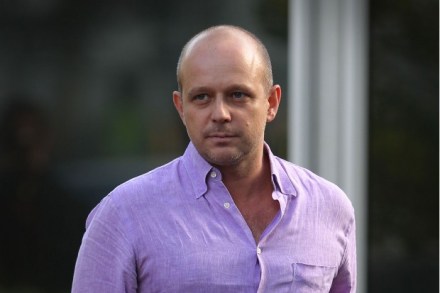
In a speech to Policy Exchange today, Steve Hilton—David Cameron’s former senior adviser—will make the case that ‘any intellectual rigorous examination makes it impossible for a Tory moderniser to support staying in the EU’. He argues that Tory modernisation was about trusting people, and that the EU does not; that modernisation was about localism, and that the EU is inherently centralising; and that the EU helps the rich and not the rest. I think there’s much to be said for Hilton’s analysis. (Though, of course, it should be recognised that there are Tory modernisers on both sides of the argument.) But where Hilton is surely right is that the EU is not the future, it is an idea of its time—the late 20th century.

What’s making Remain campaigners so tetchy?

From our UK edition

Like a lot of keen games-players I’m a stickler for the rules. This is not because I’m an especially honourable person; merely a recognition that without a rigorous structure and a sense of fair play, a game can be no fun and winning can afford no satisfaction. I feel much the same way about politics. Take Hilary Benn’s recent contribution to the Brexit debate, wherein he professed to have taken grievous offence at Boris Johnson’s use of the word ‘Hitler’ in an article about Europe. As was perfectly clear from the context, the reference was dropped in lightly and unhysterically in the service of an unexceptionable point. So the game Benn was playing there definitely wasn’t cricket.

Brexit: the-stab-in-the-back myth is coming

From our UK edition

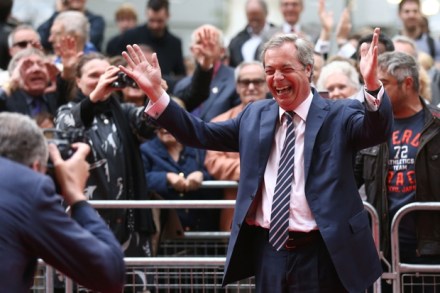
I don’t know if 'Leave' supporters will win. With the young abstaining and the old voting in a low-turnout referendum, it is just about possible that they could. But it is already dismally clear how they will react if they lose: they won’t accept the result. Nigel Farage was proud to admit that he would be a bad loser. 'In a 52-48 referendum this would be unfinished business by a long way,' he told the Mirror. 'If the Remain campaign win two-thirds to one-third that ends it.' The old-fashioned among you might have thought that in any electoral contest the side with the most votes wins. How out of touch you fuddy-duddies are.  It is not enough to win a majority of the vote anymore.

Tory unity after the referendum is looking increasingly difficult

From our UK edition

One of the big questions about the EU referendum campaign is whether the Tory leadership is running its campaign in such a way as to make it impossible to stitch the party back together again after the result on 23 June. The Prime Minister’s colleagues concerned with party management who work in Number 10 and the whips’ office are certainly very agitated about the mood in the party, with a number of pro-Brexit ministers appearing to conclude that they have burned their bridges irreparably. This has led their colleagues to worry that there will be a large group of ministers and backbenchers after a ‘Remain’ vote who still try to move against the Prime Minister.

The Brexiteers have brought romance back into politics

From our UK edition

I recently got round to reading Francis Fukuyama’s famous book The End of History and the Last Man. As well as heralding the triumph of liberal democracy, he explains that a snake will always lurk in the garden, for human nature is not entirely won over by the gospel of equality. He introduces us to the term megalothymia, the desire to distinguish oneself from the rest, be the best. It’s expressed in capitalism, sport and other cultural pursuits. It is also likely to be expressed in politics: leaders will probably emerge who don’t have any new ideology, but want to rock the liberal democratic boat. They are motivated by a sort of primitive lust for adventure.

Is the Brexit campaign ‘morphing into Ukip’?

From our UK edition

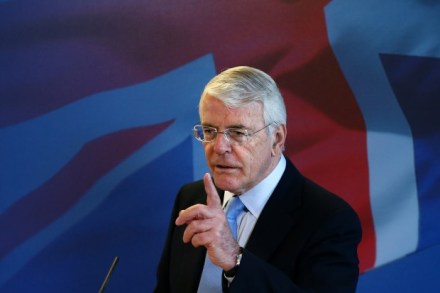
Is the Brexit campaign 'morphing into Ukip'? That's what Sir John Major will say he fears is happening later. In a speech at Oxford University, he'll argue that those calling for Britain to leave the EU are 'fuelling prejudice on immigration'. He'll also say that: 'As the leave arguments implode one by one, some of the Brexit leaders morph into Ukip and turn to their default position - immigration. I urge them to take care, this is dangerous territory that - if handled carelessly can open up long-term divisions in our society'. So does he have a point? It's definitely credible to see how some elements of the leave camp are focusing their positions around the immigration debate.

Enter Boris, eyes on the prize

From our UK edition

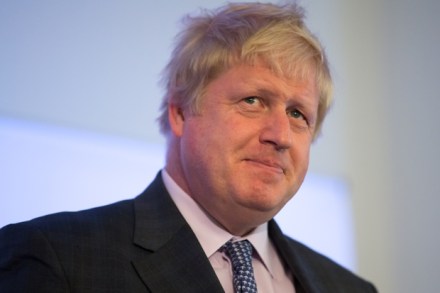
[audioplayer src="http://feeds.soundcloud.com/stream/262486539-the-spectator-podcast-erdogans-europe.mp3" title="James Forsyth, Fraser Nelson and Isabel Hardman discuss Boris" startat=552] Listen [/audioplayer] After an eight-year detour into municipal government, Boris Johnson has now returned to national politics. The former mayor of London will mark this moment by going on the stump for the Leave campaign. He has some catching up to do: while never far from the public eye, he was absent from the Commons for seven years. Even when back in Parliament after the general election, Boris felt he could not take the cabinet job that was offered to him. But his time at City Hall hasn’t dented his ambitions; quite the opposite.

Let’s make assisted dying legal for Brightonians

From our UK edition

I am having terrible trouble with my hair at the moment. It is lank, flat and lifeless. There are split ends. Also, it doesn’t smell too good. What’s that appalling stench, my wife asked recently while sitting next to me on the sofa as we watched a rerun of the old racist editions of Midsomer Murders starring the excellent John Nettles. ‘Probably the dog, again,’ I replied — but I knew that was a lie. I knew it was my hair. It smelt like that rotten cheese Italians eat. I don’t know why, because I wash it frequently enough. Maybe, to adapt Orwell’s mordant observation, at the age of 56 everyone has hair which smells exactly as they deserve. In my case, Gorgonzola, with a subtle undertone of raw sewage.

Brexit Tories are feeling disrespected. How awful

From our UK edition

There are moments when one wonders whether one is seeing and hearing the same things as others. For me such a moment occurred a fortnight ago when reading The Spectator’s weekly column by our political editor, James Forsyth. James is exceptionally well plugged in to the world of Westminster, but — beyond that — a person of cool and sensitive judgment, so I read what he writes with attention. He said this: ‘[The Prime Minister] is campaigning with no thought for the feelings of those in the party who disagree with him. It is one thing for a leader to disagree with close to half of his MPs and most of his activists, but quite another not to do it respectfully.’ And for the first time in my life I had literally no idea what James was on about.

Barometer | 21 April 2016

From our UK edition

European bogeymen Michael Gove said ‘remain’ campaigners were spreading tales of bogeymen. But what is a bogeyman? Appropriately enough, the concept of an imagined monster is a pan-European concept which has exercised the right to free movement for centuries. — The boggel-mann has been terrifying children in Germanic cultures since the Middle Ages, as has the bussemand in Scandinavian countries. In Dutch, he became the boeman. — Middle English had its bugge-man and Scotland its boggarts — the latter suggesting a possible connection with marshy ground. But possibly the earliest bogeyman was bugibu, a monster in a French poem written in the 1140s. Reversed forecasts A Treasury report claimed that leaving the EU would leave the UK economy 6% smaller by 2030.

Cut the claptrap

From our UK edition

So far the campaign for the EU referendum has resembled a contest as to which side can spin the most lurid and least plausible horror stories. On the one hand, the ‘in’ campaign claims that we’ll be £4,300 worse off if we leave; that budget airlines will stop serving Britain and that we will become more prone to terror attacks. Not to be outdone, the ‘out’ side warns that we will be crushed by a fresh avalanche of regulation and immigration, and more prone to terror attacks.

Cameron’s heading for a hollow victory

From our UK edition

[audioplayer src="http://feeds.soundcloud.com/stream/260046943-the-spectator-podcast-obamas-eu-intervention-the-pms.mp3" title="Isabel Hardman, Fraser Nelson and James Forsyth discuss the PM's hollow victory" startat=511] Listen [/audioplayer]‘Nothing except a battle lost can be half as melancholy as a battle won,’ wrote the Duke of Wellington after Waterloo. David Cameron may well feel the same about referendums on 24 June. The EU debate is already taking a toll on the Tory party and his premiership. While defeat would be disastrous for him, even victory will come at a heavy political cost. Victory is, for now, still the most likely outcome.

Today in audio: Gove’s case for Brexit

From our UK edition

Michael Gove has been making his case for Brexit and doing his best to knock the stuffing out of the 'remain' campaign. He started the day on the Today programme, spelling out why he thought Britain was best off outside the EU. In his pitch to the nation, he said: 'I want us to vote to leave the European Union before it's too late, because that's the safer choice for Britain. If we vote to stay, we're not settling for a secure status quo, we're voting to be hostages, locked in the back of the car, driven headlong towards deeper EU integration.' The Justice Secretary then gave a speech later in the day in which he put forward in greater detail why he thought the opposite side in the EU debate are treating the electorate like children.

Did Stephen King write the In campaign’s script?

From our UK edition

One of the most striking things about the debate on Britain’s future relationship with Europe is that the case for staying is couched overwhelmingly in negative and pessimistic terms, while the case for leaving is positive and optimistic. Those of us who want to Leave believe Britain’s best days lie ahead, that our country has tremendous untapped potential which independence would unleash and our institutions, values and people would make an even more positive difference to the world if we’re unshackled from the past.