Michael collins

‘People are at breaking point’: on the road with the Irish fuel protestors

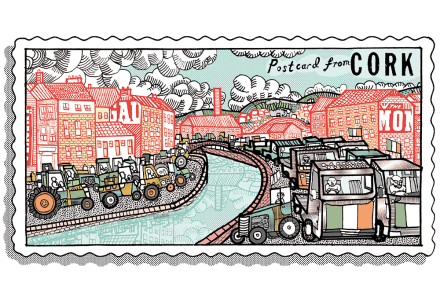
A fuel protestor stood on top of a tractor waving a tricolor. In Ireland, everything is about nationhood and the price of oil is being contested here like a new war of independence. I got into the middle of a scrum of farmers and hauliers blockading Whitegate oil refinery, a kamikaze sort of protest, for it has been stopping tankers getting in and out to supply the country, severely limiting supplies. Here on the windswept coast of Cork, traditionally dubbed the rebel county, working men have been sending out the message that they have nothing left to lose. The oil crisis sent this lot over the edge arguably because they were already on the verge of a collective nervous breakdown over fuel costs, higher than in Britain partly due to EU carbon taxes.
Matthew Parris, Joanna Bell, Peter Frankopan, Mary Wakefield and Flora Watkins

38 min listen

On this week’s Spectator Out Loud: pondering AI, Matthew Parris wonders if he is alone in thinking (1:10); Joanna Bell meets the leader of the Independent Ireland party, Michael Collins, ahead of the Irish general election later this month (8:41); Professor Peter Frankopan argues that the world is facing a new race to rule the seas (17:31); Mary Wakefield reviews Rod Dreher’s new book Living in wonder: finding mystery and meaning in a secular age (28:47); and, Flora Watkins looks at the Christmas comeback of Babycham (34:10).  Produced and presented by Patrick Gibbons.

‘We want to put common sense into Irish politics’: inside Ireland’s new populist party

When the Taoiseach Simon Harris called a snap election for 29 November, Ireland’s electricity board asked political parties not to put election posters on telegraph poles. They might as well have asked them to take the time off on holiday. As I drive through the Irish countryside on my way to County Cork, I notice plenty of posters on poles, but the usual suspects – Fianna Fail, Fine Gael, Sinn Fein and Labour – are now joined by a new force in Irish politics – a grouping dedicated to a punchier, more populist, anti-immigration and pro-family agenda.

Don’t bother calling the doctor 

‘If you are calling about sinusitis, sore throat, earache in children, infected inset bite from the UK not overseas, impetigo, shingles, or female-only uncomplicated water infections, speak to your local pharmacist.’ That is how my parents’ GP surgery now answers the phone. A recorded message telling you to go away for almost every illness you might have is read out by a very stern male voice, unnecessarily loudly. He first tells you to dial 999 for life-threatening emergencies, or 111 for anything less serious, leaving you to decide which is which. Then he tells you there are no appointments even if you wait for an answer because so many of the doctors themselves are off sick.

No one knows how to sell the European project to the Irish any more

A few days after having Sunday lunch at the hotel where Michael Collins ate his last meal, we found ourselves on the road to Beal na Bla. We had gone to get hay and the hayman was out to lunch, so we followed the heritage signs to the site of the ambush where Collins was shot dead. The events of 22 August 1922 immortalised this picturesque valley in West Cork near to where the builder boyfriend and I have bought an old country house. Beal na Bla, or Blath, translates as ‘entrance to the good land’. The memorial by the curve in the road where Collins was murdered is surrounded by lush pastureland.

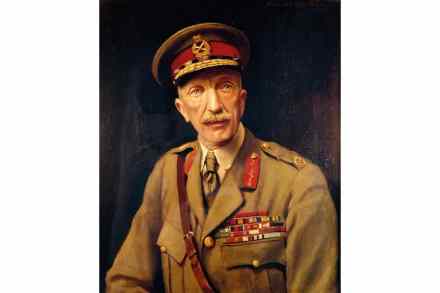
Who planned Field Marshal Sir Henry Wilson’s murder?

Until very recently, political assassination was a mercifully uncommon occurrence in British politics, though that has changed. Previously when such murders did happen, they were usually associated with Ireland: the 1882 Phoenix Park murders of Lord Frederick Cavendish and Thomas Burke, the killings of Airey Neave and Lord Mountbatten, and numerous unsuccessful plots and near misses. One spectacular example occurred in June 1922, when Field-Marshal Sir Henry Wilson was shot dead outside his Mayfair house by two IRA operatives called Reginald Dunne and Joseph O’Sullivan, who were swiftly captured and hanged, after a trial whose procedures were sharply criticised by George Bernard Shaw among others.