Memoir

To Salman Rushdie, a dream before his attempted murder ‘felt like a premonition’

From our UK edition

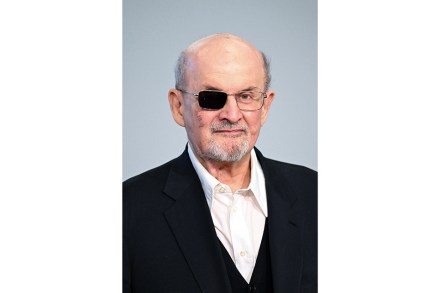
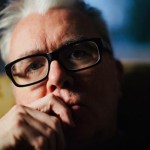
Salman Rushdie has long hated and struggled against the idea that the 1989 fatwa pronounced on him after the publication of The Satanic Verses should define his career or his life. It was, as he frequently pointed out, a book he published only a quarter of the way through his career. He wanted the life of a writer, and for his books – even ‘that book’ – to be read as books rather than as footnotes to an episode in his biography or tokens in some pre-digital culture wars. Two nights before the reading, Rushdie dreamt he was attacked by a man with a spear in a Roman amphitheatre He thought he had managed that. The only people who ever asked him about the fatwa, he told me when we met in 2020, were journalists: ‘to be dragged back into the late 1980s is boring.

Murder in the dark: The Eighth House, by Linda Segtnan, reviewed

From our UK edition

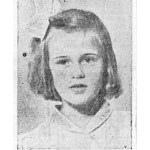
It takes a Scandinavian mother to write like this: ‘Why murder a nine-year-old girl? She wasn’t raped. Rape is the only motive I know of for the murder of little girls, unless the killer is a close relative.’ Linda Segtnan’s The Eighth House benefits from this bluntness. Its author, a historical researcher based in Stockholm, was browsing through a newspaper archive in 2018 when a photograph of nine-year-old Birgitta Sivander caught her attention. The girl lived in a village called Perstorp in southern Sweden until one evening in May 1948 she went out to the football field and did not return. A search was organised, the human chain making its way into the nearby forest in the middle of the night to look for her. They found her clogs.

A magnificent set of dentures still leaves little to smile about

From our UK edition

John Patrick Higgins is unhappy about the state of his mouth. His teeth resemble ‘broken biscuits’, a ‘pub piano’, ‘an abandoned quarry’ and ‘Neolithic stones. It’s all I can do to keep druids from camping out on my tongue each solstice.’ So he invests in a series of expensive interventions. He has seven gnashers removed, followed by three root canals, and acquires a natty set of dentures. They feel a bit weird at first (‘it’s like having an internal beak’), but ‘I look like the actor playing me in a Hallmark movie of my life.’ In this slim, refreshingly unpretentious memoir, Higgins, a middle-aged English filmmaker living in Belfast, chronicles his emotions as he undergoes successive rounds of treatment.

‘Now I have been made whole’: Lucy Sante’s experience of transition

From our UK edition

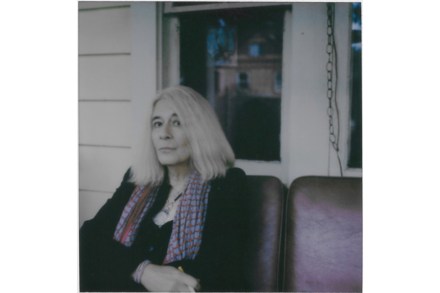
Lucy Sante concludes her thoughtful and occasionally poetic memoir with the words: ‘Now I have been made whole.’ Before transitioning at the age of 66 she had lived her life as a deeply divided man. This is an affecting book that could help move the trans debate forward from its currently undignified state of abuse and polarity. Sante interweaves the story of the first 18 months of her transition with that of the first three decades of her biography. Her parents emigrated to New Jersey from Belgium, initially when she was four (there were subsequent toings and froings). She writes a lot about her identity as a working-class Walloon, an ‘only child of isolated immigrants’, and notably about her relationship with her pious, difficult mother.

My prep school scarred me for life

From our UK edition

On one blissful, cloudless day during the summer holidays of 1972, Charles Spencer, who had just turned eight, surveyed the scene in his mother’s garden in Sussex. He’d spent the morning cycling and swimming, and a barbecue was being prepared. He remembers thinking: ‘This is too good to last.’ And he was right. A date he was dreading, 12 September, arrived. His father drove him the 100 miles from his house on the Sandringham estate in Norfolk to Maidwell Hall, the boarding prep school in Northamptonshire where Spencer would be a pupil for the next five years. We all remember that end-of-summer-holidays dread: the savage haircut, the putting on of itchy school uniform after months in cotton. Spencer evokes this brilliantly in his unputdownable memoir A Very Private School.

Stories of the Sussex Downs

From our UK edition

This amazing book is itself a little like a flint, a misshapen stone egg of the Sussex Downs. It resists the reader at first, coated in the calcite rind of the author’s slow, scholarly journey, missteps and all. But when you persist, breaking the book’s spine or, as it were, knapping the flinty nodule, you find treasure within. Alexandra Harris quotes the painter Paul Nash writing in 1937: ‘If I broke all the shells of all my wild stones, I should find that precious yolk which is like precious stones, the black core of the flint.’ From Nash, it’s a hop and a skip to Henry Vaughan, the metaphysical poet who ‘understood his heart as a cold flint that must be violently struck if it were to kindle into divine light’.

On the road with Danny Lyon

From our UK edition

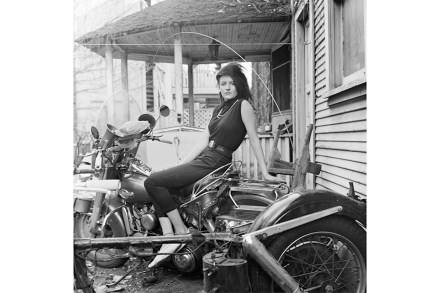
A Google search for ‘Danny Lyon’ produces more than eight million results in 0.30 seconds, yet the celebrated American photojournalist and filmmaker is little known in the UK. This superb, quixotic, bare-all memoir ought to change that. Starting in 1962, Lyon not only photographed the heroes of the US civil rights movement as staff photographer for the Student Non-Violent Coordinating Committee (SNCC, pronounced ‘snick’), but in a way was one of the heroes himself, risking jail, beatings and abuse. He’s had prizes galore and two solo shows at the Art Institute of Chicago.

The true valour needed to go on pilgrimage in Britain

From our UK edition

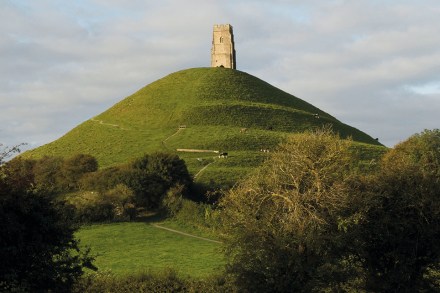
Every summer solstice, thousands of people gather at Stonehenge to greet the longest day of the year. Judging from the druids in the crowd, you might think this tradition dates back to pagan Britain. In fact, it was started in 1974 by members of a hippy commune who decided to host a free festival among the stones. The Pope, the Dalai Lama and John Lennon were invited, along with a handful of British Airways hostesses. These ‘interactions between ancient and modern faith’ fascinate the travel writer Oliver Smith. On This Holy Island is a journey across Britain, telling the story of a dozen pilgrim destinations and the spiritual seekers drawn to them. As well as recounting the history of these places, it explores how later generations have re-enchanted them.

The healing power of Grasmere

From our UK edition

William Wordsworth’s life is the foundational version of the nature cure. After a disrupted, troubled childhood, sent to live with unsympathetic relations after his mother’s death, a chaotically disaffected time at Cambridge and a muddled youth, fathering a child on a woman he loved but scarcely knew in France, Wordsworth refused all his family’s urgings to a nice career in the church or the law. Instead, he stumbled towards the kind of poetry he wanted to write and looked, with his sister Dorothy, for a sense of home in Dorset and Somerset. Finally, he returned to the Lake District, and in December 1799 came to Dove Cottage and Grasmere, where nature felt like the parent he longed for and, surrounded by his coterie of women supporters, the years of agony could be over.

A war reporter bravely faces death – but not from sniper fire

From our UK edition

When you are a foreign correspondent and have covered wars in dozens of countries, the last place you’d expect a threat to your life to come from is your own cells. Yet this was the predicament in which the New York Times reporter Rod Nordland found himself in July 2019. Despite close shaves in Lebanon, Iraq, Afghanistan, Central America and Darfur, he only really became aware of his mortality after collapsing with a seizure in India and discovering the existence of a ‘space occupying lesion’ (SOL) in his brain – a euphemism for a growth, benign or malignant. On transfer to a hospital in Manhattan, Nordland learned that his was a stage 4 glioblastoma multiforme, a primary brain cancer with a poor prognosis.

A mother-daughter love story

From our UK edition

In Splinters, the American novelist and essayist Leslie Jamison leaves behind the issue of her addiction and recovery – the subject of her previous memoir, The Recovering (2018) – and takes us through her pregnancy, experience of childbirth, marriage, divorce and post-separation dating life. Each stage of her journey is related with the author’s trademark love of the telling detail: On the postpartum ward my window ledge filled up with snacks from friends: graham crackers, cashews, cheddar cheese, coconut water, oranges with tiny green leaves. Someone hands her a form to fill out. ‘Did I want bone broth?’ We can assume she does, as bone broth appears later on. Much of Splinters recounts her marriage to the author Charles Bock – referred to throughout as ‘C’.

The summer I dwelt in marble halls

From our UK edition

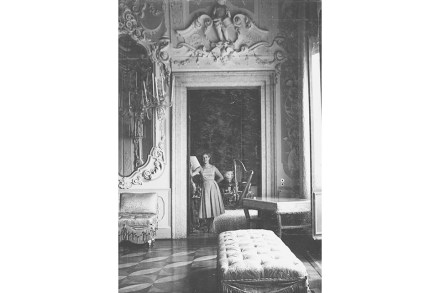
The discovery of a cache of long-lost love letters might be an over-familiar inspiration for a memoir, risking a bit of a dusty lane indulgence – a charming, nostalgic featherbed flop into a past romance. But although the events described by this delightful nonagenarian first-time author took place three-quarters of a century ago, there is nothing sepia-flattened about Gill Johnson’s writing. This is a book which shimmers with remarkable recall as the author returns us to the post-war vibrancy of Venice and the dazzling inhabitants who transformed her young life. The youngest of four children, Gill reached adulthood in Blitz-scarred, rationed 1950s London.

Britney Spears’s much-anticipated memoir is a desperate cry for help

Biological differences exist between men and women. Hamas lacks a justifiable reason to kill Israelis. Joe Biden won the 2020 election fair and square. Vaccines work. These are truths which, depending on the political class you’re speaking to, you can no longer say in public. Reading Britney Spears’s memoir, The Woman in Me, I thought, “We should add ‘the Free Britney Movement was wrong’ to the unspeakable truths list.” Two years into her freedom, Spears should celebrate her memoir as her umpteenth comeback. She should be sitting down with Oprah, confessing what really led to her 2007 breakdown, and releasing a new album pegged to The Woman in Me.

britney spears

The mystery of Werner Herzog

From our UK edition

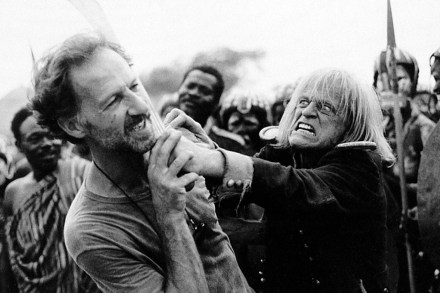
Many movie actors are famous for their unmistakable voices – people like Sean Connery, John Wayne and Peter Lorre, who all pub comedians mimic. But how many directors are like that? Only one: the German auteur Werner Herzog, hero of the New German Cinema, who at the age of 81 has published this headspinning, free-associating memoir. Its German title, Jeder Für Sich Und Gott Gegen Alle, was also the original, anarchic title of Herzog’s 1974 film The Enigma of Kaspar Hauser, based on the true story of a boy reportedly brought up in an isolated darkened cell.

Robyn Davidson explores yet another foreign country – the past

From our UK edition

Robyn Davidson never set out to become a writer. ‘It did not form my identity,’ she tells us early on in her memoir Unfinished Woman. ‘In my own mind I had simply pulled another rabbit out of a hat. As I had done all my life with everything.’ The rabbit, in this case, is the ability to capture an exciting and complex life with insight and humour. When she decided to leave the underworld, she was sexually assaulted at knifepoint Born in 1950 on a cattle station in Queensland, Australia, Davidson was the second daughter of a handsome war hero from a privileged background. Home was a place full of ‘dust and wide verandas, comfortable old chairs and good horses, though never adequate cash’.

Too many tales of Mrs Tiggy-Winkle

From our UK edition

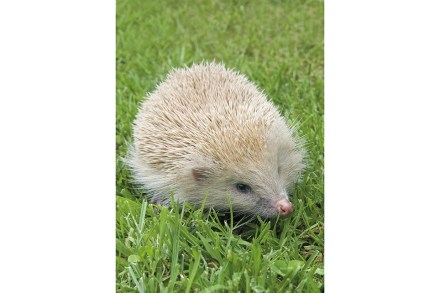
A book about hedgehogs is not the obvious next step for Sarah Sands, the former editor of Radio 4’s flagship news programme Today, and before that editor of the Evening Standard. But then Sands has had a rough time of it lately. In The Hedgehog Diaries, she recounts the death of her father, Noel, the news broken to her by her brother, Kit Hesketh-Harvey, who had to climb through a window of her Norfolk house to do so since she wasn’t answering her phone. Hesketh-Harvey, who was a writer and performer and a great favourite of the King, died not long afterwards of heart failure.

Christine Blasey Ford to release memoir

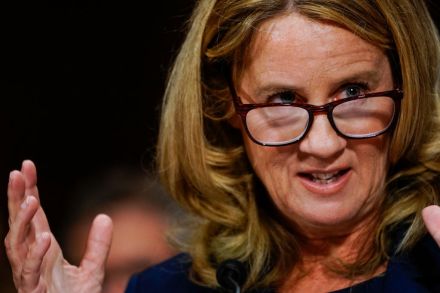
Christine Blasey Ford is back and ready for more — disbelief, tears? Perhaps all of it. The professor of sociology who testified in 2018 that Supreme Court nominee Brett Kavanaugh had committed sexual assault against her in high school is set to release a memoir this March detailing the trial.   Cockburn suspects your opinion on whether the book will be fiction or nonfiction depends on how you vote, though One Way Back promises to be “the compelling true story behind the testimony that awed the nation.”   According to St. Martin’s Press, the memoir recounts the months leading up to the Kavanaugh confirmation hearing as Ford attempted to get information “into the right hands” without bringing backlash on her friends and family.

Bernie Taupin is more than just ‘Elton John’s lyricist’

It takes only a couple of hours by train from the southern reaches of rural Lincolnshire to central London. But for seventeen-year-old Bernie Taupin, leaving home in June 1967 to try his luck in the big city, the journey might as well have been to a distant planet, such was the gulf between his life as a casual farm-laborer and his ambitions to become an internationally acclaimed songwriter like his heroes Hank Snow or Merle Haggard.

taupin

Another tragic case involving medical incompetence and cover-up

From our UK edition

It was only eight lines into O Brother that I realised I was in the hands of a good writer. John Niven’s landline phone has rung. His partner hands it to him. ‘I take the phone from her as she watches me in the intense, quizzical way we monitor people who are about to receive Very Bad News.’ I can’t recall a writer noticing that before (I presume a few have), but we have noticed it ourselves. And the narrative masterstroke is that now the reader is looking at the page in an intense, quizzical way, for we want to know what the Very Bad News is. The VBN is that Niven’s younger brother Gary is in a coma, following a suicide attempt.

Who would be a farmer’s wife?

From our UK edition

On the opening page of The Farmer’s Wife, Helen Rebanks quotes George Eliot’s famous passage from Middlemarch. Dorothea adds to ‘the growing good of the world’ through her ‘unhistoric acts’ and by having ‘lived faithfully a hidden life’. With this enchanting, funny, fearless book, Rebanks brings her own ‘unhistoric’ life unequivocally out of hiding. The blood, mud, slog, exhaustion, bureaucracy and financial angst of farming are ever-present She lives with her husband James (a bestselling writer) and their four children in the Lake District on their farm shared with six sheepdogs, two ponies, 20 chickens, 500 sheep and 50 cattle.