Meat

Is barbecue a noun or a verb?

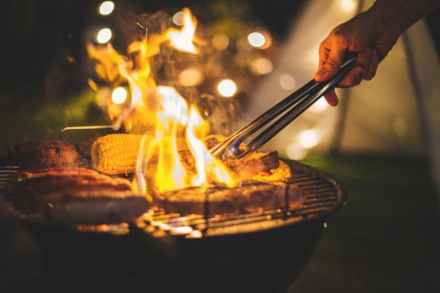
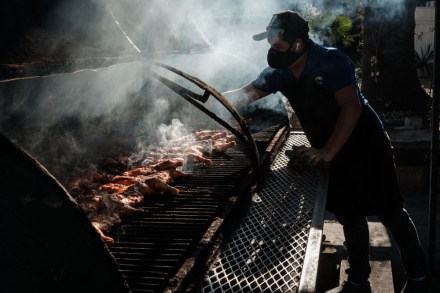
Memorial Day is approaching, the traditional kickoff for the American barbecue season – or for grilling season, depending on where you are in the country. In some regions – say, New Jersey and northward – if someone asks you to come over for “a barbecue” during the holiday weekend, you’re likely to find a charcoal or gas grill loaded up with hot dogs, hamburgers, or, if the host is really putting on the dog, thick ribeye steaks. Western-inspired parties took off in the 1930s – though digging a hole in the lawn was kind of a pain For most folks in the South, calling such fare “barbecue” is painful. Here we call those events “cookouts,” and we would say the hosts are “grilling,” not “barbecuing.
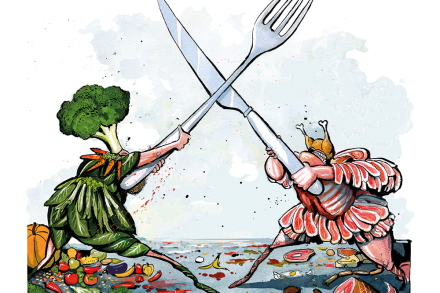
Tomorrow belongs to the vegetarians

From our UK edition

Can there be any thinking person who has passed a lorry filled with live animals peering out through the slats on their way to slaughter, without a momentary shudder? How many of us would take an opportunity to inspect what happens there? Be honest: you recoil from the thought. ‘Slaughterhouse’. So unpleasant we frenchify it as ‘abattoir’. Hunting leaves me cold yet has an honesty about it: you see and choose your prey, and kill it yourself: morally a million miles from the systematic industrial slaughter of creatures we never look in the eye, couldn’t bear to see killed, and so turn away, pay others to do the killing, and deny our own agency. There are things we’d rather not think about. Take note of them. They’re the first signs of rejection.

The offal truth? Organs are delicious

From our UK edition

I’m sure my mum would forgive me for saying this, but cooking is not one of her many strengths. Raising three children, and with a husband who worked shifts in a steel mill, she was feeding people round the clock, so cooking became a necessity rather than a pleasure – as it will have been for the majority of working-class women in the 1960s and 70s. Since this was before convenience food really hit the shelves, things were cooked from scratch, and in winter, steak and kidney suet pudding was on the menu in our house most weeks. As were liver and onions, mince and potato pies and anything else cheap and cheerful, usually involving lots of animal fat and parts. The sweet, creamy texture, gamey and pungent, was a delight.

Stuff the turkey: try capon or partridge for Christmas

From our UK edition

‘It was a Turkey! He never could have stood upon his legs, that bird. He would have snapped ’em short off in a minute, like sticks of sealing-wax.’ (A Christmas Carol.) And there is exactly the problem with festive fowl. In most cases, we get turkey. And usually we get it far too big, which leads to all the problems of using the thing up over the course of a week. It may have been fine for Bob Cratchit’s large family but for most people, the mammoth turkey isn’t the way to go. A turkey is a fine bird (one of the trinity of actually useful things, with potatoes and tomatoes, to come out of the European discovery of America) – but it’s not the only option.

When vegans are worthy of our disdain

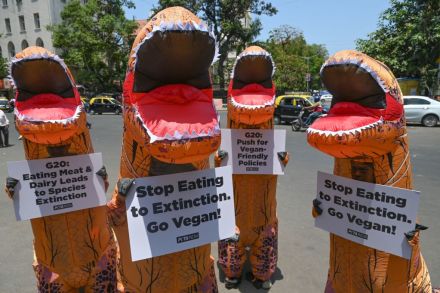
Celebrity chef John Mountain made headlines last week for banning vegans from his restaurant, Fyre, citing “mental health reasons,” reportedly because a vegan customer complained about Fyre’s lack of plant-based menu options. Meanwhile, a vegan landlord in New York City forbids tenants from cooking meat in his $5,750-a-month apartments. What’s the deal with vegans? Are they all self-obsessed, birdseed-eating eco-warriors who are only able to wash down “cheese” made of arrowroot with a massive dose of ego? Or are they disciplined, clean-living champions whose commitment to the cause merits our admiration and imitation? Had you asked me my opinion of vegans a few years ago, I would have scoffed and made a soy boy joke.

Where’s the beef? Eric Adams wants to force New Yorkers to be vegetarian like him

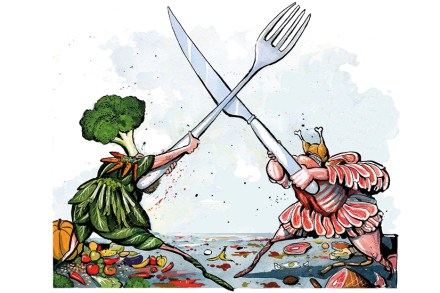
New York City mayor Eric Adams is on a quest to cut the city’s “food-related emissions” by 33 percent by 2030, and not by making Gas-X free to residents. Adams, whom the New York Times reports is “a self-described vegan who sometimes eats fish,” has expressed support for the city reducing the amount of meat it serves at schools, hospitals and in other government-funded capacities. “It is easy to talk about emissions that are coming from vehicles and how it impacts our carbon footprint,” Adams said. “It is easy to talk about the emissions that’s coming from buildings and how it impacts our environment. But we now have to talk about beef. And I don’t know if people are really ready for this conversation.

beef meat eric adams

In praise of meatless steak

From our UK edition

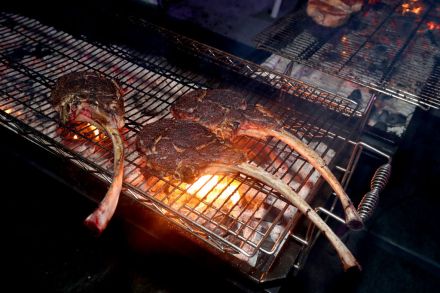
Sirloin, rump, tomahawk, fillet, rib-eye. However it comes, is there any food that gets salivated over more than steak? Restaurant reviewers compete to outdo one another with their florid descriptions of the sensual delights of tucking into a particularly prime example. But then steak comes loaded with far more than a dollop of garlic butter or hollandaise. More recently, tucking into a juicy slab of meat has also become a bold statement of ‘I will eat – and live – as I please’, a carpe diem rejection of vegan-botherers and eco-worriers. Veganism is on the rise, with the number of vegans in Britain quadrupling between 2014 and 2019.

Are you man enough to eat raw offal?

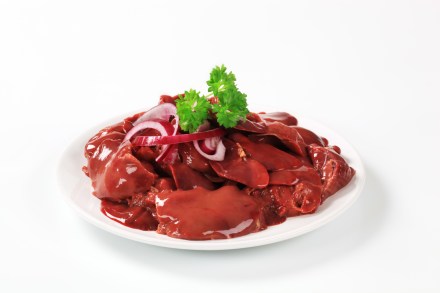
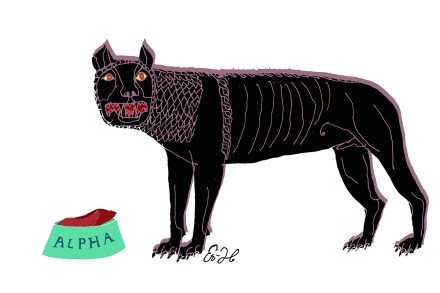
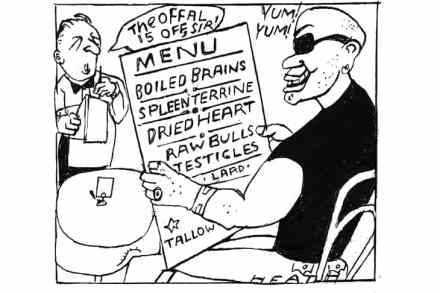
The dominant wolf gets the liver, at least according to the podcaster Joe Rogan. In one episode, a bodybuilder called “CarnivoreMD” (real name Paul Saladino) tells him: “If you eat liver, you get to be an alpha male... or alpha female.” Offal has taken a markedly macho turn in recent years. No longer consigned to memories of the postwar school cafeteria, organs have become the preferred food of a certain type of gym bro. The word “offal” implies wastage — from the Middle Dutch for offcuts — but it can also be a delicacy. Foie gras is only the most obvious example. For the most part, though, the West has become squeamish about what was once called “variety meat.” But a new wave of offal-lovers is reviving an interest in organs.

offal

What to eat in game season

From our UK edition

Game is a perfect refutation to the sort of militant vegan campaigners who go around placing floral tributes on packaged meat. So long as shoots are responsibly conducted, game is as environmentally sustainable and ethical as meat-eating gets. But this year looks set to be a tough one for parts of the industry. Chiefly because of a severe outbreak of avian flu in France, gamekeepers in the UK have struggled to source enough birds to rear (90 per cent of partridge eggs and 40 per cent of pheasant eggs are imported from or through France). By some estimates up to 70 per cent of partridge shoots and nearly a third of planned pheasant shoots may be cancelled this year.

Peta, Lysistrata and the comedy of a sex strike

From our UK edition

The German branch of the ‘green’ organisation Peta (‘People for the ethical treatment of animals’) is demanding that, until men stop eating meat – apparently they cause 41 per cent more pollution than female carnivores – women must deny them sex. The same sanction had its origin, of course, in Aristophanes’s comedy Lysistrata (411 bc), staged during the war between Athens and Sparta (431-404 bc), just after Athens had suffered a disastrous defeat in a failed attempt on Sicily. Naturally, an organisation like Peta might well think the play was in earnest. Was not Lysistrata proposing a noble, female-instigated sex-strike, by the women of both sides, to stop a war?

In praise of British lamb

From our UK edition

In one of Roald Dahl’s lesser-known short stories, ‘Lamb to the Slaughter’, the guilty Mrs Maloney tempts police officers into enjoying a spot of supper while they’re at her house hunting for the weapon used to kill her husband. That's the hell of a big club the guy must've used to hit poor Patrick, one of them was saying. The doc says his skull was smashed all to pieces just like from a sledgehammer.That's why it ought to be easy to find.Exactly what I say.Whoever done it, they're not going to be carrying a thing like that around with them longer than they need.One of them belched.Personally, I think it's right here on the premises.Probably right under our very noses. What you think, Jack?

Five tips for a sumptuous summer barbecue

From our UK edition

The sun is set to shine again this weekend, and those lucky enough to have access to a garden are turning their minds to al-fresco dining. So we’ve gathered together our top five tips to help you pull off your weekend barbecue – everything from how to get the best out of your meat, to barbecue-friendly puddings. 1. Marinating Marinating meat (and veg!) is a no-brainer when it comes to injecting flavour quickly and easily: using punchy spices, herbs, sugars and salts and letting them get to know the raw meat is minimal work for maximum reward.

Has Covid turned us into a nation of cyclists?

From our UK edition

On this day Would 19 July make a suitable ‘freedom day’ (assuming Covid restrictions are lifted even then)? There is an ominous warning from history. In 1919, 19 July was designated ‘Peace Day’, on which victory in the Great War would be celebrated with parades and banquets, three weeks after the signing of the Treaty of Versailles. In London 20,000 service men and women marched on a seven-mile route past the temporary Cenotaph. Many demobbed servicemen felt aggrieved, however, that so much money was being spent on celebrations when many of them were out of work and still without the housing they had been promised.

Spring’s perfect roast

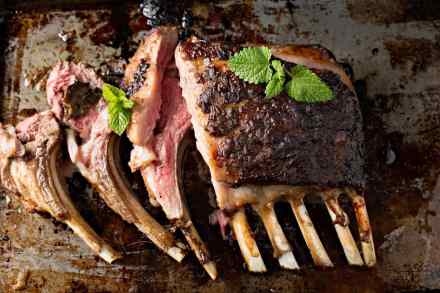
When I first moved to the country, I was intrigued by the sight of people walking sheep on a leash round and round the front garden of a neighboring farmer. City girl that I am, I wondered if they were receiving some kind of special therapy. Equine interaction is supposed to help with certain anxiety disorders, why not sheep-walking for, say, insomnia? It turned out, however, that the sheep-walkers were members of the local 4-H club preparing to show their market lambs at the fair, an event I was later privileged to witness. But I was put to the blush when the judge, a tall, competent-looking man in a checked shirt and green boots, commented loudly on the fine chops displayed by the winning entrant.

lamb

Are you man enough to eat raw offal?

From our UK edition

The dominant wolf gets the liver, at least according to the American podcaster Joe Rogan. In one episode, a bodybuilder called ‘CarnivoreMD’ (real name Paul Saladino) tells him: ‘If you eat liver, you get to be an alpha male… or alpha female.’ Offal has taken a markedly macho turn in recent years. No longer resigned to memories of the postwar school canteen, organs have become the preferred food of a certain type of gym bro. The word offal implies wastage – from the Middle Dutch for offcuts – but it can also be a delicacy. Recently saved from a government ban on cruel foods, foie gras is only the most obvious example. For the most part, though, the West has become squeamish about what was once called ‘variety meat’.

Why I retrained as a butcher

From our UK edition

Two years ago, I enrolled on a butchery course. I rather fancied seeing how the sausage was made, and also envisaged taking home handsome pork chops and having an ‘in’ when I needed to order my Christmas turkey. But the amateur course was no longer offered by my local college. So instead of a four-week, two-hour evening course, I signed up for a year-long Level 2 NVQ in craft butchery that involved a lot more anatomical theory and hairnets than I had anticipated. Butchery work is physically demanding — I wasn’t made for carrying beef forequarters over my shoulder — and comes with the usual risks of a job involving knives and saws. It can be smelly and messy and bloody. It can also be hugely satisfying, but it is definitely not glamorous.

The American dream has no time for offal

You can get goat in parts of New England. Consumers of Portuguese origin create a market unparalleled elsewhere in the US. In Boston, as I recall, Savenor’s used to sell camel and kangaroo. Few meats are too un-American for New York City. Ottomanelli, purveyors to whatever is left of the Four Hundred, still has venison of the quality they sold to the Upper East Side in the Gilded Age. Los Paisanos in Brooklyn stocks alligator, turtle and caribou. But the great days of the 1950s, when a club in New York served porcupine, caribou, muskrat and armadillo, are fled. With the closing of the American mind has come the narrowing of American appetites. Americans’ self-image is of enterprise, pioneering, innovation, adventure and the call of the wild.

offal

Letters: In defence of the National Trust

From our UK edition

Trust us Sir: I refute Charles Moore’s assertions (‘Broken Trust’, 5 June) that the National Trust frowns on local expertise, ignores its members and is prone to ideological zealotry. National Trust houses are historic treasures of national importance and we are very proud to care for them. Before the pandemic, the Trust was spending three times more on its houses than on coast and countryside. Covid has caused regrettable staff reductions, but we still have more curatorial posts than we did several years ago. This is hardly an organisation ‘attacking the very idea of country houses’. The report looking at links with slavery and colonialism was not driven by ideology, our intention was simply to acknowledge factually these aspects of history.

The ‘clean meat’ revolution is coming

From our UK edition

On 19 December last year, some chicken nuggets were sold in a restaurant called 1880, in Singapore. This doesn’t sound like a significant turning point in history, but it was. That small plate of chicken nuggets might well have been the start of a major industrial, social and cultural revolution — one the UK needs to prepare for. That Singaporean chicken nugget was the first time in history that meat that did not come from a slaughtered animal had been sold commercially. It was genuine chicken meat, not a substitute, but it had been cultured from cells in a vat called a bioreactor.

Now we’re talking: mouth-watering meat boxes to order in

From our UK edition

If you're sick to death of Deliveroo, it’s time to take a look at the meat box. Forget vegan meats and plant-based pretenders. It’s dark and wet and we’re all stuck indoors — there’s no point making ourselves any more miserable. Steakhouses and brasseries have been moving their menus online and into cardboard boxes, with a bit of home prep involved to ensure it's fresh on the plate. We’ve all got used to the idea that you can order anything over the internet — but there’s still something faintly thrilling in opening up an innocuous package and finding a Sunday roast staring back at you. And it seems bored Brits are warming to the idea of prep at home restaurant food: over the last 12 months, sales are up more than 92 per cent.