Marine le pen

Is Steve Bannon right about Jordan Bardella?

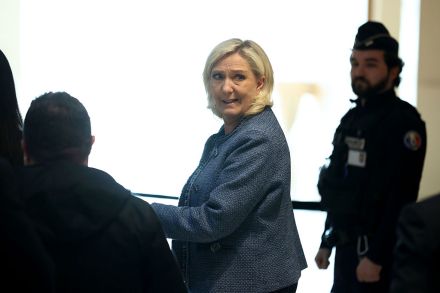
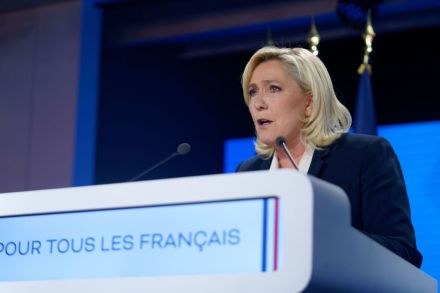
Marine Le Pen returned to a court in Paris on Tuesday as her appeal began against her five-year ban from political life. The leader of the National Rally was disqualified in March last year after she was found guilty of misusing €4 million ($4.6 million) of funds from the European Union. She claims she is the victim of a political witch-hunt, a view supported by President Donald Trump and Vice President J.D Vance. The appeal will last a month and the verdict is expected in June. If Le Pen is successful she will be able to run in the presidential election in April 2027. If she fails, however, it will be her protege, 30-year-old Jordan Bardella, who will represent the National Rally.

jordan bardella

Will bromance bloom between Trump and Jordan Bardella?

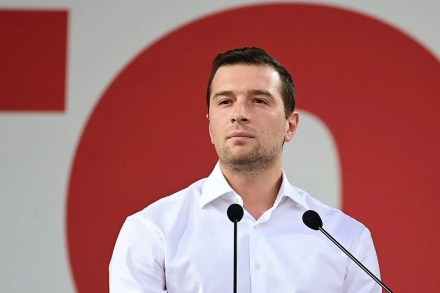
Life has never been so good for Jordan Bardella, the 30-year-old president of Marine Le Pen's National Rally. A recent opinion poll had him as the runaway favorite to win the 2027 presidential election. One man who believes in his credentials is the former president of France, Nicolas Sarkozy. Now out of prison and promoting the book he wrote during his 20-day incarceration, the center-right Sarkozy said that Bardella reminds him of a young Jacques Chirac. Despite Sarkozy’s conviction for criminal conspiracy, he retains a large and loyal fanbase among the metropolitan boomer bourgeois, a demographic that the National Rally has traditionally struggled to attract.

bardella

Why is it only left-wing leaders who are allowed to be young?

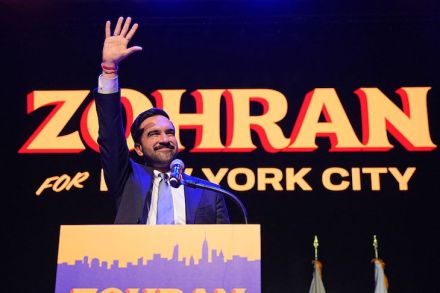
There was a time when the French left turned its nose up at all things American. Too low-brow for them. Not now. The victory of Zohran Mamdani in the New York mayoral race has caused much joie de vivre in left-circles. Jean-Luc Mélenchon, the Gallic Bernie Saunders and the leader of the far-left La France Insoumise, described Mamdani's win as "very good news." The general secretary of the center-left Socialist party, Olivier Faure, posted a smiley face on X above a headline in Le Monde, hailing Mamdani as "the youngest mayor in New York history." Mamdani referenced his age during his victory speech in Brooklyn. "The conventional wisdom would tell you that I am far from the perfect candidate," he proclaimed. "I am young, despite my best efforts to grow older. I am Muslim.

young

Trump, le Pen and the legal war on politics

A few days ago, Raphaël Glucksmann, a French Member of the European Parliament and co-president of the left-wing Place Publique party, proposed that the United States return the Statue of Liberty to France.  In a speech on March 16, he argued that the US, under the Trump administration, no longer embodies the values of democracy and freedom that the statue represents.  Glucksmann said, “We’re going to say to the Americans who have chosen to side with the tyrants, ‘Give us back the Statue of Liberty.’ We gave it to you as a gift, but apparently you despise it. So it will be just fine here at home.” Be careful what you wish for.

Le Pen

A ‘Trump tornado’ is about to hit Europe

There is a wind of change blowing through the West. It emanates from Washington DC, where President Donald Trump continues to dash off executive orders; more than fifty by the end of last week, the highest number in a president’s first 100 days in four decades. The liberal mainstream media is rattled. The New York Times magazine ran a piece at the weekend in which it described Trump as "the leading light of a spate of illiberal leaders and parties flourishing in democracies around the world." The paper namechecked some of them: Poland, Holland, India, France, Germany, Italy, Brazil, Hungary and Russia. What unites and motivates these "illiberal" parties is their opposition to what the NYT called "liberal creep," which they regard as a civilizational threat.

Trump

Is the fate of democracy truly at stake?

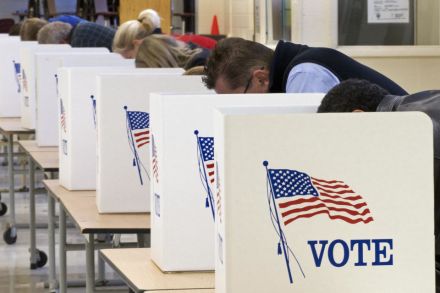
In a few months, the stolen election narratives will start in earnest. There was one in 2020, of course, but there had been another in 2016, a liberal myth about Russian interference stealing victory from Hillary Clinton. Disgruntled Democrats similarly said the Republican president before Trump was “selected, not elected” — put in office by the Supreme Court, not voters. Claiming that Barack Obama wasn’t a natural-born citizen of the United States, as “birther” Republicans did in 2008 and 2012, was another variation on the stolen-election theme. Even when elections run smoothly, ideologues easily find cause for complaint. Discontents can even apply to foreign elections.

democracy

Despite defeat, Le Pen’s party has made steady progress

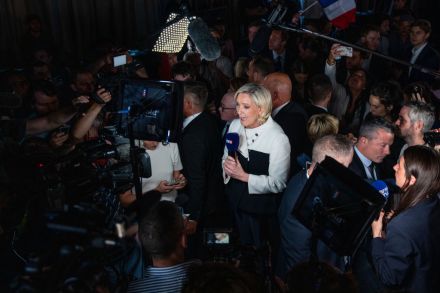
I have been in Paris the last few days and by coincidence am staying cheek by jowl (joue contre joue?) with the Eiffel Tower, site of France’s version of those “mostly peaceful” and of course eminently wonderful protests against “the far right” last week in the aftermath of Marine Le Pen’s strong showing in the first round of voting for seats in the National Assembly. The second round took place yesterday, and there were some of us who hoped that Le Pen’s Rassemblement National Party would sweep the field. France has an excellent law that neither the media nor politicians may comment publicly on an election until the polls close, which last night was at 8 p.m.

marine le pen

One-on-one with Broadway powerhouse Betsy Aidem

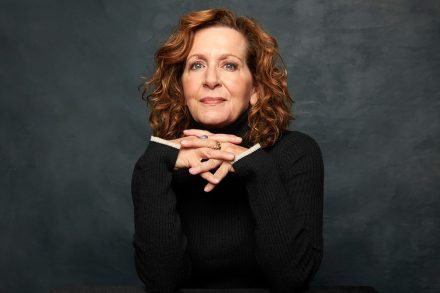
For the last few years, Betsy Aidem has immersed herself in historical trauma. In 2022, the Broadway powerhouse starred in Leopoldstadt, Tom Stoppard’s Tony Award-winning play, which follows the lives of a Jewish family in Vienna in the first half of the twentieth century.  The same year, she took on a part in a similar vein: that of the feisty Marcelle in Joshua Harmon’s Prayer for the French Republic, which ended its Broadway run on March 3. The action flits between 2016 France, when antisemitism is on the rise and the far-right Front National leader Marine Le Pen is gaining traction as a presidential candidate; and the 1940s, when Marcelle’s grandparents hide from the Nazis in their Parisian apartment.

betsy aidem

Paris match

“If you wish to meet intellectual frauds in quantity,” V.S. Naipaul once said, “go to Paris.” After two years of pandemic-induced shutdowns and travel bans — some of them instituted, it seemed at times, with the sole purpose of harrying visitors from Britain — it was oddly satisfying, rather than irritating, to be assailed once again by the sciolistic outpourings of aspiring novelists. On mild spring evenings, the Left Bank echoed with the chatter of students and veterans of the creative writing mills of North America. Paris, finally, was emerging from the thickets of depression and terror occasioned by disease, ennui and patrols of gendarmes hunting for delinquents out for a walk.

Paris

The failure of Marine Le Pen

Following her second-round loss to Emmanuel Macron in France’s presidential elections last month (it was her third loss on the national stage), Marine Le Pen has announced her candidacy for the National Assembly. She hopes to win Pas-de-Calais’ eleventh constituency in June — a seat she won in 2017 — to oppose Macron’s policies in the French parliament, along with her National Rally (RN) colleagues. But she is unlikely to have much leverage. In the last parliamentary elections, the National Rally (then the National Front) won eight seats out of 577. The latest poll by Harris Interactive has them winning 65 to 95 seats this year, compared to 338 to 378 seats for Macron’s re-branded Renaissance party, which would give Macron an absolute majority.

Emmanuel Macron’s fleeting win

In France’s presidential runoff vote on Sunday, incumbent Emmanuel Macron defeated nationalist contender Marine Le Pen. This makes the center-left Macron the first president since 2002 to get a second term, though he is also one of the least popular politicians in French history. Compared to 2017, Macron dropped by more than seven percentage points from 66 percent to just 58 percent. In turn, contender Marine Le Pen upped her score from 34 percent to 41.5 percent. Meanwhile, the abstention rate is the highest it’s been in more than 50 years, at 28 percent, higher than in the runoff vote compared to the first round. This explains why Macron lost a lot of the lead he had five years ago, and why Le Pen’s National Rally party registered its strongest support to date.

Marine Le Pen takes on the king of Europe

Last Sunday marked the beginning of the French presidential vote; the runoff election will take place on April 24, and incumbent president Emmanuel Macron winning again is no sure thing. If she plays her cards right, challenger Marine Le Pen has a legitimate shot at becoming the next president of France. Macron emerged victorious in the first round with 27 percent of the vote, followed by Le Pen with 23 percent. For the nationalist Le Pen, it is the second time she has qualified for the runoff, and thus the second time she is running against Macron. In 2017, she lost to Macron 66 percent to 33 percent, crushing once again the ambitions of her National Rally party. This year, however, will be a much closer call.