Madeira

The republic’s public life started with dinner

From our US edition

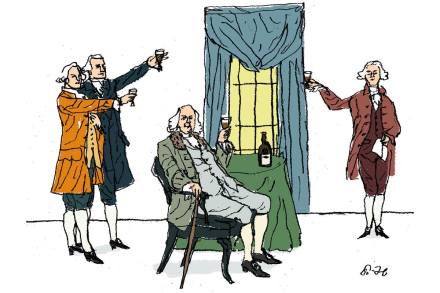
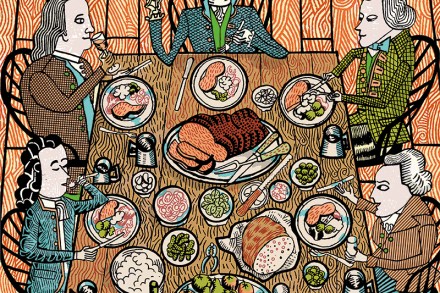
The Constitution was signed on a Monday. That much everyone knows. What the official record tends to skip is what happened right afterward. Forty-two men – some of them barely on speaking terms, three of them having refused to sign at all – stepped out of the Pennsylvania State House into the thin September air. Their wigs were damp from the long, sticky summer. Instead of heading back to their lodgings at the Indian Queen or Mrs. Marshall’s boarding house, they turned south on Chestnut, walked a couple of blocks, and went to City Tavern. At the tavern, on the corner of Second and Walnut, they sat down and ate together.
constitution

There’s nothing to fear from Madeira

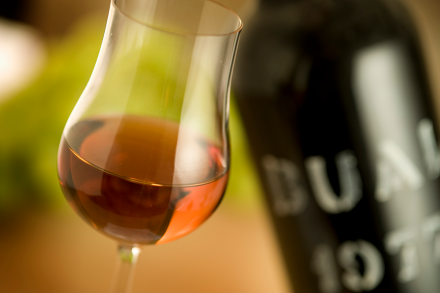
Perhaps because of the Flanders and Swann song in which a louche older gentleman tries to lure a younger lady to bed with Madeira wine, the drink has unfairly acquired a fusty image. While port and sherry have experienced a resurgence, Madeira remains underappreciated despite the fact it stands as a proud monument to the grand old Anglo-Portuguese alliance. One man, Jamie Allsopp, is intent on fighting a noble battle to promote the virtues of Madeira. And so to the Blue Stoops, Allsopp Brewery’s newish pub on Kensington Church Street, for their second annual Game and Madeira Dinner, named after the site in Burton-on-Trent where Jamie’s ancestors first brewed Allsopp’s Ale in 1730.

Madeira, our onetime national drink

From our US edition

Does America have a national drink? It once did — not officially, quite, but in fact. And what was that national potation? Madeira. The wine, John Hailman writes in Thomas Jefferson on Wine, “symbolized to Americans a common patriotism and spirit of independence.” It was, he continues, the “mother’s milk of the American Revolution,” the “virtual national beverage after the Revolution.” Madeira was used to toast the signing of the Declaration of Independence. Jefferson dispensed it at his inauguration. Washington, Hamilton and Benjamin Franklin all loved the stuff. John Adams remarked that a few glasses of Madeira made anyone feel capable of being president.

madeira

Don’t bring me sunshine: a week in the Surrey hills

I’m staying for a week in an 1850s house in the Surrey hills that looks-wise might have been built for the suburban 1920s. I came last night. ‘Sorry about the rain,’ said the UK Border Force lady. ‘Rain is exactly what I was hoping for,’ I said. This morning the owner went to work, leaving me alone in the atmospheric old house. Before he left he warned me about the dictatorial cleaner. ‘She’s called Maria and she comes from Madeira and she’s particular about you not being in the same room while she cleans,’ he said. When she came in I was sitting at the kitchen table looking out of the window at the darkening, gathering rain clouds.

Florida flirts with diversity-centric medical training

From our US edition

If you needed urgent heart surgery to save your life, would you care about the racial background of your doctor? While you as a prospective patient in need of treatment may not care, Florida State University cares a great deal and recently received a grant worth $14.5 million from the National Institute of Health to promote diversity. FSU’s “Florida-First Brigade” initiative is to “build a research community committed to diversity and inclusive excellence”. Diversity of medical professionals is the end-goal of the funds, not the provision or development of better medical care. Therein lies the problem. The human body operates the same way across individuals regardless of racial background.

florida diversity

Ports for any storm

From our US edition

Just as tastes in female beauty have differed widely through the ages — take a comparative glance at the damsels Rubens featured with those of Botticelli (I leave the Venus of Willendorf out of account) — so, too, does the taste in wine vary through the ages. The British critic George Saintsbury was a giant in the field of literary scholarship. He was also an avid apologist for wine, and his Notes on a Cellar-Book (1920) is a classic in the literature of wine writing. A modern reader, however, cannot help but be struck by the prominent place given to wines that have fallen out of favor today, especially such fortified wines as sherry, Madeira and port.

ports