Lucian freud

The art of resurrecting forgotten artists

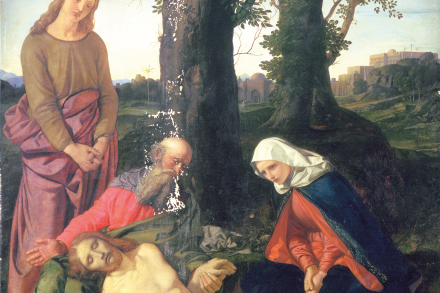
A retired priest in North Wales once told me that after the war he had been asked by Billy Butlin to buy 19th-century paintings for the holiday-camp chapels, because they were going cheap. One he bought, for 49 guineas in 1947, was William Dyce’s 1835 “Lamentation of the Dead Christ.” In 1983, after the Butlin’s chapels had closed, it made a handy £125,000 at auction, when it was bought by Aberdeen Art Gallery. As late as 1962, Lord Leighton’s great “Flaming June” (1895) was sold for £50. Today? Millions. Talk about “the bubble reputation.” The pattern of artistic fame followed by subsequent obscurity has been repeated through the centuries.
This Lucian Freud belongs on the compost

From our UK edition

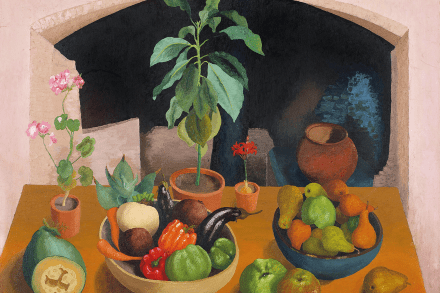
From 1940, at Benton End, near Hadleigh in Suffolk, the artist Cedric Morris brought his eye to breeding irises. Eliminating hated shades of ‘salmon or knicker’, he was, according to his biographer Hugh St Clair, ‘unstinting in his efforts to produce a pure, delicate pink’. Forty years of dedication brought a wild abundance to the garden, which was packed with cultivars, including ‘Benton Baggage’ (pale rose with a blue blaze), ‘Benton Persephone’ (very large white flowers) and ‘Benton Mocha’ (coffee-coloured, with a bright orange beard). A living flower painting.

Mothers and daughters: I Couldn’t Love You More, by Esther Freud, reviewed

From our UK edition

A new novel by Esther Freud — her ninth — raises the perennial but always fascinating question about the use of autobiography in fiction. Since her first novel, Hideous Kinky, Freud has frequently used an underpinning of autobiography, but mostly it’s been discreet. You didn’t need to distinguish what was life, what fiction. But with I Couldn’t Love You More the auto-biographical element has become overt and somehow obtrusive. Freud’s previous novel, Mr Mac and Me, concerned with Charles Rennie Mackintosh’s stay in Suffolk at the start of the second world war, is on the cusp of being an historical novel. This one is close to autofiction.

Derek Jacobi on playing Lucian Freud

Lucian Freud almost had a second career in the cinema. He acted as an extra in a couple of films during the early 1940s; the only one in which he made the final cut was a farce starring the ukulele-playing comedian George Formby in which his 19-year-old face can be seen peering out of the background in one scene. Years later, Lucian claimed, John Huston asked him if he’d like to play the part of his grandfather Sigmund in a biographical screen drama from 1962 entitled Freud: The Secret Passion (which had, at one point, a script by Jean-Paul Sartre). Eventually Montgomery Clift was cast instead, which was just as well because Freud was definitely an observer rather than a performer.

Zadie Smith muses on the artist-muse relationship

From our UK edition

Zadie Smith was born in 1975 in the UK to a Jamaican mother and a British father, and grew up in the ethnically multi-shaded London borough of Brent. Her novels and essays often conjure the polyglot confusion and vibrant streetscapes of Willesden in north-west London where she went to school. Dead and Alive takes us from her beloved Kilburn High Road (Afro-wig emporia, pound shops) to an appreciation of a Stormzy concert at Glastonbury. This fourth essay collection is unfailingly interesting: Smith is uniquely placed to chart the vagaries of life in mixed-up, mixed-race Britain. Some of the greatest essayists of the 20th century were American. (Only a wordy journal such as the New Yorker could accommodate the long stroll, as perfected by Gore Vidal.

The greatest decade for British painting since Turner and Constable? The 1970s

From our UK edition

Slowly the canvas was unfurled across the concrete floor of a warehouse on an industrial estate in Suffolk. On and on it went, a flurry of paint marks and brush strokes, yellow, green and occasionally blue, like a cornfield at harvest time. By the time we got to the end some seven metres of it lay stretched out at our feet. It was the first time anyone had seen this unknown magnum opus by Gillian Ayres since it was rolled up in 1974 – and it looked sensational. Recently I’ve been reflecting on the 1970s for a couple of reasons. One is that I’m working on a book about art in London at that time, the other is that I’ve been helping to organise an exhibition of Ayres’s work from that era at the Heong Gallery, Downing College, Cambridge. Of course, as L.P.

A blast: Leigh Bowery!, at Tate Modern, reviewed

From our UK edition

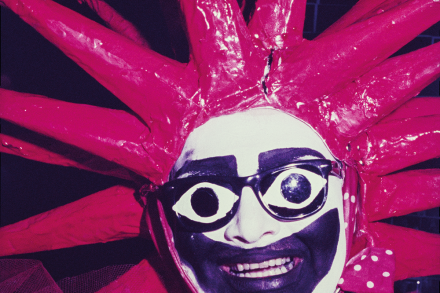
Tate Modern’s latest exhibition is a bizarre proposition on so many levels. Its subject, the Australian designer, performer, provocateur and club scenester Leigh Bowery, was by all accounts inescapable in London for much of the 1980s and early 1990s. Standing at well over 6ft and weighing 17st, he would have been a conspicuous presence on the capital’s streets even had he not adopted the berserk sci-fi drag attire that became his signature aesthetic. He appeared on TV, at Sadler’s Wells and in a ponderous suite of portraits by Lucian Freud. His life could be read as a kind of Gesamtkunstwerk, but he was not an artist in any conventional sense and there’s no explicit evidence here to suggest he ever identified as such.

We’ve got Francis Bacon all wrong

From our UK edition

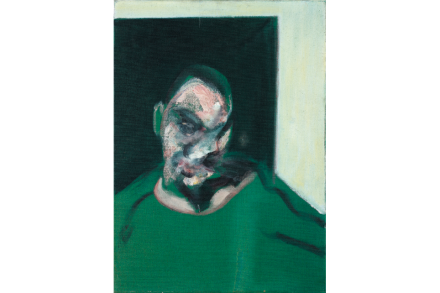
You have to hand it to the curators of this excellent survey of Francis Bacon’s portraits. Not only have they alighted at an obvious but under-explored vantage point from which to reconsider this most mythologised of postwar painters, securing some serious loans to make their point, they have also dared to open their show with what might be the single worst picture it contains. ‘Self Portrait’ (1987) speaks of everything that Bacon got wrong in his final decades: it’s recognisably the 78-year-old artist, dressing up as a younger version of himself.

The joy of hanging out with artists

From our UK edition

Lynn Barber is known as a distinguished journalist, but what she always wanted to do was hang out with artists. This book feels like a marvellous cocktail party, packed with the painters and sculptors Barber has interviewed over the years: Howard Hodgkin, Phyllida Barlow, Grayson Perry, Maggi Hambling. Sarah Lucas and Tracey Emin eye one another warily from opposite sides of the room; Salvador Dali’s ocelot weaves between the guests; everyone, naturally, is smoking. Lucian Freud is a no-show – though having refused Barber’s many interview requests, he did send a scrawled note explaining he had no wish to ‘be shat upon by a stranger’. Feuds and gossip are the making of any gathering, and A Little Art Education is not a book of art criticism.

‘There are an awful lot of my paintings I don’t like,’ admitted Francis Bacon

From our UK edition

In 1959, Edvard Munch’s ‘The Scream’ was hanging above the bed where Francis Bacon nursed a fractured skull after falling downstairs drunk at his framer Alfred Hecht’s house on the King’s Road. It was there to be re-framed – a circumstantial detail Mark Stevens and Annalyn Swan report neutrally, en passant, in their 2021 biography Francis Bacon: Revelations. An inadvertent cry, nay a scream, for attention? Or a frame-up? It was a decade after Bacon painted his first screaming pope, a palimpsest obviously based on Velázquez but equally in hock to Munch. Francis Bacon: A Self-Portrait in Words is an annotated compilation by Michael Peppiatt of statements, letters, studio notes and selected interviews.

John Deakin: the perfect anti-hero of the tawdry Soho scene

From our UK edition

During the various lockdowns I found myself wondering how Iain Sinclair was coping with the restrictions. It seemed unthinkable that this unflinching punisher of pavements could be stuck with 30 minutes round the park. But, as it turns out, sequestering, in a fashion that only the Scots word ‘thrawn’ can do justice to, has resulted in the most archetypal Sinclair book yet. John Deakin is the pariah genius of the title. During the ‘brain-dead hibernation’ of the pandemic, Sinclair got a short-term loan of ‘17 albums of John Deakin’s photographs, fresh prints made from recovered contact sheets; a substantial history of his labours, a flickbook parade of the stunned and waxy faces of his time and place’. From this Sinclair tried to create a ‘psycho-biographic fiction’.

Do we need another Lucian Freud exhibition?

From our UK edition

Do we need another Lucian Freud exhibition? After years of exposure to his paintings of naked bodies posed like casualties of a car crash in a nudist camp, we might have reached the ‘move along, nothing to see here’ point. But it seems we can’t get enough of the monstre sacré. To mark the centenary of his birth in 1922, London is being treated to a Freud fest of no fewer than seven exhibitions, the most prestigious of which is at the National Gallery.

Valuable reassessment of British art: Barbican’s Postwar Modern reviewed

From our UK edition

Notoriously, the past is another country: what’s more, it’s a terrain for which the guidebooks need constantly to be rewritten. That’s one attraction of the new exhibition Postwar Modern at the Barbican. It’s a survey of what might seem all-too-familiar territory: British art in the two decades that followed VE day. Yet it succeeds in revealing numerous half-forgotten or undervalued movements and people, the good, the bad and – most intriguingly – candidates for reassessment. The decades that followed the second world war were marked by dreary austerity, perhaps explaining the tendency for the art to be coloured oatmeal, beige, grey and brown. But this was also a time of dawning hope, increasing prosperity and growing optimism.

His final paintings are like Jackson Pollocks: RA’s Late Constable reviewed

From our UK edition

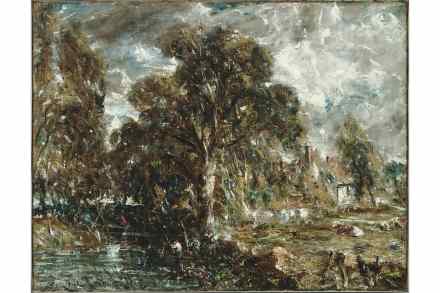
On 13 July 1815, John Constable wrote to his fiancée, Maria Bicknell, about this and that. Interspersed with a discussion of the fine weather and the lack of village gossip, he added a disclaimer on the subject posterity would most like to hear about: his art. ‘You know that I do not like to talk of what I am about in painting (I am such a conjuror).’ Perhaps by that he meant he did not like to give away how he did his tricks. As Late Constable, the magnificent exhibition currently at the Royal Academy, makes clear, he was a true magician with paintbrush and palette. Before your eye he performs astonishing transformations. Take, for example, the little oil sketch ‘Rainstorm over the Sea’, c.1824–8. It’s a picture of a sudden squall.

The joy of socially distanced gallery-going

From our UK edition

Not long after the pubs, big galleries have all started to reopen, like flowers unfolding, one by one. The timing reminded me of an anecdote that Lucian Freud used to tell about a Soho painter friend he took into the National Gallery after it had shut (as some senior artists are entitled to do). They arrived after closing time in the drinking holes of Soho, and the painter friend was staggering and swaying so much that Lucian — who was not easily rattled — became alarmed that he was going to put one of his flailing arms through a Rembrandt. I wonder how those art-lovers of yesteryear would have coped with socially distanced visits. I think they may be an improvement, at least in some respects.

How John Constable got masterpiece after masterpiece out of a tiny corner of rural Suffolk

From our UK edition

Before his marriage John Constable returned regularly in early summer to his native village of East Bergholt. When he wrote from there to his wife-to-be, Maria Bicknell, he almost always exclaimed that Suffolk was ‘in great beauty’. His enthusiasm was never more eloquent than on 22 June 1812, when he declared: ‘Nothing can exceed the beautiful appearance of the country at this time, its freshness, its amenity — the very breeze that passes the window is delightful, it has the voice of Nature.’ I often think about Constable (1776–1837) as I pace across the water meadows on my daily constitutional — partly because this too is an East Anglian landscape not unlike the one he was writing about: flat, leafy, watery, abounding in willows.

To ‘review’ such supreme paintings is slightly absurd: Titian at the National Gallery reviewed

From our UK edition

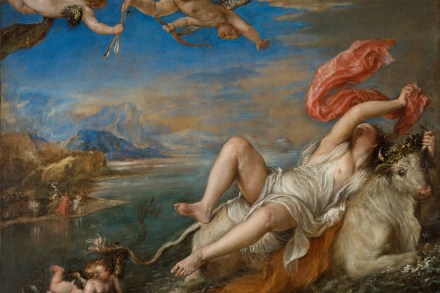
In 1576 Venice was gripped by plague. The island of the Lazzaretto Vecchio, on which the afflicted were crammed three to a bed, was compared to hell itself. In the midst of this horror Tiziano Vecellio, the greatest painter in Europe, died — apparently of something else. He was in his eighties and working, it seems, almost to the end. Titian: Love, Desire, Death, which was briefly on at the National Gallery, before it was closed down this week by our own plague, contained several of the greatest masterpieces of his old age — and also of European art. It comprises just seven canvases, all done for Philip II of Spain — a villain of English history, the man who launched the Armada, but as far as Titian was concerned his most discerning patron.

Finding the Lost Girls

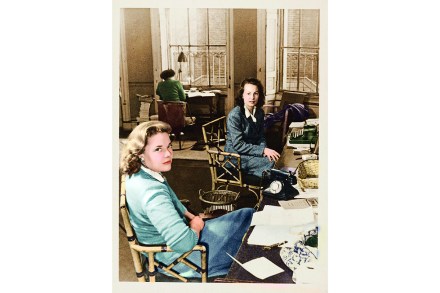
This article is in The Spectator’s February 2020 US edition. Subscribe here. Encapsulations of a particular art-world demographic nearly always fall wide of the mark. Just as there were plenty of people on hand in the 1950s to protest that the Angry Young Men were neither especially angry nor exclusively male, so countless chroniclers of interwar social life complained that the Bright Young People were neither bright nor young. But the critic Peter Quennell’s phrase ‘Lost Girls’ to describe the gang of female twenty-somethings who worked on the magazines and populated the parties of Blitz-era literary London carries an unmistakable tang of conviction.

lost girls

To fill a major Tate show requires a huge talent. Dora Maar didn’t have that

From our UK edition

Dora Maar first attracted the attention of Pablo Picasso while playing a rather dangerous game at the celebrated left-bank café Les Deux Magots. She ‘kept driving a small pointed penknife between her fingers into the wood of the table’. From time to time she missed, and a drop of blood appeared on her gloves. This alarming form of digital Russian roulette was the basis for an early work by the performance artist Marina Abramovic, who will be featured at a major show at the Royal Academy next autumn. There is nothing so arresting in the large exhibition devoted to Maar’s work at Tate Modern as the images of the artist herself, and not only those by Picasso. There are some individuals who have an impact on the arts through sheer force of personality.

Free of Lucian Freud — Celia Paul’s road to fulfilment

From our UK edition

I was looking the other day at a video of the artist Celia Paul in conversation with the curator of her recent exhibition at the Huntington Library in California. The image projected there of a reserved and quietly-spoken woman, hesitant, diffident and patently ill at ease in the spotlight, left me very unprepared for the raw honesty and openness of this memoir. Two early stories give an idea of what lies ahead. The first is of her five-year-old self, the youngest so far in a family of four daughters of a missionary father in India, making herself seriously ill with jealousy on the arrival of a fifth sister.