Lucian freud

What’s in a name? | 8 August 2019

From our UK edition

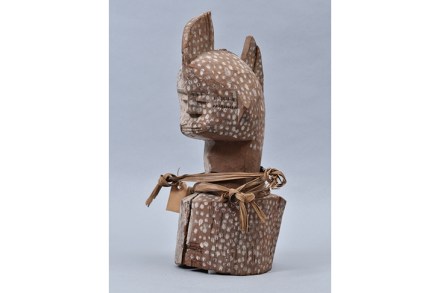
Perhaps we should blame Vasari. Ever since the publication of his Lives of the Artists, and to an ever-increasing extent, the world of art has been governed by the star system. In other words, the first question likely to be asked about a painting or sculpture is whodunit? And if the answer turns out to be, not Leonardo da Vinci — as has been suggested in the case of the controversial ‘Salvator Mundi’ — then the price tag becomes enormously smaller. Does this matter? Artist Unknown, a little exhibition at Kettle’s Yard, Cambridge, investigates the case of the anonymous work.
Feasts and flowers

From our UK edition

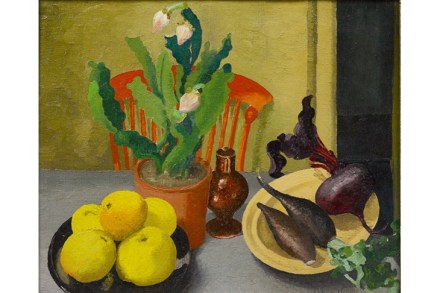
Cedric Morris is often referred to as an artist-plantsman, and while as a breeder of plants, most particularly of irises, he has always been highly regarded in horticultural circles, his reputation as a painter has been subject to regular fluctuations. Last year, two excellent and complementary London exhibitions — Cedric Morris: Artist Plantsman at the Garden Museum and Cedric Morris: Beyond the Garden  Wall at Philip Mould & Company — did a great deal to revive interest in his paintings; and so a joint biography of Morris and his partner Arthur Lett-Haines is welcome. They met in 1918 at an Armistice party hosted by Lett (as he was always known) and his wife.

What you see is what you get | 25 April 2019

From our UK edition

There’s no avoiding the Britishness of British art. It hits me every time I walk outside and see dappled trees against a silver-grey cloud that looks like it was painted by Thomas Gainsborough, or look in the mirror and feel the same gooseflesh anxiety as I do when I see a portrait by Lucian Freud. It’s got something to do with the light — that pale, ever-changing clarity that is so kind to clouds and, when Freud has got his model naked under the skylight, so unkind to human flesh. The phrase the Englishness of English art was coined by Nikolaus Pevsner in the title of a classic art-history book — though he called it an essay on ‘the geography of art’ — based on his 1955 Reith Lectures.

Fine prints

From our UK edition

Artists’ prints have been around for almost as long as the printed book. Indeed, they have similar origins in Gutenberg’s invention of the printing press and the boom in book and paper production that followed. Consequently, although the art dealer Bernard Jacobson has been around for quite a while — his gallery celebrated its 50th anniversary this year — and began as a print publisher, he arrived on the scene rather too late to have acted for Albrecht Dürer in person. Nonetheless, and for good reasons, it is with Dürer that he begins his current exhibition, Prints I wish I had published. Dürer was the first great artist to achieve fame by selling multiple editions of engravings and woodcuts rather than unique pictures.

A whiff of wine and garlic

From our UK edition

I have occasionally mused that there is plenty of scope for a Tate East Anglia — a pendant on the other side of the country to Tate St Ives. If ever that fantasy came to pass, the collection would include — in addition to Grayson Perry, Edward Bawden, Eric Ravilious, and John Wonnacott, contemporary master of the Thames Estuary — a section on Sir Cedric Lockwood Morris. The more one delves into the history of modern art in Britain — indeed, into art history in general — the more one discovers that many reputations are still free-floating. Morris’s is certainly one of these: there is no consensus as to how good he was as a painter, nor as to how he fits into the wider story.

Faulty connections

From our UK edition

In the mid-1940s, Frank Auerbach remarked, the arbiters of taste had decided what was going to happen in British art: Graham Sutherland was going to be the leading painter. ‘Then downstage left, picking his nose, Francis Bacon sauntered on. And the whole scene was changed.’ But how did it alter? What happened to figurative painting in London in the decades after Bacon exploded on to the scene? This is a question with which All Too Human at Tate Britain grapples. It is an old problem. When in 1976 R.B. Kitaj proposed that there was an important group of figurative artists at work here, a ‘School of London’, he defined them as ‘a herd of loners’.

The apple of his eye

From our UK edition

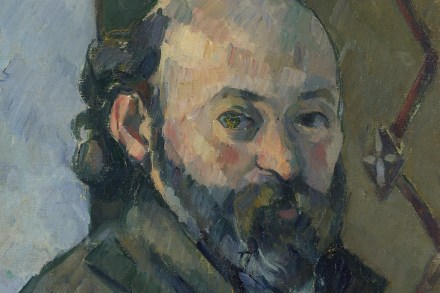
The critic and painter Adrian Stokes once remarked on how fortunate Cézanne had been to be bald, ‘considering the wonderful volume that he always achieved for the dome of his skull’. It’s a good joke, and all the better for being perfectly true — as is demonstrated by the superb sequence of self-portraits included in Cézanne Portraits at the National Portrait Gallery. These are the finest hairless craniums in the history of art. That, however, is only one of the attractions of the exhibition. This is the most impressive array of work, by one of the greatest of all painters, to be seen in London in more than 20 years. Cézanne once said, ‘I paint as I see, as I feel — and I have very strong sensations.

A tale of two artists

From our UK edition

Wherever one looked in the arts scene of the 1940s and ’50s, one was likely to encounter the tragicomic figure of John Minton. Whether he was dancing to the trad jazz of his pupil Humphrey Lyttelton — who recalled his style on the floor as ‘formidable and dangerous’ — or drinking at the Colony Room where Francis Bacon once poured champagne over his head, the painter and illustrator was ubiquitous. Even if he never produced a great picture, Minton deserves the exhibition at Pallant House, Chichester, marking the centenary of his birth, and the fine accompanying book by Frances Spalding and Simon Martin. In its way, failure can be as interesting as success, as well as more poignant.

The better angels of our nature

From our UK edition

Late one afternoon, early in the year, I was walking through the Vatican Stanze with a small group of critics and art historians. While we were admiring the Raphael frescoes that fill these private apartments of the Renaissance popes, Matthias Wivel, curator of the Michelangelo & Sebastiano exhibition at the National Gallery, made the most eloquent case for the painter I have ever heard. Suddenly, I felt a new enthusiasm for Raphael. Essentially what he said is that Raphael is the supreme master of depicting human beings in interaction. Each of the frescoes around us, Wivel pointed out, was made up of a huge number of figures, all engaged with each other in fluently orchestrated groups.

The good, the indifferent and the simply awful

From our UK edition

‘There is only one thing worse than homosexual art,’ the painter Patrick Procktor was once heard to declare at a private view in the 1960s. ‘And that’s heterosexual art.’ It would have been intriguing to hear his views on Queer British Art at Tate Britain. All the more so since it includes several of his own works, including a fine line-drawing study of the playwright Joe Orton, completely naked except for his socks — which he kept on because he felt they were sexy — and reclining somewhat in the manner of Manet’s Olympia. In fact, many of those included might have had reservations — Oscar Wilde, for example, one of whose characters observed, ‘The only artists I have ever known who are personally delightful are bad artists.

Seeing everything in black and white

From our UK edition

Two divergent approaches to printmaking are on view in an exhibition of graphic work by Francis Bacon and Lucian Freud at Marlborough Fine Art, Albemarle Street. For the former, media that depend on line, such as etching, were of little interest, since — as his friend Freud would point out — Francis couldn’t draw very well. But, Freud would add, Bacon’s painting was so brilliant that he made you forget that limitation. Bacon’s prints were essentially reproductions of his oils, signed and numbered by the artist. The etchings Freud made in the last three decades of his life were not like that at all. Though the models for the etchings were often the same as those for his paintings, his approach was entirely distinct.

The only way is up | 26 January 2017

From our UK edition

Michael Andrews once noted the title of an American song on a scrap of paper: ‘Up is a Nice Place to Be.’ Then he added a comment of his own: ‘The best.’ This jotting was characteristic in more than one way. A splendid exhibition at the Gagosian Gallery, Grosvenor Hill, London, makes it clear that Andrews was — among other achievements — a supreme aerial painter. No one else has better caught the sensation of floating, to quote another song from the Sixties, up, up and away. It was also typical of Andrews that his addition to that title was only two words — but it makes a big difference. His paintings are like that. At first, there may seem not to be much there. ‘Lights VII: A Shadow’ (1974) is almost a painting of nothing at all.

Great leaps forward

From our UK edition

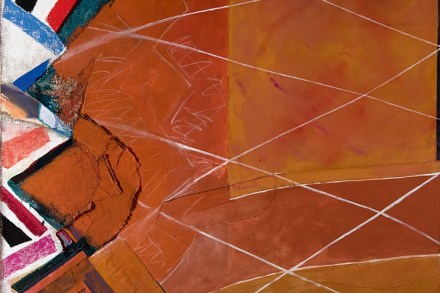
In the 1940s Lucian Freud took another young painter, Sandra Blow, up to the top of a bombed church in Soho. There were just two prongs of masonry left and Lucian promptly launched himself through space from one to the other. ‘You can’t possibly expect me to do that,’ she exclaimed. ‘Just think of it as if you were on the escalator in Selfridges,’ he replied. History does not relate whether she was persuaded by this comforting analogy, but as a small exhibition at the Fine Art Society demonstrates, Blow (1925–2006) spent the rest of her career making jumps. These were mainly of the visual and stylistic variety. There is an exhilarating feeling of rushing through air about ‘Stripes’ (1978), for example.

Skinny dipping

From our UK edition

For a 21st-century gallery, a Victorian collection can be an embarrassment. Tate Modern got around the problem by offloading its Victoriana on to Tate Britain, but York Art Gallery decided to make the best of it. As the birthplace of William Etty, York found itself lumbered with a major collection of work by a minor Victorian artist whose reputation nosedived after his death. While Etty’s statue still dominates the gallery forecourt, most of his paintings languish in the stores. For contemporary audiences, though, he has a USP. An avid frequenter of the life room, Etty acquired a mastery of flesh tones and a penchant for painting nudes that many of his fellow Victorians regarded as pervy.

Jumbled up

From our UK edition

‘In the end, nothing goes with anything,’ Lucian Freud remarked one afternoon years ago. ‘It’s your taste that puts things together.’ He would perhaps have been a little startled to find those words inscribed on the wall of Painters’ Paintings at the National Gallery, but they are very apt. The exhibition reassembles the works of art owned by a number of great painters, among them Van Dyck, Reynolds, Degas, Matisse and Freud himself. It begins with pictures and sculptures that used to co-exist in Lucian’s sitting-room. Most powerful of these is a magnificent Corot, ‘Italian Woman’ (c.1870), that once hung over his fireplace and is now part of the National Gallery’s collection.

Happy ending

From our UK edition

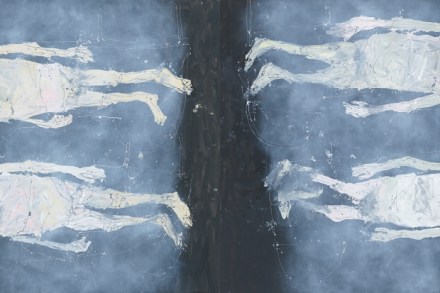
‘In many ways,’ Georg Baselitz muses, ‘I behaved against the grain of the times I grew up in.’ The era was 1960s Germany; in that context, Baselitz feels he was subversively respectable. ‘For example, I never took any drugs. I have been a very faithful husband, I just wanted to hold on to my wife, I wasn’t interested in straying. I never went on any political demonstrations.’ His major offence, however, was not what he didn’t do but what he actually did: paint figurative pictures. Eventually, fashions reversed, and this perverse behaviour made Baselitz a celebrated figure in the world of art. At 78, he remains vigorously productive.

‘Crazy mixed-up Yid’

From our UK edition

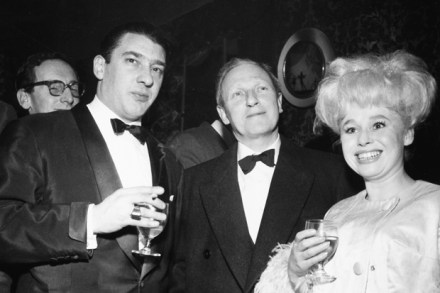
Even David Litvinoff’s surname was a concoction. It was really Levy. Wanting something ‘more romantic’, he appropriated that of his mother’s first husband. So his elder half-brother, the respected writer Emanuel Litvinoff, informed Keiron Pim, adding that David was ‘an unfortunate character altogether’, prone to ‘inventing roles for himself that didn’t have any reality’. Yet this fantasist is the elusive figure whom Pim has endeavoured to capture in an ambitious book which seeks to resurrect an era as much as an individual.

Best in show | 31 December 2015

From our UK edition

Until a decade and a half ago, we had no national museum of modern art at all. Indeed, the stuff was not regarded as being of much interest to the British; now Tate Modern is about to expand vastly and bills itself as the most popular such institution in the world. The opening of the new, enlarged version on 17 June — with apparently 60 per cent more room for display — will be one of the art world events of the year. But, like all jumbo galleries, it will face the question: what on earth to put in all that space? Essentially, there are two answers to that conundrum. Give the public what they want, or — alternatively — what you think they ought to see.

Why did Goya’s sitters put up with his brutal honesty?

From our UK edition

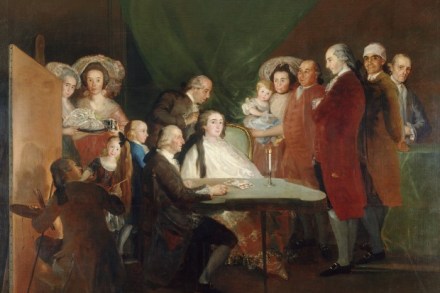
Sometimes, contrary to a widespread suspicion, critics do get it right. On 17 August, 1798 an anonymous contributor to the Diario de Madrid, reviewing an exhibition at the Royal Spanish Academy, noted that Goya’s portrait of Don Andrés del Peral was so good — in its draughtsmanship, its freedom of brushwork, its light and shade — that all on its own it was enough to bring credit to the epoch and nation in which it was created. He (or she) was absolutely correct. [caption id="attachment_9657482" align="alignnone" width="520"] Goya's portrait of Don Andrés del Peral[/caption] The same could be said of many of the exhibits in Goya: The Portraits at the National Gallery.

Hitler’s émigrés

From our UK edition

Next week Frank Auerbach will be honoured by the British art establishment with a one-man show at Tate Britain. It’s a fitting tribute for an artist who’s widely (and quite rightly) regarded as Britain’s greatest living painter. Yet although Auerbach has spent almost all his life in Britain, what’s striking about his paintings is how Germanic they seem. Born in Berlin in 1931, Auerbach was only seven when he came to England (his parents subsequently perished in the Holocaust). By rights, he should stand alongside British artists such as Peter Blake and David Hockney, yet his work feels far closer to German painters like Georg Baselitz or Anselm Kiefer. Auerbach is a one-off, a unique painter with a unique vision.