London

Loud luxury in London

If you count among the Anglophiles emerging from Downton Abbey: The Grand Finale misty-eyed, you might be interested to hear that London's cultural calendar is having a maximalist moment. Harking back to eras of pomp, excess and pouffy outfits, two exhibitions showcase icons who made extravagance an art form: David Bowie and Marie Antoinette. In South Kensington, the Victoria and Albert Museum is hosting Marie Antoinette Style, dedicated to the most fashionable teen queen in history. Across town, the David Bowie Centre in the brand-new V&A East Storehouse space (bigger than 30 basketball courts) reveals over 90,000 items from the singer’s archive.

london luxury

A tale of two parties

This is a tale of two London parties. They say something about London society, status, power, fame and fun — but I’m not sure what exactly. Party one was what I call a Power Party. It was full of famous faces from the upper echelons of British politics and media. I spotted chancellor of the Exchequer Rachel Reeves talking to the former Tory chancellor George Osborne and the former foreign secretary David Miliband. Party two was what I call a Pulchritude Party — a dazzling array of beautiful women and handsome men. There was a mix of young writers, journalists, lawyers, filmmakers and artists. It did not have the high social wattage of name recognition that the Power Party had — but it had beauty and youth on its side.

parties

Trying the best coffee in the world

It was nine on a Monday morning, and whereas my fellow commuters were heading to the office, or their classrooms or a lecture hall, I was on my way to Parcafé in the Dorchester Hotel, right next to London’s bougie shopping district, Mayfair. It’s a place to buy Ferraris and Bugattis and shop at the Row and Goyard and be passed by an endless convoy of black Rolls-Royce SUVs. Waiting for me at the hotel would be a man with a little golden cup, containing a freshly brewed portion of mankind’s favorite black nectar. And his is the best, uncut stuff on the market. The man is Amir Gehl, founder and CEO of Difference Coffee, which sources some of the best, rarest coffee beans in the world.

coffee

My Martin Amis FOMO

There’s a form of social anxiety that a lot of people suffer from — FOMO, Fear of Missing Out. “Fear” suggests something imaginary, that isn’t really happening. Not so. I don’t fear missing out, because I know I am. Friends are always asking me: are you appearing at the Hay Literary festival? No! Am I speaking at the Idler festival? No! Am I reading extracts from my book at the Cambridge Literary festival? No! “What?!” they exclaim in mock disbelief — and then ask why I’m not appearing at some small, obscure, local village literary fête, somewhere in the rectum of rural England. I’ve gotten used to the seasonal snub from the lit-festival establishment. And there are literary events all over London that I haven’t been invited to as well. OK, I’ll live.

Amis

London to Amsterdam via Brussels: taking the long way

Brexit, the gift that keeps on giving: from June 14, 2024 to January 2025, a reduced Eurostar service will run between London and Amsterdam. Why? Part-closure of Amsterdam Centraal leaves no space for the extra bureaucracy now necessary. Passengers returning to London will change at Brussels to go through security and passport checks, adding up to almost two hours of extra journey time. Global travel booking platforms such as OMIO have reported a surge in train travel in recent years. Cheaper prices (compared to flying) and environmental concerns are cited as the main drivers. But Eurostar’s capped passenger numbers and indirect routes will surely increase air travel in 2024, literally flying in the face of Dutch sustainability policies.

brussels

Why have parties suddenly gotten good?

Not long ago this month’s column would have been one long gripe about how the party — as a forum of fun — was finished. Partygoers, I would have moaned, had become more interested in big names and networking than in actually talking to strangers and having fun and blah... blah... blah. But something unexpected has recently been happening in London: people are throwing great parties again, and they are actually fun. I know, fun is one of those words that are so insipid and infantile I feel embarrassed using it. And yet the absence of fun from adult social life is a source of sadness. Even an old grump like me has been having a good time. I went to a party full of young, pretty, clever posh girls in Chelsea and they loved me — and I loved them!

parties

How to celebrate Christmas in London

You just can’t beat London at Christmas. Unless you’re lining up to get into the Tube station (never mind onto a train) at Oxford Circus, in the pissing rain. Then you’re better off in one of those glass igloos in Finland.  When I’m in town for the holidays, I find myself returning to a few old faithfuls, with a few old faithfuls. The Zetter Marylebone Keep this gem up your sleeve for when the crowds become a little too much. A warren of sumptuous suites and a lavish, candlelit parlor awaits at dinky Zetter Marylebone hotel, just a couple of streets back from shopping mecca Selfridges. Divide and conquer last-minute shopping with Mom, then meet here at lunchtime for a swift recovery.

christmas london

The decline of the stylish man

The other day I saw something you don’t often see these days on the streets of London: a truly stylish man. He was a tall, skinny black dude, with a velvet top hat that tilted on his head in a jaunty way that defied gravity. He wore a brightly-embroidered paisley jacket, a waistcoat, tight black trousers and shiny, pointed black shoes — and he carried a pearl-handled walking stick. He looked like a cross between Beau Brummel and James Brown. So I was surprised when I saw this elegant man start to collect cigarette butts from the ground. Here was a dandy in the gutter — but one so cool, he stooped with style. I went up to him and said, “Hey man, I dig your look!” And I meant it.

stylish

Mick Jagger at eighty: the beginnings of a Rolling Stone

Among the other jewels in the crown of Sir Mick Jagger’s songwriting career is a number he and his longtime creative partner Keith Richards knocked off in December 1963 to promote the Kellogg’s company products. Don’t laugh — it’s an infectious little tune in its way, even if the key lyrical message — “Wake up in the morning/ There’s a pop that really says/ Rice Krispies for you and you and you!”) falls some way short of the same duo’s “(I Can’t Get No) Satisfaction,” which followed barely twelve months later. But then Jagger, who turns eighty on July 26, was always a quick study. Last year’s four-part EPIX documentary series My Life as a Rolling Stone may be numbingly banal (“They set the bar for what a rock ’n’ roll band should sound like, look like..

mick jagger

At home with Jacob Rees-Mogg

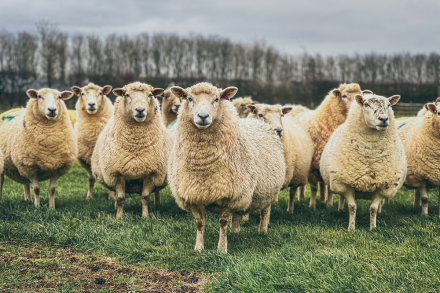
Before I arrived at Gournay Court, Jacob Rees-Mogg’s seventeenth-century home in Somerset, I’d missed the main event. Beforehand, I’d asked the Conservative Member of Parliament to lean in to whatever our photographer asked — and somehow, before I turned up an hour late, she managed to get him in a nearby field feeding sheep from the palm of his hand. He didn’t seem to mind. In fact, there were only a few times he said no to our increasingly deranged demands. Once was after we asked him to get up on the humongous dining room table, spread his legs and act natural. “Well, I couldn’t possibly do that,” he replied. When you drive up to Gournay Court, you encounter what I can only describe as the quintessential British upper class. Think afternoon tea at the Savoy.

Rees-mogg
Jenny Boyd

Jenny Boyd goes beyond the muse

The beautiful muse to great male artists is a tricky figure, omnipresent in history but a bad fit for our fussy time. From Edie Sedgwick to Zelda Fitzgerald, and even some male ones, such as Neal Cassady, they’ve always been part of artistic scenes. In the scene of great Sixties rock, one of the most important was Jenny Boyd. She may not be as well-known as Yoko Ono, or her sister Pattie, who was married to George Harrison. But she may have been as influential. She was in the backstages, the bedrooms and the jam sessions with some of the most iconic musicians of all time. Shortly after traveling around India with the Beatles, she married (then divorced and remarried) Mick Fleetwood. Later, Donovan would write a love-sick song about her, "Jennifer Jupiter." So would Mick Jagger.

Tom Crewe’s The New Life is sophisticated, intelligent and gripping

Tom Crewe’s highly accomplished debut novel, The New Life, concerns the suppression of sexual feelings, and how utopian visions can falter when they come up against cold hard reality. It begins with John Addington (closely, though not entirely, based on the nineteenth-century man of letters John Addington Symonds), fantasizing about a homosexual encounter in a London underground train. The carriage is crammed: a man is pressing his buttocks into John’s crotch; John’s excitement cannot be concealed; soon they are in the throes of passion, despite the crowds around them. It’s a claustrophobic, tense, almost nightmarish scene, executed with minute attention to detail.

new life

Zelensky touches off a revolution in London

Kharkiv, Ukraine Wednesday, the morning after Russia sent six long-range missiles into the center of Ukraine’s second city, I went for a run in snow-covered Gorky Park listening to the music of the German band Scorpions: “Down to Gorky Park, listening to the wind of change.” Scorpions were singing about a park of the same name in Moscow but I wanted to hear that song here in Kharkiv. When that song was released in 1990, the Soviet Union was breaking up. There was so much hope. Ukraine and other nations that had lived under the Iron Curtain began the process of finding freedom, happiness, possibility. But Russia? Ah, I thought as I ran past the fresh crater of a Russian missile in Kharkiv’s Gorky Park, what happened to Russia? What happened to that “wind of change"?

Eating from Lisbon to London and back again

Six months of the year, I’m a (wannabe) Lisboeta, “a person from Lisbon.” A peripatetic British food and travel journalist somewhat scuppered by Brexit, I’m allowed in the Schengen Area for up to ninety days in any 180-day block. I max them out before I’m sent packing. I’ve come to think of these moments in time as “chapters,” in a half-hearted attempt to romanticize the loss of my border privileges. Lisbon is the object of my affections — and has become my base for European chapters from which I breathlessly ping between countries. I try new dishes and try not to fall in love with anyone before I’m ordered home (rather inconvenient: "getting married for the visa" jokes grow less and less funny).

lisbon gunpowder

In defense of catcalling

Nothing says "it’s going to be a fine day" like a catcall. A short line at the coffee shop, great. No pushing and shoving to get on the subway, wonderful. But hearing that whistle when walking past a group of builders up on the scaffolding really makes me smile like nothing else in my morning routine. If I’m lucky, I even get a “looking good, darling.” It’s an act that me and my nameless builder friend have perfected. I blush, he gives me a cheeky smile, we both get on with our day. Yet in London, this morning staple of mine is about to be made punishable by up to two years in prison. Bye bye, builder friend. Late last year, the British government launched their war on ogling.

downtown philadelphia

How to tour London like a royal

The next time you arrive at London’s Heathrow Airport, you might be forgiven for wanting a welcome fit for a king. Yet under the now nearly three-month-old reign of King Charles III, there is a persistent rumor that Buckingham Palace, that symbol of the British monarchy since its acquisition by America’s favorite monarch George III in 1763, is going to pass out of private hands and into public ones. There has been talk of its being turned into a giant permanent art gallery and museum, showing off treasures from the Royal Collection Trust. There's even chatter of — and I can hear the gasps from here — its being transformed into a five-star hotel. You, too, can pay an exorbitant amount of money to sleep where kings and queens have trod.

My favorite Red Lion pub

The best bars are empty. And empty bars close, which is a shame. I used to like drinking Polish vodka in the Russia House, up from Dupont Circle, in Washington, DC. The site is currently shuttered because some over zealous internationally correct ideologues smashed it up after Russia invaded Ukraine and it hasn’t come back. The Russia House never seemed to be that popular. It had a sort of fake glamour and contrived shadiness that I liked. I could never afford the caviar, so the prostitutes left me alone. DC snobs would call it “basic” — but then DC snobs are basic, so who cares what they think? I hope it has reopened by the next time I’m in Washington. Spare a thought, too, dear Americans, for British pubs.

red lion

Cockburn’s letter from London

Following the death of Queen Elizabeth II last week, every national TV network in America dispatched crack squads of producers to London to cover the aftermath. Staff shortages meant that The Spectator opted to send Cockburn over on an economy flight, although he bets that if it was anyone else, they’d be flying classy. After Cockburn got over the screaming kids and bad liquor on his JetBlue plane, he decided to start at Buckingham Palace. This was, in hindsight, a huge mistake. In fact, Cockburn would go as far to say that the British royal family’s HQ is host to a cabal of the worst humans on earth. Loud, crying Americans, British oiks taking smiling selfies, Instagram moms laying flowers down seven times to make sure that their dutiful camera man got the best angle of their ass.

london

The rise of the Busy People

I have a friend who’s always very busy. So busy that we rarely see each other. But I know that she’s very busy because when we talk on the phone and I ask “How are you?” she always says the same thing: “Busy. Very busy.” She is one of the Busy People. Busy people work very long hours and have important meetings, conferences, trips and appointments to attend to. She belongs to that breed of Busy People — fortunately a minority — who love to tell you how busy they are. I, on the other hand, am one of the Lazy People. We hardly work at all. We don’t have meetings or conference calls; we have long lunches and short naps. The only important meeting we ever take is with our oral hygienist or therapist.

busy

The history of the American Memorial Chapel

The clipped voice on the old television newsreel tells us that November 27, 1958 was a gray old London day. The Queen, accompanied by Vice President Richard Nixon, was dedicating and opening the American Memorial Chapel at the far east end of the City of London’s great cathedral. Ordinary men and women from all over Britain paid for the chapel by public subscription. It was the least we could do. It was a miracle that the cathedral had survived the Nazi Blitz almost intact. One part of the cathedral was hit by a bomb in October 1940, and it was on that site that eighteen years later the Memorial Chapel was built. The Chapel is dedicated to the 28,000 American people who were stationed on British soil and died in World War Two, many of them on D-Day.

chapel