London

A perfect luncheon wine

From our UK edition

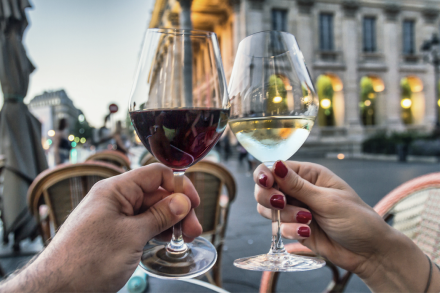
I suspect, though this may be romanticising, that if a French lorry driver with hitherto suppressed culinary tastes won France’s national lottery, and booked a table at the local much-rosetted restaurant, he would know what to expect. A great chain of culinary being would connect him to the heights of gourmandisme. In the UK, we lack a gastronomic tradition. As a result, when it comes to assessing food, inspissated snobbery often takes the place of inspired gluttony. There are superb chefs: Gordon Ramsay, Marco Pierre White, the Roux family. But there are also instances of pretentiousness: no names, no pack drill. These characters forget that the glory of a good cook is to make ingredients sing, however humble in origin.

The joy of commuting

From our UK edition

I was on a train from Sussex to London, my first since lockdown, when I realised I like my commute. The thought worried me a little. What kind of weirdo have I become? A commute is a psychological hurdle, something to be endured, not enjoyed. What’s next? The giddy thrill of waiting in a queue? A root-canal fan club? There are some aspects to commuting I don’t enjoy — the expense of a season ticket, of course, and frustrating delays — but overall, yes, I do like it. And during lockdown I actually missed it. What makes my enjoyment even weirder is that I have no interest in trains.

A great Dane: Snaps + Rye reviewed

From our UK edition

Snaps + Rye is a Nordic-themed restaurant and delicatessen on the Golborne Road, at the shabby and thrilling edges of Notting Hill, just north of the Westway, a road I uncomplicatedly love, probably because it takes me from Notting Hill to places I like better. Notting Hill fell to gentrification long ago — it gasps with boredom — but here London feels like a real city, though only just. ‘This home is not a shop,’ says a sign in a nearby window, with as much feeling as signage can muster. Or should muster. ‘Nothing is for sale.’ It is a bitter time for restaurants and those who love them.

The joy of eating birdseed

From our UK edition

Rather like unpacking after a holiday, when you take unworn clothes from the case still neatly folded because the occasion to wear them didn’t arise, unshown film sequences from my travel programmes are carefully edited and stored. The cancellation of this year’s long trip along the Spice Route made us look at these stories again; with not much prompting we have made three whole programmes from them. In the few years since we made these series the world has changed. The champion wrestler in Mongolia, the softly spoken Mr Battulga, for example, has become president of that country. He told me of his plan to build an eco-city on the plains, the streets radiating from the focal point of a colossal figure of the Buddha as a young man.

London in limbo: can the capital survive this crisis?

From our UK edition

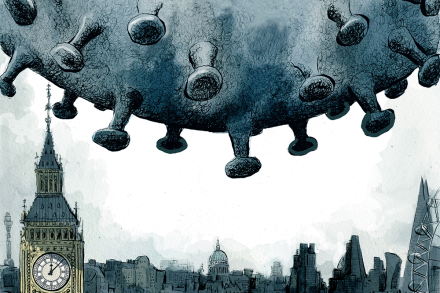
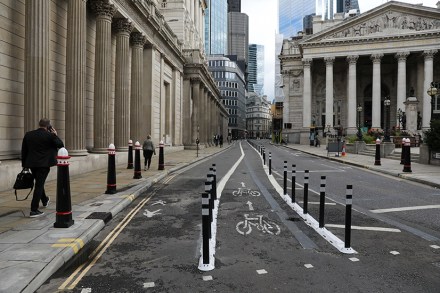
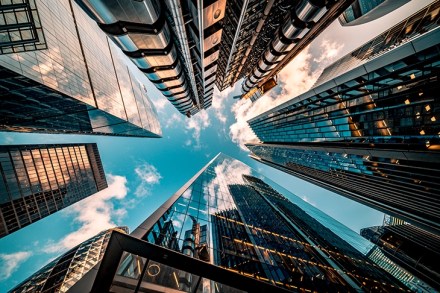
We should worry about what is happening to London. Our capital is, after all, the country’s economic powerhouse. It accounts for just under a quarter of Britain’s GDP. In fact, three of its now most deserted locations — the City, the West End and Canary Wharf — account collectively for an eighth of the nation’s output. There is a danger that short-term damage to London’s economy could become permanent unless the right steps are taken. This was supposed to be the week when things would start returning to some sort of normality, as the government encouraged more people to go back to the office. Yet uncertainty prevails.

Stringfellows with fish instead of women: Sexy Fish reviewed

From our UK edition

Sexy Fish is an Asian fusion barn in Berkeley Square, near the car dealerships and the nightingales, if they are still alive. It used to be a bank — NatWest! — and it still feels like it cares for nothing but money, even as it deals in sticky chicken, which means a good deal more than money to chickens. I wonder whether the blazing vulgarity of such restaurants — it has a large mirrored crocodile crawling up the wall, and that is the subtle part — will survive the terror of Covid-19, or whether it will go the way of the Russian Tea Room in New York City, which is empty apart from a glass dancing bear. We are initially refused entry due to my companion’s flip-flops.

The best commuter boltholes within 90 minutes of London

From our UK edition

With flexible working set to increase after the coronavirus, more Londoners will be in the market for a commuter bolthole. While the likes of Guildford have been drawing in commuters for decades, experts predict that we’ll see new hotspots emerge in coming years. ‘With the adoption of new working practices, people are realising how easy it is to work from home,’ says Philip Harvey, a senior partner with the consultancy Property Vision. ‘As a result the “golden hour” – the name given to the old commute – has been pushed to 90 minutes, or even two hours,’ he says, predicting that the Surrey, Sussex and Hampshire borders will be increasingly popular.

Statues and limitations

Statues do more than monumentalize individual achievement. They embody the self-image of those who raise, cherish and preserve them. It is this common self-conception that is being upended by the wave of iconoclasm that is sweeping through American cities. The race to raze structures that have stood untouched for decades or centuries disturbs because, instead of reassessing the past, it attacks it to reorder the present. Wherever you stand on this, the ‘debate’ is limited by Western visual traditions and stunted by patchy education. In Wisconsin, the abolitionist Hans Christian Heg was yanked down. In San Francisco, Ulysses S. Grant, a president who set the US Army on the Klan, was deposed. In Washington, DC, Gandhi, once praised by W.E.B.

statues

Literarily a love affair

I thought I could never feel fond of Charing Cross Road, London. In 1988, when I was 23, I spent a miserable three months there doing a typing course on the bleak first floor of a building next to the Garrick Theatre. Secretarial instruction was delivered over headphones to classrooms full of women and as I tried to follow the disembodied tutorials my fingers kept slipping and jamming between the keys of a hefty, black manual typewriter.Fortunately for me, just as the course was finishing, a job as subeditor at Harpers & Queen fell into my lap.

hanff

Our exile in NW1

From our UK edition

Laikipia The sweetest sound to me now is the dawn chorus of birdsong at home on the farm. I lay awake in bed and listened, as a light rain fell on the coconut thatch above me. When I walked out into the garden the three dogs burst out of the house to go off exploring. While I made coffee in the kitchen, our cats Omar and Bernini rubbed against my legs until I fed them and then in walked Long John Silver the orphaned calf, looking for a bowl of milk. I headed out to the crush where the herds were coming in to be dipped. Cattle were mooing, the sheep were bleating and the cowhands were whistling and shouting. With dew sparkling on the grass and the air alive with the hum of bees, I felt so grateful to be here. Home.

The haunting beauty of empty cities

COVID-19 has a horrid ability to turn fiction into fact. Deserted modern cities are usually the realm of post-apocalyptic sci-fi movies. Now, many of us live in them. The world's greatest streets are dramatically empty; suspended suddenly in a dream-like quiet. It's eerie and also very beautiful. We usually often don't notice how remarkable our cities are the commotion. We are distracted by the crowds, the commotion and the congestion. Now it is hard for urbanites to notice anything else. The Spectator has looked around the world, and asked various writers in various places to describe where they live in lockdown.

empty cities london

16 food delivery services to try in London

From our UK edition

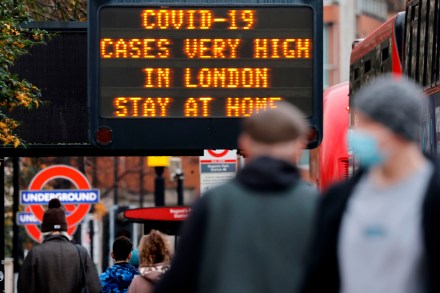
London feels very different from the city it was a few weeks ago. Restaurants are closed, the tubes are empty save for key workers, and Soho is a ghost town. We can’t eat out, or go to bars or pubs; many are struggling to get hold of even basic supplies, like eggs and flour. But a number of food businesses have shown extraordinary tenacity, ingenuity and spirit in the way they have dealt with the daily changes to our lockdown situation, manipulating their business models, and pivoting to delivery services. We’ve collated a list of independent food stores or producers who are delivering in London at the moment. Please visit individual suppliers for delivery time estimates, as most are slightly longer than normal due to the current Covid-19 situation.

Cosmopolis

Every history of London, and there have been many, has looked at the importance of migration to the city. Failing to mention that would be as inconceivable as not mentioning the River Thames. Both, after all — one literally, the other metaphorically — flow directly through the city’s heart. In this new and scholarly study, the difference is that London’s history of migration — its patchwork of settlement, its Irish ‘rookery’, its ‘colored quarter’, Huguenot silk-weavers, Jewish street-sellers, German bakers, Italian waiters, Chinatown, Banglatown — is put center-stage. The movement of all these people to London, the city’s extraordinary national, then continental, then international pull, is the story.

migrant

Cyclists have become an easy police target

From our UK edition

Most Britons assume at the outset that any misfortune involving a cyclist is the cyclist’s fault. After all, many a two-wheeled hellion has earned contempt. But put aside the understandable cynicism. This is not one of those stories. A week ago, I was cycling around Buckingham Palace while some low-key royal whatnot was pending but not under way. The vicinity was closed to traffic but not to bikes. As usual, I was heading for Hyde Park Corner via Constitution Hill, because the bike path on the right-hand side in Green Park is insensibly ‘shared use’ — meaning, teeming with pedestrians, and I see no point in our inconveniencing one another. As I passed, an officer shouted ‘Cyclist!’ and then barked something I couldn’t make out.

How to avoid catching coronavirus on the tube

From our UK edition

The epicentre of coronavirus – now more correctly called COVID-19 – remains in mainland China, and concerns about a global pandemic occurring have fortunately not been realised although in this fast-changing story this still remains a possibility in the coming weeks. The first death in Europe was recently reported in France, with nine documented cases in the UK. The advice from Public Health England if you have been in Wuhan or the Hubei Province in the last 14 days is that you should stay indoors and avoid contact with other people, like you would for flu, even if you do not have any symptoms. If you develop symptoms, call NHS 111 and inform them of your recent travel to the city.

Sumptuous, remote – and forgettable: Locket’s reviewed

From our UK edition

Locket’s is a new café from the owners of Wiltons in Jermyn Street. Wiltons is the restaurant that dukes visit when they have fallen out with White’s. It has a sign featuring a lobster that looks like Benjamin Disraeli wearing a top hat. When a bomb fell nearby in 1942, its anxious owner immediately sold it to the banker Olaf Hambro, who was sitting at the bar, by adding the price of the restaurant to his bill. It appeared, thinly disguised, in Jeffrey Archer’s First Among Equals as Walton’s, in which a fictional Tory minister plots the seduction of a woman called Amanda. I like Wiltons, even if the female staff are dressed as Edwardian housemaids, which is the second worst uniform in existence after hessian smocks.

A river of lost souls: the extraordinary secrets of the Thames

From our UK edition

If you spend enough time on the Thames, you will eventually come across human remains. It is a river of lost souls, filled with suicides, battles, burials, murders and accidents, with people so poor their families couldn’t afford to bury them, or so destitute they were never missed. Their bones wash up on the foreshore in the drifts of smooth, honey-brown animal bones, the remains of 2,000 years of dining and feasting. I know this because I am a mudlark and I’ve found my fair share of lost and forgotten Londoners. Mudlarking is best described as a hobby for the archaeologically curious. Twice a day, the tidal Thames falls low enough to search the riverbed for the city’s lost and discarded objects.

What exactly is a narwhal?

From our UK edition

A point that many people mentioned amid the horror and heroism of the attack at London Bridge was the enterprising use of a narwhal tusk taken from the wall of Fishmongers’ Hall to belabour the murderous knifeman. I am surprised to find that the first person known to use narwhal in English was good old Sir Thomas Browne, in the discussion of unicorns’ horns in his Pseudodoxia Epidemica or Vulgar Erroures, where he correctly declares that ‘those long Horns preserved as pretious rarities in many places, are but the teeth of Narhwales’. Narwhal tusks are spirally grooved, and Browne observed that the long horn preserved in his day at St Denis in Paris ‘hath wreathy spires, and chocleary turnings about it’. That was in the edition of 1650.

Who are we kidding – of course terror is a political issue

From our UK edition

It was pleasing to see that old clip of Gerry Adams endorsing Jeremy Corbyn re-emerge, just before the acts of carnage were carried out at London Bridge. It reminded us all, should we have needed to be reminded, of Jeremy’s genial relationship with terrorists who murder British citizens (or indeed Israeli citizens). The question, I suppose, is: will it sway any opinions? You would doubt it, such is the kind of deranged certitude in which the his supporters bask, where everything bad about Mr Corbyn has actually been made up by Boris Johnson, or people like me. Even as the first reports of the atrocity were coming in, Corbyn’s Momentum acolytes were all over social media suggesting that it was an establishment plot to scupper Labour’s chances at the election.

Trump is saving Nato

It’s almost Nato as usual when Emmanuel Macron calls Nato ‘brain dead’. It’s Nato as usual, and Donald Trump as usual, when Trump, who not long ago called Nato ‘obsolete’, chastises his bromantic partner Macron for being ‘insulting’ and ‘disrespectful’. It is unusual for Nato when Trump calls off a press conference and calls blackface artist Justin Trudeau ‘two-faced’.

nato