Lisette oropesa

Lisette Oropesa triumphs in I puritani

Vincenzo Bellini realised early on that as titles go, Le teste rotonde ed i cavalieri (The Roundheads and the Cavaliers) doesn’t exactly trip off the tongue. He settled for I puritani instead, though he’d have been equally happy (or so he told friends) to name the whole opera after its lovestruck heroine Elvira. He admitted that the plot catches fire only after she loses her mind: the soprano who plays her has to be able to act, and she really has to be able to sing. ‘In opera, it is the singing that moves one to tears, that causes horror, that inspires death,’ as Bellini put it, and he practised what he preached.
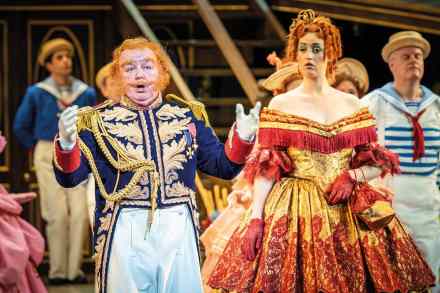
This is how G&S should be staged: ENO’s HMS Pinafore reviewed

Until 1881, HMS Pinafore was the second-longest-running show in West End history. Within a year of its première it had broken America too; at one point there were eight competing productions on Broadway alone. The single most wrongheaded notion that still clings to Gilbert and Sullivan’s operas is that they’re somehow low-rent or parochial. They were blockbuster international hits, superbly written, lavishly staged and exported far beyond the Anglosphere. Pinafore was performed in Denmark as Frigate Jutland and in Vienna, Johann Strauss was driven off stage by the runaway success of The Mikado. In the words of the operetta historian Richard Traubner, Gilbert and Sullivan’s collaborations were ‘simply the best musical productions of the Victorian age’.