Liberalism

Welcome to the age of entropy

Americans and other westerners have long been accustomed to thinking that history has a clear direction. Sometimes the direction is contested, as it was during the Cold War. The future could have been capitalist or communist, or perhaps a blend of both systems — ‘convergence’ was a trendy notion for a time — but one way or another the alternatives were clear. After the Cold War, there were no alternatives. Capitalism, democracy and liberalism were here to stay, and soon they would be everywhere else too. All the Islamic world needed if it was to join us at the end of history was a nudge: regime change would speedily bring about social and economic change.

liberalism

The Pope’s merciless war against the Old Rite

From our UK edition

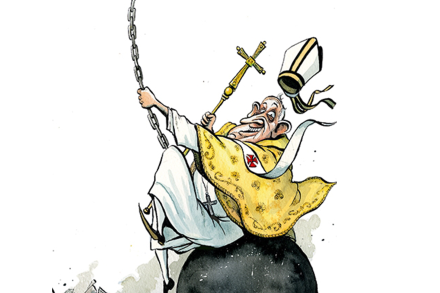
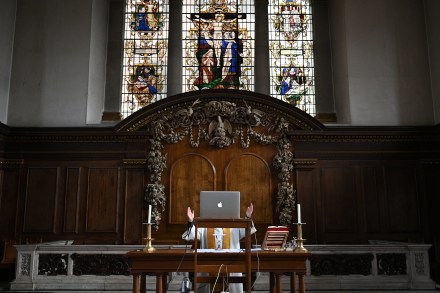
I am going to have to boil this down as crudely as I can, because it's a complex subject with a simple message, but the Pope is attempting to make it as hard as possible to say, and thus attend, the Old Rite Mass. This is the form of Mass most Catholics went to before the 1970s. It was replaced with a New Rite and the Old was driven more-or-less underground. In 2007 Pope Benedict XVI decided that priests who wanted to say the Old should be allowed to. Francis has rescinded that: now you must get the bishop's permission and things will be weighed heavily in favour of the bishop saying no. Why does this matter for Catholics and non-Catholics alike?

Starmer will regret his submission to liberal intolerance

From our UK edition

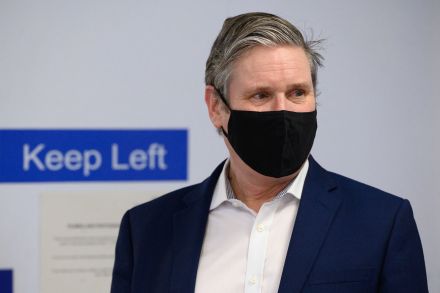
Keir Starmer obviously regrets visiting Jesus House last week because of the furore it has caused in his own party. But he will likely come to regret his reaction even more. The Labour leader posted a full apology for the Pentecostal church visit, saying: ‘I completely disagree with Jesus House’s beliefs on LGBT+ rights, which I was not aware of before my visit. I apologise for the hurt my visit caused and have taken down the video. It was a mistake and I accept that.’ The whole thing is, as Brendan O’Neill points out, rather awkward, given Starmer chose to visit this church during a key Christian festival and given non-mainstream views on homosexuality are a feature not just of many churches but many other religious groups.

The left’s illiberal turn

From our UK edition

In the House of Lords this week, Baroness Jenny Jones of the Green party said she thought that a way to combat violence against women was to institute a six o’clock curfew on all men. She added, strangely, that ‘discrimination of all kinds would be lessened’ by such a move. Mark Drakeford took that sentiment a step further when he said he’d ‘consider all measures’ when asked if would implement a curfew on men — a sentiment he has now, thankfully, rowed back on. Now, you’d be forgiven for thinking Jones was suggesting something patently ridiculous in order to demonstrate that it always seems to be women who have to do the sacrificing when it comes to ensuring their personal safety.

How to be ‘liberal’, according to the ancients

From our UK edition

Certain parts of academia seem to wish to turn the study of classics away from a historical, language- and evidence-based discipline whose focus is understanding the ancient world on its own terms, in favour of preaching to students about the evils of ancient imperialism, slavery, racism, sexism, privilege, all keenly advocated by anyone who has ever taught it. There should be added to that list of shame the ancients’ hopelessly misguided views about what it meant to be ‘liberal’. Latin lîber meant ‘free’, and lîberalis meant ‘relating to the free, worthy of the free’; also ‘gentlemanly, ladylike’, by extension ‘magnanimous, obliging’ and so ‘munificent, generous’.

Liberals should stop patronising believers

From our UK edition

An editorial in the Guardian on Friday suggests that this year may be a good one for liberal Christians, and gives them a little pat on the back.  Liberalism thinks itself the wiser, cooler sibling of religion The suggestion is based on four things: the churches have shown their social relevance during the pandemic; the incoming American president is a liberal Catholic; in his latest book Pope Francis has called for a ‘new humanism’; the leader of the Orthodox Church, Bartholomew I, has spoken in favour of social justice.

The rise and fall of Netflix

From our UK edition

In 2010, Jeff Bewkes, then CEO of Time Warner, was asked if he thought Netflix had any chance of taking over Hollywood. His sarcastic answer deserves to go down as one of the all-time dumb predictions. Bewkes (like the dude who wrote the internal Western Union memo that said telephones were a waste of time) was not taking Netflix seriously: ‘Is the Albanian army going to take over the world?’ A decade later, Netflix is not Albania. It’s imperial Spain during el Siglo de Oro. Massive, relentlessly mercantile and ruthlessly acquisitive, Netflix has rippled over the world to become one of the largest media businesses ever known. Count the hundreds of millions of subscribers, or the billion-dollar content deals.

The fight for liberalism

The world has many island nations, and sometimes the United States counts itself among them. We have water on either side of us, and though we share our big island with Canada and Mexico, neither poses any threat. America is immune to invasion, a castle surrounded by the safest of moats. This wasn’t always so, and it isn’t really true today, unless we forget about Hawaii and our Pacific and Caribbean territories, most of which would be easy prey for other states if they weren’t under our sovereignty. In the earliest days of the republic, we shared the North American continent with outposts of Europe’s leading powers: France, Russia, Spain and Britain.

liberalism

Soft-left squatters have taken over the Lib Dems

From our UK edition

I was never afraid of Jeremy Corbyn, never afraid of Momentum. I’ve never really feared Britain’s hard left at all. They’re wrong, of course, and they can do some serious localised damage; but their ideology is so obviously daft and has so comprehensively failed wherever in the 20th century it was tried that they occupy in my mind a position similar to that of Satanists. Grisly, yes, but a threat to civilised society? Hardly. The hard left always gets found out in the end, and always will. Their doctrines have no natural appeal to the middle-of-the-road British (which is most of us) and in the unlikely event they were ever elected to government, they’d soon enough crash the car.

Suzanne Moore’s departure is a sad day for the Guardian

From our UK edition

Who runs a newspaper – and especially a great liberal newspaper – in a digital age when liberalism often seems to be in retreat, menaced by its enemies internal and external? In the not-too-recent past, the question would be easily answered: the editor, supported by his (for in the past it was usually ‘his’) senior journalists ran the paper. Things are more complicated now. At least they appear more complicated at the Guardian and at the New York Times. At both papers, each the proud inheritors of certain liberal traditions, one may no longer say with confidence that editorial control of the paper resides with the editorial staff. This evening, the columnist Suzanne Moore announced she is leaving the Guardian.

Are liberal conservatives now history?

From our UK edition

It was a luminous late August sunset, and we were in France, dining outdoors with some friends who have a magical, charming place in the countryside there. We were discussing audiobooks of the kind you could listen to on a long car journey and I mentioned how Julian, my partner, and I had enjoyed my Times colleague David Aaronovitch’s memoir of childhood and youth, Party Animals: My Family and Other Communists. If you haven’t read it, do. David’s family were hardline members of the British Communist party. He was brought up to believe that ‘God Save the Queen’ was an anthem of imperialist oppression, and the revolution, hopefully peaceful, was perhaps just around the corner.

Where can patriotic Americans find America?

If we’ve confirmed anything in 2020, it is that liberal-progressives really do control the major influencers in America. This puts them at odds with a large number of Americans.The entertainment industry has long belonged to the Michael Moores and Barbra Streisands of the world. A few conservatives like Tom Selleck and Kelsey Grammar managed to scratch out careers by largely remaining silent about their political beliefs, but Hollywood inundates Americans with messages largely antithetical to faith, family and free markets.Donald Trump’s arrival made clear, too, that most major media organizations in America are far more hostile to conservatives than even the most ardent Fox News fan believed.

america

The Great Self Hate

A group of children recently gathered one morning near the Soldiers’ and Sailors’ Monument in Riverside Park. The adults in charge handed out brightly colored pieces of chalk and soon the sidewalk and plaza were cheerfully adorned with mottos such as Black Lives Matter, Black Trans Lives Matter, Tell Me Why the Police Need Tanks, Let Justice Roll Down, and — my favorite — Burn It Down.  Burn down the Soldiers’ and Sailors’ Monument? No need. New York City has had it roped off for years as it crumbles away.   The 96-foot monument was in its time a tribute to the New York soldiers and sailors who fought for the Union during the Civil War. The cornerstone was laid in 1899 by Gov.

great self hate

In defence of liberalism: resisting a new era of intolerance

From our UK edition

It has become fashionable in recent years to talk of the death of liberalism. But as crowds high on the octane of generational self-righteousness rampage through major cities, the evidence mounts. The growing intolerance of freedom of thought, the inability to talk across divides, the way that most of the British establishment, police included, feels the need to pledge fealty to the cause — as though all terrified of ending up on the wrong side — points to a crisis of more than confidence. It is evidence of an underlying morbidity. Each day the cultural revolution is picking up a pace, with the iconoclasts who attacked the Cenotaph and the statue of Winston Churchill looking for new focuses for their rage.

Our post-liberal moment

Can we still say that we live in a liberal age? We live, now, in the age of an epidemic. Calling for a political order that can effectively respond to such a disease is starting to sound a lot like calling for a post-liberal order. In the pages of the Atlantic, Adrian Vermeule has made something of the same point: the order that we have been living under is clearly unequipped to deal with crises of the nature of this epidemic. The common libertarian conservative position that any government action on this is a violation of the rights of the individual, shows the fundamental insanity of libertarianism. My father used to quote Voltaire to me: 'My right to punch you in the nose ends where your nose begins.

liberalism post-liberal

The next American revolution will be televised

Is America becoming a developing country? We’re seeing increasing evidence of reverse convergence. We used to think that the developing world would in time become like America, but it now seems that the United States has developed an emulation complex of its own. What has not been explained are the reasons. In some fundamental areas America does resemble a traditional society, with its belief in transcendence and its quaint ways of enforcing justice and delivering public goods. The US executes prisoners on a scale matched only by China, Iran and Saudi Arabia. Guns are more readily available than in Pakistan and more than half of Americans pray every single day. No other state spends so much money on health care, yet Americans’ life expectancy keeps falling.

trump television

After liberalism

We’re entering the post-liberal moment. From Trump to Brexit, Ireland to Brazil, we’ve seen a number of revolts at the ballot box that point to a mass vote of no-confidence in the economic and cultural status quo — in other words, in 21st-century liberalism. The liberals aren’t taking it lying down. They’re doing their best to define post-liberalism in language they are most comfortable with, calling it ‘fascist’ or ‘communist’ — and sometimes the criticism is spot-on. But other times it is wholly inaccurate. One of the glaring paradoxes of the post-liberal moment is that many of the people involved in it want to rescue liberalism from itself.

liberalism post-liberal

Will coronavirus revive liberalism – or deliver it a fatal blow?

From our UK edition

Politicians, said the historian A.J.P. Taylor, do not create the current of events. They can only float along with them and try to steer. But he was talking about the long contours of European history, not the sudden and shocking arrival of a global pandemic. How to float along and steer through something that looks like an overwhelming tsunami is, largely, unknown. The outbreak of coronavirus has already put much of the world in lockdown. It has pushed the global economy into freefall, killed more than 13,000 people and could yet kill hundreds of thousands more, perhaps millions. It will also have big political effects. Leaders, governments, even ideologies will be judged according to how well they meet the crisis and the fallout.

The weak response to coronavirus is a symptom of the decay of the liberal state

If COVID-19 spreads in the United States as it has spread elsewhere, then quite soon the virus will be established within the general population. The federal response will have changed from containing isolated ‘hot spots’ to managing a national epidemic. ‘Social distancing’ and self-quarantining will be endemic, hospitals will be overloaded and the economy will have continued to contract. This could test not just the American people — their social bonds, their sense of collective fate — but also America’s government and institutions. That testing will be far more demanding than the ‘stress tests’ faced by the banks after the financial crisis of 2007-08. America’s resolve will be challenged again. This should not be a time for petty politicking.

coronavirus state liberalism

The end times of the liberal order?

A liberal order is not natural. Robert Kagan admits as much in his new book, The Jungle Grows Back, when he writes that the ‘the creation of the liberal order has been an act of defiance against both history and human nature’. Nor is a liberal order an ‘order’, or liberal in nature. It is a sort of hegemonic or imperial peace. Nothing wrong with that, of course; peace, any peace, is important. Unfortunately, it is the liberal part, which causes the problem. An internationalist, utopian worldview, liberalism is full of crusaderly zeal, constantly ‘going abroad in search of monsters to destroy’. Liberal internationalists badly want to shape the world. When given the chance, they do manage to shape the world, very badly indeed.

robert kagan liberal order