PMQs live blog | 16 May 2012
<a href= "http://www.coveritlive.com/mobile.php/option=com_mobile/task=viewaltcast/altcast_code=b4764a0fc6" _fcksavedurl= "http://www.coveritlive.com/mobile.
<a href= "http://www.coveritlive.com/mobile.php/option=com_mobile/task=viewaltcast/altcast_code=b4764a0fc6" _fcksavedurl= "http://www.coveritlive.com/mobile.
Just as David Cameron is trying to move on from a tough few weeks by returning to themes that worked for him earlier in his leadership, Nick Clegg is also focusing on familiar territory. He’s given a speech this morning on the pupil premium — which he made a key component of his Lib Dem leadership bid back in 2007. And today’s speech marks the start of a two-week push on a key Clegg concern: social mobility. It’s not as if Clegg’s been silent on the topic recently, but this is the first time it’s been at the top of his agenda since he launched the government’s social mobility strategy last year. In a way, Clegg’s speech was set up nicely by Michael Gove’s forceful words on Thursday.
Not since Michael Heseltine has there been a politician who is so adept at finding the g-spot of the Tory faithful as Boris Johnson. His column today in the Telegraph is a classic example of this. There’s some witty and perceptive BBC bashing, mockery of the Lib Dems and their priorities, and a demand that the Tories get what they need out of the coalition. His line ‘If we are really going ahead with Lords reform (why?)’ sums up Tory feelings on the subject far better than more earnest tracts have done. ConservativeHome is certainly impressed, saying that the Mayor of London is ‘real and raw in an age when few politicians are.’ Boris is also being used by others as a stick with which to beat David Cameron.
Generally speaking, Philip Hammond is one of the Cabinet’s quieter members; a sort of human calculator designed to run a department efficiently and with the minimum of fuss. Which is why his interview with the Sunday Times this morning (£) is so eye-catching. There’s very little that’s understated about it at all. ConservativeHome’s Matthew Barrett has already put together a useful summary of the main points, so suffice to say that Hammond is dismissive about both Lords reform… ‘He believes the upper chamber “works rather well” as it is and that voters are “probably largely indifferent” on the subject.
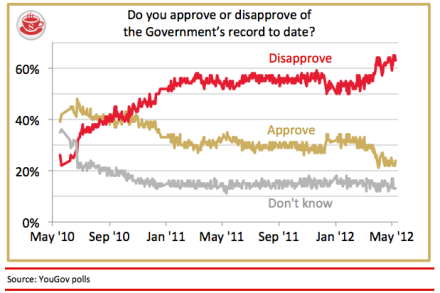
As the coalition celebrates its second birthday, it seems as good a time as any to take a look at how it’s doing in the eyes of the public. First, here’s how the government’s approval rating — as measured by YouGov — has changed since its formation: As you can see, the coalition took office with reasonably good ratings, but the first ten months or so — which included the Comprehensive Spending Review and the tuition fees vote — saw public opinion turn against it. For the rest of 2011, the ratings stayed fairly flat, with the government neither regaining ground with the public nor losing any more — and there was even a slight bump in popularity in early December, following David Cameron’s EU ‘veto’.
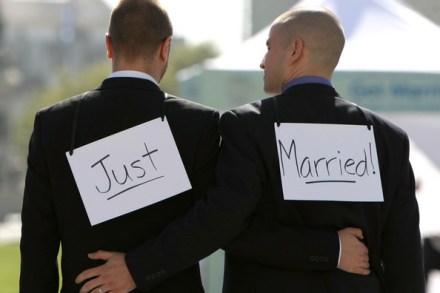
For some time now, a growing number of Tory MPs have been quietly informing the whips that they will not be voting to support gay marriage. They’ve been getting letters from their constituents, and even those in favour of the idea know that they can’t afford to support it. When a cabinet member spoke to the whips office recently, he was given a startling reply: don’t worry, it will never come to a vote. The consultation is ongoing, but the agenda is being dropped. The effect it’s having on the morale of the Tory grassroots is calamitous. I look at this fiasco in my Daily Telegraph column today, and here are the main points. 1. The kulturkampf over gay marriage defines American politics, not Britain’s.
The Queen’s Speech debate is a unique mix of parliamentary variety show and proper politics. The debate was opened by Nadhim Zahawi — who combined humour with some serious points to good effect — and Malcolm Bruce, who gave a rather worthy speech. Ed Miliband then kicked off the more political part of proceedings. Miliband, who no longer has a kick-me sign attached to him when he gets up to the despatch box, is clearly still exulting in the local election results. He scored the best hit of the debate when he complimented Zahawi on his speech. Noting that the Tory MP was the co-founder of YouGov, Miliband joked ‘I’ve spent the last 18 months thinking he has a lot to answer for.
A government relaunch of the sort we've endured this week is inevitably a fraught, fragile affair. The problem with such enterprises is that they have this unfortunate habit of drawing attention to the fact that it is, well, a relaunch. Downing Street may hope differently but a relaunch inevitably draws attention to the very failures the relaunch is supposed to put behind us. You wouldn't be doing this if things were going well, would you Prime Minister? Of course things are not going well. Nor will they get any better any time soon. Yesterday's Essex reprise of the chummy Downing Street coalition presser was a mistake. A necessary or at least understandable one perhaps but a mistake nevertheless. That's a river, as an old Greek said, in which you cannot bathe twice.
The Queen’s Speech commitment that ‘A Bill will be brought forward to reform the composition of the House of Lords’ is a lot vaguer than theLiberal Democrats were hoping for, or expected just a month or two ago. Crucially, there is no mention of the second chamber being elected. If this was not enough, the bill’s place in the speech — it was the 16th piece of legislation mentioned — sent out the signal that it is not a government priority. It appears that the Tory sceptics of Lords reform have won the opening battle. This impression is bolstered by the fact that leading Tory opponents of Lords reform are content with the words in the Queen’s Speech.
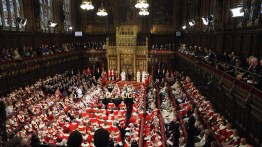
The newspapers are awash with articles previewing today’s Queen’s Speech, but few stand out as much as James Chapman’s interview with David Cameron in the Daily Mail. Here, Cameron does something that he rarely does: complain about life with the Lib Dems. There was that one time when he claimed the Tories would be ‘making further steps’ on welfare and immigration were they in a majority government, of course — but this goes further than that. He tells the paper, ‘There is a growing list of things that I want to do but can’t.’ As for the specific items on that list, Cameron mentions ECHR reform, employment regulation and the recognition of marriage in the tax system.

Have our politicos looked at last week’s turnout numbers, and thought ‘y’know, we might be a bit cut-off after all’? Reason I ask is because they’re all tripping over themselves today to downplay the significance of Lords reform, and focus the conversation on The Issues That Actually Matter. This, as James said earlier, is what George Osborne has been up to throughout the day. Ed Balls did likewise during an appearance on the Sunday Politics with Andrew Neil. And, most significantly, even Vince Cable echoed their sentiments in his interview on Sky’s Murnaghan Show.

Much of the post-Boris analysis in today’s press features on whether a rightwards shift is appropriate. The Daily Mail calls for a return to Tory values, while Matthew Parris in The Times says such calls are predictable and meaningless. But, to me, talk about moving to the right or the left is pretty pointless. As the Telegraph says in its leader today, what’s needed isn’t a lurch to the right, but a lurch towards the public. This comes back to the great, eternally-relevant distinction that Keith Joseph made between the ‘middle ground’ between political parties, and the ‘common ground’ between a party and the public.

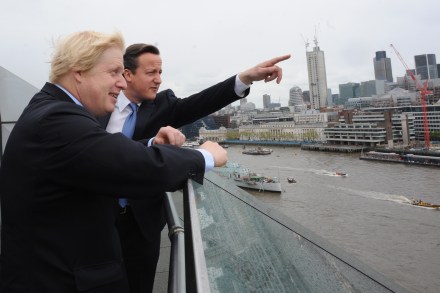
As the dust settles on these elections, it is becoming clearer how the parties did. Labour exceeded expectations, the Tories had a bad but not disastrous set of results and the Liberal Democrats took another kicking. Indeed, they actually lost a higher proportion of the seats that they were defending this year than they did last year: 44 per cent compared to 41 per cent in 2011. Given these results is it is quite remarkable how solidly behind Nick Clegg the Lib Dem parliamentary party remains. Not a single MP has called for him to go or for the party to quit coalition. I’m sure this is partly because the Lib Dems are doing better in the parliamentary seats that they hold than they are nationally. But their calm under fire is still noteworthy.
This was the election which was supposed to establish the SNP as Scotland’s new national party, replacing Labour as the default party of choice for Scottish voters. This was also the election which was expected show that last year’s extraordinary Scottish Parliament result was not a one-off and that the SNP could push on and defeat Labour in its town hall heartlands too. But none of this has happened. Not all the results are in from Scotland’s councils yet but the overall picture is already clear. Labour has recovered from last year’s Scottish Parliament shocker and halted the SNP momentum — at least in its core key urban areas of west and central Scotland.
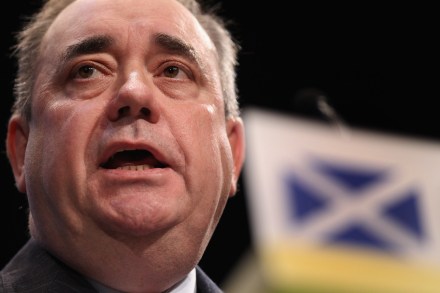
We've heard about those disgruntled Tories, but what about the Lib Dems? After all, the local elections always used to be their psychic salve: they may have struggled to make much progress in general elections, but their fierce local activism could always be counted on to yield council seats. But now that’s less reliable a tonic. After today the party is going to have fewer than 3,000 councillors for the first time since the it was formed in 1988, losing overall control of Cambridge in the process There's even talk that Brian Paddick will slump to fourth place, or possibly fifth, in the London Mayoral race. Of course, all this is unsurprising: the Lib Dems have been struggling against a tide of national hatred and indifference for almost two years now.
The results so far have been good but not spectacular for Labour. The BBC’s national vote share projection has them on 39 percent, the Tories on 31, and the Lib Dems on 16. These numbers would deliver a comfortable Labour majority on both the old and new boundaries. Strikingly, UKIP is averaging 14 percent in the wards it is standing in. This is an impressive result given that UKIP traditionally doesn’t do that well in local elections where Europe is less of an issue.
Tonight, there seems to be a general acceptance that Boris has won London. The talk is of a four points plus victory. But it is worth, of course, remembering that no votes have been counted and there’s been no exit poll. But, sadly, it appears that there will be few other mayoralties created this evening. The opposition of the local political establishment appears to have triumphed in nearly all the cities holding referendums on whether or not to have a mayor. Their loss is Liverpool’s gain which will benefit considerably if it is the largest city outside London with a mayor.
Forget London. Odds are that Boris will win re-election while Labour becomes the largest party on the GLA. There are far more exciting battles going on around the country. Here’s the state of play in 15 cities outside the M25: 1. Birmingham. After strong gains in 2011, Labour are looking to depose the Conservative-Lib Dem coalition and regain the overall majority they held here until 2003. They need just five gains to do so — and, with 18 Tory seats and 13 Lib Dem ones up, that shouldn’t prove too difficult. Both of the coalition parties are simply in damage limitation mode. 2. Glasgow. Labour held a majority here for three decades, but lost it just a few weeks ago through resignations.
Yep, they’re inescapable, those Lib Dems. Even when the airwaves are dominated by Rupert Murdoch and Tom Watson, they’re there in the background, quietly adding to the day’s pile of political news. We’ve got Ken Livingstone making a pitch for their votes in the London Mayor’s contest, for instance. And we’ve also got Nick Clegg on what seems like every radio show on air, giving his account of why folk should be Lib Dem voters in the first place. There have been two more significant scraps of LibDemmery than those, though.
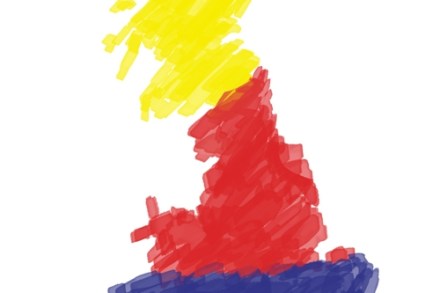
With unionists getting grubbed in Scotland and Labour being driven to near-extinction in vast swathes of the south, a new map of political Britain is emerging. In my latest Telegraph column, I called it ‘Tricolour Britain’ — the SNP at the top, Tories at the bottom and Labour stuck in the middle (with Wales). Policy Exchange has today released research which throws more light on this slow-mo political segregation. I thought CoffeeHousers may be interested in what strike me as the top points. 1. Scottish Tory Syndrome is when a once-dominant party loses and doesn’t recover. The party has failed to capture the imagination of voters, so when its apparatus is knocked down there’s no political force to bring it back.