Leonardo da vinci

The Olympic Games have been really bizarre

I am typically a huge Olympics fan because I am very big into national pride and love to shamelessly root for the USA. Gymnastics, swimming, volleyball, soccer, or even canoeing, judo and fencing — don’t care, will watch. Unfortunately, this year’s Summer Olympic Games in Paris, France were immediately marred by the obvious mockery of the Christian faith during the opening ceremony. There was a drag show version of Leonardo Da Vinci’s depiction of Jesus Christ’s Last Supper with his apostles prior to his crucifixion (plus, separately, a faceless rider on a pale horse and a queer ménage à trois).

Know better

We live at a time of universal polymathy. We don’t know everything, but there’s not much difficulty in being able to discover any given truth. But it’s also worth remembering just how hard it used to be to find things out. Thirty years ago if you wanted to research it meant a trip to the public library — and perhaps filling out a form for an inter-library loan. Or you could try your luck in a bookshop, new or secondhand. The whole process took a long time, and most people stayed within their professional competence or enthusiasm, frankly admitting to ignorance outside those limits. It was the age of the specialist, memorably captured by Michael Frayn in Donkeys’ Years and the character of Kenneth Snell.

polymath

Leonardo da Virtual

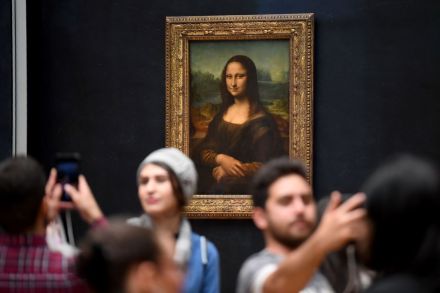
This article is in The Spectator’s December 2019 US edition. Subscribe here. The first time ever I saw her face, she was smiling. I knew her face before I saw it, but I cannot remember when I first knew it, because I had always seen it. But when I first saw her in the flesh, I couldn’t really see her at all. She was behind thick glass and a waist-high wall, and a crowd of people 20-deep were pushing toward her, shouting and pointing and taking photographs. She was still smiling, but as I forced my way out of the crowd, I felt as though the smile no longer expressed the mysterious inner mood of a high-born Florentine sitting in a loggia, but the bemused contempt of a woman sitting in the stocks for the entertainment of the mob.

mona lisa leonardo

Leonardo in Paris

ParisThe Louvre’s Leonardo da Vinci is the latest Renaissance master in a procession of epic anniversary retrospectives — after 2017’s hugely popular Michelangelo: Divine Draftsman and Designer at the Metropolitan Museum of Art in New York City, before next year’s inevitably popular marking of the cinquecentenary of the death of Raphael at the National Gallery in London. This year, with Leonardo’s posterity passing the same necroversary, the Louvre is augmenting its five Leonardo oils –– more than any other museum, thanks to the light fingers of legendary art critic Napoleon Bonaparte –– with a further six loans.

leonardo

Secrets of the maestro

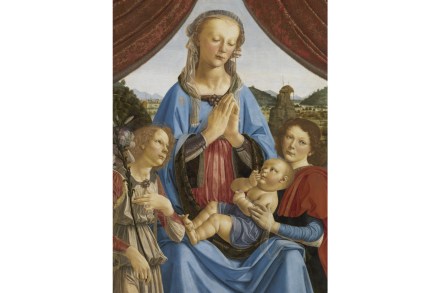
This article is in The Spectator’s October 2019 US edition. Subscribe here. At last, some justice for the ‘teacher of Leonardo da Vinci’. Verrocchio: Sculptor and Painter of Renaissance Florence, now at the National Gallery of Art in Washington, DC, reveals that this master was more than a mere footnote to his famous apprentice. Born around 1435 into the artistic boomtown that was Florence under the Medici, Andrea del Verrocchio may, in fact, have been the original Renaissance man. The greatest artists of the Florentine Renaissance took root in his studio and grew out of his mentorship: not just Leonardo, who stayed with him for over a decade, but also Pietro Perugino, Lorenzo di Credi and, most probably, Domenico Ghirlandaio and Sandro Botticelli too.