Lebanon

Israel’s strikes on Lebanon bring Jerusalem one step closer to regional dominance

From our UK edition

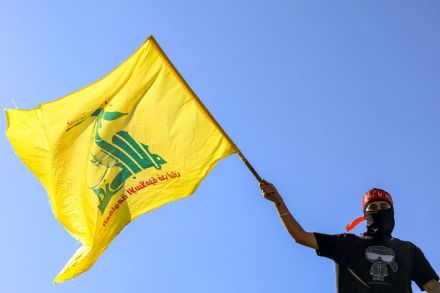
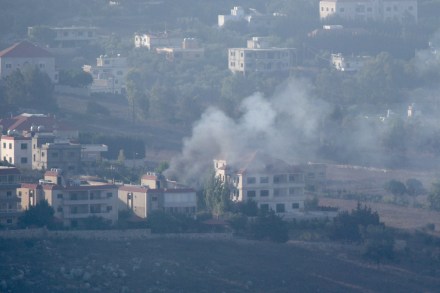
As the dust literally settles across southern Lebanon in the aftermath of the Israeli airstrikes, we are starting to see an answer to the question of whether this will be the escalation that leads to all-out war. Hezbollah has declared an end to the first phase of revenge for Israel’s assassination of its most senior military commander Fuad Shukr, who masterminded the killing of 241 marines and 58 French soldiers in 1983, in Beirut last month. Its planned attack on the headquarters of Mossad and Unit 8200, Israel’s fabled military intelligence directorate, has been averted. Casualties appear to have been very limited. Jerusalem’s spy chiefs have flown to Cairo to continue the hostage negotiations, which have not been derailed.
Can anything stop a full-scale conflict in the Middle East?

From our UK edition

The fact that the Middle East stands on the brink of a catastrophic war can be explained by a scene from The Gentlemen, Guy Ritchie’s preposterous but entertaining series on Netflix about aristocrats and sarf London drug-dealers. The dim eldest son of a duke is in trouble with a vicious gangster, who makes him dress up as a chicken and cluck and dance while the whole excruciating spectacle is filmed. Eventually the humiliation is too much for the aristo: he gets the family Purdey and blasts the gangster in the face – even though he knows that there will be terrible consequences.

Israel says it’s ready for another war

From our UK edition

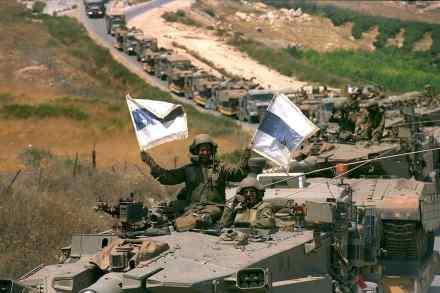
According to my phone, I’m in Beirut-Rafic Hariri International Airport. Except I’m not. The Israel Defence Forces have scrambled the GPS of everyone within about an hour’s drive of the Israel-Lebanon border. The same navigation system that tells my iPhone its location is the same navigation system that Hezbollah could use to identify targets in northern Israel. They’ve been firing across the border since 7 October, and the Israelis are fed up. They’ve evacuated 80 kibbutzim, nine villages, three community centres and two Arab villages. The phrase that ministers use to describe the displaced is ‘refugees in their own country’. The offensive in Gaza is winding down, and after that – says an official – ‘we are ready to deal with Lebanon’.

The fight among the olive trees

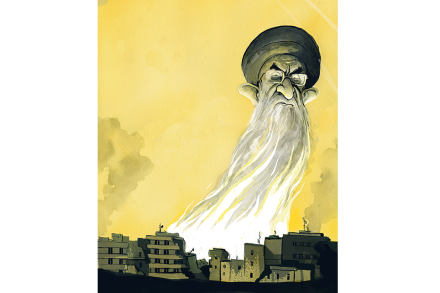
Rmeich, Lebanon On October 8, 2023, the day after the Hamas massacre further south, Hezbollah started firing rockets into northern Israel, reviving the world’s most dangerous game of chicken. What exactly has been accomplished? Hezbollah’s Shia supporters may be comfortable with their leader Hassan Nasrallah and his Iranian sponsor, head of state Ali Khameini, risking open war. But no one consulted the local Christians, who would never agree to spill Lebanese blood as a supportive gesture to Hamas. “The south [of the country] belongs to Lebanon, and Hezbollah cannot go to war on behalf of the Lebanese,” says Marc Saad, a spokesman for the Lebanese Forces, a Christian political party and Hezbollah opponent.

Hezbollah

The Lebanese always return home

From our UK edition

Beirut You might have thought that the threat of the Gaza war spiralling into an all-out regional conflagration, along with breathless travel advice from western governments urging their nationals to leave the country, would have deterred Lebanon’s expats from flying home to celebrate Eid al-Fitr this year. Not one bit. Flights, hotels and restaurants were fully booked despite Iran’s drone strike. The Lebanese know that even if there is fighting (and in South Lebanon, there is on an almost daily basis), if it isn’t on your doorstep, there’s no reason to stop the party. The Lebanese know that even if there is fighting, if it isn’t on your doorstep, there’s no reason to stop the party In any case, the Lebanese always think they have the inside track.

Why Blue Line peace is proving elusive

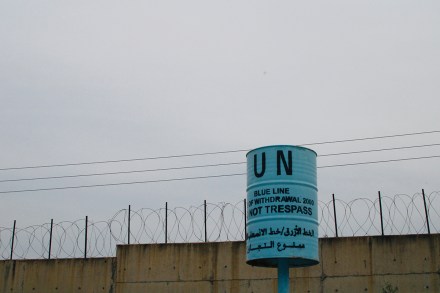
Naquora, Lebanon Tensions along the forty-nine-mile Blue Line that partitions Israel from Lebanon are as high as they’ve been in recent history. Given the stated objectives of Hezbollah, the powerful Shiite militia that controls Lebanon’s South and the IDF, which seeks to repel them beyond striking distance, that's saying a lot. Ten thousand sky-blue helmets stand between the warring sides, protecting a division of international troops from the raining debris of intercepted rockets. Nobody is targeting them, but collateral damage is inevitable in a region that sees fatal exchanges on a daily basis. The United Nations Interim Force in Lebanon was established in 1978 following the Israeli invasion of Lebanon.

unifil un blue line lebanon

A war reporter bravely faces death – but not from sniper fire

From our UK edition

When you are a foreign correspondent and have covered wars in dozens of countries, the last place you’d expect a threat to your life to come from is your own cells. Yet this was the predicament in which the New York Times reporter Rod Nordland found himself in July 2019. Despite close shaves in Lebanon, Iraq, Afghanistan, Central America and Darfur, he only really became aware of his mortality after collapsing with a seizure in India and discovering the existence of a ‘space occupying lesion’ (SOL) in his brain – a euphemism for a growth, benign or malignant. On transfer to a hospital in Manhattan, Nordland learned that his was a stage 4 glioblastoma multiforme, a primary brain cancer with a poor prognosis.

The agony and frustration of reporting from the Middle East

From our UK edition

For 25 years, Abed Takkoush assisted foreign reporters like Jeremy Bowen when they arrived to cover the chaos and conflicts in Lebanon. He drove them around in his battered Mercedes, pointing out with grim relish the places where dark deeds had taken place: the assassinations, atrocities, kidnappings and slaughter of civilians that scar this mesmerising nation. During one Israeli onslaught in 1996, Abed sped past a gunship firing at cars on the highway between Sidon and Tyre, laughing with relief when shells exploded on the road rather than the car. ‘We laughed with him,’ writes the veteran BBC reporter. ‘It was a calculated risk. The alternative was turning back to Beirut without a story.’ Four years later their luck ran out on the last day of Israeli occupation.

Don’t expect much from Biden’s Middle East trip

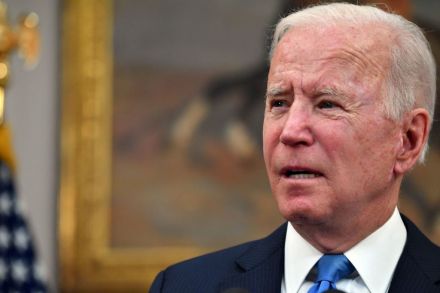
It took Barack Obama less than three months to fly to the Middle East for a visit, landing in Iraq to visit the tens of thousands of US troops stationed there at the time. Donald Trump’s first overseas trip as president was to the Kingdom of Saudi Arabia (also three months into his tenure), where he basked in the limelight, watched in awe as his face was plastered on buildings in Riyadh, and hovered over a glowing orb with King Salman. Now, eighteen months into his presidency, Joe Biden will be spending a few days this week in the region, making stops in Israel, the West Bank, and Jeddah, Saudi Arabia, for a summit of the Gulf Cooperation Council.

Goodbye, Lebanon

I’m sorry, Lebanon. We love you but we just can’t take it anymore. We’re breaking up with you. We’ve lived in Lebanon, on and off, for almost a decade. Our retreat began over the summer when we decided we couldn’t risk going to the beach with our daughter, who’s almost two. Every year, the Lebanese National Council for Scientific Research puts out a report that says that the seawater around many of Lebanon’s beaches is full of fecal bacteria. Raw sewage is discharged into the sea: you are literally swimming in shit. From some beaches, you can see the pipe and a murky flow of streptococci. We tried. We really did. We visited a private beach club that was supposed to have some of the cleanest water in the country.

lebanon

Under deep suspicion in Beirut, Kim Philby still carried on regardless

From our UK edition

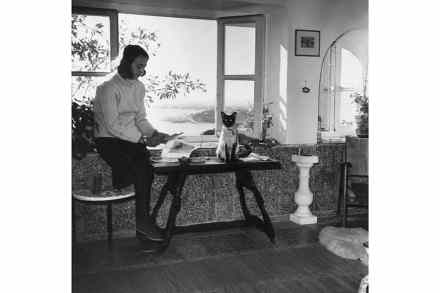
The story of the Cambridge spies has been served up so often that it has become stale — too detailed, too predictable, too firmly etched in Cold War monochrome. So it’s a good idea to seek another angle, through the warmer lens of a love affair involving its main protagonist Kim Philby and his wife Eleanor. It humanises the tale, particularly as it draws on a vivid and neglected personal source — The Spy I Loved— Eleanor’s own book centred on their romance in the Lebanese capital, Beirut. That was where Philby was despatched in 1956 to play out the penultimate act in a drama stretching back to the 1930s, when he and his fellow Cambridge students were recruited to spy for the Soviet Union.

The wonder of Lebanese wine

From our UK edition

In the Levant, the grape has been cultivated for millennia, some of it used for wine. The hills of Lebanon were — and are — especially fertile, as the Jesuits discovered. The Society of Jesus was the SAS of the Counter-Reformation. Its alumni were famous for intellectual ability and physical courage: scholars and martyrs. They were also notorious for deviousness. Even Catholic monarchs regarded them with suspicion: the latter-day successors of the Templars. But at least Jesuits were not burnt at the stake, merely expelled from a number of countries, including Spain. The Jesuits believed that in order to convert the world, they had to move effortlessly in sophisticated circles. To that end, they kept a good table, reinforced by a fine cellar.

The crisis in Lebanon is a warning for the West

From our UK edition

 Beirut On the highway into Beirut the other day, we drove past a petrol queue that was more than two miles long. On and on it went, the drivers sweating and swearing in brutal heat. Some had run out of fuel while they waited, having to push their cars when the queue inched forwards. There were people on laptops working from their cars during the day-long wait. Petrol queues are an everyday fact of life in Lebanon, but this was something else. Seeing that I was a foreigner, a frustrated driver gestured at the long line ahead of him and shouted: ‘Lebanon!’ He was summing up the fury and disgust felt by the Lebanese at what has happened to their country.

The tragedy of Lebanon — from safe haven to bankruptcy

From our UK edition

Mountains are humanity’s most comforting topographical feature. Wherever you find them you will also find those who have flocked to them for refuge. The Kurds, the world’s largest stateless people, span the most mountainous areas of their host states, while ‘Lebanon’ referred originally to the mountains in the eastern Mediterranean that for centuries served as a haven for all the region’s minorities. First came the Christian Maronites, fleeing the persecution of the Orthodox Byzantine Empire in the 7th century; then in the 10th and 11th centuries the Shiite Muslims, persecuted by the Sunni powers; followed by the Druze, persecuted by the Shiites.

Britain must learn from Israel’s mistakes as it prepares to leave Afghanistan

From our UK edition

On 24 May 2000 the last Israeli soldier left Lebanon after 18 years of war. A few months earlier I completed my national service as an IDF operations sergeant, serving in command centres on the Lebanese border. Back then I watched the withdrawal with relief; happy that the roadside bombs, shelling, Hezbollah attacks on convoys and outposts, the wounded and the killed – everything that had been my daily reality for two years – was now a thing of the past. Today I watch the withdrawal of American and British forces out of Afghanistan with dread. There are differences between Israel’s involvement in Lebanon and the involvement in Afghanistan; there are also differences between Hezbollah and al-Qaeda and the Taliban.

What happens when your currency collapses?

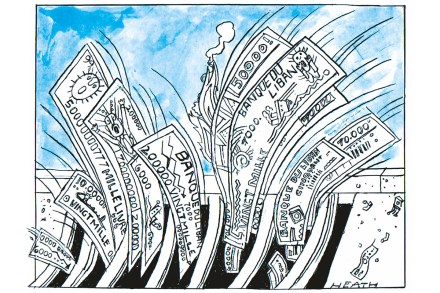
I’m a millionaire. A million in crisp, new bills is stacked up on the table in front of me. Unfortunately, it’s Lebanese lira and cost me about $75 a week ago. It’s already worth only $65, and by the time you read this, it will be worth even less. The Lebanese currency has lost more than 90 percent of its value over the past 18 months and is continuing its steady decline. It would be foolish to keep more than a few days’ spending money on hand, so everyone has a moneychanger. Mine is Mohammed, who pops round on his moped with ever-fatter stacks of notes with ever more zeros on them. The currency grows physically as it shrinks in value. He passes over a wad of cash and says, smiling: ‘Our leaders are stupid and corrupt.

currency

Migrant smuggling is one of Lebanon’s last businesses

From our UK edition

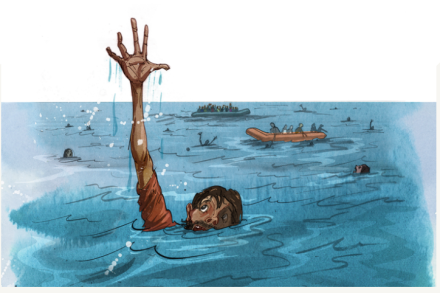
Ibrahim Lachine sold his mother’s furniture to pay for a place on a smuggler’s boat from Lebanon to Cyprus and left without saying goodbye. Stealing was, he admits, a bad thing to do, but the boat mafia wanted $700 (£500) and he couldn’t see any other way to get the money. He was 22 and hadn’t worked for three years. Food came from charities. Rent hadn’t been paid in months. Ibrahim leans back on a plastic chair, tall and angular in a black tracksuit and black running shoes. ‘We were very sad and very poor.’ Then he grins, a little embarrassed but mostly pleased with himself. He says he waited until one morning when his mother and his four sisters went out to visit a relative.

The beauty and tragedy of Lebanon

From our UK edition

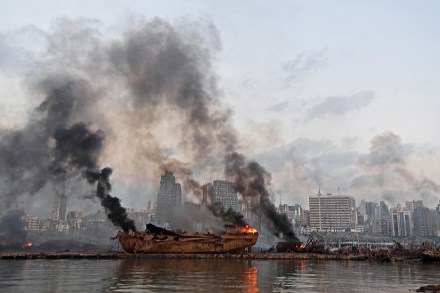
I was thinking about tragedy. Could one use the term ‘chronically tragic’? My first instinct is against. Tragedy is the soul-ravaging final scene of Othello or King Lear, when hope is overpowered by implacable despair. In Kent’s words: ‘Break, heart; I prithee, break.’ Flesh and blood could not withstand such emotional intensity in chronic form. Then again, how else can we describe the modern history of Lebanon? I have just heard of the passing of a splendid old girl. Yvonne Sursock was caught up in the terrible explosion which shattered Beirut at the start of August. Being a tough old bird, she lived for more than two weeks. Being 98, she succumbed. Yvonne could claim kinship with most of the Christian great and good along the Mediterranean littoral.

Emmanuel Macron is a Karen

Cockburn dislikes the latent misogyny behind the rise of this term ‘Karen’, which is used to describe any white woman who is caught being aggressive on social media. Then again, Karens don’t have to be female; plenty of men fit the term perfectly. One of them is the President of France.Yes, Emmanuel Macron lost his rag again on Wednesday, this time berating a French journalist who dared to try to cover the President’s complicated maneuvers in Lebanon.

emmanuel macron

Portrait of the week: Employment falls, exam failures and a roundabout rigmarole

From our UK edition

Home In fine weather with calm seas, 565 migrants in four days crossed the Channel in small craft. French officials said that 33 migrants in two boats that got into difficulty had been returned to Calais. In July more than 1,000 migrants crossed the Channel. Priti Patel, the Home Secretary, appointed Dan O’Mahoney as Britain’s Clandestine Channel Threat Commander, tasked with somehow making such voyages ‘unviable’. Employment fell by 220,000 in the three months to June, the biggest quarterly fall since 2009, but unemployment remained at about 3.9 per cent, as millions stayed on the furlough scheme. At the beginning of the week, Sunday 9 August, total deaths from Covid-19 stood at 46,566, with a seven-day average of 53 deaths a day.