Law

The Bill of Rights would be useless anyway

From our UK edition

I would like to defend the coalition from allegations that there has been a deplorable Tory concession on the Human Rights Act. Tearing it up was never in the Tory manifesto. Dominic Grieve, who drafted the Tory plan, is one of those lawyers who is rather passionate about the European Convention of Human Rights (ECHR) and praised it in his maiden speech. I had many conversations with him about this: for Britain to pull out of it, he said, would send an “odd” signal to the countries on the fringes of Europe whom we were trying to pull into our orbit. Grieve’s plan was to propose a Bill of Rights which would look and sound like something that would supplant the ECHR (put into British law by the Human Rights Act).
Trouble averted or trouble ahead?

From our UK edition

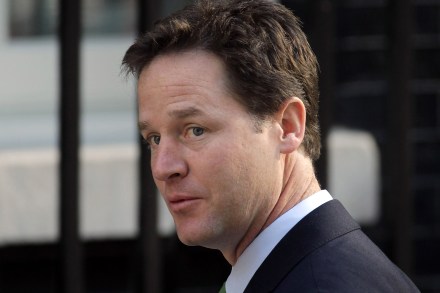
"The biggest shake up of our democracy since 1832."  That's how Nick Clegg is describing the legislative package that he's announcing today.  And, even if that's pure bravado, there's certainly plenty of encouraging stuff in it.  Scrapping ID cards; restricting the storage of innocent people's DNA; and the government is even set to ask the public which laws they'd like to see repealed.  Sign me up. But it's one omission which is really ruffling Tory feathers today.  There will not, it seems, be an immediate move to supplant or even dilute the European Convention on Human Rights with a British Bill of Rights.  Speaking on Radio 4 this morning, Theresa May stressed that this is still a matter for negotiation within the coalition.

A good time to bury bad news

From our UK edition

Sunday, Bloody Sunday. Someday the Bloody Sunday Inquiry will be published. It has taken 12 years to conduct and it has cost £200 million (about the going rate for state sponsored marriage, or Aston Villa). £2.50p per head is extortionate, so I’d quite like to see Lord Savile’s findings. I don’t expect to enjoy the experience. The report is said to confirm what was already known: confronted by an angry and possibly violent mob, heavily outnumbered British soldiers panicked and opened fire. It will be an expensive impertinence, like reading an idiot child's private school report. Anyway, the government will not publish the report until well after the election. I hate to disappoint you reader but this is not a 2010 Labour efficiency saving.

Endless saga<br />

From our UK edition

The four members are before a magistrate, attempting to clear their names. I’m not sure if it’s more preposterous than it is shaming to claim that conventions protecting free speech apply to false accounting. If only Enron’s lawyers had been as ingenious. In addition to Morley et al’s abuse of parliamentary privilege, Alan and Ann Keen have been fined £1,500 today, which, as Paul Waugh notes, is lenient compared to the Parliamentary Privileges and Standards Committee’s damning verdict. Expect to hear more on that decision as public anger over expenses remains unabated. Some time ago, I thought the expenses scandal would only be resolved by the catharsis of a General Election.

Weighed in the balance

From our UK edition

We sanctify some expressions, and in the process empty them of meaning. ‘Democracy’, ‘freedom’ or ‘equality’ are all used in ways that beg more questions than they answer. As Orwell pointed out, those who reject the concepts have a habit of appropriating the words. And so it is with the ‘rule of law’. At a time when the arbitrary power of the state has rapidly increased in most western countries, the ‘rule of law’ is invoked more than ever. Is it any more than another august slogan? Tom Bingham, one of the greatest English judges of the past century, presided over the Judicial Committee of the House of Lords for eight years until his retirement in 2008.

What you won’t read about terrorism in Britain

From our UK edition

I have some advice for CoffeeHousers hungry for the latest evidence about the guy who tried to blow up the Amsterdam-to-Detroit flight: go to the American press and their websites.  They are 100% free to pursue these stories: the press in Britain isn’t. Not any more. The suspect suffering second degree burns in hospital, named by the US authorities as a Nigerian called Farouk Abdul Mutallab, may have been living in London. This is, alas, no surprise. It fits with Britain’s reputation as Europe’s no1 incubator of terrorists  - let’s remember that the 7/7 bombers were home-grown. And it raises huge questions which a free press should be pursuing. But this is a subject where the British press are not free.

The politics of self-defence

From our UK edition

The spin machines are gearing up as we amble towards an election, and strategists’ latest hobby-horse is self-defence. Following the sentencing of Munir Hussain, Alan Johnson admitted feeling “uncomfortable” about Judge Reddihough’s decision. Never one to miss the bus, Chris Grayling went further and faster, suggesting that householders should be immune from prosecution unless they had responded in a “grossly disproportionate” fashion.   It’s rather unfair, but deliciously cutting, of cartoonists to portray Grayling as a plump second hand car salesman posing as James Bond, but Grayling deserves criticism because “grossly disproportionate” is as ill-defined as the “reasonable force” that current legislation describes.

The High Court’s decision on BA concerned law, not politics

From our UK edition

The Guardian’s Seumas Milne condemns the BA strike judgement as ‘blatantly political’. He writes: ‘Mrs Justice Cox has made a transparently political decision to skew the balance of power still further in favour of BA's recklessly incompetent management.’ That, as Mrs Thatcher would say, is poppycock. Mrs Justice Cox’s decision was informed by law, not ideology. Unite had balloted ineligible members, which is illegal. That the result of the ballot would not have changed is immaterial, Unite broke the law. In this instance, the legal decision will enable a sensible business plan time to develop. After years of procrastination and painting tail wings, the BA board is realistic about the challenge of survival, their employees are not.

What should be in the British Bill of Rights?

From our UK edition

The success or failure of Cameron’s EU policy rests in part on the promised British Bill of Rights. What is clear is that Tories are unclear what should be included in it. One question that is yet to be answered is whether aspects of the constitution should be entrenched? Writing on the Blue Blog today, Michael Howard writes: 'Any decision about these rights requires a balancing of competing rights. The fundamental question is who should be responsible for striking that balance: elected MP’s or unelected judges? On terrorism, Parliament twice, after great debate, reached its view. Yet twice the judges have held that Parliament got it wrong.

Paul Clarke Update II

From our UK edition

The national newspapers may not be terribly interested in the Paul Clarke case but, happily, legal blogger Jack of Kent is. He's produced a detailed account of the case, and the law, that I highly recommend. Mr Clarke may not be the ideal poster boy for liberty but it's equally clear that this is of little to no import. What we have here, as Jack of Kent makes clear, is a case that makes a nonsense of a) strict liability offences, b) manadatory minimums, c) the police and d) the CPS. It's possible that e) the judiciary and f) the jury could also be added to this list. Mr Clarke has not been sentenced yet. He could be discharged.

Trying KSM in NYC

From our UK edition

On the whole I'm sympathetic to the Obama administration's desire to try Khalid Sheikh Mohammed in a civilian court in New York City. That is, dealing with this kind of terrorism is a matter of law-enforcement as well as, in other respects, a military matter. And yet, despite all the talk about how putting KSM on trial is an affirmation of superior, civilised values and all the rest of it, I'm not sure that the trial will be quite the propaganda victory some think it may be.  Ruth Marcus happily spares one the job of dealing with a typically atrocious Michael Gerson column which alleges, ludicrously, that the ACLU is now running the Justice Department and that the Attorney-General's interpretation of the Constitution is, amazingly, some kind of "suicide pact".

Paul Clarke Update

From our UK edition

Remember the outcry after the discovery that Paul Clarke could face five years in prison for the "crime" of finding a sawn-off shotgun in his garden and handing it in to his local police station? No, me neither. Well, blog-land has not been happy about this but, as a reader points out, our friends at newspapers and the BBC have completely ignored it: This story is getting zero coverage. I've seen more coverage from American websites than I have from UK sources. I've done a search at the Times, the Guardian and the BBC News website and - unless I'm doing something very wrong - none of them seem to be touching it. It doesn't even feature on the BBC website's local coverage for Surrey. It seems to me that this is a story in and of itself, no?

Is This the Most Enraging Story of the Year? Perhaps!

From our UK edition

You might think that this story can't be true or that's been made-up to provoke everyone's inner Littlejohn. But no, not so. It is true and, alas, an enraging, dispiriting business. A former soldier who handed a discarded shotgun in to police faces at least five years imprisonment for "doing his duty". Paul Clarke, 27, was found guilty of possessing a firearm at Guildford Crown Court on Tuesday – after finding the gun and handing it personally to police officers on March 20 this year. The jury took 20 minutes to make its conviction, and Mr Clarke now faces a minimum of five year's imprisonment for handing in the weapon. In a statement read out in court, Mr Clarke said: "I didn't think for one moment I would be arrested.

A chance for parliament to re-assert itself

From our UK edition

This afternoon, I had the great privilege of hearing Geoffrey Robertson QC and Sir Ken MacDonald QC argue why English libel law must be reformed. Up to this point I had, along with most of the audience I suspect, assumed that reform would only benefit journalists. I suppose that illustrates just how narcissistic the profession is because now I see that libel reform is essential for the preservation free speech and the sanctity of English law. As Geoffrey Robertson put it, “We do not have free speech in this country, we have expensive speech.” English libel actions cost several million pounds to fight – 140 times more than the European average. Libel is the preserve of the rich, the ultimate private members’ club.

A Grieve error

From our UK edition

The Conservative leadership claims that a British Bill of Rights would serve to guide judges in interpreting the European Convention on Human Rights and so give Britain some discretion in how the rights which exist in the Charter — many of which are vague — are applied in this country. But in the new issue of Standpoint the eminent legal commentator Joshua Rozenberg reports that Dominic Grieve, the shadow justice secretary and a firm supporter of the ECHR, thinks that a British Bill of Rights would only be introduced towards the end of a Cameron first term and might well not be on the statue book by the end of it. Grieve tells Rozenberg, "I would like to think we could do it in the course of a parliament".

The Equalities Commission plays straight into Griffin’s hands

From our UK edition

The BBC reports that Nick Griffin is to put an amended constitution before his party that will abolish the ‘White only’ membership clause. This is the result of legal action brought by the Equalities and Human Rights Commission, who proved that the clause was at odds with equality law. John Wadham, of the Equality and Human Rights Commission, told the BBC: "We are pleased the party has conceded this case and agreed to all of the Commission requirements. Political parties, like any other organisation, are obliged to respect the law and not discriminate against people." On the face of it, this should be welcome news, but the opposite is true.

The right decision

From our UK edition

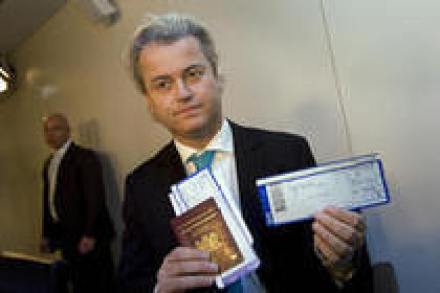
There's little more to add to Alex's take on the news that Geert Wilders has won his appeal against the Home Office decision to bar him from the UK.  While there's much about the Dutch MP which makes me feel uneasy, preventing him entry to this country always struck me as a needless and potentially inflammatory move.  Now, happily, that wrong has been righted, and there's just one question left: will Jacqui issue yet another apology?* *Ahem, of course she won't.  The Home Office is already saying that it may fight today's ruling.

The SFO can go hang, BAE should not be prosecuted for doing business

From our UK edition

All eminent barristers have their specialism, Lord Goldsmith’s is changing his mind. Scholarly integrity is to blame – he likes to give both sides of the argument. His two thrillingly different Iraq war advices are, of course, his crowning achievement; but he’s playing devil’s advocate again today. He writes in the Guardian: ‘I applaud Richard Alderman, director of the Serious Fraud Office for his vigour in pursuing corruption cases in Africa and eastern Europe against BAE. Reports are that he had put an ultimatum to BAE to reach a plea agreement or suffer the full weight of prosecutions. He is right to do so.’ Now, the general sentiment expressed is somewhat at variance with his position on the BAE/al-Yamamah scandal in.

All the trimmings

From our UK edition

The cover of this collection boasts a striking claim by P. D. James: ‘Rumpole, like Jeeves and Sherlock Holmes, is immortal.’ But will Rumpole’s world endure with Baker Street and Totleigh Towers? The cover of this collection boasts a striking claim by P. D. James: ‘Rumpole, like Jeeves and Sherlock Holmes, is immortal.’ But will Rumpole’s world endure with Baker Street and Totleigh Towers? The case in favour rests partly on the similarities. All three are first-person, multi-story narratives.

One to admire

From our UK edition

The English Bar is no longer immune to the celebrity culture. There are lawyers’ equivalents to Hello! magazine and the Oscars ceremony; lists of the 100 most, top ten, five to follow, proliferate. But peer and public recognition do not always coincide. To that rule Michael (or more usually Mike) Mansfield is a notable exception. He is indisputably the most high- profile barrister of his generation, both within and beyond the profession, and for that reason alone his memoirs, published to celebrate what he claims to be his retirement from practice, were always likely to be of interest. Expectations are amply fulfilled.