Law

Astonishing Development: Common Sense and Decency Win the Day

From our UK edition

More legal matters: remember the case of Gail Cochrane? She's the 53-year old Dundonian who was jailed for five years for the crime of possessing her father's service revolver. The sentence, its defenders claimed, was justified since her gun was, for admittedly curious reasons, stashed beneath her bed and not in a box in the attic or basement. Nevertheless, the ghastliness of mandatory sentencing was again on display. Happily, for once, sanity has won the day. Lallands Peat Worrier brings the news that Mrs Cochrane has won her appeal at the High Court of Justiciary. The full judgement may be read here. Praise be to Lords Reed and Marnoch for their sense, indeed their decency and shame upon Lord Carloway for endorsing the original verdict. Lord Reed writes: [...

Phil Woolas, four investigations and a funeral wreath

From our UK edition

It may take another week to discover if Phil Woolas has the right to challenge the election court ruling that destroyed his career. To the delight of his cadre of supporters in the House, judges have said there are "difficult questions to resolve" - not about the evidence of Woolas' campaign making "false statements", but about the specific application of the Representation of the People Act (RPA). Before the last die is cast, here are two quick contextual points. First, it is not just Harriet Harman who is keen to shut down this episode - many folks on all sides of the House of Commons would like to pretend skulduggery of this kind is exceptional. It is not - Phil Woolas' behaviour is far from untypical of northern politics.

The curious case of the Guantanamo Bay pay-outs

From our UK edition

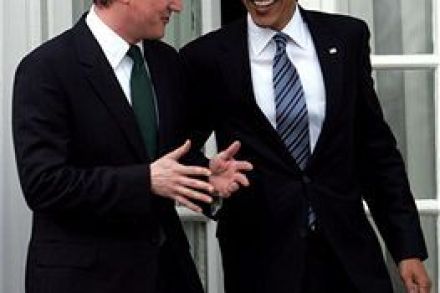
What to make of the out-of-court settlement that has been paid to around a dozen former detainees of Guantanamo Bay? According to unofficial reports, taxpayers might have to shoulder £10 million as a result. One of the men is thought to be receiving £1 million. The explanations seeping out of Westminster are understandable enough. Security chiefs, we're told, were keen to avoid a lengthy process – not just because it could mean more cost for the taxpayer, but because it would drag the practices of our intelligence services out into the public realm. David Cameron, speaking on the matter in July, highlighted that Mi5 and Mi6's time could be spent more usefully than sifting through documents in preparation for a court case.

The Lib Dems are spared by idiotic students

From our UK edition

The violence at today’s student protest is, politically, a boon to the coalition. The story now is not the Lib Dems breaking their word but the storming of Millbank. The violence will also have cost the no-fees cause much public sympathy, we don’t like attempts at aggressive direct action in this country. There are questions that need to be answered after today, why were the cops so unprepared for the protest turning violent? I crossed through the protest at lunchtime and then it was quite clear that there was potential for trouble. I’m also bemused as to why it is taking so long to put a stop to the violence and deal with those involved. Given the political environment, this might well not be the last protest to turn nasty.

Europe hasn’t gone away

From our UK edition

The Tory party’s acceptance of a 2.9 percent increase in the EU budget has persuaded Steve Richards that ‘Europe has ceased to be a toxic issue in British politics.’ As Steve acknowledges, this is in part because the Euro-sceptics have won the argument over the single currency. But it is also because the Tory parliamentary party has accepted that the coalition means nothing positive is happening on the Europe front for the next few years. One thing, though, needs to be borne in mind: the Tory party is more Euro-sceptic than it has been in living memory.

The growing case for libel reform

From our UK edition

Policy Exchange’s work on Islamism has been some of the most important undertaken by a think-tank in recent years. It has influenced and bolstered the thinking of brave politicians in both the last government and the current one. That’s why it is so important that Policy Exchange came off best in the libel case brought against it by North London Central mosque. The case is now over and the mosque has made, what Policy Exchange calls, ‘a substantial contribution’ towards the think tank’s costs. Policy Exchange has stated that it never meant to suggest that extremist literature was sold or distributed on the mosque’s grounds with the consent of the trustees or staff of the mosque.

Hardly vintage stuff from Ed and Dave

From our UK edition

Neither Ed Miliband nor David Cameron had a good PMQs. Cameron let his irritation at questions about the appointment of his campaign photographer to a civil service post show. It was also a bit rich for him to criticise a Labour MP for asking a question scripted by the whips when Tory MPs ask patsy questions with monotonous regularity, I counted at least four in this session alone. But the regular shouts of ‘cheese, cheese’ from the Labour benches were clearly riling the Prime Minister. But it wasn’t a good session for Ed Miliband either. His delivery was rather halting and he stumbled on his words far more than he usually does. His jokes didn’t quite come off either.

Prisoner voting rights are undemocratic

From our UK edition

It was unlikely that the Coalition could have played for any more time before lifting the ban on prisoner voting.  That was the tactic played by the previous Government, but now it seems the will of Strasbourg will prevail.  But the policy is wildly out of step with public opinion, hard to justify and difficult to administer – it is also another example of how our own Parliament and domestic courts have been undermined.     The public are opposed – usually on principle – to granting additional privileges to serving prisoners, especially when they have done little or nothing to earn it.  They are against voting rights in particular on the grounds that it is one of the rights that lawbreakers give up by virtue of their crime.

The inviolable right of prisoners

From our UK edition

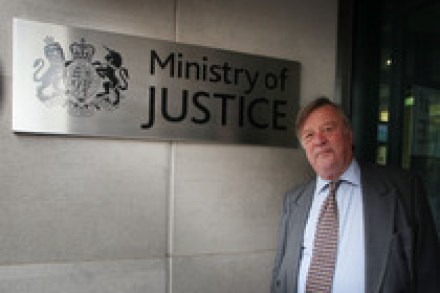
After 6 years of resistance, the British government has submitted to the European Court of Human Right’s judgement that prisoners have the right to vote. It will use a case in the Court of Appeal to make the announcement and then prepare itself for compensation suits. Understandably, the government is furious that it has been forced to make a concession on law and order, an area where they are weak enough already. Even Dominic Grieve, a firm supporter of the ECHR, is understood to be exasperated. Straining to limit the political damage, Ken Clark hopes to limit the franchise to those prisoners sentenced to less than four years; judges may also be able to decide who to exclude.

How Do You Make North Lanarkshire Look Good?

From our UK edition

The answer may not be what you think. It seems that South Lanarkshire council have embarked upon the most idiotic defamation action of the year. Over to Jonathan Mitchell QC to explain: South Lanarkshire Council has long had a certain reputation for Brezhnevism. Recently it seems to have excelled itself by bringing proceedings for defamation in Lanark Sheriff Court against the membership of a local community council for an article on its website which linked to another article on a different organisation’s website entitled “South Lanarkshire Council and Scottish Coal Hand-in-Hand at Community LIE-aison Meeting”.

Who governs Britain? | 28 August 2010

From our UK edition

CoffeeHousers may like to see the full leaked letter (pasted below) to which I referred in The Spectator's cover story this week. It shows how the NUT is using Freedom of Information to try and force school heads to hand over a list of names of anyone who might support a campaign to opt out of local authority control and become quasi-independent Academies. We have blacked out any information that may reveal the source. This letter helps explain why Michael Gove will have so few names next week, when he lists the list of schools who have succeeded in their fast-track application. Out of the 3,000 eligible, a few dozen will have made it.

From the archives: The Chatterley trial

From our UK edition

It’s 50 years since the case of Lady Chatterley’s Lover was declared sub judice, so commenting on the trial amounted to contempt of court. Here’s how the Spectator circumvented the order at the time: The Prosecutors, The Spectator, August 26, 1960 As Penguin Books Ltd. have been summoned under the Obscene Publications Act, the case of Lady Chatterley’s Lover is now sub judice; and this means… But what does it mean? The trouble with the law of contempt in this country is that because defendants are allowed neither trial by jury nor the right of appeal it tends to be more arbitrary, and more capriciously exercised, than any other law.

Tipping the scales against legal aid

From our UK edition

Britain’s legal aid system continues to fail, and should be abolished for virtually all compensation claims. Reformed Conditional Fee Agreements (CFAs for short) should take its place. Those are the headline recommendations of the Adam Smith Institute’s latest report, written by legal expert Anthony Barton.   It’s not difficult to point to problems with legal aid, but the main one is that it encourages risk-free, speculative litigation, and fuels a costly compensation culture. The fact that claimants receiving legal aid are not responsible for defendants’ costs if their case is unsuccessful essentially puts them in a no-lose situation. Defendants, on the other hand, just can’t win – they’re going to be out of pocket whatever happens.

A New Labour landmine detonates

From our UK edition

Has Mark Hoban just become the first victim of the New Labour landmines? He was asked on the Today Programme whether the Treasury had conducted a formal study assessing the impact of the cuts on ethnic minorities. Hoban was speechless - as well you might be. But the assessment, he was told, is required under Harriet Harman's Equalities Act. Has it been carried out? He avoided the question and was asked it again. And so it continued, a la Paxman v Howard. When Labour retreated, it sewed several landmines in the political territory it was about to cede. One of them was Harman's Equalities Act, which - as Pete blogged a while ago - mandates government "to consider how decisions might help to reduce inequalities associated with socio-economic disadvantage".

Stage 2 in the penal revolution

From our UK edition

The government’s position is that prison does not work. It aims to reduce prison numbers and now Ken Clarke has announced that further savings will be made to the criminal justice budget. The Times reports (£) that Clarke will continue Labour’s policy of closing courts; 103 magistrates courts and 54 county courts will shut up shop. The Tories campaigned against court-closures at the fag-end of the last government; and there is whispered concern around Whitehall and Westminster that the concrete apparatus of justice is already over-stretched. But, savings must be made. Clarke's closures will save a paltry £15.3 million from the annual £1.1bn budget; the bulk of cuts will come from reducing the number of contested trials.

Obama defeats our shameful libel laws

From our UK edition

Here's one divergence between the US and the UK where we can all get behind our American brethren. Yesterday, Barack Obama signed into law a provision blocking his country's thinkers and writers from foreign libel laws. The target is "libel tourism," by which complainants skip around the First Amendment by taking their cases to less conscientious countries. And by "less conscientious countries," I mean, erm, here.         As various organisations have documented, not least the Index on Censorship, the libel laws in this country are a joke – and a pernicious one at that.

System failure aids another EU power-grab

From our UK edition

David Cameron's so-called “referendum lock" is supposed to ensure no more powers are handed to the EU. His thinking, bless him, is that if he just keeps a low profile and doesn't sign any extra treaties then things won't get worse. This fundamentally mistakes the way the EU works. As we say in the leader for this week's magazine, ever-greater integration is hardwired into the system. An example we cite is the coming European Investigatory Order, which Theresa May has naively described to other ministers as a tidying up exercise (Jack Straw said the same about the EU constitution).  As we put it: “Another power grab is looming. Plans are being drawn up for a European order that would mandate British police officers to follow requests lodged from overseas.

If the Tories go on like this Labour will become the party of law and order

From our UK edition

Before such fripperies were banned, al-Qaeda terrorists were given lessons in stand-up comedy while in high-security prisons. I’d have thought that the exploding underpants fraternity had natural advantages in comedy, but never mind. What I want to know is who gave the lessons? It’d be ironic if it was a voluntary group. The Mail has worked itself into a panicked fury about that the ban on prison parties would be revoked. To be fair to the Mail, Crispin Blunt, the Prisons Minister claimed as much in speech last night, and he vowed to abolish Indeterminate Sentences for Public Protection - orders that incarcerate the sort of charmers who butcher you in the bus queue if you give 'em a look.

What can Cameron do about Obama’s war against BP?

From our UK edition

Very little is my immediate answer. The President’s approval ratings are biting the dust. Powerless to stem the tide of oil and unpopularity, Obama can only victimise a ‘foreign’ oil company. Obama may be embattled at home, but if any doubt the US President’s ability to influence global events, they need only look at BP’s share value and the pension funds derived thereof. BP is mired in an expensive oil disaster, but the President’s rhetoric about the ‘habitual environmental criminal’ and threatening BP with criminal proceedings demolishes market confidence. If the British government had condemned AIG, Goldman Sachs and Merrill Lynch in similar tones, the US administration would have retorted. Cameron can do nothing.

In defence of Mary Whitehouse

From our UK edition

The first time I interviewed Mary Whitehouse was for the Evening Standard in 1965. She seemed to me a narrow-minded schoolmarm, and after our encounter I wrote a teenagerish attack on her. I was thrilled by the satire boom that had been launched by That Was The Week That Was, and I loved other shows that she opposed, such as Till Death Us Do Part. In the event, Charles Wintour, then the Standard’s editor, spiked my article. ‘You haven’t understood the point about Mrs Whitehouse,’ he said. ‘She’s challenged the system. She has annoyed the hell out of the Director-General of the BBC, [Hugh Carleton Greene]. But she’s got a constituency behind her and she’s making an impact.