Labour party

‘Submission not unity’: Labour MPs react to Corbyn’s reshuffle

From our UK edition

Jeremy Corbyn's reshuffle is a clear show of intent. Having won re-election as Labour leader, Corbyn is shoring up his authority and sending out a message to critics by ousting some of those who may have helped placate the Parliamentary Labour party. Unsurprisingly, his ongoing reshuffle isn't going down well with everyone. Labour MP Tom Blenkinsop had this to say about the changes at the top: https://twitter.com/TomBlenkinsop/status/784080234077380610 Labour MP Barry Sheerman also appeared to suggest he thought Corbyn was asserting his power rather than reaching out with his reshuffle: https://twitter.

Corbyn tightens his grip

From our UK edition

Jeremy Corbyn’s shadow Cabinet reshuffle is all about strengthening, and demonstrating, his control over the party. Jonathan Ashworth, a Corbyn-sceptic, has lost his place on the party’s National Executive Committee and is replaced by Corbyn backer Kate Osamor. The word in Westminster is that Ashworth was told he could take shadow Health and lose his seat on the NEC, or reject it and lose it anyway. Ashworth made the deal. In an email to Labour MPs, the chair of the Parliamentary Labour Party John Cryer makes clear that the leader’s office started the reshuffle while talks on shadow Cabinet elections were still ongoing. Cryer complains that ‘the party leadership did not engage in the talks in any constructive way.

Augustus vs Jeremy Corbyn

From our UK edition

Jeremy Corbyn has been re-elected leader of the Labour party not by MPs but by his teenage ‘fans’ in Momentum. So what does Corbyn need to do when he wins power? Follow the example of the emperor Augustus, that’s what. When Rome was a republic, its monuments and military banners proclaimed it as SPQR — Senatus Populusque Romanus, a combination of the senate, mostly consisting of Rome’s elite families, and the people. The Greek historian Polybius greatly admired its clever balancing of powers between senate, people and office-holders. In the course of the 1st century BC, this system collapsed in bloody civil war. From that final conflict in 31 BC emerged Rome’s first emperor, the revolutionary Augustus (d. AD 14).

The Spectator’s Notes | 6 October 2016

From our UK edition

 Birmingham Checking in to my hotel room on the 18th floor, for the Conservative party conference here, I opened the door and bumped into a workman on a stepladder. ‘Sorry,’ he said, ‘They shouldn’t have let you in. All the water came through from the room upstairs.’ He was painting over the damage. Then he looked at me, recognised me and asked, ‘Hard or soft Brexit, then?’ I burbled slightly, not being happy with the distinction, but eventually said I thought ‘hard’ better described what was needed. The painter told me he read the Guardian and the Telegraph every day to ‘get both sides’. He reckoned ‘hard’, too: ‘It’s got to be divorce.

Paul Mason vs the MSM

From our UK edition

With Seumas Milne rumoured to be on the way out, Jeremy Corbyn could soon be on the prowl for a new Director of Communications. Although Paul Mason has denied that he is interested in the job, he is still a favourite to join the Leader's Office. So, with that in mind, Mr S was curious to hear his views on Fleet Street and the Mainstream Media (better known as MSM among Corbynites) at a Momentum talk on 'radical media'. It turns out that the former Newsnight economics editor isn't such a fan.

Letters | 29 September 2016

From our UK edition

Ground zero Sir: James Forsyth looks for hope for moderates within the Labour party and finds none (‘The party’s over’, 24 September). That is because the most promising source of hope for them is not a change of position by Labour, but one by the Conservatives. The history of British politics since 1990 has been a prolonged fight for the centre ground. This isn’t because that’s where either party naturally wants to be, but because that’s where the votes are. With Corbyn’s renewed mandate, Labour have unilaterally ceded that ground. The Conservatives could, as Forsyth suggests, use the opportunity to dig themselves in there so firmly that Labour will never recover it.

I know an anti-Tory pact won’t work

From our UK edition

I appeared on Radio 4 with Shirley Williams recently and as we were leaving I asked her if she thought Labour might split if Jeremy Corbyn were re-elected. Would the history of the SDP, which she helped set up in 1981, put off Labour moderates from trying something similar? She thought it might, but suggested an alternative, which was a ‘non-aggression pact’ between all the left-of-centre parties. ‘We can unite around the issues we agree on and get the Tories out,’ she said.

The Labour party’s struggle with the F-word

From our UK edition

This year, Labour's Women Conference saw Harriet Harman take to the stand to describe Theresa May as 'no sister'. Hoping for a bigger platform next year for their feminist message, party members have since called for the event to be integrated into the main conference. While Mr S wishes them luck with this, the ladies of Labour can take heart that things have at least improved since the conference first returned in 2010. Speaking at a Progress fringe event this week, Ayesha Hazarika -- Harriet Harman's former chief of staff -- recalled the struggle they came up against when Harman was acting Leader: 'In 2010 when we had just got kicked out of government, we didn't even have a women's conference.

Let the metropolitan elite lead the way

From our UK edition

How does one join the Liberal Metro-politan Elite? What should be the qualifications? I must be an LME member because literally thousands of my readers have (over the years) told me so. They don’t mean it kindly, but I take it kindly. ‘Elite’ means ‘the best’, I should hate to be called illiberal, and I have a nice flat near central London. How, though, do we LMEs maintain the exclusivity of our club? The 48 per cent of voters who voted Remain will soon be hammering on our door for admission, plus (I’ll bet) a fair few repentant former Leavers too.

Coffee House Shots: The verdict on Jeremy Corbyn’s conference speech

From our UK edition

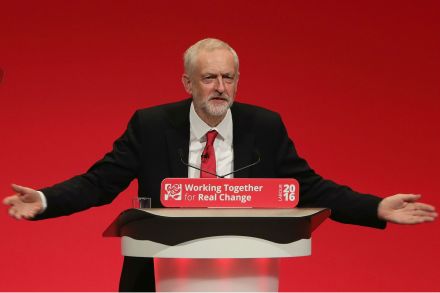
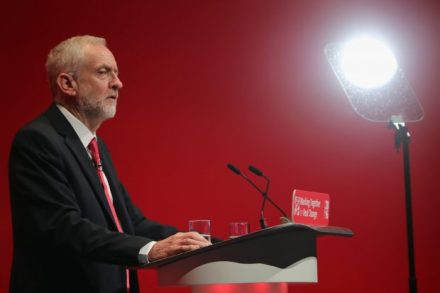
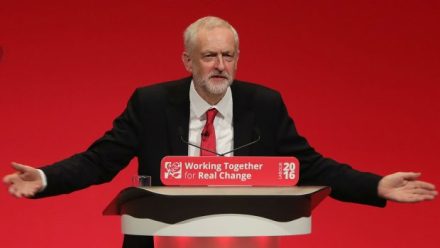
Labour conference is over for 2016 and it concluded with a barnstorming speech from Jeremy Corbyn. After rumours that he would only be speaking for half an hour, Corbyn addressed the audience for almost an hour, receiving a rapturous ovation in the conference hall, along with unified approval from Labour MPs. Andy Burnham called it a 'strong speech', whilst even Chuka Umunna had praise for Corbyn's economic policies, calling them 'well put'. The analysis from The Spectator's Isabel Hardman was also positive, as she told the podcast: "I thought it was a much better speech than the rambling one he gave last year. He had two clear aims.

Corbyn talks past the country

From our UK edition

Jeremy Corbyn’s second leader’s speech was much better than his first. One has to beware the soft bigotry of low expectations when judging his performance as leader of the opposition. But, it’s fair to say that Corbyn’s speech was up there with some of Ed Miliband’s off year efforts. The delivery was much improved, there was a joke or two and some canny lines. Corbyn cleverly made the moderates an offer they’ll struggle to refuse, saying that the one thing everyone in Labour agreed on was that a divided party would not persuade the public. So, he asked them, ‘accept the decision of the members, end the trench warfare and work together to take on the Tories’.

Full speech: Jeremy Corbyn at Labour party conference

From our UK edition

Thank you for that introduction. And how brilliant it is to see the hall here in Liverpool, absolutely packed for the Labour conference, well I say it’s packed but Virgin Trains assure me there are 800 empty seats. Either way Conference, it’s a huge pleasure to be holding our party’s annual gathering here in this fantastic city that has shaped our country, our economy, our culture and our music. Liverpool and its people have always been central to the Labour party and our movement. And I know some people say campaigns and protests don’t change things. But the Hillsborough families have shown just how wrong that is.

The Brexit charlatans are getting away with it

From our UK edition

Opponents of demagogues from Donald Trump to Nigel Farage have suffered from a huge political disadvantage. They were either politicians who were or had been in power, and had to take responsibility for all the failures and compromises power brings as inevitably as blisters on weary feet. Or they were voters, who thought that mainstream politicians were preferable to the leaders of the far right and left. Demagogues could dismiss them as establishment lackeys, Blairites, liberal elitists, Republicans in name only, and so on. And the dismissals could work. For how many wised-up 21st century voters wants to think him or herself as some establishment drone, some dupe of a failed status quo?

‘Awesome’, ‘amazing’ & ‘divisive’: Jeremy Corbyn’s speech, the conference verdict

From our UK edition

Jeremy Corbyn has just brought down the curtain on the Labour conference. He earned a standing ovation at the end, but what did those filing out - including MPs who have spoken out against Corbyn in the past - really make of what Corbyn had to say? Coffee House caught up with delegates to hear their thoughts: Unsurprisingly, many of those leaving the hall were singing Corbyn's praises. Labour MP Richard Burgon went as far as saying it was the best speech Jeremy has given as Labour leader: ‘You saw in there how enthused people in the hall are but I also think the message in there and the policies in there can enthuse people right around the country too. I think this is the start of something big’ But Stephen Kinnock said Corbyn still needed to do more to reach out.

Andy Burnham finally quits the shadow cabinet

From our UK edition

Andy Burnham has just announced he's leaving the shadow cabinet. He said he was doing so to concentrate on his mayoral bid, telling Labour's conference: 'That's why I can tell you all first today that I have asked Jeremy to plan a new Shadow Cabinet without me, although I will of course stay until it is in place.' He also took a pop at Westminster ('Westminster over decades has failed the North of England') and said the turmoil in the Labour party over the last year had made him 'profoundly sad'. But he also - tried - to use his speech to defend himself. Burnham has been accused of flip-flopping all over the place recently. He came under fire over the summer for being one of the few members of the shadow cabinet not to walk away.

Jeremy Corbyn is ‘relaxed’ about migration. He might not be after the next election

From our UK edition

What does Jeremy Corbyn have to say to Labour voters worried about migration? Not a lot, seems to be the answer. And that’s a big problem for the Labour party if it doesn’t want to haemorrhage support at the next election. Several newspapers this morning report his ‘relaxed’ stance on the subject. While his interview on the Today show just now (which was pre-recorded, apparently because Corbyn isn’t a ‘morning person’) made it clear - as if it wasn’t before - that the Labour leader isn’t taking this issue very seriously at all. He batted away a question about what an acceptable level of migration is.

Jeremy Corbyn makes an impression at Labour’s ‘Friends of Israel’ bash

From our UK edition

Has Jeremy Corbyn turned over a new leaf? This time last year at the Labour Friends of Israel reception, the Labour leader pointedly refused to say the word ‘Israel’. That stubbornness led to a heckler yelling at Corbyn: ‘Say the word Israel!’. It was clear he was determined not to make the same blunder a year on. In fact, at tonight’s reception, he went five times better – mentioning Israel repeatedly during his address. Corbyn also affirmed a ‘two state solution’ and said: ‘I say this: the Labour party is not a home for anti-Semitism in any form. I do not intend to allow it to be. The Labour party must be specifically an anti-racist party and specifically opposed to any form of anti-Semitism anywhere in our movement.

Solidarity for Venezuela at Labour conference

From our UK edition

Recent reports on the situation in the socialist haven of Venezuela suggest that not everything is so tickety-boo. With five-hour queues for toilet paper, the prospect of forced labour looming and a mass food shortage, Mercosur -- the South American trade bloc -- has threatened to expel the country over human rights violations and not complying with trade laws. Despite this, the Labour party continues to show solidarity with the country. Last night, comrades gathered at conference for Cuba and Venezuela: International Solidarity Needed Now More Than Ever!.

G4S makes a comeback at Labour conference

From our UK edition

There was a time when it looked as though this year's Labour conference might not go ahead as they struggled to find a company to provide security at the event. The party's usual supplier G4S had been deemed unsuitable after the NEC made a decision to boycott them over its prison contracts and links to Israel. By the time Labour came crawling back to the company to ask for their help, after running short of suitable options, G4S declined -- and they opted for OCS. So, conference regulars have been surprised to see a lot of familiar faces from previous years manning the doors at the event. It turns out that around a quarter of OCS's work force at the event also work for... G4S. And the reason they can work for both companies? They are on zero hours contracts.