Labour party

Asylum reform: is Labour bold enough?

From our UK edition

18 min listen

Danny Shaw and Tim Shipman join Lucy Dunn for today's Coffee House Shots to talk about the government's reforms to the asylum system. Having worked with Yvette Cooper before, Danny argues that the reforms are a great approach for a long-term solution – but he worries that they are not bold enough for the public mood. Is Labour putting procedure above politics? And, with the migrant hotel issue bubbling under the surface, is the public's patience wearing thin? Plus: as Zack Polanski is elected leader of the Green Party, is Labour about to be out-flanked by two radical populists to its left? The Greens and Jeremy Corbyn's new party could now pose as much of a threat on the left, as Nigel Farage's Reform is doing on the right. Produced by Patrick Gibbons.

Labour’s transfer deadline day

From our UK edition

17 min listen

The summer transfer window comes to a close today but, as Parliament also returns from summer recess today, the only team Keir Starmer is focused on is his own in Number Ten. The Prime Minister has decided to reshuffle his advisers, including bringing in Darren Jones MP to Number Ten from the Treasury. Political editor Tim Shipman and James Kirkup, a partner at Apella Advisors and senior fellow at the Social Market Foundation, join economics editor Michael Simmons to go through the moves. Will yet another change in advisers boost Labour's fortunes? Or are they doomed to relegation? Produced by Patrick Gibbons and Natasha Feroze.

How have the 2024 intake found frontline politics?

From our UK edition

20 min listen

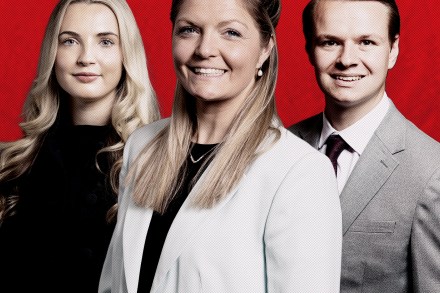
As Parliament returns from summer recess tomorrow, three rising stars of the 2024 intake join Coffee House Shots to provide their reflections on frontline politics so far. Labour's Rosie Wrighting, the Conservatives' Harriet Cross and the Liberal Democrats' Joshua Reynolds tell deputy political editor James Heale how they have found Parliament so far, and their most – and least – favourite thing about being an MP. Plus: while they are all new, and young, MPs, their parties' fortunes have all varied wildly – how have they dealt with that? Produced by Patrick Gibbons.

Why Angela Rayner is so iconic

From our UK edition

17 min listen

The Daily Telegraph have run a story this week that Angela Rayner may have dodged stamp duty on her second home. But beyond the story, its the photos of the Deputy Prime Minister on the beach at Hove – drinking and vaping – that went viral. Christian Calgie, senior political correspondent for the Daily Express, joins James Heale to unpack the story and the wider questions it raises for British politics, but also to discuss Rayner herself. Could 'teflon Ang' turn around the Labour Party's fortunes? And why do so many people – including many Tories – like her so much? Produced by Megan McElroy and Patrick Gibbons.

Bell Hotel latest: ‘two tier justice’?

From our UK edition

17 min listen

Human rights barrister Dr Anna Loutfi and deputy political editor James Heale join Michael Simmons to unpack the latest court ruling over the migrants housed at the Bell Hotel. The government has won an appeal today – but how much of a victory is it really? Anna explains how the legal questions considered by this case raise a much wider debate about the rights of citizens. Is this another example of 'two tier justice'? Produced by Patrick Gibbons and Natasha Feroze.

The coming crash, a failing foster system & ‘DeathTok’

From our UK edition

45 min listen

First: an economic reckoning is looming ‘Britain’s numbers… don’t add up’, says economics editor Michael Simmons. We are ‘an ageing population with too few taxpayers’. ‘If the picture looks bad now,’ he warns, ‘the next few years will be disastrous.’ Governments have consistently spent more than they raised; Britain’s debt costs ‘are the worst in the developed world’, with markets fearful about Rachel Reeves’s Budget plans. A market meltdown, a delayed crash, or prolonged stagnation looms. The third scenario, he warns, would be the bleakest, keeping politicians from confronting Britain’s spendthrift state. We need ‘austerity shock therapy’ – but voters don’t want it.

Angela Rayner and the spite of Labour

From our UK edition

As a snapshot of our country, you’ll be pressed to find anything quite so resonant as the one which depicts a leading member of our Skankerati sitting in an inflatable off the southern coast of the UK with tattoo and vape in attendance. There has been much debate of late about the very large numbers of other people bobbing about in the English Channel – and the possible value they might be to our benighted economy. We could ask the same question about Angela Rayner. On paper she is a huge cost to the Exchequer, one which would easily outstrip even a fairly successful Albanian drug dealer.

The left’s fightback against Labour has begun

From our UK edition

If there is a hallmark of Keir Starmer’s leadership, it is a willingness to bash the left. For five years, he has repeatedly sided with his moderate factions to make Labour electable. Corbynites have been purged from parliament and the party machine. Principles and policies have been changed to meet the electorate’s approval. Last summer’s election result appeared to vindicate the Prime Minister’s strategy. But with Starmer’s authority crumbling, the British left is aiming to reassert itself and wreak its revenge from outside, rather than inside, the Labour party. ‘This Labour government is here to appease Reform. We are here to defeat Reform’ Three groups pose a threat to Starmer. The first is the new ‘Your Party’, led by Jeremy Corbyn and Zarah Sultana.

Labour goes on the Farage offensive

From our UK edition

12 min listen

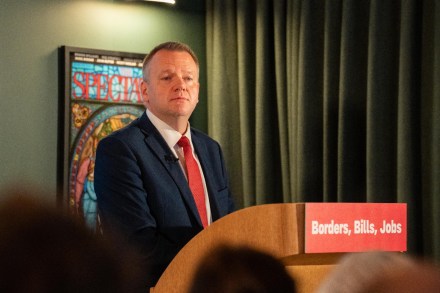
As James Heale writes online for the Spectator today, 'two issues continue to plague the government': how best to attack Nigel Farage. and how to frame an incrementalist approach to policy 'when the national mood favours radical change'. Nick Thomas-Symonds, the Cabinet Office minister responsible for UK-EU relations, attempted to tackle both today as he came to the Spectator to set out Labour's Europe strategy. Labour are pursuing 'pragmatic alignment' – what they argue is greater co-operation when beneficial to the British interest. But what does this mean? James joins Michael Simmons on the podcast to unpack the speech.

Farage, flags and the forgotten English

From our UK edition

The flag-raisings in towns and cities across the country are an inevitable consequence of elites’ seeming preference for every flag but England’s. High-status flags: Ukraine, Palestine, Pride. Low-status flags: Union Jack, St George’s Cross. It is possible, of course, to favour multiple flags. Although a Scot, I am quite partial to St George’s Cross, a simple emblem that stirs up a thousand years of English history – of blood and bravery, trial and triumph – in a crisp, snapping flutter of its folds. The Ukraine flag is the banner of a people who, rather than surrender their homeland, have chosen to fight to the death for it. However you feel about your compatriots flying another country’s flag, Kyiv’s is at least an honourable one to fly. Honour.

Is the Blair-Cameron consensus on education over?

From our UK edition

19 min listen

GCSE results day has brought a mixed picture; the pass rate has fallen, yet the regional gap has reduced and the gender gap is the narrowest it has ever been. Isabel Hardman and Sir Nick Gibb, former Conservative schools minister, join James Heale to discuss education policy, how changing cultural expectations may be helping the gender gap and why Labour seem determined to attack the Conservatives’ record on education. In Nick’s words, is Education Secretary Bridget Phillipson a ‘more political figure than education figure’? Plus: how the recent High Court ruling over migrant hotels could spark a crisis for the government as more councils, including Labour-controlled ones, seek an end to the policy. Produced by Patrick Gibbons.

Letters: Village cricket is the highest form of the sport

From our UK edition

Fighting dirty Sir: John Power is very interesting (‘Dark matter’, 16 August) when outlining the ‘dark arts’ being proposed by Labour to counter the political threat of Nigel Farage and Reform. This is nothing new of course, with one of the most divisive examples being during the Batley and Spen by-election in 2021, when Keir Starmer’s future was on the line if Labour had lost. During the campaign, a controversial Labour leaflet, clearly designed to appeal to Muslim voters, made a number of criticisms against the then prime minister, Boris Johnson, including a picture of him shaking hands with the Indian prime minister Narendra Modi, with the words: ‘Don’t risk a Tory MP who is not on your side.

Does European solidarity over Ukraine matter?

From our UK edition

14 min listen

Ukraine's President Zelensky has spent today with Keir Starmer at Number 10. This is in anticipation of tomorrow's Alaska summit between Presidents Trump and Putin – where European leaders will be notably absent. Zelensky's visit to the UK is designed to project an image of solidarity with Starmer, and European leaders in general – but does it really matter? And is Putin really closer to accepting a ceasefire? Tim Shipman and James Heale join Lucy Dunn to discuss Plus – Tim talks about his article in the magazine this week, for which he spoke to George Finch, the 19 year old Reform councillor who is leader of Warwickshire County Council.

Vance & Farage’s budding bromance

From our UK edition

16 min listen

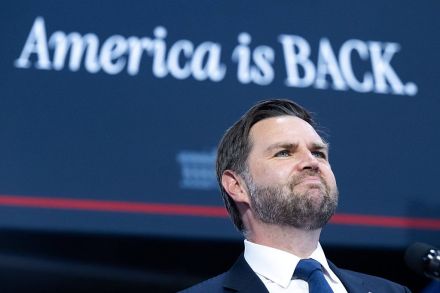
Nigel Farage hosted a press conference today as part of Reform's summer crime campaign 'Britain is lawless'. He unveiled the latest Tory defector: Leicestershire's Police & Crime Commissioner Rupert Matthews. Amidst all the noise of whether crime in the UK is falling or not, plus the impact of migration on crime, is Reform's messaging cutting through? Would US Vice President agree with Farage's message that Britain is lawless? Vance is in the UK, staying in the Cotswolds, as part of his summer holiday. Tim Shipman and Lucy Dunn are joined by James Orr, associate professor at Cambridge University, and a friend of Vance's to talk us through the dynamics between Trump, Vance, Starmer, Lammy and Farage. Does Farage have Vance's ear?

Online Safety Act: are Labour or the Tories worse on free speech?

From our UK edition

27 min listen

Is the Online Safety Act protecting children – or threatening free speech? Michael Simmons hosts John Power, who writes the Spectator's cover piece this week on how the Act has inadvertently created online censorship. Implemented and defended by the current Labour government, it is actually the result of legislation passed by the Conservatives in 2023 – which Labour did not support at the time, arguing it didn’t go far enough. Michael and John joined by former Conservative MP Miriam Cates who defends the core aims and principles at the heart of the Act. They debate the principles of Big Tech, the risks of government overreach and whether freedom of expression is under threat. Produced by Megan McElroy and Patrick Gibbons.

Will the junior doctors regret picking a fight with Wes?

From our UK edition

13 min listen

The dispute between the British Medical Association (BMA) – a trade union for doctors – and the government continues, following the five-day strike by junior doctors. Doctors argue that pay is still far below relative levels from almost two decades ago, combined with the cost of study, the cost of living and housing crises, as well as challenging conditions within the NHS. Nevertheless, with an average pay rise of 5.4% for resident doctors this year, support for the strikes appears to be falling – both with the public at large, and within the BMA. Health Secretary Wes Streeting has hit back at the BMA and said they 'will not win a war with this government'. Tim Shipman and Lucy Dunn join Natasha Feroze to discuss whether the junior doctors are wise to pick a fight with Wes.

How to handle the Wagner problem

From our UK edition

There are deep ructions across Europe, as in Britain. All come down to the same thing. The societies in question have decided to take in more people than they could ever absorb or integrate, and have done so at a rate that will ruin these societies financially as well as socially. It’s a little late for the occasional minister to talk about the fabric of the country being under ‘strain’, or the need for greater ‘social cohesion’. These things have been shot for years. What is interesting is not just what a mountain Wagner is for modern Germany, but how they deal with it The problem is that every counter to this problem has the same Charybdis. Oppose the migration extremism and even now you will be accused of Hitlerian tendencies.

Varun Chandra: the most important adviser you’ve never heard of

From our UK edition

The porousness of the Establishment, and its reluctance to advertise its activities, are illustrated by the career of Varun Chandra. At the age of 40, he sits as business adviser at the right hand of the Prime Minister, accompanied him to the meeting on Monday with Donald Trump at Turnberry, and is credited with playing an invaluable role in the recent trade talks in Washington. Before the general election, he used his innumerable high-level contacts to persuade business that Labour would be a better bet than the Conservatives. About himself he has preserved an almost immaculate discretion. He has no Wikipedia entry and is not in Who’s Who.

The asylum hotel crisis will cost Labour

From our UK edition

Yvette Cooper doesn’t do holidays, which is probably just as well since she is the minister who, this summer, holds Labour’s fate in her hands. During the Easter break, the Home Secretary, her husband Ed Balls and their adult children holidayed in Madrid. Cooper went every day to the British embassy to check emails and make secure phone calls to London. Balls tells a story about a camper van trip to New England in 2015, when Cooper was running for the Labour leadership. ‘After a few early mornings spent sailing her into the middle of the lake near their campsite so she had enough signal to call her campaign team in London, he sent her home,’ a family friend recalls.