Labour party

Labour candidate’s campaign leaflet fail

From our UK edition

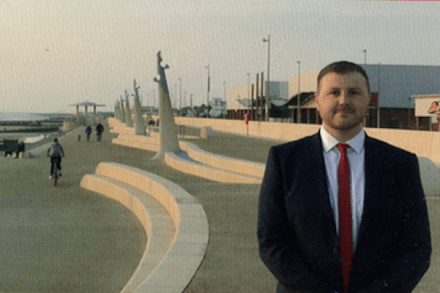
Oh dear. Come June 8, Labour are hoping to take the marginal seat of Blackpool North and Cleveleys from the Tories. However, the party's local candidate Chris Webb might want to consider re-printing his campaign literature. Mr S was curious to come across Webb's campaign leaflet. He says that, as a local boy, he would put Blackpool and Cleveleys first. However, this claim is put into doubt by his second promise to... 'never stop fighting my home town': With Webb a Remain supporter in a Leave area, perhaps he is on to something after all... https://twitter.

Labour’s elections chief expects party to be cut down to 140 seats

From our UK edition

Labour's elections team expects the party to be left with just 140 seats after the election, The Spectator has learned. I understand from two very good sources that this working assumption developed by Patrick Heneghan, the party’s elections director, is based on the party’s private data. This could mean that 89 sitting Labour MPs lose their seats - and means the party considers previously safe constituencies to be at risk.  This internal prediction may well explain why Len McCluskey chose this week to set 200 seats as the sign of a ‘successful campaign’. Falling so far short of that threshold would give those on the Left who have previously supported Jeremy Corbyn an excuse to move against him after the election.

Power and the middle class

From our UK edition

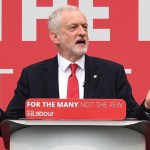
The Labour party’s tagline for the forthcoming general election is: ‘For the many, not the few.’ Aristotle, who understood this as ‘For the poor, not the rich’, thought this a recipe for conflict and proposed a solution of which Mrs May would approve. Suspicious of monarchy, Aristotle favoured two styles of constitution: oligarchy and democracy. The problem was that both systems ran the risk of creating an inherently unstable state. In a democracy, the poor would be in control by sheer weight of numbers; in an oligarchy, the rich would gain control (presumably) by sheer weight of influence.

Stupid is as stupid votes

From our UK edition

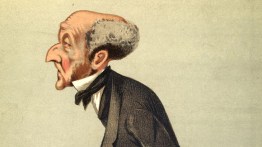
John Stuart Mill is usually credited as the person who first called the Conservatives ‘the stupid party’, but that isn’t quite accurate. Rather, he referred to the Tories as the stupidest party, and he didn’t mean that it was more stupid than every other party in the country, just the Liberals. If you substitute the Lib Dems for the Liberal party, that probably isn’t true any more, and it certainly isn’t true if you include Labour in the mix. No, I think there is now a strong case for passing the crown to Jeremy Corbyn’s party. If you look at Labour’s leaders, this is a very recent development. Harold Wilson was the most brilliant prime minister of the 20th century, having got the highest First in his year in PPE.

Portrait of the Week – 18 May 2017

From our UK edition

Home The National Health Service was one of the first big victims of a vermiform global ransomware computer infection going by names such as WannaCrypt and WannaCry, which locked computer systems. Hackers demanded $230 a time in Bitcoin to unlock them. Thousands of NHS devices were affected and outpatient appointments had to be cancelled. The Nissan plant at Sunderland was also hit. A 22-year-old from Devon, Marcus Hutchins, who runs the Malware Tech blog from his bedroom, found an effective kill switch that slowed the infection’s spread. Organisations abroad affected included Renault and Telefónica. Baddies had apparently unleashed the worm from software once in the keeping of America’s National Security Agency. Some people blamed North Korea.

Diary – 18 May 2017

From our UK edition

On the heels of the Today programme’s invitation to discuss ‘cultural appropriation’ (again), the New York Times reported the disheartening fate of a Canadian magazine editor, Hal Niedzviecki. ‘Anyone, anywhere, should be encouraged to imagine other peoples, other cultures, other identities,’ he wrote, gamely proposing an Appropriation Prize for the ‘best book by an author who writes about people who aren’t even remotely like her or him.’ After the usual social media shitstorm, Niedzviecki had to resign. The Times correctly quoted me asserting that this cockamamie concept threatens ‘our right to write fiction at all’.

Election 2017: Do you believe in miracles?

From our UK edition

If you want to imagine the future of British politics, consider the tale of Kristy Adams, the Conservative candidate in Hove. Her campaign is an insult to the electorate, but it is hardly alone in that. After the crash, the expenses scandal, Savile and phone hacking, it became a cliché to say that trust in institutions has collapsed. If the House of Commons is to restore its reputation, candidates must be honest. I don’t mean MPs have to tell us about their sex lives or publish their bank accounts, just be straightforward. Theresa May wants to make this a Brexit election. Taking her at her word, reporters from the Brighton Argus asked Adams a basic question. 'How did you vote in the referendum?

Ten Labour MPs that Tories should vote for

From our UK edition

The Conservatives are going to win the election -- that much we know. The question is what kind of opposition Britain is going to be left with. If a slew of moderate Labour MPs are swept out, the Corbynite grip on the party will strengthen. The leader will not go and Labour will take a great leap forward in its journey to oblivion.  Tories should not relish this outcome. It would do serious violence to our parliamentary democracy, which was not designed to cope with one dominant party and no real opposition. Legislation would not face proper scrutiny, ministers would become less accountable, and the business of government would be less transparent. Tory MPs, eager to be 'team players', would begin to soften their questions and pull their punches.

‘Our children are horrified’

From our UK edition

Wrexham, North Wales   To window cleaner Andrew Atkinson, Theresa May’s ‘blue-collar Conservatism’ is not just a slogan. It’s what he is. For the duration of the general election, gap-toothed, 32-year-old Atkinson has hung up his chamois leathers and water-fed poles and taken to campaigning on doorsteps in a bid to become Wrexham’s first Conservative MP. The campaign is costing him a fortune in lost jobs. Atkinson is a broad-shouldered lad who left home at 17 to earn a living as a self-employed squeegee wallah (‘glass hygiene technician, please,’ he jokes). He has the square jawline of Buzz Lightyear and an unaffected way with housewives.

Corbyn is the real heir to Blair

From our UK edition

Alastair Campbell once famously punched the Guardian’s Michael White in the face. A commendable thing to do, undoubtedly, as Mr White is the very incarnation of pomposity and self-righteousness. Quite possibly the best thing Campbell has ever done. But the brief spat (White hit back, according to White) was revealing in another way. Robert Maxwell had just drowned by falling off his yacht and Campbell, then working in the lobby for Maxwell’s paper, the Daily Mirror, took exception to White’s glee at this watery end to the proprietor’s life. ‘Captain Bob, Bob, Bob!’ White chortled, so Campbell punched him.

The one question Theresa May should ask Labour voters — in order to win them over

From our UK edition

Prime Minister, I have good news and bad news.  The good news is that you have been denounced in the letters page of the Daily Telegraph. One correspondent huffs: 'I wonder if Theresa May and her small group of advisers closeted in Westminster are aware of the fact that each initiative they introduce in an attempt to win over traditional Labour voters risks having the opposite effect on traditional Conservative voters.’ Another damns your energy price cap as ‘wrong-headed’ and even accuses you of ‘play[ing] into the hands of Jeremy Corbyn’s muddle-headed electioneering economics’. Lord Tebbit echoes these fears: 'The further Labour goes Left, that would mean the further we go Left. We need to stick to sensible, Conservative economics.

Labour’s manifesto steals from the rich – and gives it back to the wealthy

From our UK edition

The consequence of last week’s leak of a draft Labour manifesto is that all eyes today have fallen on what was missing from the draft: the costings. There is a very big assumption in Labour’s figures: that when you raise taxes you get all the extra revenue that you would expect to receive. The reality, of course, is that when you raise taxes you change people’s behaviour which might lead to them paying less tax. With a 45 per cent income tax levy above £80,000 and a 50 per cent rate over £123,000 higher rate taxpayers would have a greater incentive to find some way of avoiding tax – either by converting income into capital gains, shovelling more into their pensions – or by scarpering abroad.

Labour Party manifesto 2017 (official version): full text

From our UK edition

Labour have this morning launched their manifesto for the election. A big part of being the leader of a political party is that you meet people across the country and hear a wide range of views and ideas about the future. For me, it’s been a reminder that our country is a place of dynamic, generous and creative people with massive potential. But I’ve also heard something far less positive, something which motivates us in the Labour Party to work for the kind of real change set out in this manifesto. It is a growing sense of anxiety and frustration. Faced with falling living standards, growing job insecurity and shrinking public services, people are under increasing strain. Young people are held back by debt and the cost of housing.

This election isn’t about policy – and it shows

From our UK edition

One of the complaints that allies of Jeremy Corbyn often issue is that his critics - whether in his own party, the media, the Tory party or the general electorate - tend to focus on the man, not his policies. His policies are, those allies argue, actually very popular with voters -- when you test them without mentioning either Labour or Jeremy Corbyn. Which seems to be proving rather difficult in this election. There are two problems with this. The first is that voters don’t give a fig about your wonderful policies if they don’t trust your party’s leader to be competent enough to enact them. Every Labour MP I have spoken to across the country says that the number one issue on the doorstep is Jeremy Corbyn.

To tax the rich, introduce a tax cut

From our UK edition

Jeremy Corbyn wants to put up income tax only for people who earn more than £80,000 a year, he says. Anyone below that figure is safe. This reminds me of John Smith’s ‘shadow Budget’ in the 1992 general election. Smith said that the top rate of income tax would rise to 50 per cent for everyone earning more than £36,375 a year (which would be just under £72,000 today). Most people earned much less than the sum chosen, but voters decided they did not like such a clear intention to damage the higher earnings they hoped they might one day achieve. The shadow Budget was said to have lost Labour the election. Perhaps bearing this in mind, Mr Corbyn has so far avoided a specific percentage and pitched the taxable sum a little higher, but the signal is similar.

Labour’s plan to ban unpaid internships will do more harm than good

From our UK edition

Nothing better sums up middle-class millennials’ sense of entitlement than their demand that they be paid for interning. ‘Paid internships now!’ has become the rallying cry of young media people and the Twitterati and now the Labour Party, too. Its throwback manifesto, leaked this week, promises to ‘ban unpaid internships’, on the basis that ‘it’s not fair for some to get a leg up when others can’t afford to’. Self-regarding youths will cheer this, as will their sad-eyed supporters in the press, but the rest of us should raise a collective eyebrow. There are many grating things about the call for paid internships. Here are just three of them.

What politicians mean by a ‘great response’ on the doorstep

From our UK edition

It’s that time of the year when politicians start posting pictures of groups of people smiling eerily while holding party placards and claiming that they’ve just had a ‘great response’ on the doorstep.  For the uninitiated, this sounds as though the people opening their doors in each street are just thrilled to see said eerily smiling groups of campaigners striding up their garden paths. For those of us who spend election campaigns following politicians of all hues around on doorsteps, we know that a ‘great response’ is more likely to mean that only three people in a very long street were both in and disposed to opening their front doors.

Jeremy Corbyn’s Chatham House speech, full text

From our UK edition

Chatham House has been at the forefront of thinking on Britain’s role in the world. So with the General Election less than a month away, it’s a great place to set out my approach: on how a Labour Government I lead will keep Britain safe, reshape relationships with partners around the world, work to strengthen the United Nations and respond to the global challenges we face in the 21st century. And I should say a warm welcome to the UN Special Representative in Somalia,  Michael Keating, who is here today. On Monday, we commemorated VE Day, the anniversary of the victory over Nazi Germany in Europe. VE Day marked the defeat of fascism and the beginning of the end of a global war that claimed seventy million lives.