Labour party

Is the end nigh for Ukip?

From our UK edition

Ukip is a party dwelling on its past glories rather than its future this afternoon. The party’s leader Paul Nuttall has very few crumbs of comfort from the results so far: Ukip has lost every single one of the seats it had previously held. It has, just moments ago, snatched a single seat from Labour in Lancashire. Yet even the most optimistic Kipper would struggle to put a spin on the performance so far. The line that there are still results to come through is rapidly wearing very thin. Instead, when Nuttall broke his silence earlier he talked of the party’s ‘electoral success over recent years’ and how the party had forced the Tories to ‘embrace’ their cause. He went on to say that Ukip were 'the victims of our own success’.

Thornberry’s BBC gaffe: ET can’t phone home

From our UK edition

Poor old Emily Thornberry. Labour is having a torrid time in the local elections and during her appearance on the BBC this morning, things took a turn for the worse for the shadow foreign secretary. Thornberry - who Mr S previously revealed is known as ET by Jeremy Corbyn -- was there to try and defend Labour’s dire results. The only sticking point? ET could not phone home. Alas, her phone wasn’t working so she couldn't stay in touch with Labour HQ. Thornberry spent several minutes attempting to get her mobile to work before a worried Huw Edwards stepped in to ask her what was wrong: ‘It’s not even my iPhone. I don’t know how it works. it’s just got an Apple on it. It’s only got about five per cent battery’.

Local elections: West Midlands win caps off a day of stunning successes for the Tories

From our UK edition

The Tories are up 540 seats, have gained control of 11 councils and enjoyed success in the Tees Valley, Cambridgeshire and Peterborough and West of England mayoral races. Conservative candidate Andy Street has won the West Midlands mayoral contest. Labour's vote has plummeted, with the party losing 360 seats as well as control of six councils. Labour's Steve Rotherham won in Liverpool's mayoral contest; Andy Burnham won in Greater Manchester. Ukip has lost every seat it was defending. The party has gained one seat across the whole country - in Lancashire, from Labour. The Lib Dems have lost 24 seats but have seen their share of the national vote jump by seven per cent. The SNP are down 7 seats in Scotland, with the Tories up by 164.

Why Wales decided to forgive the Tories

From our UK edition

The recent Welsh poll showing a ten-point Conservative lead in voting intentions for the forthcoming general election (and also, though much less reported, the first ever Conservative lead in devolved voting intentions in Wales), came as a shock to many. The next Welsh poll, out next week, will tell us whether this first one was just an outlier or the more solid harbinger of an historic realignment in Welsh politics. But why should it be such a surprise that the governing party of the UK, with around a twenty-point opinion poll lead across Britain, should have a lead half that size in one particular part of Britain? The astonishment is that the Conservatives winning in Wales offends many deeply-held and cherished myths and assumptions. The Welsh just don’t do Conservatism, surely?

Never mind the election – Corbynism isn’t going away

From our UK edition

General elections are meant to produce a government and an opposition — ideally, a decent version of both. It is obvious what government this election will deliver: a Tory one with an increased majority. That, after all, is one of the reasons why Theresa May has decided to go to the country three years early. But it is not clear what opposition there will be. What passes for optimism in moderate Labour circles these days is the belief that a shellacking in this election will lead to Jeremy Corbyn’s departure, as the party’s membership sobers up and elects a new and sensible leader. But it is far from certain that this will happen.

Labour’s election strategy – vote for us and watch us lose

From our UK edition

The crapness of Corbyn’s Labour is a phenomenon. It fascinates me. Frankly, it does my head in. For there is a theory, you see, that Corbyn’s Labour isn’t really crap at all. That it is all a conspiracy. That journalists such as me, who I suspect are ‘neoliberal’ or something, merely construct a narrative demonising it as such. Where politicians match our prejudices, this theory goes, we give them enormous leeway and spring to their defence. When they don’t, we supposedly deem them ‘mad’ or ‘radical’ or, yes, ‘crap’, in a spirit of sheer defensiveness. It’s a neat theory, this, and very occasionally I even find myself wondering if it might be true.

Diane’s grey matter and Labour’s sticky votes

From our UK edition

I awoke the other morning to hear Diane Abbott’s brains leaking out of her ears and all over the carpet during an interview with LBC’s excellent Nick Ferrari. You will need a mop and a bucket very sharpish, I thought to myself, as she gabbled on, the hole beneath her feet growing larger with every syllable she uttered. Diane has had the brain leakage problem before, many times, and my worry is that following the LBC debacle there is almost nothing left inside her skull at all, just a thin greyish residue resembling a kind of fungi or leaf mould. This would leave her on an intellectual par with Emily Thornberry, a disaster for Labour. Later Diane explained that she had ‘misspoken’ during the interview — but how were we to know?

My brush with the pro-Corbyn Twitter mob

From our UK edition

When my old friend – a lifelong Labour supporter – told me he was voting Tory at the election, I posted a message on Twitter: https://twitter.com/RevRichardColes/status/858296208477040640 That was that, I thought. But then the replies started piling in. One of the first responses came from someone who thought my friend would regret his decision if he ever needed the NHS. ‘He’s an NHS consultant’, I replied. Even that didn’t stop the disbelief: many of those responding struggled to believe that someone working for the NHS could possibly vote Conservative. Was my friend real, they demanded to know. Admittedly not everyone thought I was making it up.

The Conservative party is treating the electorate like mugs

From our UK edition

What a curious election this is proving to be. It is hard to think of another general election in which the two largest political parties indulged in so much nonsense, nor did their best to persuade you that what is evidently true cannot possibly be true.  In the first place, the Conservative party asks you to believe the Labour party could yet finagle its way into Downing Street. You can’t afford to take a risk on Jeremy Corbyn, the Tories tell a public that has not the slightest intention of taking a risk, or anything else, on Jeremy Corbyn.

Watch: Dithering Labour frontbencher Jon Ashworth hounded by Piers Morgan

From our UK edition

If Labour ever does make it to No.10, it’ll be Jeremy Corbyn with his finger on the nuclear button. The Labour leader has been famously wishy-washy on whether he'd retaliate in the event of a nuclear attack. And it seems Corbyn isn't alone on the Labour frontbench in dithering on the subject. Following his performance during an interview on Good Morning Britain today, Mr S hopes that Labour MP Jon Ashworth isn’t involved in the decision-making process in the event of a nuclear strike. Ashworth was repeatedly asked by Piers Morgan what he would do if another country launched an attack on Britain. Here's what he said: When @piersmorgan asks a question, Piers Morgan makes sure he gets an answer... pic.twitter.

Theresa May’s scrutiny-dodging will only get worse

From our UK edition

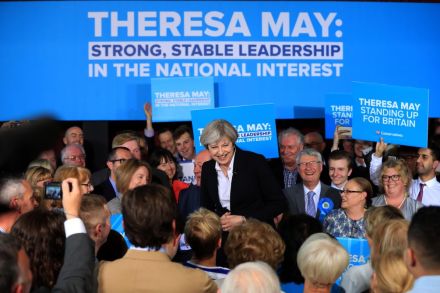
What a very boring election this is. The Tories are trying to keep their Prime Minister away from anyone who isn’t an android programmed to wave a placard about ‘strong and stable leadership’. Journalists from local papers are being kept in rooms to prevent them from - gasp - filming an interview with the Prime Minister for their websites. Other events take place away from the media entirely, with Theresa May cocooned safely among Tory activists: the political equivalent of a tree falling in an empty forest. Over the bank holiday, the Sunday papers carried tales of a row between May and her key aide Fiona Hill in which the Prime Minister apparently complained that she was being kept away from voters.

The snap election is likely to make the Commons a lot more dull

From our UK edition

At midnight, we won’t have any MPs. The dissolution of Parliament means that no-one who has sat on the green benches of the Commons for the past two years has any official status above their fellow candidates in the General Election. Some will return victorious for another five years (or until another advantageously early election). Some have decided that it’s time to go. Others will find that their local electorates have decided it is time for them to go.  Elections are exciting for the political world. They activate a gene in politicians that the rest of us fortunately do not possess, which makes them enjoy six weeks of trying to save their jobs, or fighting again in a seat where they were turfed out only a few years before.

Listen: Diane Abbott’s car-crash interview on Labour’s plan for extra policemen

From our UK edition

Is there something in the water today? First Nick Clegg lost his temper on Good Morning Britain, and now Diane Abbott has gone and outdone him with an awkward LBC interview on a policy she is supposed to be advocating. The shadow home secretary has been doing the rounds unveiling Labour’s plans for putting more bobbies on the beat. The problem: Abbott seems to have no idea how she'd pay for the 10,000 extra police officers. At first she said it would cost £300,000 - working out at £30 an officer. Her interview just got worse from there. Here it is:- Nick Ferrari: ‘So how much would ten thousand police officers cost?

In praise of Jeremy Corbyn’s campaign

From our UK edition

Almost two weeks in, and before the short campaign has even started, people are starting to wise up to Theresa May's conjuring trick. Last week, Philip Collins of the Times tweeted 'I am usually a strong defender of politics but this empty, choreographed, stale, boring Tory campaign essentially implies we are all idiots' (which was retweeted four and a half thousand times). This was then followed up by a performance on Marr that Fraser Nelson judged to have 'perfected the art of saying nothing'. At the same time, people are still picking holes in the Labour effort. On Thursday, a video emerged of Jeremy Corbyn heading to address a crowd, before he was spun around by a lackey in order to face the gathered cameras.

Sunday political interviews round-up: Theresa May says Conservatives will not raise VAT

From our UK edition

Theresa May - Conservatives will not raise VAT Touring both the BBC and ITV studios today, Theresa May tried her best to avoid giving specific answers about the Conservatives tax policies after the election. However, during an interview with Robert Peston, the Prime Minister appeared to disown David Cameron's 'triple lock' and make a commitment that a Conservative government would not raise the level of VAT above 20% over the next Parliament: Peston: Given what you say your record as a party is on taxes, do you need to repeat David Cameron's triple lock - no rise in VAT, no rise in National Insurance, no rise in income tax - do you need to repeat that? May: Well, I'm clear that we have no plans to raise the level of tax. Peston: What does the level mean? I'm not sure what that means.

Political activists who behave like zealots will do no good at all

From our UK edition

The election debate so far has included a fair bit of to-ing and fro-ing over whether religion has a place in politics and whether religious politicians have to spend significant portions of interviews talking about their views on what other people get up to in bed. But one striking feature of all political debate is how many of its participants behave like religious zealots without even realising it.  Media vicar Reverend Richard Coles yesterday tweeted that he’d spoken to a friend who planned to switch from Labour to the Conservative, rather than the Lib Dems, as Coles might have expected. The replies to this message were rather instructive. A number of people thought this voter simply could not exist.

Why the Tories are talking up Labour

From our UK edition

Considering that their party is expected to win by a landslide, the Tory spin doctors sound unusually panicked. They are keen to point out that the polls aren’t always right, and the pollsters are still trying to correct what they got wrong at the last general election. They insist that national voting tells you little about what will happen in the key marginal seats. These are normally the pleas of a party that is failing, and trying to persuade voters that it is still in the race. But Labour isn’t doing a good job of spinning its own prospects — so the Tories are doing it for them. This is not as odd as it first sounds. The Tories are worried about complacency, about their vote not turning out.

Tim Farron is a Christian, so of course he’s not allowed an opinion

From our UK edition

Maybe I’m wrong about this, but I don’t remember the BBC running a documentary 100 days into Barack Obama’s first presidency and kicking him from pillar to post. Interviewing almost exclusively people who hated him, pouring scorn on his every utterance. They did it this week to Donald Trump, though, and even wheeled out Jeremy Paxman to present this travesty of a documentary. Because Jeremy was interviewing exclusively people with whom he wholeheartedly agreed, he didn’t get the chance to put on that famous supercilious expression we all used to love, back when he was good. Shame. With Obama, as I remember, it was a very different approach. The studio floors were still awash with liberal ejaculate well after 100 days of his singularly inept presidency had elapsed.

Why the Midlands will matter on June 8th

From our UK edition

It is no coincidence that Theresa May chose to hit the campaign trail in Wolverhampton and Dudley last weekend; both are areas where Ukip did especially well in 2015. What is emerging is that the West Midlands – particularly the Labour-held Midlands marginals – will be the key battleground in this coming election. From the creation of the Mercian kingdom by Alfred the Great, to the Battle of Bosworth and Germany’s bombing of Coventry in 1940 – not to mention the 2015 election which led to Brexit – the Midlands has provided the backdrop against which the future of our country has been shaped. The election on 8 June will be no exception.