Labour party

Labour’s reckless net zero promise

From our UK edition

On the face of it, the Labour party conference commitment to bring forward Britain’s net zero greenhouse gas emission target to 2030 is nothing short of reckless. ‘We need zero emissions,’ the economist Paul Johnson and member of the Committee on Climate Change tweeted. ‘Getting there by 2050 is tough and expensive but feasible and consistent with avoiding most damaging climate change. Aiming for zero emissions by 2030 is almost certainly impossible, hugely disruptive and risks undermining consensus.’ The GMB, the union representing what remains of Britain’s industrial workers, warned that it could lead to widespread job losses. The GMB is right. Accelerated decarbonisation is a formula for rapid de-industrialisation.

Is this the beginning of the end for Jeremy Corbyn?

From our UK edition

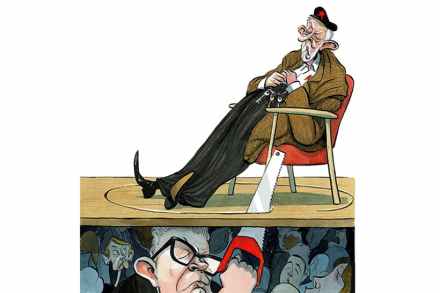
Did Labour’s conference help or hinder Jeremy Corbyn’s chances of becoming prime minister? For some, Corbyn ended up stronger than ever. There will be a review of the post of deputy leader, one likely to see the authority of Tom Watson, his severest internal critic, greatly diminished. Corbyn also won a critical vote on Brexit which endorsed his position of neutrality going into a general election. The conference also passed a raft of policies that confirm support in the party for Corbyn’s desire to dramatically extend state intervention in the cause of promoting economic growth, greater equality and tackling climate change.

Jeremy Corbyn would destroy the market for specialist medicines

From our UK edition

Amid Labour’s jubilation over the Supreme Court decision yesterday it would have been easy to miss Jeremy Corbyn’s latest attack on the market economy. But it shouldn’t go unremarked because what Corbyn proposed would seriously damage the pharmaceuticals industry – either meaning that taxpayers would have to bear the enormous costs of developing drugs, or would mean fewer drugs being developed at all. Corbyn cited the case of nine year old cystic fibrosis sufferer Luis Walker, who is being denied the medicine, Orkambi, because the drugs manufacturer is refusing to sell it to the NHS at an affordable cost.

Full text: Jeremy Corbyn’s conference speech

From our UK edition

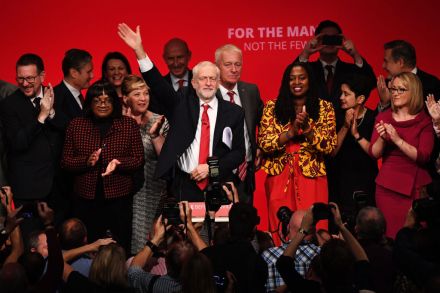
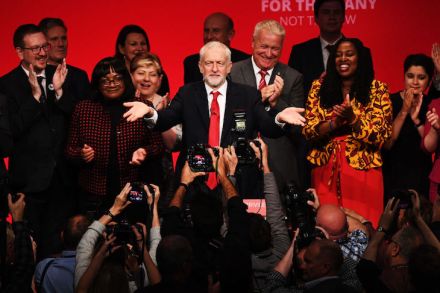
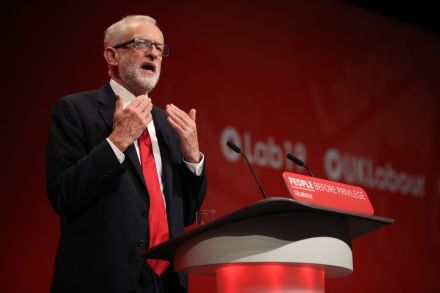
This is an extraordinary and precarious moment in our country’s history. The Prime Minister has been found to have acted illegally when he tried to shut down parliament.The highest court in the land has found that Boris Johnson broke the law when he tried to shut down democratic accountability at a crucial moment for our public life. The Prime Minister acted illegally when he tried to shut down opposition to his reckless and disastrous plan to crash out of the European Union without a deal. But he has failed. He will never shut down our democracy or silence the voices of the people. The democracy that Boris Johnson describes as a “rigmarole” will not be stifled and the people will have their say. Tomorrow parliament will return.

Ken Loach: Tom Watson is the biggest threat facing Labour

From our UK edition

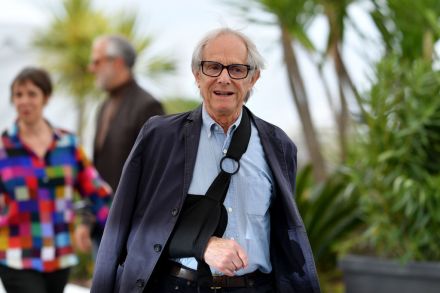
What's the biggest threat facing the Labour party? The Tories? The Lib Dems? Brexit? All wrong, says pro-Corbyn film director Ken Loach. The Kes filmmaker reckons its the likes of Tom Watson and other Labour MPs failing to line up behind Jeremy that is the thing to worry about right now. Loach told Mr S's favourite paper, the Morning Star, that 'the right inside Labour are the biggest obstacle to a Labour government'. He said: 'The right wing of the Labour party is the biggest threat we face. These are the inheritors of Ramsay MacDonald, Neil Kinnock and Roy Hattersley, Blair and Brown. The right, embodied by Tom Watson, aims to destroy the socialist programme. In the party there is the leadership and a core of socialists backing it.

Tories should be terrified of John McDonnell

From our UK edition

Once again, question marks surround Jeremy Corbyn’s leadership. This is not new. While I was at 10 Downing Street, with the small but significant possibility of a sudden Corbyn departure, we spent some time exploring the electoral impact of who might come next. To work out who might put up the best fight and how best to counter them, I discussed potential candidates in focus groups, played videos to voters, and polled frontbenchers’ perceived attributes. The most consistently effective potential leader? Shadow chancellor, John McDonnell.  This may seem surprising – and as a Conservative it was a painful discovery. But he ‘focus grouped’ remarkably well.

Fury at Labour conference over Brexit votes

From our UK edition

On paper, Labour's conference has managed to unite around the Brexit position set out by the leadership. Delegates this afternoon overwhelmingly approved the NEC statement endorsing Jeremy Corbyn's plan to decide how the party will campaign in a referendum at a special conference after a general election. They then voted down the rebel composite motion which called for the party to campaign unequivocally for Remain from now on. But what happened in the conference hall was chaotic and means the issue is unlikely to feel resolved for a lot of party members. The NEC vote was overwhelming, but the vote on composite 13 was much closer. So close, in fact, that there was a disagreement between those on the stage about which way it had gone.

Boris Johnson would be foolish to underestimate Labour

From our UK edition

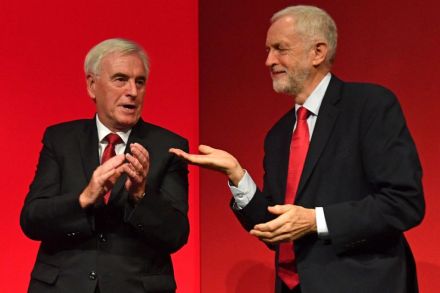
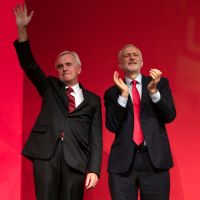
In the next election, as in the last one, McDonnellism will prove a serious challenge to the Tories. John McDonnell, as chancellor, confirmed that in government, he and Jeremy Corbyn would make a full frontal attack on 40 years of economic and industrial orthodoxy, the precepts that markets know best and that our prosperity depends on trusting the private sector. During the first 30 years, this orthodoxy may have delivered relatively steady income growth for the economy as a whole. But over the full 40 years, we've seen the greatest shift in history between the share of national income that accrues to workers and what is taken by the owners and providers of capital.

Emily Thornberry’s political wardrobe malfunction

From our UK edition

These days everyone in politics is obsessed with ‘optics’, with making sure they never do or say anything that might look bad to the public. Which makes Emily Thornberry’s European Union outfit all the more extraordinary. Thornberry paraded around Brighton in a blue-and-gold EU dress like some wide-eyed devotee of the cult of Brussels. What the hell was she thinking? It was at the ‘People’s Vote’ march in Brighton to coincide with the Labour conference. (Those quote marks around ‘People’s Vote’ are necessary because of course we already had a people’s vote, in 2016. What these people really want is a second referendum to try to erase the people’s vote in the first referendum.

Labour should scrap state schools, not private ones

From our UK edition

Shadow education secretary Angela Rayner has promised that if Labour wins the next election it will use its first budget to ‘immediately close the tax loopholes used by elite private schools and use that money to improve the lives of all children.’ This slab of red meat went down well with the class warriors at the party’s conference in Brighton, where there were doubtless plenty of teachers in attendance, but it wasn’t enough. Labour conference not only voted to withdraw charitable status from private schools, but to abolish them altogether. This was described, rather euphemistically, as ‘integrating all private schools into the state sector’ by Holly Rigby of the not remotely euphemistic Abolish Eton campaign.

Will Labour conference defy Jeremy Corbyn and back Remain?

From our UK edition

Labour conference will this afternoon vote on three different motions on its Brexit position. There are two – one from the NEC, and one from delegates – which endorse the leadership's plan to put this decision off until after the next general election, and then to hold a special one-day conference to decide instead. Then there's an unambiguously pro-Remain motion. It's going to be tight. Those around Jeremy Corbyn are anxious that conference doesn't back the Remain stance, seeing it not just as a debate about policy, but as a move that could seriously undermine the Labour leader's own position.

Watson-mania hits Labour conference

From our UK edition

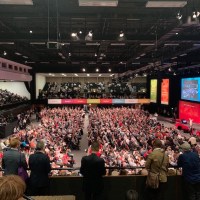
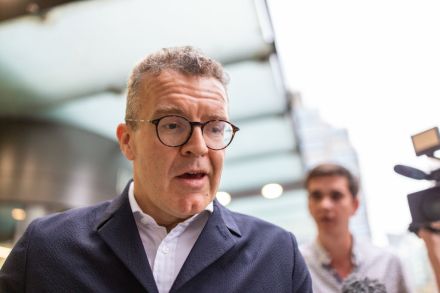
This year's Labour conference is proving to be a rather sedated affair after a difficult few days for Jeremy Corbyn. Rather than Corbyn-mania taking hold of attendees, attendees report of a flat atmosphere following the high drama of John Lansman's botched attempt to oust Tom Watson as deputy leader. After the first vote failed on Friday night, Jeremy Corbyn intervened to stop plans for a second vote. However, that hasn't stopped internal rows – with infighting becoming the main story of conference so far and rumours growing over Corbyn's exit. There is one politician, however, who is clearly enjoying conference and that's Watson. Watson allies are delighted with how this whole affair has turned out. 'They are the ones who are crumbling,' says a Labour figure of the Corbynistas.

As top aide quits, is Corbyn’s leadership now sinking?

From our UK edition

The best way to understand the chaos engulfing the start of the Labour party conference is by looking at the instability of Jeremy Corbyn’s leadership. Even if this is not immediately obvious from the outside (which, with such terrible personal poll ratings for Corbyn, it should be), it is the underlying factor in yesterday’s attempt to abolish Tom Watson, and in the resignation of Andrew Fisher, the leader’s policy chief. Fisher isn’t a Labour man through and through: he endorsed a  Class War candidate standing against Labour in the 2015 election. But he is - or was - a Corbyn man through and through. He was involved in the first leadership campaign that sent the obscure backbencher rocketing into power.

The ‘Mondeo man’ myth

From our UK edition

In the run-up to every election, newspapers fill with articles about the handful of voters that will supposedly swing the result – ‘soccer moms’, ‘NASCAR dads’, ‘Worcester women’, even ‘pebbledash people’. Occasionally this analysis is useful. Normally it is not. In the past six UK elections, 84 per cent of demographic groups swung in the same way as the population as a whole. A common trick to make a target group sound like it's worth focusing on is to highlight what is distinctive about them, at the expense of what is important. For example, Guardian readers are more likely to be Labour voters (73 per cent voted Labour in 2017) than Mail readers (17 per cent).

Labour’s NEC in plot to oust Tom Watson

From our UK edition

This evening, Labour's ruling National Executive Committee has started to discuss a motion which would oust Tom Watson as deputy leader. There is expected to be a vote on this plan, which abolishes the role altogether, tomorrow, and there is a strong chance that it will pass. It was tabled by Momentum founder Jon Lansman, and was narrowly ruled out of order because Watson wasn't present at tonight's meeting. Tomorrow it will be in order. Why is Labour having this battle on the eve of its autumn conference? It is potentially weeks away from an election, and instead of facing outwards to voters, it is engaged in an internecine battle over internal positions. And not just small roles, but the separately-elected role of the party's deputy leader.

‘F–k Boris’: London climate change protest turns red

From our UK edition

Students went on strike today worldwide to protest against climate change. Luckily, the London protest took place only a stone’s throw away from the Spectator office so Steerpike went down to Parliament Square to see what action the eco-protesters want taken as a country. Only, with signs ranging from ‘F--k Boris’ to ‘Defy Tory Rule’, and Palestinian and communist flags flying, the event could easily have been mistaken as a pre-party for Labour’s conference this weekend. Jeremy Corbyn and a slightly hoarse Owen Jones showed up to lend their support. It turns out that if you want to make a point on the environment, it's best to use plenty of expletives to get your point across.

Labour’s latest bid to alienate Jewish members

From our UK edition

Labour has yet again shown it doesn't care about its Jewish members. Jeremy Corbyn said earlier this year that “there is no place for anti-Semitism or any form of racism in the Labour party”. But not for the first time – and not for the last – Jews who still belong to the party have been sidelined.  The latest cause for disquiet is the decision yesterday by the party's National Executive Committee. Not content with scrapping the party's student wing ahead of next week's gathering in Brighton, the NEC has now agreed new rules concerning the handling of allegations of anti-Semitism and disciplinary procedures for expelling members.

Momentum’s plan to get the student vote out

From our UK edition

Thinking of digging deep for a good cause? Mr S is a big fan of giving his hard-earned cash to those in need but he won’t be coughing up for the latest organisation to ask for money. Leftist pro-Corbyn fan group Momentum has just emailed to warn that 'in the coming weeks, we're going to be flooding marginal constituencies with big student populations with flyers, posters and stickers'. Mr S has got his recycling box ready. Momentum is also asking for cash to help out with this latest mission. 'We need money', the organisation says. Pleading for donations of £10, Momentum claim they will reach 3,000 university voters in marginal seats to influence their voting through Facebook ads.  Mr S will pass...

Is Jeremy Corbyn preparing to purge moderate Labour MPs?

From our UK edition

Ahead of the looming general election, moderate Labour MPs are understandably upset by an instruction they say the party has given to suspend the selection of new candidates in seats where the serving MP is retiring or has defected. They've been told the reason is to 'concentrate on the trigger ballot processes' – or the deselection of usually moderate MPs who have alienated activists. See the below email by a Labour official for detail. What moderate MPs fear is that there is tacit support from Labour’s leadership for a purge of MPs from the right of the party.