Labour party

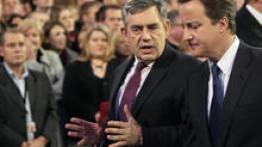
Clarke and Cameron, in conversation

A neat little anecdote in Steve Richards’ column this morning: “When David Cameron bumped into Charles Clarke at the end of the summer, the former Cabinet minister told the Tory leader in relation to the attempted coup: ‘Don’t worry… we’ll be back’. Cameron replied to him only half jokingly: ‘That’s exactly what I am worried about’.”

Clarke tries to get a left hook through Brown’s defences

Charles Clarke has sounded off so often during the Brown premiership that it is tempting not to pay too much attention when he does. But his latest broadside is interesting in that Clarke is having a go at Brown as much from the left as from the right. He again attacks the abolition of the 10p rate and calls for Trident not to be renewed, two things that please the left. But he follows up with two new criticisms of Brown that will play well with the left. He says that Brown’s “toleration of UK tax havens has been a disgrace” and calls for “genuinely fair” corporate taxation. The plot

The thinking behind Mandelson’s double-dip warning

Peter Mandelson’s warning of a double-dip recession is in pretty much all the papers today. There’s no doubt that there is a risk the recession could turn into a W shaped one because the underlying problems in the financial sector have not been properly dealt with. But it also plays into Labour’s political strategy which is to argue that the situation is still so serious that it remains no time for a novice. ‘Don’t let the Tories ruin it’ or ‘Don’t let the Tories throw it away’ are both being mooted as possible Labour election lines. Brown apparently believes that Churchill’s fate shows that the people must not think the

More fuel for the fire of leadership speculation

So the Daily Mail has another anti-Brown plot rumour for the collection; this one based around the idea that a “Gordon must go” candidate could run for a seat on the PLP’s Parliamentary Committee: “Rebels are planning to put up a candidate for the Parliamentary Committee, a panel of senior backbenchers which meets once a week with the Prime Minister, when MPs return to Westminster next month. The ‘coup candidate’ will run on a single platform – a call for Mr Brown to stand aside and let someone else lead Labour into the General Election… …MPs will then be able to vote in secret for Mr Brown to stand down,

On second thoughts, maybe Labour should keep Brown in place…

Over at his essential blog, Benedict Brogan says that Dave ‘n’ George deserve some praise for Moody’s decision to retain the UK’s AAA credit-rating.  His thinking: that because Messrs Cameron and Osborne have been going on about debt and the need to cut spending, investors – anticipating a Tory government – are more confident about Things to Come. A similar point is made by Edmund Conway in a comment piece for the Telegraph today: “Part of the reason the debt markets have remained relatively sanguine in the face of a staggering collapse in tax revenues and increase in the deficit is that they are assuming a Conservative victory: when the

Will Brown accept the TV debate challenge, after all?

Kevin Maguire, who is keyed into Team Brown more than most journalists, writes that it’s looking more and more likely the PM will participate in a televised party leader debate: “Talking to people in and around Downing Street I reckon the odds are shortening (if you can get odds) on Brown agreeing to a TV election debate. It’s a no-brainer for a Prime Minister well behind in the polls. There’s a touch of the stunt about the Sky News empty chair threat but the channel deserves credit for helping focus minds. Brown’s view, I’m told, is now isn’t the moment to decide or announce what he’ll do in the campaign

Mission accomplished for Cameron’s cost-cutting speech

So what has David Cameron achieved with his speech on “cutting the cost of politics” yesterday?  Quite a lot, judging by this morning’s papers.  The coverage it receives ranges from wholehearted scepticism in the Guardian to front-page celebration in the Daily Mail, but – more importantly, from a Tory perspective – it steals the thunder from Alistair Darling’s public spending speech.  The Chancellor’s innuendo about “nasty Tory cuts” is much less resonant when juxtaposed against the Tory leader calling for cuts in MPs’ perks, whether those cuts are regarded as populist or not. What’s more, Cameron has drawn quotes from Labour and the Lib Dems that may look a little

John Prescott: Not Very Big in Armenia

Perhaps the second-funniest line I read today comes courtesy of good Mr Dale: One great thing about Armenia is that they cannot abide John Prescott. Iain’s just back from a trip to Armenia, where, as you can see, they have a pretty good grasp of British politics. Some of my Armenian-related blogging is collected here. Note to Armenian think tanks and other organisations: I too would be delighted to visit your country.

Darling sells himself as a cost-cutter

Alistair Darling’s speech today gives one a good idea of what Labour’s pitch is going to be this autumn. He stresses the importance of a strong, active government and argues that Labour will cut costs but not services. As he puts it, ‘Some seem in a hurry to cut services. We are focussing on cutting costs.’ He also takes a pop at the Tory position on inheritance tax: “I cannot accept that cutting inheritance tax for the few is a greater priority than getting people into work or investing in public services.” The inheritance tax pledge is fairly small beer in revenue terms but it is a big issue in

Will Polly Toynbee have to eat a rack of hats?

In today’s Guardian, Polly Toynbee sets out a shopping list of policies by which Labour could “set national politics alight”; everything from personal carbon trading to bringing back media ownership rules.  But she adds that she’ll “happily eat a rack of hats if any of this happens”. In which case, part of me thinks that Toynbee may have to start investing in some hats and some ketchup, as I wouldn’t be massively surprised if Labour did put its name to one of her proposals.  Namely, this one: “Spread the pain of the recession: make the coming 50% top tax rate start at £100,000, as those in good jobs are doing

Labour’s cutting confusion

Yesterday, the Guardian told us that the health and overseas aid budgets wouldn’t be spared from Labour cuts.  But, today, Steve Richards suggests that may not be the case: “The preliminary manoeuvring begins today when the Chancellor delivers a lecture on the principles that will guide the Government’s approach, in effect arguing that while the Tories ‘wallow’ in the prospect of spending cuts he will take a more expedient approach, in terms of timing, pace, depth and in his view that the Government can still play a creative role as an enabler in the delivery of public services. But even this early message is hazy. Contrary to some authoritative briefings,

The dangers of the government’s “mic-strike”

Jackie Ashley complains in her column today about Labour misters going on ‘mic-strike’ saying that it will lead to Labour being beaten so badly that it might not be able to come back. Ashley is speaking for a lot of people in the Labour party, one hears frequent complaints these days about Minister who are prepared to pick up the cheque each month but not to put in the hard yards. The consequences of ‘mic-strike’ were evident this morning. William Hague was on the Today Programme talking about the latest revelations concerning the government’s relations with the Gaddafi regime but no Foreign Office minister was prepared to do a response.

Meekly does it

You wait days to see the word “meekly” in print, and then it crops up twice at once.  Today’s Sun reports on a Jon Cruddas speech tomorrow, in which he claims that: “[Labour] seem to be meekly accepting defeat, unable to show what we believe in… …We have only months to get this right, otherwise we will go down to catastrophic defeat.” While Jackie Ashley develops the same theme in a piece for the Guardian, highlighting the same Cruddas quote along the way. The Cruddas intervention is significant mainly because of its timing.  The MP for Dagenham has clarified his views on Labour’s plight before now (including in the latest

Labour may outflank the Tories on health and overseas aid spending – but will struggle to do so on reform

If you want some insights into where Labour are going next, then do read this story in today’s Guardian.  The main points are that Brown and Darling have agreed not to spare the health and international development budgets from cuts; that Labour’s public spending cuts will be set out over the next couple of months, beginning with a couple of speeches this week; and that Labour wants to frame its cuts as a return to the public service reform agenda.  As one “cabinet source” tells the paper: “The new economic context is a challenge for us, but New Labour in its original form never saw spending more money as the

Unite not united about its support for Labour

To my mind the most interesting political story of the weekend is tucked away inside The Sunday Times. Jonathan Oliver reports that Unite, a trade union which donates huge sums of money to Labour, might be taken over by those who believe that the union should stop funding Labour.  (The new leadership would not be in place this side of the election, though. Labour will still be able to rely on Unite’s help during the campaign). Unite provides 15 percent of Labour’s funding and the loss of this money after an election defeat would be painful for Labour financially. However, I suspect that many Labour figures on the right of

Another smear plot story to damage Gordon Brown

After the abortive plot to smear Richard Dannatt, you’d have thought Labour would have learnt their lesson: that it’s often politically foolish, not to mention indecent, to pick petty fights with the military top brass.  But – what’s this? – today’s Mail on Sunday reports that certain Labour figures may have been priming another smear campaign against Dannatt’s successor, General Sir David Richards: “The threat to target the General, who took up his new job just nine days ago, was one of the real reasons that Labour MP Eric Joyce resigned as an aide to Defence Secretary Bob Ainsworth last week. Former soldier Mr Joyce has told friends he attended

Straw: Megrahi included in PTA because of trade concerns 

One question that arises from the publication the Lockerbie documents is why Jack Straw suddenly decided against excluding al-Megrahi from the PTA? Straw justified his change of heart on the grounds of “overwhelming national interests”, though trade and commercial interests were not a contributing factor in that calculation, a point he reiterated last weekend. But, in an interview with the Telegraph today, Straw contradicts himself: ‘”Yes, it (trade deals with Libya) was a very big part of that (including al-Megrahi in the PTA). I’m unapologetic about that. Libya was a rogue state. We wanted to bring it back into the fold and trade is an essential part of it –

Number 10’s flawed plan

Andrew Grice has an interesting column in the Independent today laying out Number 10’s plans for an autumn fightback. The six-step strategy is as follows: “1. Labour will focus on the policy choice between the two main parties because the Tories are more vulnerable on policy than their current opinion poll lead suggests. The Tories are perceived by the public not to have any policies. 2. The focus on Labour’s record and future plans will allow it to close the poll gap. 3. As an economic recovery begins, the Government’s approach will be seen to have stopped recession turning into depression. 4. Labour must then show how the recovery will

Darling lays down the spending gauntlet – but will it be flung back in his face?

So here it is.  After rumblings that Brown is prepared to set out spending cuts – rather than hiding them away in he small print of the Budget – Alastair Darling confirms the new strategy in an interview with the Times.  He doesn’t actually use the word “cuts”, but it amounts to that: “‘As there is less uncertainty you can decide what your priorities are,’ he said. ‘This doesn’t mean you are going into some sort of Dark Age but we will have to decide, given what’s happened to the economy, how much we think we can afford to spend on services, how much we should be devoting to making