Labour party

Brown’s new dividing line ignores that banks are our route to salvation

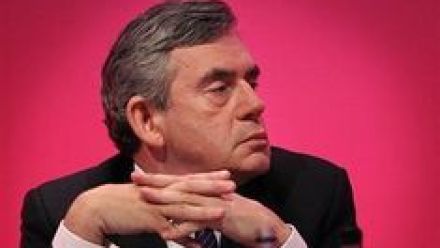
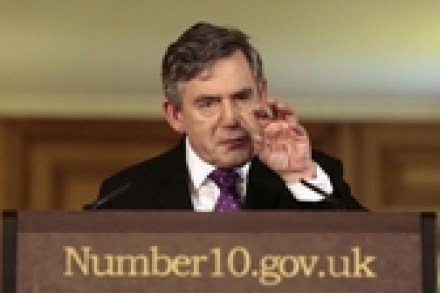
Gordon Brown and Alistair Darling will launch their umpteenth fight back today by talking tough on banks and bonuses. They hope to prove the Conservatives are interested solely in “helping their rich friends”. The Times has the details: ‘The Chancellor will tell the party conference in Brighton that legislation to be introduced in the next few weeks will scrap automatic year-after-year bonuses and stop executives getting payouts unless they can prove they are deserved. Bonuses will be deferred over a period so that they can be clawed back if they are not warranted by long-term performance.’ This is not a dividing line.

Either debt goes up, or goes down. It really is that simple.

Last night, I appeared on an hour-long phone in on Five Live listening in amazement as Angela Smith and Barry Gardiner defended Brown. You’d be amazed the lines the Labour MPs are being sent out with: that the shallow media is personality-based, but real people know that Brown did a great job on the economy. Seriously. That Brown’s fiscal decisions have somehow saved us all – rather than bankrupted us all. They are suggesting that the idea of 9% Labour cuts was a Treasury speculation, when it is a hard plan contained in the Budget.

Mandelson: I would work with the Tories

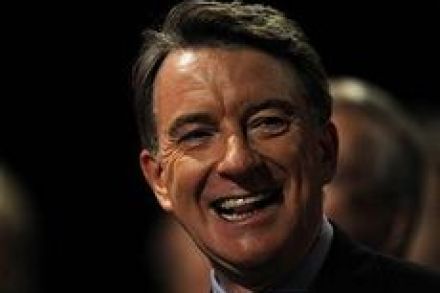
The Conservative party’s seizure of the progressive agenda and the rhetoric of liberal democracy suggests that Cameron intends to build a broad coalition. But how large would the Tories’ tent be? Peter Mandelson reveals that he would have no trouble “serving his country” under a Conservative government. ‘In an interview with The Sunday Times magazine, the business secretary said he would be willing to put his “experience at the disposal of the country”, if Labour lost power. “As I grow older, I can imagine more ways of serving my country than simply being a party politician,” he said.

Labour’s latest dividing line

Today’s papers give us an idea of what Labour’s new dividing line with the Tories is going to be. Labour will find money for eye-catching but not too costly initiatives such as the cancer pledge that the papers have reported on this morning. These pledges will be financed by taking money from the less sexy parts of departmental budgets. Labour will then ask, as Pete noted Ed Balls doing today, how the Tories can match this spending when they are committed to paying down the deficit faster than the government and to reversing several of Labour’s tax rises.

Tories plan Operation Tumbleweed for Labour conference 

Throughout Labour conference, the Tories will be trying to promote the message that the conference shows Labour is on the way out. Expect the Tories to pump out lots of statistics about how the number of delegates attending is down, how there are fewer commercial stands, lobbyists and the like. The other thing the Tories plan to do is constantly contrast it to John Major’s last conference, a sweet form of revenge for all those in the Tory party who worked for it during the Major years—a group that includes Cameron and Osborne. Tory researchers have been reading Major’s 1996 conference speech ready to point out parallels between it and the one that Brown will deliver on Tuesday.

A Bargain Ringside Seat to History

Apparently the Labour Party is selling tickets to sit behind Gordon Brown during his leader's speech for a bargain £130 a pop. At the same time they are struggling to fill the seats for their gala fundraising dinner in Brighton. Things are getting desperate. Already, last year in Manchester, the exhibitors' hall was dominated by Labour associated organisations and unions. The corporate world abandoned the party long ago. The interviews in this morning's papers show a new change in the political weather. Ed Balls continues his charm offensive and even borrows the rhetoric of Peter Mandelson's "fighter not a quitter" speech as a rallying call for the party. (I'm not sure it's a great idea to evoke the image of that toe-curling moment though).

Question Time conundrum

I was a panelist on Question Time last night, and it started me thinking about how they will handle the BNP episode – which I expect fairly soon. Make no mistake, a Question Time slot is as big for the BNP as winning seats in Europe. When I was on the campaign trail with them for a cover story in June, I noticed how they would refer to Question Time as a goal – almost as much as getting to Brussels. It represents one thing: the political mainstream. With two MEPs and almost a million voters the BNP have a legitimate claim to that Question Time panel. For them, it is totemic. It will be an historic moment – and one which could work to the BNP’s favour.

Ben Bradshaw’s advice for Brown

It's the question that won't go away for Gordon Brown: should he - will he -  take part in a televised leaders' debate?  On this weekend's Straight Talk, Andrew Neil takes the opportunity to quiz Ben Bradshaw about his views on the matter.  Here's how the Culture Secretary responds: "I don’t think [Brown]’s got anything to lose by doing that ....  My advice to him would say, I think you’ve got the arguments, you’ve made the right decisions, you could demolish that guy." Like Mandelson's interventions before now, Bradshaw's advice will slightly raise the pressure on Brown to take part in a debate.  But the first half of it also chimes with what a lot of Labour folk are saying around Westminster.

A number that shows what a drag on Labour’s prospects Brown is

The news that Max Clifford is now involved in publicising the story of Baroness Scotland and the illegal cleaner is another blow to an already bruised Labour party. One of the last things that it needs is the beginning of its conference being overshadowed by a story that combines the two toxic issues of political hypocrisy and immigration violations.

Can things get any worse for Brown?

Yesterday was bad enough, but today’s turning into an utter catastrophe for Brown. First, it emerged that the Tories enjoy a 4 point lead in Labour’s traditional northern strongholds, then Baroness Vadera leaves the government to work for the G20, and now another former GOAT, Lord Malloch Brown, tells the World at One that Brown was too “desperate” in his pursuit of a meeting with President Obama. Malloch Brown said: “I don’t know whether they were frantic or not, they shouldn’t have been frankly so desperate.” When handpicked former ministers make such statements it's clear that the writing’s been on the wall for so long it’s started to fade.

Is Vadera about to resign?

If, as the Westminster rumour mill suggests, business minister Baroness Shriti Vadera is about to resign from the Government, it is a far greater blow to the beleaguered prime minister than the loss of a PPS no one's ever heard of over the Baroness Scotland affair, the potential loss of Lady Scotland herself, or even the refusal of Barack Obama to grant him a private audience ahead of the G20 summit. Vadera has been one of Brown's most loyal sidekicks for more than a decade, and unlike anyone else who fits that description, she is the very opposite of a spin doctor or political hack.

The Tories lead in the north

Financial Times research has revealed that Labour has lost its traditional northern strongholds under Gordon Brown. Here are the details: ‘The Tories have built a narrow four-point lead in the north, eradicating the 19-point Labour lead in the region that underpinned Tony Blair’s last general election victory, the research shows. The 11.5 percentage point swing from Labour to the Tories in the north since the May 2005 poll is the largest for any region of Britain. The FT analysis suggests Mr Cameron has yet to win over fully pivotal “Middle England” voters. He has built a convincing lead among the well-off AB upper and upper-middle socio-economic groups.

Clegg embodies his party’s incoherence

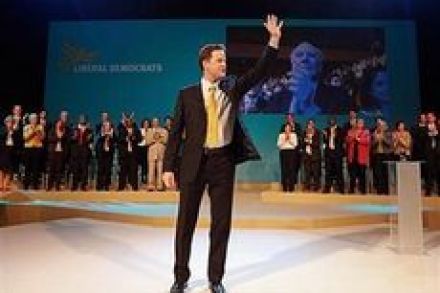
Nick Clegg started the Lib Dem conference with an interview calling for ‘savage cuts’ in public spending and ended it with a speech trying to position the Lib Dems as the main party of the left in Britain. That pretty much sums up the strategic incoherence of this conference which has left the Lib Dems worse off than they were before.   The Lib Dems have had an awful week for several reasons. First, they haven’t done the basics well—putting Clegg up against Obama was hardly clever programming and not informing every spokesperson of policy announcements before the media was told was bound to cause trouble. (How no one thought to tell Julia Goldsworthy of a change that so dramatically impacted on her brief is beyond me).

Government aide resigns over Scotland’s survival

Sky News reports that Stephen Hesford, who was PPS to the law officers, has resigned over the Baroness Scotland scandal. His resignation letter reads: ‘Whilst I have great personal regard for the Attorney General, I cannot support the decision which allows her to remain in office. In my view the facts of the case do not matter. It is the principle which counts, particularly at a time when the publics' trust of Whitehall is uncertain to say the least.’ This is profoundly embarrassing for the government, who can hardly turn around and sack Scotland now. Baroness Scotland’s position is increasingly untenable. She should resign.

Tories cock-a-hoop about Lib Dem disarray

Every Tory I have spoken to this week has said the same thing, ‘aren’t the Lib Dems having a terrible time.’ The Tories are particularly happy because they see the Lib Dems’ credibility on economics taking a battering thanks to the total confusion over Cable’s proposed new tax on million-pound homes. They also think that the new Lib Dem policy will hurt the Lib Dems in a lot of the Southern seats the Tories are trying to win—Richmond, Winchester, Meon Valley and Taunton—as well as in three way marginals like Hampstead and Kilburn.   The other thing that is putting a smile on Tory faces is the Lib Dems downgrading their pledge on tuition fees.

More than half of those who voted Labour in 2005 say they won’t do so this time round

The new ICM poll for The Guardian shows the Tories in an extremely strong position heading into conference season. They are on 43 percent, 17 points ahead of Labour. The extent of Labour’s fall since the last election is illustrated by the fact that only 47 percent of those who voted for the party then intend to do so again. Indeed, even 40 percent of those who have remained loyal to Labour now expect a Tory victory at the next election. The poll also shows that Labour is not seen as credible on the state of the public finances by the electorate. Only 14 percent of voters believe that Labour is “telling the voters the truth about the size of the problem facing government finances.

The Tories must ready themselves for the coming tax battle

You may not agree with the specifics, but one of the successes of the Lib Dem conference so far has been to shift the debate about our fiscal recovery from one wholly about spending cuts to one about tax changes too.  This is a necessary step.  For reasons which have been delved into by Danny Finkelstein, spending restraint alone won't be enough to tackle Brown's debt mountain.  There will have to be tax rises.  And, what's more, they will have to be efficient and - as far as possible - fair. These points are made by Jackie Ashley in today's Guardian, who argues that Labour should move as quickly as possible onto the issue of taxes, because they're getting routed when it comes to spending cuts.

Could You Vote for the Liberal Democrats?

Sometimes, you know, I wish I could. Then the Liberal Democrats come along to remind one how difficult it is to support them. But, in theory, could one vote for a truly liberal party? Of course one could. And would, if only one were so available. In Massie's Better Ordered Political Landscape the Liberal Democrats would, roughly speaking, be the equivalent of Germany's Free Democrats*. It's true that there are some liberals** in the Lib Dems - one thinks of the gang at Liberal Vision and other bloggers such as Charlotte Gore - but they're a minority within their own minority.

Lib Dems in the limelight

The Lib Dems need eye-catching policies to attract attention and this time round their neon lit policy is a 0.5% levy on houses valued at over £1million. The party forecast levying £1.1bn from the top 1% of rich property owners to raise the income tax threshold to £10,000. The tax will be collected by councils using land registers to identify which properties are liable. It doesn’t follow that families can afford a £2,500 bill just because they happen to own a property worth in excess of £1million. But, providing the levy remains a temporary measure, the proposal is a fair way to fund an income tax threshold rise, the current level of which is unfair.