Labour party

If you must deceive, deceive competently

From our UK edition

On 15th September, Gordon Brown finally uttered the word ‘cuts’, but he diluted the shock by pledging that frontline services would be protected. He told the TUC: “But when our plans are published in the coming months, people will see that Labour will not support cuts in vital frontline services on which people depend. Labour will not put the recovery at risk, protect and improve your frontline services first and make the right choices for low and middle income families in the country.” Today, some of those plans are published, albeit inadvertently in a document leaked to the Observer. Cuts are being planned in next year’s skills budget.

Rank desperation

From our UK edition

Gordon Brown’s suggestion for a Tobin tax would, if implemented, crucify the City of London. We are the largest foreign exchange centre in the world and that Brown is seriously suggesting hitting this industry is a sure sign he does not expect to be in government after the election. It is the proposal that a British prime Minister should be dying in a ditch to kill off given that the City generates about a tenth of Britain’s economic wealth. The kind of proposal that might be aired by a Frenchman, purely to outrage Britain. It is, of course, a trick: Brown knows it won’t be agreed because it requires the approval of every major currency-trading country – and that will never be secured.

Scorching the earth

From our UK edition

Tim Montgomerie is right; Peter Oborne is at his best in the Mail today – a mix of relevant history and sharp analysis of current affairs. Like Callaghan and Major before him, Gordon Brown faces electoral defeat. Brown’s predicament is deep – consistently loathed by the electorate and the target of unhatched coups and constant intrigue. How does a prime minister defend a hopeless position? Does he govern in the best interests of the country, his party, or himself? Oborne remarks about the magnanimity of Callaghan and Major and notes that Brown has not followed their example. ‘The truth is that Gordon Brown is now governing Britain purely for partisan or even personal advantage rather than in the national interest.

Hain’s hollow rhetoric 

From our UK edition

This week’s interviewee on the BBC’s Straight Talk with Andrew Neil is Peter Hain. One of the topics for discussion is Labour’s disengagement with its core vote and the rise of the BNP. Hain admits that this can be ascribed to Labour’s failings and Westminster’s disengagement with voters. Certainly, Labour’s failure on housing and migration has been a major factor in Griffin’s rise. But there is nothing to suggest that Labour has the political strength to re-engage. Even after the recent furore, there have been no new initiatives on housing or migration, just pitiful contrition in the place of action. Hain’s outright refusal to share a platform with the BNP and engage with its arguments is a case in point.

Quantatitive Easing is an affront to democracy

From our UK edition

Readers of the Spectator will know George Trefgarne’s work, and today he delivered an important report on the dangers of Quantitative Easing. I urge Coffee Housers to read the speech. It provides an interesting and relevant insight into historical precedents for the policy and how to manage it, and gives a balanced analysis of the current policy’s pros and cons. Trefgarne concurs with Mark Bathgate’s critique. There is little evidence that QE has stimulated money supply, as banks are using the cash to re-balance their lop-sided books. QE is funding the government’s debt habit. The IMF estimates that QE has reduced the benchmark 10-year interest rate on government debt by up to 1%, currently standing at 3.5%.

Leaked minutes reveal a party short on ideas and low on confidence

From our UK edition

It’s worth flagging up the minutes of a regional Labour Party meeting, dated 2 November, that have been leaked to Iain Dale. The first stand out passage shows the Labour Party’s reliance on Barack Obama as a source of inspiration: ‘Claude[Moraes MEP] has been to Washington DC where Obama administration key players made it clear they don’t want to have to deal with a Eurosceptic Tory Government here as they want to be able to deal with the EU as a whole.’ Iain argues that the claim has no basis in fact. But, as Daniel Korski pointed out recently, it is clear that the US administration would prefer to work with an assertive and united EU, not one embroiled in internal squabbles.

Labour and the KGB

From our UK edition

How close were Labour and the Soviets during the cold war? At the time, many newspapers were on the hunt for links - but allegations were hard to prove. Today, the Spectator tells the story from the horse's mouth - Anatoly Chernyaev, the Kremlin's link man with Labour in the 70s and 80s. Unbeknown to his visitors - Michael Foot (who welcomed Brezhnev as 'comrade') and even Charles Clarke (who comes out of this quite well) Chernyaev was keeping a diary. It shows how various Labour visitors begged for help - after all, Labour and the Soviets had a common enemy: the Conservatives. They said so in terms. Edward Short, as Harold Wilson's deputy, said: "if you, the Communist party of the Soviet Union, want a Labour government in Britain then help us". It goes on like this.

Vaclav Klaus signs the Lisbon Treaty

From our UK edition

According to the BBC's Laura Kuenssberg, Czech President Vaclav Klaus has signed the Lisbon Treaty. As James wrote this morning, Cameron has not broken any promise concerning a referendum because there was no such pledge except under circumstances that have passed; but Cameron must now detail how he intends to repatriate powers and obtain an opt-out from the Social Chapter. What is peculiar is how this has become a story about the Tories breaking pledges. It should be nothing of the sort. That 'honour' lies squarely with Brown and Blair. Labour's mock-outraged line that Cameron has '"reneged on his cast-iron guarantee" defies belief; it's incredible, brazen and unmistakably wrong.

One in five children live in jobless households

From our UK edition

The Guardian reports this morning that, “One in five – two million – British children now live in households where neither parent has a job.” This is an incredibly worrying statistic. The evidence suggests that worklessness is corrosive and soul-destroying. A child growing up in a workless household will, for obvious reasons, tend to have limited ambitions and opportunity. Obviously, as the economy recovers this number should go down — the recent rise indicates that many of these parents have been laid off in recent months. But even before the credit crunch really kicked in, there were more than 1.8 million children living in workless households.

Referendum Delayed: 2012 to be the new 2010?

From our UK edition

So, it seems that dreams of a referendum next year have been dashed. 2010, once the Year of the Referendum, will now be plebiscite-free. No referendum on the Lisbon Treaty and no referendum on the Act of Union either. This my be good news for voters but it's tough on hacks who'll need to find something else to write about. But, for a moment, let's consider some of the implications of this. I'll leave the Lisbon question to one side for now and reiterate my suspicion that Labour, the Conservatives and the Liberal Democrats are helping, not hindering Alex Salmond, by agreeing to delay nay referendum until after the next Holrood elections. Granted, the SNP may not remain the largest party, nor form even a minority ministry in Edinburgh after the 2011 election.

Nanny knows best

From our UK edition

Does Professor David Nutt's dismissal concern the impossibility of relaxing drugs legislation, or the relationship between experts and ministers? David Nutt was sacked because he spoke the unspeakable and criticised the government for failing to acknowledge the self-evident scientific truth that horse-riding, especially after quaffing sherry, is more dangerous than taking ecstasy and dancing maniacally in a night club. As Bruce Anderson notes in today’s Independent, it is impossible to have a rational debate about drugs. The politics of narcotics always trumps evidence.

To hell with Alan Johnson, the Tories are just as moronically authoritarian as Labour

From our UK edition

I don't think that government ministers should necessarily listen to the advice they're given by independent, expert authorities. That is, the government is and should be free to decide that, whatever the merits of any given piece of independent analysis the larger, more general, interest is best served by rejecting that advice. So there's nothing wrong with Alan Johnson sacking Professor David Nutt. That's his prerogative. But we have our own views and interests too. And we may fairly say that Johnson is a fool and that Nutt's recommendation, shared by his colleagues at Advisory Council on the Misuse of Drugs, that Cannabis should be reclassified at a Class C, not Class B, drug is eminently sensible.

Even under the Tories, President Blair will be our man in Brussels 

From our UK edition

In his column, James asks the key question about Tony Blair’s candidature for President of the European Council: what would it do for the Tories and Britain’s foreign policy. William Hague clearly thinks it would be a bad thing and has been lobbying against Blair’s candidacy.   The Shadow Foreign Secretary is letting his anti-EU, anti-Labour views cloud his judgement. Let me explain. If the Tories win, Labour will be in the doldrums, a shadow of its former self. The idea that the party will mount a challenge to a Conservative government by rallying around an EU-focused Tony Blair is unbelievable. Romani Prodi may have jumped from an EU job to the top of Italian politics, but Britain works differently. Peter Mandelson is the exception, Roy Jenkins the rule.

Is privatising the Royal Mail viable?

From our UK edition

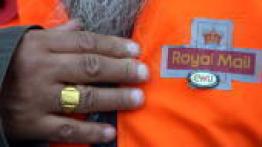
Over the summer, as the postal crisis mounted, the government argued that adverse market conditions deterred potential investors. Regardless of the ongoing industrial dispute, the government maintain that Lord Mandelson’s bill will not be reintroduced unless conditions improved. According to the Guardian, Ken Clarke, the shadow business secretary, believes that there is still demand in the public sector to buy the Royal Mail, providing the CWU accepts modernisation and ends the strikes. ‘Ken Clarke, the shadow business secretary, has held talks on the sale of Royal Mail with potential bidders, and the party believes there is still a desire in the private sector to take over the company.

The Rabbi speaks

From our UK edition

Poland's Chief Rabbi, Michael Schudrich, told the Today programme that Michael Kaminski is, as far as he knows, not an anti-semite today - though the Jewish leader made clear he "could not read his heart", and thought Mr Kaminski's teenage views extremist. The rabbi's words will further fuel the spat between David Miliband and William Hague. Expect the Shadow Foreign Secretary to renew his calls today for an apology to be issued to Kaminski. Expect the Foreign Secretary to ignore this and find support, including from within the Jewish community, to his charges against Mr Kaminski and his accusation that the Tories mingle with madmen. Both parties think the fight is important. Miliband thinks he has stumbled upon political cryptonite to the Tories' electoral superpowers.

The Nonsensical Neather Plot

From our UK edition

Conspiracies are all the rage these days. And since this has turned into Immigration Week here one might as well address the Neather Brouhaha. This, British readers will need no reminding, refers to the uncovering of the nefarious New Labour plan to destroy Britain and spike the Tories' guns forever by destroying this green and pleasant land and turning it into a multi-cultural hellhole. We are led to understand that this was indeed a deliberate plot, apparently borrowed from the Democrats' presumed determination to make the United States a Spanish-speaking Banana Republic. The evidence [sic] for this rests upon two paragraphs from an article written by a former government speechwriter.

Road to perdition

From our UK edition

It is another black day for Gordon Brown. The financial news from America, contrasted with continuing decline here, indicts Brown’s recession strategy. Playing the long game, Osborne is being vindicated, and Guido is correct that the ongoing UK recession negates Labour’s attack line on Osborne: the novice has trumped the alleged master. More damaging though is the resurfacing of Damian McBride and the ‘omerta’ of Brown’s inner circle, with its sordid and cynical connotations. The news that Nadine Dorries will receive £1,000 from McBride reflects poorly on the Prime Minister. Worse still, there is possibly more to come – Dorries has two suits outstanding, against Number 10 and Derek Draper respectively.

Once again, Britain stands alone

From our UK edition

It’s fortunate that pluck and stoicism are fundamental British characteristics and that we are at our best when backs are to the wall. Figures published today suggest that the US economy grew by an annualised 3.5 percent in the third quarter. Britain is now alone among developed countries in fighting a shrinking economy. So much for Mr Brown’s confidence last autumn and Alistair Darling’s growth forecasts. Even Italy is doing better. One crumb of comfort for Labour is that the American consumer has regained confidence thanks to government stimulus: sales of manufactured goods, such as cars covered by the government scheme, are up by 22.3 percent. This should have global consequences that benefit Britain.

Raging against the dying of the light

From our UK edition

George Osborne’s speech on Monday calling for huge cash bonuses not to be paid this year drew an angry response from those hoping to receive huge cash bonuses – and various City and business pressure groups. A few years ago I would have felt deeply uncomfortable with what Obsorne proposed, but because nearly every bank has drawn heavily on state support over the last year, I think politicians do have a right – even a responsibility – to offer firm guidance to the banks. The FT led the charge against Osborne with both a critical news story, gleefully dissected by Iain Martin, and a harsh leader. Today, the paper follows up with a page two story on a letter Alastair Campbell has sent the paper criticising the shadow Chancellor.

Two polls to please the Tories

From our UK edition

There have been two polls today which are worth mentioning belatedly.  The first is YouGov's voting intention poll for Wales, which Anthony Wells has analysed here and here.  It's not often you see a Welsh voting poll - which is a shame - and the results of this one are striking.  Labour are on 34 percent; the Tories are on 31 percent; Plaid Cymru on 15 percent; Lib Dems on 12 percent.  Overall, that's much better news for the Tories than it is for Labour: the last time the Tories scored 31 percent in Wales was in the 1983 election.