Labour party

Hold your horses | 23 November 2009

From our UK edition

The blogosphere is alight with all kinds of chatter about yesterday's Ipsos MORI poll for the Observer, which showed Labour closing the gap between them and the Tories to 6 points: from James Macintyre's claim that the Labour fightback has begun to Nick Robinson's call for calm.   Myself, I'm on Team Robinson.  Sure, the poll is an eye-opener for CCHQ - but, by itself, it's hardly evidence of a tidal shift in voting intentions.  Indeed, going off two very useful posts by Anthony Wells and Stephan Shakespeare, there's a considerable chance that this is a rogue. Polls will always be imperfect, but they've been particularly volatile recently.  Since party conference season, we've seen the Tories achieving 17-point leads as well as this low of 6 points.

Bradshaw goes to war against the Sun

From our UK edition

Peter Mandelson has already claimed that the Tories and the Sun have “effectively formed a contract", but today Ben Bradshaw takes the insinuations even further.  Here's the relevant passage from his interview with the Guardian, with my emphasis in bold: "Echoing the views of the business secretary, Lord Mandelson, Bradshaw says of News International and the Tories: 'There is no doubt there's a deal ... The Tories have basically subcontracted their media and broadcasting policy to News International. It's brazen.

Brown goes for growth – fails

From our UK edition

So the dividing line persists.  Today, both Gordon Brown and David Cameron will talk about "going for growth" at the CBI's annual conference.  But it all, more or less, comes down to the same, dreary "investment vs cuts" line that we've heard countless times before.  According to the Times, Brown is going to say that growth is the best way of tackling the deficit, rather than those nasty Tory cuts.  And, what's more, "he hopes investment from China will drive the recovery". Of course, growth will have a role to play in reducing the deficit.  A vibrant economy will have a better chance of tackling record deficits and debt levels than a sinking one.  But to indicate that extensive cuts will not be necessary is disingenuous in the extreme.

A fine line between love and hatred for Peter Mandelson

From our UK edition

So far as Downing Street is concerned, this morning's Sunday Times cover is a presentational nightmare. It reports that Peter Mandelson is calling on Brown to make him Foreign Secretary – a move which would create all kinds of internal difficulties for the PM. Sounds a little bizarre to me: we all know that Mandelson would, in theory, like the role which was once occupied by his grandfather, but would he really want it under such controversial circumstances and for what would likely be only six months? Perhaps not. But, true or no', it still feeds into the idea that the government is divided and self-obsessed. It's also the kind of story which could loosen Mandelson's grip on the government. Over the past year he's enjoyed a remarkable renaissance within the Labour Party.

Behind the closed doors of Brussels

From our UK edition

Today's Times carries a cracking account of all the wheeling and dealing that went on during the EU jobs fair this week.  Here are some of the most striking points that I've culled from it: i) Brown rejected advice from Mandelson and other ministers that he should try and secure one of the EU's financial roles for a British candidate. ii) There are claims that Brown was "persuaded" into accepting the EU High Representative role for Britain by Europe's Socialist leaders along with José Manuel Barroso. iii) There are also claims that Brown did a deal with the French to get Baroness Ashton appointed, by which a French MEP, Michel Barnier, would be appointed the Commissioner in charge of the internal market and financial services.

The problem with Brown’s latest Big Idea

From our UK edition

There's some very readable stuff in this week's Economist (including a leader which outlines what Brown's government should – but almost certainly won't – do with its "last months in power").  But if you read only one article from it, make sure it's the Bagehot column and its dissection of Brown's latest Big Idea: public service guarantees.   These are the pledges-turned-legal entitlements which popped up throughout the Queen's Speech – such as the "guarantee" that patients will have hospital treatment within 18 weeks of being referred by a GP.  As Bagehot points out, it's a problematic approach: 'To be worth the manifesto paper they will be printed on, public-service guarantees need to be readily enforceable.

The day ends on a sour note for Labour

From our UK edition

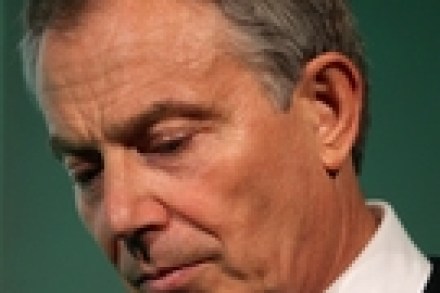
Two Labour figures, two bad news stories.  The first is Tony Blair, and the news that he has given up on the role of EU President – leaving the path more or less clear for the Belgian PM, Herman Van Rompuy.  The second is Harriet Harman, and the news that she faces prosecution for allegedly "driving without due care and attention and driving while using a mobile phone." The Blair story is significant enough on its own – but throw in Harman, and it's doubly certain that Brown's legislative programme will be shunted right off the news agenda.  But isn't that a good thing for Labour, you might ask, given the kicking the Queen's Speech was subjected to in this morning's press?  Well, perhaps.

They think it’s all over | 19 November 2009

From our UK edition

It looks like curtains for ‘President’ Blair. Every commentator besides Adam Boulton and James MacIntyre, who is possessed of a ruinous gambling streak, have now virtually written off the former PM. Blair has an uncanny knack of winning through against the odds, so I will not call time on his chances quite yet. But with Merkel and Sarkozy united against him, the fat lady is warming up for the main event with a few scales and arpeggios. Where would failure leave Blair with regard to Labour and the election?

A phonecall to Kelly looks better than not mentioning expenses

From our UK edition

If you want a measure of how disastrous yesterday's Queen's Speech was for Gordon Brown, you need only pay heed to two things.  First, today's news coverage, which is almost universally negative for the PM.  Even the FT, which is usually quite forgiving of Brown, launches an acerbic attack on the "shameless politicking" in the speech.  And that's before we get onto numerous stories about discontent on the left, as well as unflattering write-ups by political columnists across the political spectrum. The second is David Cameron's interview on the Today programme this morning.

Hoist by his own petard

From our UK edition

The Queen’s Speech contained some worthwhile bills. Parents will face orders when a child breaches antisocial behaviour rules, and the Flood and Water Maintainence Bill, whilst unlikely to rival the 1911 Parliament Act in the annals of Westminster, is welcome, responsible legislation. I can even see that if you’re that way inclined, which I’m not, Harman’s Equality Bill has something to commend it. The remainder of the programme is a political landmine, presenting benevolences that mask incendiary conceits. Clever politics theoretically, but in the rush to prime the fuses, and with little thought for these bills’ practical application, this incomparable government has blown itself up.

A paper-thin Queen’s Speech

From our UK edition

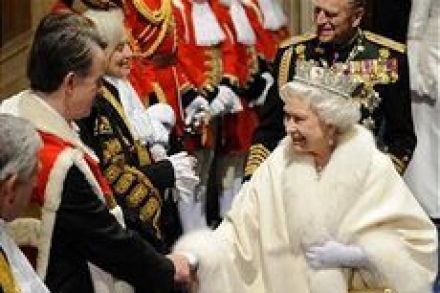
Even before the Queen had trundled back to Buckingham Palace, Mandy had let the cat out of the bag. Speaking on BBC News he said of the Gracious Speech, ‘All these laws are relevant … and achievable. It will be for the public to decide whether they want them or not.’  There you have it. The greatest power in the land admits the Queen’s Speech is Labour’s manifesto. The response to the Gracious Speech is an enjoyably ragged parliamentary occasion, full of ancient traditions and even more ancient jokes. Frank Dobson proposed the Humble Address and spoke with pride about his Holborn constituency where the anti-Apartheid movement had been born.

Nothing to see here

From our UK edition

Blink and you missed it.  After seven minutes, the Queen had rattled through the Government's legislative agenda for the next few months.  It was all pretty much as expected – although it’s worth noting the “council of financial stability,” made up of the Treasury, the Bank of England and FSA, chaired by the Chancellor, and which was first mooted back in July.  The question is whether any of this will connect with the public.  I rather doubt it. We’ll put footage on Coffee House as soon as it’s available.

Last chance saloon

From our UK edition

So what to make of today's Queen's Speech?  Myself, I'm finding it hard to drum up much excitement.  After all, we already know most of its contents (if you want a primer, then check out this excellent Guardian summary article here), and much of it is either underwhelming, unworkable or – as everyone from David Cameron to Michael White has pointed out – self-servingly political on Labour's part.  Tory peers are saying that they'll block the proposals, but you've got to doubt whether they'll be enacted before the next election anyway.  All in all, Danny Finkelstein's analysis is attractive.  As he puts it: "who cares?" But there is one sense in which this Queen's Speech matters.

Things are as they seem

From our UK edition

Steve Richards writes a stirring defence for what is likely to be Labour’s last legislative programme. Richards argues that if you suspend your disbelief and ignore everything you have read about current political situation and you will see not a tired, regressive government but a radical political force. ‘Perhaps none of the proposals will be implemented by the election. Maybe they will all turn into dust, but they mark a departure from cautious incremental approaches usually adopted by the Government. The Conservatives' equivalent proposals have an echo with the mid 1990s, while their Euro-scepticism takes us further back, and their plans for spending cuts to 1981.

Your chance to grade Gordon

From our UK edition

The public's judgement on Gordon Brown will probably come with the general election, but CoffeeHousers may have fun with this webpage in the meantime.  It has been created by the clean-up-politics organisation Power 2010, and will let you grade Gordon Brown in the aftermath of tomorrow's Queen's speech.  Naturally, the grades run from A ("Top of the class") to F ("Brown fail"); you can leave comments; and Gordon will receive a school report in December.  I suppose it's meant to help close the democratic deficit between Downing St and the rest of the country – but it could just help some folk let off a little steam...

Cameron fires a broadside at ‘petty’ Brown

From our UK edition

David Cameron has written an apoplectic editorial in the Times condemning Gordon Brown’s partisan hijacking of the Queen’s Speech. Here is the key section: ‘We are mired in the deepest and longest recession since the Second World War, with deep social problems and a political system that is held in contempt. The State Opening of Parliament tomorrow ought to be about radical ideas to deal with this triple crisis. Instead, by all accounts, the Queen’s Speech will be little more than a Labour press release on palace parchment. Don’t take my word for it. As The Times reported yesterday, a Cabinet minister has been boasting about the contents of the speech. What was said? That it was the most ambitious since Labour had come to power?

Balls dumps Brown into another lose-lose situation

From our UK edition

Things never seem to go smoothly for Gordon.  On a day when the Telegraph carries details of his Whitehall savings programme, the FT has news that one of his closest allies, Ed Balls, is calling for relatively hefty spending increases elsewhere.  Apparently, Balls has asked the Treasury to grant his department – the Department for Children, Schools and Families – real-terms spending increases of 1.4 percent until 2014.  That's an extra £2.6 billion in total – and goes beyond previous Labour commitments to "protect" schools spending. It's a brassy move by Balls and one which is sure to aggravate his colleagues.