Labour party

Piers for Parliament?

From our UK edition

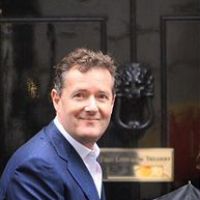
Could you vote for Piers Morgan? In an interview with Freddy Gray in The Spectator tomorrow, he says he's tempted to stand for Parliament - and it's not such a surprise. He has weirdly inserted himself in the political process in recent weeks, defining Nick "no more than 30" Clegg and giving Gordon Brown probably the best piece of television coverage he will receive - ever. Now he is even considering standing for election. 'I am tempted to run on a ticket of openness and frankness about the problems of this country and not being afraid to deal with them,' he says. He doesn't have much time for Cameron, describing him as 'a spivvy snake-oil salesman who has got a load of his Old Etonian mates and they're all on a bit of a jolly to take over the country.' But here's the thing.

PMQs live blog | 17 March 2010

From our UK edition

Stay tuned for live coverage from 1200. 1201: And here we go. Brown starts with condolences for fallen troops, and also for the late Labour MP Ashok Kumar and his family.  For the first question, Tony Baldry takes on Brown over his claim that defence expendintue has risen in real terms under Labour.  A note from the House of Commons library has since shown this to be "incorrect".  Brown says that he is already writing to Chilcot to correct this.  Brown: "I do accept that, in one or two years, defence expenditure did not rise in real terms" - but it did rise in cash terms.  Not a good start for the PM. 1203: The Tories are up in arms about Brown's jibe, in response to the second question, that they'd cut SureStart centres. 1205: Cameron now.

The Tories’ Unite strategy is paying unimagined dividends

From our UK edition

The Tories Unite strategy has been so effective, even Peter Mandelson is peddling it. Led by Mandelson, Labour’s isolated right has questioned Unite’s influence over candidate selection. James Purnell’s preferred successor, Jonny Reynolds, was omitted from the Stalybridge and Hyde shortlist, compiled by the NEC, which has two Unite members on its board. Mandelson and Purnell have urged Downing Street to reopen the race. For its part, Unite responded. One of its preferred candidates for the seat, Glyn Ford, who failed to make the cut, demanded a right to appeal also. The Tories’ must be ecstatic. Their strategy, initially conceived to nullify the Ashcroft scandal, is paying unimagined dividends.

For the workers?

From our UK edition

One of the defences that Labour types are mustering over Unite is, bascially, that it's better to be funded by a body which represents some two million workers than by Ashcroft type figures who may have their own personal agendas. In which case, the question is: do Charlie Whelan and his coterie really represent the views and interests of Unite's members?  And, in answer, it's worth pulling out two snippets from today's papers. EXHIBIT A, courtesy of Danny Finkelstein: "A Populus poll of Unite members last year showed the majority preferring David Cameron to Gordon Brown and opposing Unite donations to Labour.

The Tories open fire on Unite

From our UK edition

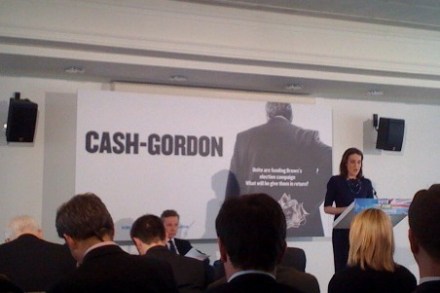
So, the Tories have declared war on Charlie Whelan and Unite – what Eric Pickles calls the "great untold story of British politics". He was joined by no less than two more shadow frontbenchers – Michael Gove and Theresa Villiers – at a briefing attacking the union's political influence this morning. And that's not all: the Tories have produced a document detailing how Unite is funding Labour and opposing reform, and there's even a new digital poster campaign to go along with it.  The gloves are well and truly off.

Brown faces the horror of the petrol pumps

From our UK edition

Yes, I know, cause and correlation aren't the same thing – but Mike Smithson's latest graph over at Political Betting is still incredibly striking.  It shows that the Tories' strongest poll position over the last few years coincided with a high in the petrol price.  It also shows that the smallest gap between Labour and the Tories coincided with when petrol prices were at their lowest.  Which all makes today's Telegraph story about petrol potentially hitting a new high of 120p a litre, as the election approaches, very resonant indeed. The problem for the government is twofold.  First, rising petrol prices are something which millions of people will understand and feel, so much more so than abstract talk about cuts, deficits and the like.

Tories to outline spending cuts after the Budget

From our UK edition

Now here's a turn up: according to Nick Robinson, the Tories are going to announce details of what spending they would cut in the forthcoming fiscal year after next week's Budget.  So it looks like Cameron might come good on his promise, after all. We'll have to wait and see before judging whether those cuts are credible.  But, along with George Osborne's FT article today, it does seem that the Tories have rediscovered the will to take on Labour over when and what to cut.

The Tories’ Second-Best Recruiting Sergeant…

From our UK edition

Things have come to a pretty pass when the Secretary of State for Education endorses ignorance and scoffs at knowledge pretending, one is given to understand, that it's just a kind of posh irrelevance favoured only by the terminally stuffy and fuddy-duddy and out-of-touch. Such, however, seems to be the case for you poor English folk, lumbered as you are with the grim Mr Edward Balls. I'd thought Boris must be exaggerrating matters in his Telegraph  column today. As the Mayor puts it: "Speaking on the radio, Spheroids dismissed the idea that Latin could inspire or motivate pupils.

Brown dithers over BA

From our UK edition

At last, Gordon Brown has been forced from the comfort of silence on the Unite/BA strike. Yesterday, Lord Adonis said that he "absolutely deplored the strike” because the “stakes were too high”. Brown has done nothing more than echo those sentiments, but that is at least a step in the right direction. Obviously, the strike poses an enormous problem for the government. Betting men would get decent odds on BA collapsing, but it is a failing business that needs to change. Labour is a near insolvent party that needs Unite, and not just for its funds but for Charlie Whelan’s tireless work in support if the PM in an election year. So I doubt Labour will take any meaningful action.

Osborne colours the water blue

From our UK edition

George Osborne has long been in the City’s crosshairs, and criticism peaked last week when less than a quarter of a City panel believe he has the mettle to be Chancellor. Today, Osborne fights back in the FT, with a piece co-penned by Jeffrey Sachs. The pair set out an argument for immediate ‘frugality’, rather than ‘cuts’, and damn Brown’s economic policy as short-term politicking: ‘We are sceptical that a sustainable economic recovery can be based on either reinflating the sectors that have declined or believing future job creation can come simply from the public sector payroll.

Brown’s latest confidence trick

From our UK edition

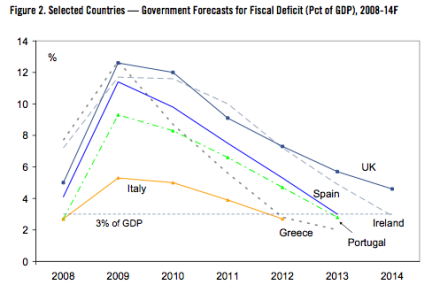
One of the Brownie's we've been hearing recently from the Dear Leader is that it is in some way ambitious to "halve the deficit by 2014". It's a Brownie because it is technically accurate, yet designed to mislead the voter. Two years ago, he forecast no deficit at all by 2014. Now he's projecting one of 5 percent of GDP - simply mammoth - and still makes out that this is something to be proud of. It's a confidence trick: the voter is supposed to think 'I don't know about the figures, but if he's boasting about it then it must be good'.

The Tories should ignore Byrne’s tax fantasy

From our UK edition

Liam Byrne told The Daily Politics yesterday that Labour would reduce the deficit without raising additional taxation to that which is already planned. Iain Martin describes this pledge as being akin to a chocolate fireguard. He’s right. It’s less realistic than a Jeffrey Archer novel. As Andrew Neil notes, Labour plans to reduce £82bn from the deficit by 2014 with £19bn in tax rises and £38bn in cuts. They bank on economic growth eradicating the remaining £25bn. The government’s optimism for Britain’s economic prospects is touching but scarcely credible on the basis of 0.3 percent growth and the frightening trade deficit. Andrew Neil observed that Byrne was armed with books of notes and briefings.

Do these slogans hit the mark?

From our UK edition

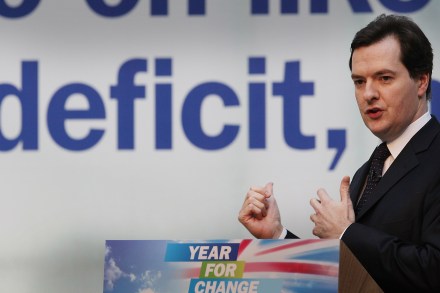
Michael Savage called it right. The LibDems’ campaign slogan (Change that works for you. Building a better Britain) is a wooden, overly alliterative union of Labour’s and the Tories’ respective slogans. All three party slogans are jumbled. ‘A future fair for all’ is mealy-mouthed and grammatically suspect – where will they build this national fairground? Similarly, ‘Year for change’ is vague, and ‘We can’t go on like this’ is a staple line of Radio 4 afternoon plays. So to be fair, the Liberals didn’t have much to work with. Campaign slogans are important, reducing a vision to a firm phrase. For me, none of these quite hit the mark.

Affluence for influence

From our UK edition

I'd assumed the left was dead, but Mehdi Hasan says otherwise. The left is triumphant. Whilst Hasan defines left with abstractions like ‘progressive’ and ‘empowerment’, I prefer something more concrete. Unionism is triumphant. With New Labour in rigor mortis, the Unions slipped their moorings and struck out for old havens. Whelan, Crow, Simpson and Woodley are fixated on disruption. Crow will close the railways next Friday, the BA cabin crew suicide pact is now all but signed in blood, and thousands of civil servants will exchange the pen for the sword. Certainly, the members have grievances, but who doesn’t? Britain is emerging from the deepest recession since 1929 with a financial equivalent one of Kingsley Amis’ existential hangovers.

Gordon’s McCavity Days Are Ending

From our UK edition

Watching the news last night, I was struck by how little one had seen of Gordon Brown on TV recently. No wonder the polls have tightened. But the Prime Minister, alas, cannot play McCavity forever. The "bullying" allegations weren't as damaging as they might have been in other circumstances because, for many, they merely confirmed that Brown is an impossible individual and, frequently, an unpleasant one too. But people already knew or suspected that. Instead, the papers and the teevee have been dominated by Ashcroft and the Tory wobble. In a sense this was a verdict on the government too: since few people expected Labour to win, it's sensible to tak a long look at the opposition.

City middlemen don’t like Osborne precisely because he is competent

From our UK edition

The City’s elopement with New Labour has ended violently. A poll of leading financiers, conducted by City AM, reveals that 73 percent think that a Tory majority would be best for the economy; a mere 10 percent support Labour. But the City has little enthusiasm for George Osborne: 23 percent believe he has the mettle to be Chancellor, 13 percent behind Ken Clarke. So where is it going wrong for Osborne? James Kirkup observes that the Tories recent collapse in the polls coincided with Osborne and Cameron obscuring their economic message. But the City’s antipathy to Osborne is long established. Disquiet reigned even when Osborne and the Tories were storming the polls.

Clegg’s conditions

From our UK edition

Nick Clegg is the rage of the papers this morning. His interview with the Spectator is trailed across the media and the Independent has an interview where Clegg once again lists the four demands that would be his initial negotiating tests for backing a minority government. They are: - Raising the income tax threshold to £10,000 through taxes on the rich. - An education spending boost for the poorest in society through the 'pupil premiums'. - A switch to a Green economy, less dependent on financial services.  - Political reforms at Westminster, including electoral reform. What to make of that quartet? There is much that is sensible, much that is not, and still more that is unworkable.

Hague and Cameron are vindicated for leaving the EPP

From our UK edition

Daniel Hannan breaks the, sadly, not very surprising news that MEPs have voted overwhelmingly in favour of an EU Tobin tax. The margin: 536 to 80. Only the European Conservatives and Reformist group and a handful of radicals opposed the motion. The EPP, which describes itself as ‘centrist’, voted uniformly in favour. Cameron was right to withdraw from a grouping whose interests are at odds not only with British Conservatives but with Britain itself: a tax on all financial transactions would castrate the City. What does this division mean for Britain? On the face of it not a lot: anyone of the member governments could veto it. However, many European governments, including our own, seem alarmingly pro the measures.