Labour party

Byers, Hewitt and Hoon suspended from the Labour party…

From our UK edition

...according to the Beeb just now.  And if you watched tonight's Dispatches programme, you'll know exactly why. Nick Robinson comments that the "Labour leadership" will delight in "taking revenge" on three figures who have ruffled Brown's feathers on multiple occasions – so it continues to look like backbiting and politicking will take priority over geniune reform.  A grubby Parliament just got considerably grubbier.

Four politicians singing the same tune…

From our UK edition

Cabbies have a reputation for telling tall tales, but Stephen Byers could be in a league of his own. Lords Adonis and Mandelson have stated, categorically, that Byers is lying: he did not alter government policy. If so, why on earth did he liken himself to (though I would use a more lurid epithet) a 'cab for hire'? This affair is being obscured by thickening smoke. Each new answer poses further questions. Mandelson’s outright denial contrasts with yesterday’s amnesia. The Sunday Times quoted Mandelson as having “no recollection” of a conversation which Byers alleges took place. There is subtle difference between denying something happened and being unable to recall it. But that’s not the half of it.

Another shaming day for Westminster

From our UK edition

There was something particularly depressing about Harriet Harman’s statement to the House today on this lobbying scandal. The MPs involved have damned themselves more effectively than anybody else could and so the anger of the Commons lacked bite. Though, it was noticeable that the personal attacks on those involved tended to come from their own side not the opposition benches; proof that for many this is another episode in the long running battle for the soul of the Labour party. David Heath, the Lib Dem shadow leader of the House, made probably the best speech. He wanted to know why the House was always reacting to these problems rather than pre-empting them.

Both Labour and the Tories need to get stuck into Vince

From our UK edition

The public remains infatuated with Vince Cable. A Politics Home poll reveals that 31 percent want Cable to be chancellor. It’s a crushing endorsement: Don’t Know is his nearest rival on 24 percent, followed by Ken Clarke on 16 percent. Cable’s reputation rests on his sagacious airs and an apparent contempt for party politics. His eminence is baffling. Fleet-footed fox-trotter he may be; economic guru he is not. Andrew Neil's interview shattered Cable’s invincibility. The Sage of Twickenham admitted to changing his mind over the HBOS Lloyds merger and his constantly shifting position on cuts was exposed. Add to that the ill-thought out Mansions Tax and Cable begins to look leaden. The Tories and Labour should emphasise Cable’s intellectual shortcomings.

Introducing the Nelson tax

From our UK edition

In the News of the World today, I propose a new tax on the rich: specifically, on ex-ministers who go on to earn a crust advising companies how to avoid the regulations with which they have saddled the British economy. I proposed this before the news broke about Byers and Hewitt etc, but their appalling story makes it all the more pertinent. The Nelson tax should be above the top rate, and imposed on any activity such as giving speeches to the Chinese, lobbying, consultancy, etc. - anything which trades from contacts or reputation built up while serving the taxpayer. It would not be levied on activities which the ex-minister could plausibly claim he would have taken on anyway. So if Blair were to return to law, his earnings would be taxed at the normal rate.

Osborne steps up his game

From our UK edition

George Osborne must have changed breakfast cereals, or something, because he's suddenly a different man.  After the Tories muddied their economic message to the point of abstraction a few weeks ago, there's now a new clarity and directness about the shadow chancellor's languange.  Exhibit A was his article in the FT last week.  And Exhibit B comes in the form of his article for the Sunday Telegraph today. It sets out five deceptions that we can expect from the Budget this week, and are all punchy and persuasive in equal measures.  But it's the first which, as I said on Friday, is the most important: "The Chancellor might be so brazen as to claim he has a 'windfall' because it turns out he has to borrow a few billion pounds less than he forecast in the autumn.

Dirty money and dirtier politics

From our UK edition

Busted.  Yep, that's the word which first sprung to mind when I read the Sunday Times's expose of MPs and their dirty lobbying work.  Hoon, Hewitt, Byers – they're all revealed as providing influence and access for cash, and a lot of cash at that.  But it's Byers who comes out of it the worst.  You can read his story here, but suffice to say that it involves boasts about successfully lobbying ministers to change policy, and about parading Tony Blair in front of his clients.  He even describes himself as "a bit like a sort of cab for hire".  I imagine he'll pick up fewer fares now. Our democracy could hardly bear another major political scandal, but here we have one: as grubby, underhand and dispiriting as last year's expenses revelations.

Pot, kettle, black

From our UK edition

George Boateng, Alan Milburn and Andrew Smith have written a letter to George Osborne, calling him to task over the contradictions in his policy. 'It is not clear to us whether these mixed messages are a deliberate attempt to obscure your plans or a symptom of a confused approach to policy but either way the public deserves better.' Fair enough. Osborne's policy has become more concrete in recent weeks, but much remains still to do. Peversely, I think they've given too much detail, and have been found out because they haven't seen the nation's books.The reduction in the amount of cuts that are planned is a case in point. But talk about hypocrisy: take a look at Labour's economic policy in the run-up to the budget. They are certainly clear on cuts: there aren't going to be any.

Ed Miliband’s new investment vs cuts battleground

From our UK edition

Ed Miliband certainly isn't one for holding back, is he?  In an interview with today's Guardian he discusses what we might expect from the Labour manifesto, and there's some pretty noteworthy stuff in there: a People's Bank based around the network of Post Offices; an increase in the minimum wage; a reduction in the voting age to 16; things like that. But, as Sunder Katwala suggests over at Next Left, the most eye-catching passage is when Miliband discusses Free School Meals for all: "The manifesto could well include a pledge to provide free school meals for all children, Miliband says. 'I think a lot of people would like free school meals.

Tony Judt’s Manifesto for the Left

From our UK edition

Anyone who cares about political debate should read the essay by the historian Tony Judt in today's Guardian. It is an astonishing piece of work which argues for a renewal of social democracy in response to the failure of the New Labour experiment (which Judt considers as evidence of the redundancy of the philosophy of Thatcherism so willingly embraced by Blair and Brown). You may quibble with the detail -- Judt remains over-sentimental about the public sector -- but it is a challenge to received wisdom in all strands of dominant contemporary political discourse.  He captures what many of the liberal left feel here: "It's difficult to feel optimistic about the upcoming election.

Why Cameron must never say “deficit”.

From our UK edition

Listening to BBC news, it's striking how they are still using Labour's politically-charged vocabulary. When the universities are kicking off about their budgets being cut, the BBC newsreaders are told to talk about "investment" in higher education, rather than spending. Why, though? An "investment" would be to put £1 billion of taxpayers’ money into an Emerging Markets fund, and hope it grows. Giving it to universities - many of which serve neither students nor society - is not an investment. But using the word "investment" is Labour code for "good spending". There is one particularly frequent example if this: the BBC regularly confuse the words "deficit" and "debt" - a bugbear of mine, and something James Forsyth deals with in his column in this week's magazine.

Strike-a-rama<br />

From our UK edition

So there we have it: talks between the BA management and Unite have collapsed, and the strike is back on for midnight tonight.  Throw in the news that railway workers have also voted in favour of strikes, and it looks like there will be more transport trouble ahead. Politically-speaking, the government won't enjoy operating against a backdrop of industrial unrest as the election approaches.  Sure, last year's postal strikes had no discernible effect on the polls.  But, this time around, the Brown premiership has closer ties with the striking party – and those ties are already front-page news.  Involving Charlie Whelan in Labour's election campaign is now looking like an even more toxic manoeuvre.

Darling’s Budget takes shape

From our UK edition

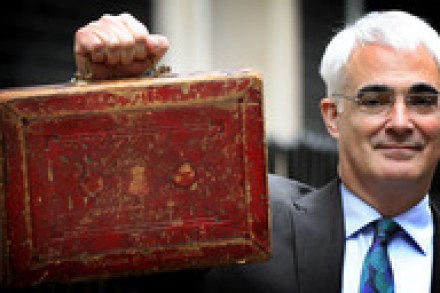
Yep, it's that time of the year again – when the government starts briefing about the contents of the Budget.  First up, there's the news that Alistair Darling may cut projected borrowing figures by £5-10 billion, thanks to higher-than-expected tax receipts.  And then there's Peter Mandelson's claim that new tax rises would have to be considered a year from now – implying, perhaps, that there won't many in this year's Budget. Many folk around Westminister were surprised that the government was putting out a pre-election Budget – especially given the sorry state of the public finances.

It’s turning into an extremely good week for Osborne

From our UK edition

The gods are smiling on George Osborne. On Monday, he wrote an excellent article in the FT, explaining why he opposed the government’s fiscal plans and giving a brief sketch of his alternative vision. It was a short, sharp, shock article that contrasted with the tentative and nebulous announcements that characterised the Tory post-New Year slump. They were immediate benefits. On Tuesday, the EU Commission broadly supported the Conservative position on reducing public spending, and today a City AM poll indicated that 77 percent of a panel of City experts think that cuts must be made this year. Indeed, many panellists rejected Samuel Brittan’s contention, elucidated in last week’s Spectator, that the markets expect the continuation of current strategy.

The Lib Dems keep ’em guessing

From our UK edition

Last week, Nick Clegg was singing the blues.  But, this week, it's clear that he's doing as much as possible to distinguish his party from the others.  Indeed, his performance in PMQs yesterday was a case in point: he went out of his way to attack both Brown and Cameron, and positioned his side as the non-Unite, non-Ashcroft choice.  Given the Lib Dem's recent history with dodgy donors, that's a move which - at the very least - is going to ruffle a few red and blue feathers. So it's striking, today, that the Lib Dems are probably going even heavier on the Ashcroft story than Labour.

The Tories and Lord Ashcroft – stupidity rather than wrongdoing?<br />

From our UK edition

So the Lord Ashcroft story is back on the airwaves, courtesy of a document leaked to the BBC.  That document shows William Hague was "satisfied" with the discussions about Ashcroft's undertakings in 2000 – so the Tories wheeled the shadow foreign secretary onto the Today programme to explain himself to Evan Davis.  Three things struck me: i) Stupidity rather than wrongdoing.  When the Ashcroft story first broke a couple of weeks ago, Labour seemed eager to turn it into one of Tory wrongdoing – they called for inquiries left, right and centre (indeed, there's one taking place today), in the apparent hope that they'd find something improper had gone on.   But the more that's emerged, the less likely that has become.

Tales from the Downing Street Crypt

From our UK edition

Why aren't more people talking more about Andrew Rawnsley's book, The End of the Party? It's full of fascinating, appalling stories! Again, the Tories (and the Lib Dems) should be producing a Rawnsley Dossier on Brown. There's nae shortage of material that's for sure. Here's a bit from page 305: The scene: Anthony Minghella has arrived to film a 2005 PPB featuring Gordon and Tony that's designed to show what good pals they are... 'It's all about working as a team,' Brown was recorded saying to the Prime Minister he wanted rid of. 'It's a partnership that has worked,' said Blair of the Chancellor he had planned to sack. Before the filming began, Minghella did a warm-up exercise with his subjects to get them into the mood for some acting.

The cost of Brown’s propaganda splurge

From our UK edition

Gordon Brown has been shameless in using the tools of state to advance his party political objectives – to him, government is electoral war by other means. Anyone who has turned on a commercial radio station recently will have worked out his latest trick: a mass propaganda splurge before an election campaign. Get on a bus, and it can be 100 percent state adverts – advising how Big Brother will help you get a job, buy a car, see off door-to-door salesmen, give you a job in the prison services – anything you want. We at The Spectator have tracked down the figures that show the extent of all this. State advertising was £13 million in December – yet surged to £34 million last month.

The Tories’ growing mood of quiet confidence

From our UK edition

It is worth pointing out, because it is so different from what was happening a few weeks back, that the Tories are having another good day today. Gordon Brown has been forced to admit at PMQs that he had got his defence statistics wrong when addressing both the Commons and the Chilcot inquiry, the Unite story is rumbling on and there are various rows breaking out over Labour’s process for selecting candidates. All of this has led to a distinct improvement in Tory morale. A few weeks ago, Tory MPs were irritated and despondent. Some had even started ruminating on the leadership challenge that would occur if the Tories were not returned as the largest party. But there is now a mood of quiet confidence among Tory MPs that the party will win a small but workable majority.