Labour party

Guess who’s back

From our UK edition

Yep, you guessed right: Tony Blair was doing his bit for the Labour cause this morning, with a speech in his old constituency.  In truth, there was little in it of any note – or that we haven't heard countless times from his successor.  Thus the Tories were derided as either the "old Tory party," or as confused about their direction of travel.  Gordon Brown and Alistair Darling were hailed as the men who brought us through the worst of the economic storm.  And even the soundbites ("meeting not just future challenges, but seizing future opportunities") sounded as if they had come from straight from the Brownite copybook.

Labour have moved on from the death tax for now – and so should the Tories

From our UK edition

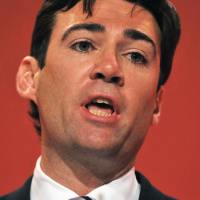
Labour's plans for a national care service aren't looking too sharp this morning.  Andy Burnham is expected to announce a cap on residential costs for the elderly later today – to be funded by freezing inheritance tax bands, raising the statutory retirement age, and (lo!) efficiency savings.  But the full, free-for-everyone-at-the-point-of-use service will have to wait some time – or at least until a new independent commission has decided on how it can be funded in the long-term.  In other words, the government has decided to park the death tax issue until well after the election. Presentationally speaking, this is proving difficult for the government.

Osborne’s silent victory

From our UK edition

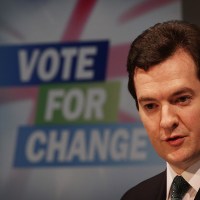
I think Osborne’s main victory tonight would be to reassure those who thought him a clueless idiot. The left demonise him, and it’s easy for the right to despair at him too (yes, guilty). But the figure we saw tonight was calm, collected and assured – and I reckon this was his achievement. He allayed fears. Expectations of his performance would have been rock bottom, and he’d have surpassed them easily. He was playing it safe. Vince Cable did his after-dinner speaking comedy act (I met William Hague in the ‘spin room’ afterwards, who swears that some of Cables lines were nicked from his repertoire), and the studio audience loved him for it. But Cable is not going to be Chancellor, he can afford to take risks.

Tory poll lead widens further

From our UK edition

I'll spare you the nitty-gritty, but suffice to say that three separate polls tonight record growing leads for the Tories – of 7, 7 and 10 points, respectively.  One of the 7-point leads is from the YouGov Daily Tracker, which has been hovering around the 4 point mark for the past few weeks.  You could argue that we're still operating more or less within the margin of error.  That's true.  But throw in the polls from the weekend, and you'd be hard-pressed not to conclude that the tide is turning, at least momentarily, in Cameron & Co.'s favour.  Either way, Tory folk around Westminster certainly seem more relaxed than they have been for months.

Few fireworks – but solid performances from Cable and Osborne<br />

From our UK edition

So now we know what happens when you put three would-be finance ministers into a room, and start asking them questions.  There's plenty of esoteric language, a good dash of posturing – and next to no fireworks.  Thinking about it, perhaps we shouldn't have expected much else. Not that the pyrotechnics were completely absent, of course.  Both Cable and Darling rounded on Osborne over the Tories' national insurance plans, and Osborne hit back with some well-directed attacks on Labour's own tax and spend agenda – even getting Darling to waver and admit that a "death tax" is no longer on the cards.   But, for the most part, calm and civility ruled the day.  I lost count of how many times the participants said "I agree with...

Brown and Cameron’s Commons clash serves as the warm-up for tonight’s debate

From our UK edition

Gordon Brown and David Cameron have just been facing each other in the Commons chamber. Brown was notionally reporting back on the European summit meeting, but in relaity Brown and Cameron were setting the stage for the Chancellor’s debate tonight. Cameron claimed that there was a new dividing line in British politics, the Tories for ‘efficency and aspiration’ and Labour for ‘waste and taxes.’ Brown claimed that the Tories were indulging in panic measures and that their plans announced today would ‘withdraw the support that is necessary for the economy to have a sustained recovery.’ Brown might have some Keynesian economists on his side when he says this.

How long will it take Gordon Brown to act on this?

From our UK edition

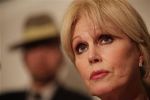
Defence minister Kevan Jones was extremely foolish to re-open the Gurkhas’ residency issue at the electoral cycle’s eleventh hour. Accusing Joanna Lumley of maintaining a “deathly silence” over the campaign was a temptation too many for fate.   She’s silent no longer. She convened a press conference and immediately gained the moral, and strategic, high-ground, saying: “(There is) a sense of regret that it has come to this, almost clearing our name in public. “We want to call on the prime minister to confirm that the policy is one that he still completely supports, to affirm from the prime minister that the MoD is still behind what it said it was behind.

Back to his Tory best

From our UK edition

George Osborne has just set the scene for tonight's Chancellors' debate by announcing something neither Darling or Cable will be able to match: a tax cut. It's a real one, it will benefit some 20m workers and (best of all) it will be paid for by spending cuts. While the amount is not huge - everyone on under £43,000 will be £150 better off - it indicates the route the Conservatives would go down in government.   Trusting people with their own money, and stoking the recovery by cutting the tax on jobs. Here are the main points: 1) Osborne would raise National Insurance threshold in Apr11. One of the many booby traps Brown laid for the country after the next election is a national insurance hike of 1 percent, for both employer and employee.

A smart move by Osborne – but he needs to ready himself for his opponents’ attacks

From our UK edition

There's little doubting it: the Tory plan to (at least partially) reverse Labour's national insurance hike has handed George Osborne a high-calibre weapon for tonight's TV debate.  It is, I suspect, an attractive and attention-grapping policy in itself.  But it also helps the shadow Chancellor paint the Tories as the party of aspiration.  Or, as Tim Montgomerie has put it: "Seven out of ten working people will be better off if Cameron becomes Prime Minister." But announcing the policy this morning has also given Alistair Darling and Vince Cable a chance to very publicly denounce it later today.  We've already had a preview of what's likely to form the central thrust of Darling's counterattack, courtesy of Patrick McFadden on GMTV earlier.

Labour’s Political Football

From our UK edition

Elections really are pretty grim. Perhaps it's because I've been overseas for some of them (well, 1997 and 2005) that this one seems especially awful. First there's the rash of "celebrity endorsements"* which are themselves enough to make one abandon any remaining hope. I mean, if the Tories are "backed" by Ulrika Jonsson, John McCririck, Tony Handley and Jimmy Greaves how can any sentient person consider that an argument for the Conservative cause? Then there's this latest election-gimmick from Labour: proposals** to "give" football supporters' groups a 25% stake in their club's shareholding. By give, of course, I mean insist. Really, it's hard to know where to begin. But this is a) ridiculous b) pointless and c) pointlessly ridiculous.

The most corrupt parliament ever?

From our UK edition

It makes you proud to be British. Where resourcefulness and self-worth are concerned, our political class is unmatched. Former Sports minister and ambassador for the 2018 World Cup bid, Richard Caborn, has been stung by the Sunday Times soliciting influence for £2,500 a day ‘plus expenses, obviously’. Obviously Richard, we would expect nothing less from a man of your eminence. So to for former Defence Minister, Adam Ingram, who takes lobbying so seriously he charges VAT. I wonder how Colonel Gadaffi reacted to the 17.5 percent extra charge when Ingram facilitated the construction of a new Libyan defence academy? Hypocrisy is more ubiquitous at Westminster than Pugin.

Explaining the NotW endorsement

From our UK edition

The News of the World's endorsement of the Conservatives today is worth reading. It has taken some time and much soul-searching for the paper to make this decision. Papers, even under the same proprietor, have different readerships with different outlooks on life. The Sun came out for the Tories on the last day of the Labour conference last September, but its stablemate has taken far longer. It has been firm in its denunciation of Brown's failings but – like many voters – it has looked long and hard at just how a Tory government would correct them. The reason for its endorsement now is laid out in the leading article. It started with the reasons for why it backed New Labour in 1997 – what would it change?

Three Sunday polls have growing Tory leads

From our UK edition

We're operating in or around the margin of error here, so we can't be certain whether this is truly the result of the Budget – but it's still striking that three polls in tomorrow's papers have growing Tory leads.  The ICM poll for the News of the World has the Tories up one to 39 percent, Labour down one to 31, and the Lib Dems on 19.   YouGov's daily tracker has the the Tories unchanged on 37 percent, Labour down one to 32, and the Lib Dems on 19.  And Anthony Wells is reporting a BPIX poll for the Mail on Sunday, which has the Tories on 37 percent, and Labour on 30 percent.  So that's Tory leads of 8 points, 5 points and 7 points, respectively.  Enough to calm a few Tory nerves.

How Brown would get Darling out of the Treasury

From our UK edition

After reading Brown's claims in the Guardian today, this Kill A Minister mechanism in his speech today rather jumped out at me: "I will set out a clear and public annual contract for each new Cabinet Minister, detailing what I expect them and their department to deliver to the British people, and that their continued appointment is dependent on their delivery just as it would be in a business or any other organisation." I mean, you can just imagine what Alistair Darling's first "contract" would look like: You, the Chancellor, will undertake to deliver the following to the British people: i) Economic growth of 5 percent in 2010-11 ii) A sufficient level of investment in our schools, hospitals and families, to be determined by Number 10.

Will anyone take any notice of Labour’s five pledges?

From our UK edition

So the Labour pledge card is back – and, this time, it's a good deal more nebulous than in 1997 or 2001, but quite similar to 2005.*  Here are the themes that Brown & Co. will be campaigning on: i) Secure our recovery ii) Raise family living standards iii) Build a high tech economy iv) Protect frontline services v) Strengthen fairness in communities There's another key difference with previous elections too: one of trust.  Sure, voters have always been reluctant to take politicians' promises and exhortations at face value.  But it's a safe bet that they're even more sceptical and uninterested this time around. *Although, as Alastair Campbell points out, there is more detail on the back of the card – but a bit too much to be immediately memorable.

The Tories are paying the price for Osborne’s mercurial political instincts

From our UK edition

I’m at a loss. How can a government that will raise the national debt to £1.4 trillion be trusted to run the economy? The Daily Politics/Com Res poll shows that Labour is more trusted on the economy than the Tories; it indicts George Osborne’s political performance. As Fraser noted, Osborne blew an unprecedented opportunity on yesterday's Today programme. The danger inherent in a £1.4 trillion national debt is not a difficult argument to make. Tax hikes, inflation and soaring interest rates will be the progeny of Brown’s continued borrowing binge. Yet Osborne confined his attack to valid but esoteric points about credit ratings and a list of acronyms. Ken Clarke would not have made such an elementary political mistake.

A week to forget for Andrew Adonis

From our UK edition

The weekend cannot come quick enough for Andrew Adonis. What an awful week. The BA strike wrecked travel; the absurd Stephen Byers dragged him into the lobbying scandal; the RMT voted in favour of Bob Crow’s surreal steam-era fantasy; and today comes the coup de grace: the High Court decides that the third Heathrow runway is ‘untenable’. Transport is beginning to make Northern Ireland look like a soft brief, but Adonis hides his perturbation. He responded to this morning’s news by saying: "I welcome this court ruling. Heathrow is Britain's principal hub airport. It is vital not only to the national economy but also enables millions of citizens to keep in touch with their friends and family and to take a well-deserved holiday.

What did Darling mean by his “deeper and tougher” cuts claim?

From our UK edition

There's been some hubbub on the good ol' blogosphere about Darling's claim that Labour spending cuts would be "deeper and tougher" than Thatcher's.  Did Thatcher actually cut spending?  What would that indicatate about Labour's plans?  And so on. Part of the confusion is caused by the different metrics that are referred to as "spending".  So here's a quick guide to what Darling might have had in mind: OPTION 1: Real-terms total spending.  As the below graph from the IFS shows (taken from this excellent blogpost by the FT's Alex Barker), real-terms total public spending only fell in two years of the Thatcher premiership.  In all the other years it rose.  Indeed, spending increased by an average of 1.