Labour party

Brown’s thin air manifesto

From our UK edition

"You got that, Britain? We. Are. The. Future. Future, future, future. The Tories are the past. We are the Future. The future that is fair for all. We are that future. For all."  And so, more or less, went Gordon Brown's pitch to the nation at Labour's manifesto launch.  Except it lasted a good hour and a quarter.  And it involved a eye-wateringly fuzzy screen behind Brown's head.  And a needless introduction from Harriet Harman.  So if you managed to tune into it all, then well done: your enthusiasm for politics knows no bounds. But Labour's problems today weren't so much presentational as political.  After thirteen years in power, Brown was always going to struggle to convincingly sell this "future" shtick.

Labour manifesto launch: live blog

From our UK edition

1240: And Brown rounds proceedings off by saying "future" a few times.  Did you manage to stay awake?  Never mind - I did, so that you wouldn't have to.  My immediate thoughts below, of course.  But I've given the actual manifesto a quick read-through as I've been typing - and will report back shortly.  That's it for this live blog.  Thanks for tuning in, and all that. 1237: Brown says that "we are the party of everyone on middle or modest incomes in this country".  Hm - try telling that to everyone who lost out from the 10p tax debacle. 1235: This is dragging on.  The Tories should be taking lessons from this event - things need to be clearer and more direct.

Will Labour’s manifesto mean the end of VAT attacks on the Tories?

From our UK edition

You know it's the day you've all been waiting for, CoffeeHousers – the day of Labour's manifesto launch.  Last Thursday, Douglas Alexander described the document as a "progressive programme worthy of these testing times".  So, well, it must be good, mustn't it? Problem is, this manifesto risks going the same way as the Budget.  So much of it has been so heavily trailed, that there's a danger we've already heard it all – and that it will be met with weary indifference by the media and the public alike.

Dirtier tactics

From our UK edition

I think we all expected this election campaign to be fought a few inches below the belt.  But, as Iain Dale and Dizzy say, Labour's tactic of mailing scaremongering leaflets to cancer sufferers is some new kind of low.  I mean, just imagine how it would feel to receive, as a cancer patient or an immediate family member, a leaflet which politicises the problem to the point of suggesting that your care would be jeapordised by voting for another party.  And then imagine how it would feel if you have been specifically targeted because of your connections with the illness, as seems to have been the case here.  Well, it defies belief that this is how the party of government is going about "restoring trust in our broken politics," or whatever they say.

An ICM marginals poll points to a hung parliament

From our UK edition

The News of the World has its expensive and much-awaited ICM poll of the marginals tomorrow. There is some good news for Cameron, and some not-so-good news. First: 66 percent of voters in the marginals agree with the message "it's time for change". Bad news: a surprisingly large number think that Nick Clegg represents that change. A Lib Dem surge means that Tory swing is just 6 percent in the marginals, versus 5 percent nationally. Where is the Lord Ashcroft magic? In James's political column this week, he says the Tories had been so confident about the marginals that they reckon they need a 5-point lead nationally to win, rather than the 8-point lead previously assumed. The News of the World/ICM poll challenges that narrative.

The case for voting Conservative

From our UK edition

Why vote for Cameron? The reasons for voting against Gordon Brown are so numerous that the positive pro-Tory reasons for voting are often lost. This week's Spectator gives you all the ammo you need to win around wavering friends, colleagues and family. We have restricted ourselves to the ten most compelling points. I summarise them below: 1. School reform. In itself, it's enough reason to vote Tory. Gove has specifically promise that within four years of a Tory government everyone will have an independent school offering to educate their kid for free. This should have been a 1981 Tory proposal, but Keith Joseph lost a battle with the civil service (after he recruited a young Cambridge graduate named Oliver Letwin to help him fight it). 2.

How Labour and the Lib Dems are attacking the Tories’ marriage tax break

From our UK edition

This morning, we've already seen the two primary attacks which will be used against the marriage tax break outlined by George Osborne in the Times today.  The first came courtesy of Vince Cable, who said it represents a "derisory" sum of £3 a week for those who benefit from it.  And the second was from Ed Balls – who else? – who labelled the policy as "discriminatory," because it doesn't cover every married person, and nor does it account for couples who split.  Or as he rather suggestively put it: "if your husband beats you up and leaves you you get no support." One thing worth noting is how the Tories' opponents aren't majoring on a fiscal irresponsibility angle, as they've been trying to with the national insurance cut.

The role of the state

From our UK edition

Tony Judt is a vivacious and controversial historian. He is Jewish but has turned against Israel. He is a thinker of the Left who has ended up in the USA. And now he has been struck down with a grievous illness, a virulent form of motor neurone disease which has left him paralysed from the neck down. As a result he has composed his latest book in his head and then dictated it to an aide, using the classic memory device of setting the text in different rooms of an elaborate building. This elegant essay is the result. Judt’s illness has left him determined to restate his belief in what he calls social democracy. It is above all aimed at the younger generation. He fears that, because of the dominance of neo-liberalism, they have lost an appreciation of the good that the state can do.

What Makes a Labour Candidate Unsuitable?

From our UK edition

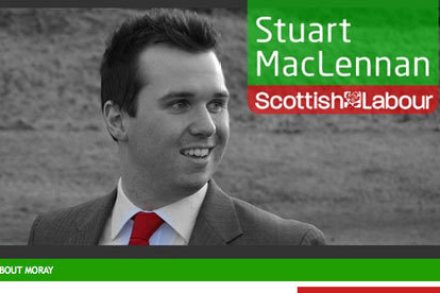
Stuart McLennan, Labour's candidate for Moray, has resigned over his Twitter stupidity and quite right too. What a repellent individual. And how obvious he made the fact by tweeting his every last small-minded thought. So what of Battersea MP's Martin Linton's outburst warning about the "tentacles" of Israel that were buying the election? As I report in today's Jewish Chronicle, the Board of Deputies of British Jews has asked the Labour Party to consider Linton's suitability as a candidate. Linton has since apologised for the tentacles comments, but not for the suggestion that the Israel lobby has  undue influence on British politics.

Tories remain on the front foot over national insurance

From our UK edition

A copy of a letter that George Osborne sent to Alistair Darling today: Alistair Darling The Labour Party 39 Victoria Street London   SW1H 0HA 9 April 2010 Dear Alistair, In the course of today, the Labour Party’s economic policy has collapsed in a heap of contradictions. In the morning, you attacked our efficiency plans on the grounds that they would reduce public sector headcount – but by lunchtime your own Treasury Minister, Stephen Timms, admitted that your own spending plans meant that “there will be some job losses” (The Daily Politics, BBC 2, 9 April 2010).

Three lessons for the Tories on immigration

From our UK edition

The witterings of Phil Woolas about immigration yesterday - where he accused The Spectator of contorting immigration figures and double-counting immigrants - have landed him in plenty trouble. Stephen Timms was on the Daily Politics today and conceded that Woolas was talking out of his hat. They weren't our figures, they were from the ONS - and compiled under orders from Eurostat with its Labour Force Survey (LFS) scheme. Andrew Neil has written it up in a blog here. The government is at sea because even ministers in charge of the relevant departments have no idea about the scale of immigration in Britain. This wee farrago brings three lessons for the Conservatives. 1. Honesty about immigration is crucial.

Are the Tories ready for joined-up government?

From our UK edition

The Civil Service is readying itself for a new government. The BBC has already reported a discussion of efficiency savings among senior officials. In another part of Whitehall, work is a foot on how to set up a National Security Council should the Tories win. I have in the last few weeks been interviewing ex-ministers and senior officials as research for a RUSI paper, due out soon after the election, on how to improve the government's security set-up. Traipsing around various departments, a number of interesting conclusions have come to light: - Conservative ideas for an NSC are not the same as the government's NSID committee, however much ministers say it is, but there is yet no clarity on the Tory detail of what one official called "the second layer" of reforms.

Darling admits defeat …?

From our UK edition

Curious exchange of the BBC, Alistair Darling admitted that the Tories were winning the opening stages of the campaign: "They might have got their political tactics right for the first day or so but their overall judgment is just plain wrong." Ben Brogan has more details. This looks remarkably like an admission of defeat on the politics of the National Insurance, which, considering it took Labour 10 to respond, seems an accurate assessment. Not good politics, Darling.

Darling in cloud cuckoo land

From our UK edition

Labour can’t lay a finger on the Tories over national insurance. And desperation has morphed into hysteria. Alistair Darling has just told Sky News that David Cameron contradicted George Osborne and that the Tory plan is “unravelling”. "He is going to have to find deeper cuts, some experts are saying tens of thousands of jobs will go," he said. "He's had to go on to say that he's going to have to cut which will mean job losses." Now, Cameron said: "Even after our plans for public sector pay and pensions, benefits, ID cards - yes, it's still not enough. I accept that.” But that does not contradict George Osborne, who is clear that pay freezes and low level efficiencies will make only a small impression on Brown and Darling’s mess.

Why Labour Needs To Be Much Fleeter of Foot

From our UK edition

It is difficult to fault Cameron's idea of a national volunteer force. While the Labour Party was forced to spend today defending the National Insurance hike, the Tories were able to seize the intiative with a genuinely far-sighted proposal. All the more galling for the government that this idea has been rattling around in Labour circles for at least a year. Cameron has stolen Labour's clothes on this just as he did on co-operatives. David Lammy will be seething. His ideas for compulsory civic service were promoted in the pages of Prospect a year ago. He has been lobbying within the Labour Party for the policy for considerably longer.

Labour’s high risk, high reward strategy on national insurance

From our UK edition

Labour today has tried to shift the National Insurance debate from whether you should cut waste to prevent a tax rise, to whether the Tories’ sums add up. When the Tories announced their plan to avoid the worst of Labour’s NICs rise by cutting waste they made a conscious decision not to offer details on how they would make these efficiency savings. As one shadow Cabinet minister explained to me, they had no desire to repeat the experience of the James Review when they were going on Newsnight to argue the toss over individual savings. The Tories think that the argument that government can save one pound in every hundred that it spends is credible and that combined with the endorsement of two men who have advised the government on efficiency so recently is enough.

The VAT dividing line is growing deeper

From our UK edition

Is this a pledge we can count on?  After the Lib Dems suggested they wouldn't increase VAT earlier, the Labour Chief Whip has told ITV's Lucy Manning that his party won't either.  If so, it's quite a turnaround from when both Darling and Cable refused to rule out VAT hikes during last week's Chancellor's debate. I wouldn't be surprised if we see a LibLab pincer movement against the Tories now: the two parties who seem to have ruled out VAT hikes against the one which is being being slightly more equivocal about it.  As I said earlier, it would hardly be edifying politics.  But the real worry is if it dissuades politicians from talking sensibly about how to fill our country's fiscal black hole.

Your guide to Labour’s latest attack

From our UK edition

So much for the positive vision.  Labour have spent most of the day attacking the Tories and their national insurance cut.  You'd have heard Brown trying to wheel out statistics about it during his Today Programme interview. And then the PM's press conference, alongside Peter Mandelson and Alistair Darling, reduced to a How The Tories' Sums Don't Add Up session. One thing that's striking about the latest attacks is how Labour are slipping, with calculated ease, between different figures to represent the efficiency savings that the Tories hope will fund their NI policy.  Here's a quick guide to the numbers, so you know what's what: £6 billion: This is roughly how much the Tories think the Exchequer will lose from their national insurance plan.