Labour party

What Do We Really Want from a Labour Government?

From our UK edition

After reading Seumas Milne and Timothy Garton Ash in the Guardian and then looking at the advert for the New Left Review on the back of the London Review of Books ("Good Riddance to New Labour"), I do wonder what these people want from a centre-left government. God knows I have been critical of New Labour -- I've had a pop at its record on civil liberties, education, radical Islam, prisons. I could go on. This government has lacked imagination and it has failed to be bold enough. But between 1997 and 2008 Britain became more tolerant and more confident. Hell, it has almost became a modern European nation. It is a better place to be than it was in the 1980s. David Cameron knows that and so do his closest allies in the Conservative Party.

Brown’s signature parade

From our UK edition

Only 58? Labour's last letter attacking Tory spending cuts this year had 60 economists' signatures attached to it. Their latest, released today, has only 58. Number 10's signature-marshalling skills are clearly on the wane. I sincerely hope that the Tories don't marshal some economists of their own. The last time that happened, back in February, we witnessed the low point of the fiscal debate – with both sides using a bunch of academics as a substitute for a proper conversation with the public. And, lest we forget, Guido's handy graph reminds us just what those economists were and are quibbling over anyway. This is a phoney war, so it's little surprise that Brown has resorted to it once again. Thankfully, signs are that Tories won't pay heed to the bait.

Rod Liddle is Right

From our UK edition

Why, as Rod asks, has so little attention been paid to the story about Labour sending 250,000 women leaflets suggesting that if they get cancer they'd probably die under a Conservative government? I was in Ireland at the weekend and so didn't see the Sunday Times story but as far as I can see, what follow-up there's been on the BBC and elsewhere has been remarkably restrained. To recap: Labour has become embroiled in a row about the use of personal data after sending cancer patients alarmist mailshots saying their lives could be at risk under a Conservative government. Cards addressed to sufferers by name warn that a Labour guarantee to see a cancer specialist within two weeks would be scrapped by the Tories.

The Lib Dems Lose a Voter

From our UK edition

I had my first experience of frontline canvassing in a marginal at the weekend, when I visited my mum in the west country for a few days. She lives in a village in Nick Harvey's North Devon constituency, a key target seat for the Tories. As a lifelong Labour and former activist she is torn between wasting her vote on the Labour candidate or voting tactically to keep out  the Tory, Philip Milton. On Monday we found some Lib Dem canvassers on the doorstep and very cheery in that way Lib Dems have to be. They explained why it made no sense to vote Labour in North Devon and the clincher was when one local Lib Dem said, "You really should vote to keep Milton out, I should know, I'm his cousin." Well, it was almost the clincher.

First poll since all the manifesto launches has the Tories ahead by 9 

From our UK edition

The figures from YouGov's daily tracker have just been released, and they have the Tories on 41 percent (up 2), Labour on 32 (up 1), and the Lib Dems on 18 (down 2) – so a lead of 9 points for Cameron & Co.  It's worth noting, as well, that the Tory manifesto comes out on top in supplementary questions about which has the best policies, which is most honest and which is the best for the country.  But, to my eye, the most striking result is that relatively low level of support for the Lib Dems.  I imagine that they'd certainly hope for better as they continue peddling their anti-"Labservative" message.

Brown demolishes himself with untimely ‘admission’

From our UK edition

Sorry is the hardest word and Gordon Brown stil hasn’t said it. But, everyday brings surprises. His ‘admission’ about his errors is the first time I’ve ever agreed with his economic analysis. In short, even Brown knows he’s not what he’s cracked up to be. Making such an admission at this stage of the election cycle is extraordinary. The intention may have been to make Brown look human. In which case, he’s succeeded, but to his detriment. Brown looks Biblically fallible. Labour’s campaign rests on one deduction. Gordon Brown built an era of prosperity; then Gordon Brown saved the country from a recession that originated in America; therefore Gordon Brown is the man to lead the country back to prosperity.

How Charlie Whelan killed New Labour

From our UK edition

Last summer, The Spectator received a letter from Charlie Whelan's solicitors complaining about this post - where we mention their client's spot of bother with his colleagues at Unite. Carter-Ruck were instructed on one of the no-win-no-fee deals: it cost Whelan nothing to sue, but could cost us £thousands to defend. So the lawyer's letter is, by itself, an effective form of intimidation. A magazine with a small budget obviously faces huge pressure to do what he wanted: apologise, pay up and (suspiciously) undertake not to pursue the story any further. Under the circumstances, The Spectator could do only one thing. Our full investigation into Charlie Whelan is the cover story of tomorrow's magazine (see image, left).

Follow the money | 14 April 2010

From our UK edition

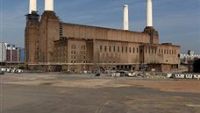
Looking at the papers this morning and watching the news last night, you realise what a benefit in the image stakes the Tory cash advantage gives them. The Tories can afford to hire out better venues than the other two parties. So while Labour launched their manifesto in hospital and the Lib Dems theirs at Bloomberg, the Tories used Battersea Power Station which provided them with much better visuals. We saw the same dynamic on the day the election was called: Labour’s event was in Downing Street, the Lib Dem one in an office and the Tory one on the terrace of County Hall looking over to Parliament The Mirror’s front page today accuses Cameron of using his photo-ops to benefit the firms that are backing his position on National Insurance.

Labour’s response to the Tory manifesto

From our UK edition

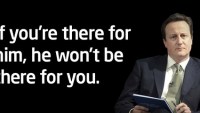
Anyone else think that Labour's latest poster is like a negative of the Tories' "Vote For Me" effort?  White text on a black background, instead of black text on a white background.  A picture of Cameron, instead of Brown.  I mean, the only thing that isn't swapped over is the tone: both go on the attack, rather than presenting a positive vision. Labour's message here is that the Tories' Big Society manifesto washes its hands of the people.  Which echoes the caricatures - "an agenda for abandonment" - that Peter Mandelson wheeled out yesterday, and which you can expect to hear again and again between now and polling day.  The question is whether this attack will connect at a time when people trust politicians - and their capabilities - less than ever.

Children of Maggie

From our UK edition

I was going to say that Labour have gone negative but, actually, their campaign has, for any number of understandable reasons, been negative all along. Still, that reached a new low (or height) this evening with this advert, broadcast in Scotland only: It's impressively dishonest on many levels, not least because any decisions taken on Scottish NHS or education funding will be made in Edinburgh, not by any Conservative government in London. True, the block grant could be squeezed but this is true regardless of who is in power in London or who's running Holyrood.

Counting the cost of Labour’s national insurance hike

From our UK edition

Insightful work from the FT's Chris Giles, who has dug out a couple of academic articles - including one co-authored, in 2007, by George Osborne's current chief of staff, Rupert Harrison - to work out how many jobs Labour's national insurance rise might cost the economy.  The results?  Well, according to Giles, one says that 23,000 jobs will be lost, and the other comes up with 22,000. Neither of these are figures that Labour will want to crow about.  But, as Giles points out, they are below the "57,000 jobs in small and medium-sized businesses alone" that the Conservatives predict in their manifesto.

Brown will fear the foreign policy debate most of all

From our UK edition

The Tories’ Invitation to join the Government was never going to dwell on defence. (You can listen to the brief chapter on defence here.)  But that doesn’t mean defence isn’t an election issue. It is, and it's one that the Tories will win. Brown’s defence record is abysmal even by his standards. Former service chiefs have described how Brown ‘guillotined’ defence budgets whilst fighting two wars, and field commanders in Afghanistan have made constant reference to equipment shortages. These accusations were corroborated by facts that Brown then tried to distort before a public inquiry. That’s not all.

Voting blues

From our UK edition

One of the key questions in any election is turnout: whose voters will turn up and whose won’t. People are clearly disappointed in the political class - on a scale from 0 to 10, trust in politicians and parties is hovering around 3 points - but does it mean that they will stay at home, spoil their ballots or opt for fringe parties and single-issue candidates? What about the talk of a hung parliament ? Will it make voters believe that their vote counts - and so bring them to the polling stations -- or make them stay at home, giving up on the idea that any change is possible? In the last three elections turnout was low, relatively speaking: 59 percent of the electorate voted in 2001 and 61 percent went to the polls in 2005.

The Tories invite you to join government

From our UK edition

Battersea Power Station was the site of one of the Tories' most effective publicity stunts of recent months – and it will be the venue for their manifesto launch tomorrow.  Details are already emerging about the document (ConHome has a good summary here), which sounds as though it won't contain much, if anything, that we haven't heard before.  As with Labour earlier, this approach risks an indifferent response from the media and the public.  But at least the Tories have clearer flagship policies to broadcast – the national insurance cut among them. While the manifesto may not contain any new policy, it sounds as though the Tories have gone to town on it presentationally.

What Brown really offers Britain…

From our UK edition

Labour's manifesto cover has been the cause of much merriment online - creating what the Americans call "subvertisments". ConservativeHome has already lined up some spoofs. We asked Carla Millar, who has done quite a bit of work for The Spectator, to do a version with a mushroom cloud of debt in the middle and the family shielding their eyes. This is the result.

Adam Boulton’s damning verdict

From our UK edition

We've already collected some of the general blogosphere response to Labour's manifesto launch, but this addendum is worth making separately.  In a post describing the hostility of the Labour crowd towards the gathered media, Adam Boulton writes (with my highlights): "The crowd, including some cabinet ministers, booed and shouted at questions they didn’t like. Nick Robinson, the BBC’s political editor, had his question interrupted by jeering and Graham Wilson of the Sun was booed just for identifying his newspaper. Labour did not behave like that in the last three elections when the Sun backed them. Gordon Brown was happy to join in this confrontational mood. It was the most substantive aspect of the manifesto event.

Around the Web: Labour’s manifesto

From our UK edition

We have some video footage of Brown’s speech at Spectator Live, and you can read Pete’s analysis here. Elsewhere on the Web: Hopi Sen likes the promise on early diagnosis on Cancer care, and the fact that no incredible spending pledges have been included. The Guardian’s Julian Glover attacks a 'meaningless manifesto': 'Ed Miliband, who we are told wrote Labour's manifesto, is fond of saying that the Tories are on the wrong side of the battle of ideas. It's a neat phrase, but an empty one unless you have ideas of your own. On the basis of today's manifesto performance, Labour doesn't.