Labour party

Cameron is much improved – but the Lib Dem bubble hasn’t burst

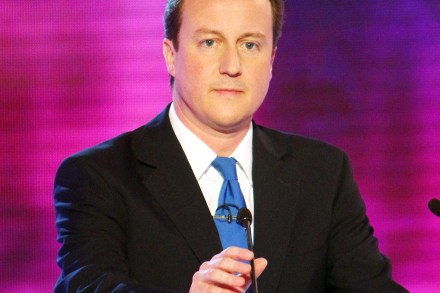
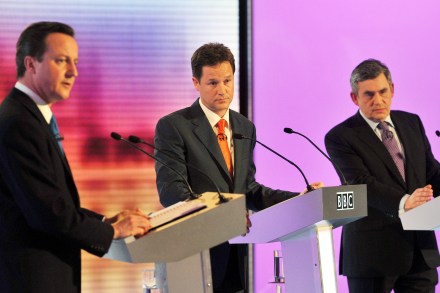
It seems that the general election of 2010 will turn on 90 minutes next Thursday. David Cameron was far better tonight than he was last week. This time he managed to bracket Brown and Clegg together and had the moment of the debate when he called Brown out on Labour’s leaflets claiming the Tories would scrap various things that pensioners currently get free. If there was a YouTube moment in the debate, it was that exchange when Brown said he didn’t authorise the leaflets making these claims. The Tory press team then delighted in pointing to a Labour party political broadcast where they had suggested the Tories would take away

Cameron’s evening – as he and Brown fight back against the Clegg surge

Well, one thing was clear: Brown and Cameron have both been at the textbooks, staying behind for extra classes, and learning the lessons of last week.  They came into this TV debate prepared.  Not just for the very fact of Nick Clegg, but with strategies and soundbites to slow his advance.  The result was a more passionate and confrontational show than I expected. Brown was the biggest surprise on the night.  Sure, you have to apply the usual caveats and parameters: he is Gordon Brown, and being disingenuous and deluded is what he does.  But, all that considered, he was uncharacteristically sprightly, I thought.  His little prepared quips were half-way

Team Brown playing the same old tunes

The strange thing about last week’s TV debate is that, for all its transformative power, it doesn’t seem to have changed Labour’s campaign strategy in any fundamental way.  Team Brown were hoping for a hung Parliament, and courting the Lib Dems, before last week.  And, as Peter Mandelson demonstrated earlier, they’re still doing the same now.  The only difference is that it’s more likely their wishes will come true. But this creates problems for Brown so far as tonight’s TV debate and the rest of the election are concerned.  His instinct may well be to repeat the “I agree with Nick” positioning of last week.  But this has already been

Is Europe a Con-Lib deal-breaker?

Europe is likely to play a big role in tonight’s debate. It is probably the one issue that divides the Liberal Democrats and the Tories as much as electoral reform. Nick Clegg, a former MEP and adviser to then-EU Commissioner Leon Brittan, is a euro-enthusiast who would like Britain to join the Euro, even if it takes time. David Cameron is a euro-skeptic (though not, to the chagrin of many CoffeHouse readers, obsessed about the issue).   But neither wants a confrontation with the EU and other European governments over the next four years – and the Liberal Democrats have become quieter over time about their pro-EU tendencies. Their support

A Tory-Liberal Coalition is Easier than a Lib-Lab Pact?

I’m glad to see that more people – Iain Dale, John Rentoul, Iain Martin among them – are paying attention to Labour’s eclipse. At present Labour could finish third in the popular vote for the first time since 1922 and yet many people seem to assume that a Labour-Liberal Democrat coalition or arrangement of some sort is the most likely, even inevitable, outcome of a hung parliament. I don’t believe this is the case and not only because of Nick Clegg’s attack on “desperate” Gordon Brown this morning. The Liberal Democrats have based their campaign for proportional representation on the grounds that it is unfair that, as they did in

The Tories need to get economical

Nick Clegg handed Gordon Brown a lifeline in one respect: the economy’s old hat compared to the Clegg frenzy. Not any more. The news that unemployment rose by 43,000 between December and February, together with yesterday’s dramatic inflation rise, has dumped the economy back onto the front pages. The Tories must keep it there; this election should be about the economy and nothing else. Obviously, these figures, which are worse than expected, lend weight to the argument that Brown’s policies impair recovery. Also, they demolish Brown’s claim that he ran up a deficit in the boom years to protect employment: unemployment is now higher than it was 16 years ago.

What happens if this is the result?

Tonight’s YouGov poll has the Lib Dems three point ahead. They are on 34, the Tories on 31 and Labour on 26. In terms of working out what this would mean in seats, I doubt that uniform national swing is that useful. But for the sake of argument, let’s imagine that did occur. These poll numbers would leave Labour as the largest party in the Commons and the Lib Dems as the third party. One wonders what on earth happens then.   The Palace would pretty much have to summon Brown, he’s the sitting Prime Minister and would be the leader of the party with the most seats. But I

The killer poster

So, as Daniel Korski wrote earlier, a vote for Nick Clegg keeps Labour in office – surely fertile territory for a killer poster? Here’s a selection of CoffeeHousers’  ‘Vote Nick Get Gordon’ posters. Remember him? – Sam Davidson                          ——————————————————— Buy one, get one free – Disillusioned                           ——————————————————— Don’t get duped again – Hamish                           ——————————————————— Trusting Pinocchio, Jonathan                       ———————————————————— The Marriage of Convenience, John Macleod (Used by the SNP in the 2003 Scottish Parliament election, but one we hadn’t seen before)                       ——————————————————————- The Puppet Master, RKing                            ——————————————————— Share and share alike, Greg                               ——————————————————– Labour’s Last Hope, Ed Turnham                       

A bumpy ride for Brown on Radio One

Gordon, meet disillusionment.  Disillusionment, the Prime Minister.  Ask him questions on whatever you want: the economy, jobs, immigration, expenses – the ball is in your court.  Make him squirm, if you like.  Confront him.  He is, after all, here at your pleasure. For that was the set-up of Radio One Newsbeat’s interview with Gordon Brown earlier this afternoon.  It was one of those impossible situations for the PM.  He could hardly decline to be quizzed by a group of first time voters, aged between 18 and 28.  But it put him at the mercy of some pretty disgruntled members of the public.  And they took full advantage. The questions were

Brown’s leadership back under the spotlight

Things have clearly moved on since I wrote this back in March.  From Rachel Sylvester’s column today: “…those close to Mr Clegg have made it clear to senior Labour figures that it would be difficult for the Liberal Democrats to do a deal with a Labour Party led by Mr Brown. ‘The whole notion of change is so important to Clegg and Gordon doesn’t represent change,’ says one Labour strategist. ‘It’s hard to see how they could prop up Brown in a hung Parliament.’ With Cabinet ministers openly discussing the prospect of coalition, the question of the Labour leadership is back on the agenda. David Miliband is seen as the

Is Nick Clegg really Robert Redford?

And not in a Cleggover* or Rentoul-bait sense either. No, you remember The Candidate? Of course you do for you enjoy political movies as much as we do. Which means you’ll also remember the movie’s strapline: Too Handsome. Too Young. Too Liberal. Doesn’t have a chance. He’s PERFECT! And you’ll also recall the movie’s final line, delivered after Redford’s character wins an unlikely victory: What do we do now? It was never clear that Redford had an answer to this and nor, frankly, is it obvious that Nick Clegg does either. Again and at the risk of repeating myself, how can Clegg be the “Agent of Change” if, once the

Towards a Tory-Lib Dem Future?

I don’t really know if the Tories “Vote Clegg, get Brown” argument will work but if I had to bet on it I’d guess that it won’t. There’s a large enough constituency out there that doesn’t want either the Tories or Labour. Nevertheless, the post-election environment now becomes very interesting. Suppose, just for now, that Labour come third in the popular vote but actually win the most seats. What happens then? And this could happen. Consider this scenario: Tories 33%, Labour 28%, Lib Dems 29% – according to Electoral Calculus and, admittedly, on a crude national and uniform swing, this could produce a result something like Tories 258, Labour 265,

The Land That Time Forgot

That would be Scotland, of course. Dear old Scotia, meek and mild and quiet as a well-nursed child. There was another YouGov poll released at the weekend and this Scotland on Sunday survey had its own startling findings. To wit: Labour – 40% SNP – 20% Lib Dems – 19% Tories – 16% Others – 5% You read that correctly. After 13 years and the worst fiscal apocalypse in 70 years 40% of my compatriots will still, like so many zombies, endorse the Labour party just as their faither did before them and, god knows, perhaps his faither before him too. True, this poll may slightly under-estimate currrent levels of

And so to Brown…

Haven’t we been here before?  Investment versus cuts, I mean.  Because that appears to be the main message of Labour’s press conference this moring.  Gordon Brown set about the Tories’ Big Society, claiming that it “means big cuts in public services”.  Hm. It’s certainly a punchier, if similar, message to the “agenda of abandonment” one that Labour roadtested last week.  But will voters listen?  Well, amid all the excitement about Clegg and the Lib Dems, it’s easy to forget that Labour are now polling third – with a vote share which recalls the days of Michael Foot’s leadership.  They seem to be in a pretty desperate position themselves. This may

Can the Tories turn things from personality to policy?

If the Lib Dem surge shows anything, then it’s the growing power of personality politics in this country.  A few days ago, they’re languishing in third place with around 20 percent of the vote.  One dose of TV razzmatazz later, and they’re topping the polls on over 30 percent.  Yes, even though I admire much of what Nick Clegg has done with his party, there’s little doubt that all this has been catalysed by simply putting him in front of the cameras.  Like someone with an okay singing voice reaching the X-Factor final, the Lib Dem leader triumphed in what was essentially a clash of personalities. Further evidence for this

YouGov have the Lib Dems on top

Tonight’s YouGov tracker has the Lib Dems on 33 percent (up 4), the Tories on 32 percent (down 1) and Labour on 26 percent (down 4).  So the topsy-turviness continues – but for how long?

How Whelan & Co. exploit Britain’s libel laws

The Charlie Whelan problem is intensifying for Labour, with more revelations in the Mail on Sunday today taking on from our cover story in this week’s magazine. Whelan’s behaviour may be no worse than that of Ed Balls and Gordon Brown – but he is more careless. Like McBride, he was actually caught: and his tactics documented in a formal seven-page report. Not the sort of document you want surfacing during a campaign. So it’s little wonder why Whelan used Carter-Ruck to try and deter The Spectator from any further investigation in the bullying case: it threatens to expose Gordon Brown’s entire modus operandi and the methods which he uses