Labour party

David Miliband has the best of it as the Labour leadership candidates debate

From our UK edition

David Miliband’s performance in Sky News’ Labour leadership hustings will have calmed the nerved of his supporters. In the run-off between him and his brother, David came out on top. His answers were generally sharper and he managed to parry away Ed’s criticisms on tuition fees and foreign policy. (In a pointed remark, Ed said that the Labour government’s foreign policy had been based on ‘old ideas’.) Indeed, Ed Miliband only seemed to get going in his closing statement which was pitch-perfect David’s best moment came when the contenders were asked to pick between Blair and Brown. Ed Balls opted for Brown, Diane Abbott said that Brown ‘was the better man’ and then it was the elder Miliband’s turn.

Cameron and Clegg’s message to Tory AV rebels

From our UK edition

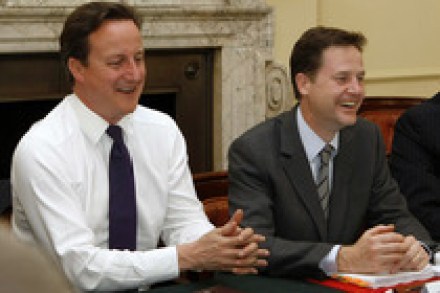
So, Cameron and Clegg end the summer break much as they started it: with a public statement on the aims and successes of the coalition government. Their article in today's Sunday Telegraph hops across all the usual touchstones – reform, deficit reduction, people power, and all that – but it lands with an unusually combative splash. In anticipation of tomorrow night's bellwether vote on the AV referendum and redrafted constituency boundaries, the two party leaders write: "This is an important moment for political renewal. We have different views on the future of our voting system. But we both recognise that there are genuine concerns about the current system. And we emphatically agree that the decision is not, in any case, for government alone...

“Ed does not need to hold the broccoli”

From our UK edition

A Thick of It style interlude from Ann Treneman's interview (£) with Ed Miliband today: "There is also a visit to something called a 'communiversity' where he is confronted with what, for a Miliband, is a scary sight: a bowl of fruit. 'Us Milibands are funny about funny shaped fruit,' he notes, plucking out an apple and avoiding the yellow peril that gave his brother the nickname Milibanana after he was pictured holding one and looking, well, a bit bananas. Later, on a trip to a community farm I feel on the brink of a major news scoop when someone tries to make Ed hold a broccoli. 'Ed does not need to hold the broccoli,' says his press handler as the green blob was extended.

Miliband D tries to break out of the Blairite box

From our UK edition

With ballot papers out, the Labour leadership contest is entering its most critical phase. It is striking that David Miliband has taken this moment to co-author an essay with his most significant left-wing supporter, Jon Cruddas. Indeed, a casual observer looking at the piece would assume that the two men were running on a joint ticket. The language in the article is very Cruddas, it talks of a ‘new covenant’ (one of Cruddas’ favourite phrases) with Britain. The intellectual heart of the piece is an attempt to break away from the left right arguments within the party by proclaiming that Labour in government was “too hands-off with the market and too hands-on with the state.

Labour turn up the heat on Coulson

From our UK edition

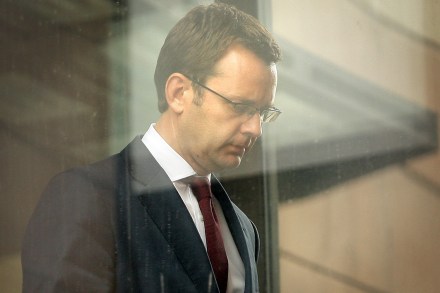
As we drift into the weekend, Labour are stepping up their attacks on Andy Coulson. Already today, Tom Watson, Alan Johnson, John Prescott and Chris Bryant have all drawn noisy attention to the allegations made in that New York Times Magazine article about phone tapping and the News of the World – and their efforts have already pushed the story to the top of the BBC news agenda. Indeed, Bryant has even called for David Cameron to sack Coulson. Labour types will no doubt repeat that message constantly over the next few days. So far, the Tories are standing behind their comms chief. A statement from No.10 reiterated that Coulson "totally and utterly denies" the allegations made against him.

Balls turns on the man he called Labour’s ‘greatest ever leader’

From our UK edition

The ever-pugnacious Ed Balls was on the Today Programme this morning denouncing Tony Blair for saying that the coalition was, broadly, right in its deficit reduction plans. As Balls warmed to his task, he started reeling off Blair’s failings—his advocacy of entry into the euro, his one-sided account of things in his autobiography and the like— and I wondered: if this is his opinion of the man he called Labour’s greatest ever-leader, what on earth does he think of the other men who have led the party?   But in all seriousness, the coalition needs to start hitting back at the ‘growth denier’ charge that Balls keeps hurling at them.

David Miliband strikes for the middle ground

From our UK edition

It must be quite satisfying for the David Miliband campaign that they can commission a YouGov poll and get all the results they would have wanted. According to the Guardian, MiliD has a signigicant lead when it comes to which candidate is the "most effective alternative to Cameron". But it's this finding that is the most significant:   "The poll of 2,907 people, conducted between 25-27 August, also found that David Miliband enjoys a strong lead among voters who abandoned Labour – a key battle in the leadership campaign. He has a 25% lead over his brother among these voters on who would be the best alternative to Cameron, and a 27% lead as the candidate most likely to persuade people to vote Labour.

Memo to the Left: Blair Won Because He Hated You

From our UK edition

Over at Liberal Conspiracy our old friend Sunny Hundal calls out Tony Blair: It was always obvious that Tony Blair hated the left. His recently published book said nothing new on that front. What’s staggering is how easily he dismisses even close Labour colleagues and ministers. [...] What does it say about Tony Blair’s loyalty to the party and the movement? What does it say about his committment to pluralism within the party? What it says is that Tony Blair was interested in winning elections. This is not rocket science. We may not like this aspect of British politics but, at the moment anyway, the public is extremely wary of political parties. That's one reason, aming many, why the combined Tory-Labour share of the vote has fallen from 90% of voters to 65%.

Tony Blair, freelance statesman

From our UK edition

Say what you like about Blair, but he is something of a political entrepreneur. He detects a gap in the market and fills it: he did with New Labour in the mid-1990s. And he detects a trend in the globalised world: a system where governments don't matter so much and power is held by a global elite. This, CoffeeHousers, is what he's up to with his memoirs. He is presenting himself in new incarnation, a statesman without a state, able to move without being tied down to an electorate. There's a very revealing passage in his book where he talks about Condi Rice: “She is a classic example of the absurdity of people with experience and capacity at the highest level not having big political jobs after retirement from office,” he writes.

The Mirror backs ‘The Special One’

From our UK edition

The ballot has opened and the Mirror has joined the mounting chorus in favour of David Miliband. They say of Miliband: ‘We believe he has the intellect, talent and experience to take on the Tories - and eventually become PM.’ Their timing is odd, given that Fleet Street and Westminster are currently captivated by Tony Blair’s memoir. But it is also a neat coincidence that Blair’s journey ends on the day that his apparent heir’s begins. As Tim Montgomerie notes in today’s Times (£), the Tories fear David Miliband because he is the only Labour leadership candidate who asks: ‘What would Tony do?’ It goes deeper than that.

Blair’s contempt for the left

From our UK edition

In tomorrow's papers the reviewers will compare 'A Journey' to those "real-life" misery memoirs that seem to be publishing catnip. It is not inaccurate to conclude that this is tale of one man's struggle in an abusive relationship, and all the more unstatesmanlike for it. The tiny details of the relationship between TB and GB fascinate me. Brown is the one, Blair admits, who coined the soundbyte "tough on crime, tough on the causes of crime" for example. However, by far the most interesting aspect of the book is Blair's barely disguised hatred of the Labour left and, most of all, the left-wing intellectuals. So here, very quickly are some of his key quotes about today's leading left-wing Labour figures. Tony Blair, it is reasonable to conclude, does not like the Labour Party one bit.

Tony Blair’s advice for Labour: be more like the coalition

From our UK edition

There's a remarkable self-certainty about what we've seen of Tony Blair's book so far. Sure, there are the fleeting moments of doubt and insecurity: the drinking that was becoming less a pleasure and more a habit, for instance.  But, apart from that, the dominant motif is how His Way was the Right Way. And so, he was right to keep Brown on as Chancellor. He was, it seems, right to prosecute war in Iraq – even if the WMD intelligence was "mistaken". And his chapter on Northern Ireland is written up as a ten-point action plan for future peace processes after future conflicts. Make no mistake, this isn't a bad thing in itself.

Tony Blair’s memoirs: the first extracts

From our UK edition

Even the literary critics have to wait until tomorrow for the Blair memoirs – but the book's contents are slowing spilling out onto the Internet this evening. A series of extracts has just been published on the official website, and the Guardian has extensive coverage, including an interview with the man himself. So far, there's nothing too surprising. Blair, for instance, lays into Brown – but adds that it would have been wrong to sack him as Chancellor. And he declines to endorse a candidate for the Labour leadership, beyond offering a handful of veiled criticisms of Ed Miliband. Coffee House will have more tomorrow.

Labour needs a Byrne rather than a Balls

From our UK edition

And Westminster's Idle Question of the Day is: will Ed Balls be made shadow chancellor under a Miliband leadership? There are good arguments both for and against the proposition – and most of them are made in this blog post by the Guardian's Nicholas Watt. Even Blairites, he says, are warming to the idea of Balls running Labour's economic policy. But if it's to happen under David Miliband, then the two men would have to reconcile their different views on tackling the deficit. Under Ed Miliband, the reconciliation would have to be more personal than economic. Neither, I suppose, is impossible. But as all this speculation whirls around Balls, I do wonder why Liam Byrne's name hasn't been mentioned more often in connection with the role.

The Blair memoirs loom over Labour’s leadership struggle

From our UK edition

A day before the ballot papers get sent out, and the grey corpse that was the Labour leadership contest has suddenly leapt into a crazy jig. Ed Balls is slamming the "soap opera" of the Mili-rivalry, while calling for more social housing. Andy Burnham is insisting that he's still in with a chance of winning. Alan Johnson has - with a nod to Jose Mourinho, of all people - labelled David Miliband as "the special one". And as part of his rebranding exercise the former Foreign Secretary has even starting making fairly amusing gags. Welcome to the Twilight Zone. But it's not just the prospect of imminent voting that is animating the contenders.

Darling exhumes Cameron’s Big Mistake

From our UK edition

Amid all the feverish commotion about cuts, it's easy to forget that it took the Tories until November 2008 to ditch Labour's spending plans - and, indeed, that it was barely a year ago when George Osborne first mentioned the c-word in public. Even David Cameron admits that this delay was his biggest mistake. It weakened his party's claim to foresight, and gave them less time to embed a new narrative about the economy before the election. So it's noteworthy that Alistair Darling exhumed this mistake on the airwaves earlier, telling the Beeb that "the Tories supported [our spending plans] until the end of 2008." This may sound like a cheap shot at Cameron and Osborne, but I expect we'll hear more of it in coming months.

Old Labour, New Labour – or just Same Labour?

From our UK edition

Whatever happened to Peter Mandelson's regard for Ed Miliband? A year-and-a-half ago, the Ennobled One was thought to have marked out MiliE as a future Labour leader. But, today, he pulls out the verbal chainsaw and sets about tearing him down. The younger Miliband, Mandelson implies in an interview with the Times (£), would lead Labour into an "electoral cul-de-sac," because, "to suggest that we should be concentrating on our core current voters … is by way of saying that we want to remain a minority party." And, just in case we didn't get the message, he adds: "we're not looking for a preacher as our leader." Although Mandelson doesn't say as much, it all adds up to an endorsement for the other Miliband brother.

Don’t mention the NHS

From our UK edition

As Tim Montgomerie notes, cuts are becoming more real. Yesterday, the government axed NHS Direct, the telephone health service. Actually it hasn’t been axed but replaced by the more cost effective ‘111’ service. Removing the sacrosanct letters ‘NHS’ from the title of any body is anathema to the opposition, who have mobilised a frantic defence over the past 24 hours, so predictable and I can barely contain my indifference. Twitter has exploded in a fit of righteous indignation; Ed Balls, without a hint of irony, is using words like ‘callous’ and ‘ill-thought policies’; and Andy Burnham’s talking about Andrew Lansley’s ‘vindictive mission to break up the NHS’.

Will Labour boldly go with ‘Red Ed’?

From our UK edition

  David Cameron has dismissed the Labour leadership election as a "Star Trek convention" with policy wonks battling out to go where no spad has gone before. That caricature has some currency (see picture, left). But as he'll know, a deeper choice faces Labour. David Miliband may be the geekier one - playing Spock to Ed's Kirk. You can argue that Ed speaks better human, that he's more plain-speaking. But when he does speak, it's worth listening to what he has to say. And his piece in the Observer makes clear why so many Tories want him to win. He says he will "make capitalism work for the people" - who has it been working for so far? The government? He proposes to ration corporation tax cuts for companies if they up the minimum wage to £7.