Labour party

At last…

From our UK edition

…a minister has repudiated the Brownite axiom that spending is the sole indicator for healthy public services. Nick Herbert has said, unequivocally, that ‘cuts and good services are not mutually exclusive.’ Herbert, minister of state at the Home of Office, continued: ‘I don't think we can go on playing this numbers game and say that we can automatically assume that every additional police officer recruited is bound to help deal with crime because I think what matters is what's being done with those forces.’ Then he elaborated, mentioning the Independent Inspectorate of Constabulary’s opinion that the police can find £1bn in efficiency savings by cutting administrative duties.

A worrying – but not disastrous – poll for the government

From our UK edition

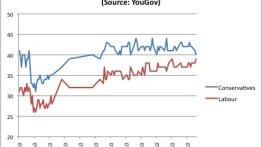
This morning's Times/Populus poll (£) will have supporters of the coalition grimacing into their cornflakes. The headline finding is bad enough, if rather familiar, with Labour closing the gap between themselves and the Tories to only two points. But what follows is worse. According to the poll, around three-quarters of voters reject the government's deficit reduction strategy – preferring, instead, what are loosely the approaches advocated by Labour and the unions. And, what's more, economic pessmism is arrowing upwards. The number of respondents who think "the country as a whole will fare badly," has risen by 13 percentage points since June. The number who think "me and my family will do badly" has gone up by 6 points.

Are the Labour leadership polls telling the whole story?

From our UK edition

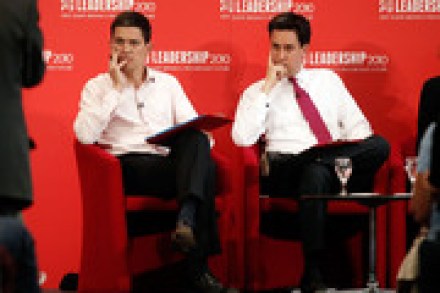
This weekend’s YouGov poll showing Ed Miliband ahead in the Labour leadership contest is the talk of Westminster today. One David Miliband backer told me that he thought it was flawed as it assumed that MPs' second preferences would split evenly between the two brothers when David had the advantage. I was told that nearly all Andy Burnham’s parliamentary backers would put David second, that most of Balls’ would do the same and that Ed Miliband could only rely on Diane Abbott’s parliamentary backers' second preferences. But Ed Miliband’s supporters dispute this. They believe that they are making progress everywhere.

Harman tries to bind Labour and the unions even closer

From our UK edition

Progressive coalition. Those two words haven't been tied together too frequently since Gordon Brown scrambled for survival in the aftermath of the election. But Harriet Harman invoked them in her speech to the TUC today, and she wasn't talking about a union between Labour and the Lib Dems: "We are witnessing an emerging political movement amongst progressives in Britain – beginning to see that the Tory/Lib Dem government has no mandate. They are seeing the difference between what they thought they voted for and what they ended up with. The Labour movement is their vehicle for progressive change.

Who is behind Nick Boles’ proposed electoral pact?

From our UK edition

Nick Boles proposed electoral pact (£) between the coalition partners would have a clear benefit for the Conservatives, it would make a deal between Labour and the Liberal Democrats after the next election impossible. That is quite a prize for the Conservatives. It would mean that David Cameron would continue as PM as long as the two parties between them held a majority of seats in the Commons. It is less clear what the Liberal Democrats would gain from it. Yes, it would help more of their MPs survive, but it would tie their hands ahead of another hung parliament and massively reduce their ability to claim that they are a distinct political party rather than just an adjunct to the Conservatives.

Benefit reform – one theatre in Cameron’s war

From our UK edition

The Observer has received letters revealing that George Osborne plans to deliver net savings of ‘at least £2.5bn’ from the Employment Support Allowance by limiting the amount of time people can spend claiming it. Here is Osborne’s letter to IDS, Cameron and Clegg: ‘Given the pressure on overall public spending in the coming period, we will need to continue developing further options to reform the benefits as part of the spending review process in order to deliver further savings, greater simplicity and stronger work incentives.

The government should return the unions’ fire

From our UK edition

The TUC is mustering in Manchester and its leaders are in bellicose mood. Brendan Barber has called for a general strike; Bob Crow, brimming with the satisfaction of having wrecked London’s transport earlier in the week, has called for his members to ‘stand and fight’ the government’s cuts. These statements have a ‘Me and my executive’ air to them, so ludicrous as to be beyond parody. But the message is rousing and clear. Not so the government’s – as Fraser argues today in his News of the World column. The government is caught in an intellectual cul-de-sac. Its sole refrain is that these cuts are Labour’s cuts and they are necessary. At the same time, the government defines the cuts debate in Labour’s terms.

What you need to know ahead of the spending review – making the case for cuts

From our UK edition

This is the next of our posts with Reform looking ahead to the Spending Review. Earlier posts were on health, education, the first hundred days, welfare, the Civil Service, international experiences (New Zealand, Canada, Ireland) and Hon Ruth Richardson’s recent speech. Last night the BBC showed 12 major regional television debates examining impending cuts to public sector spending. I spoke at the debates in London and the East of England (held in Ipswich). There were interesting similarities and differences in the two debates and these illustrated some important lessons for the spending review. Both debates showed that there is still work to do to explain to the public, and some commentators, the case for eliminating the deficit in one Parliamentary term.

Labour get the inquiry they wanted

From our UK edition

To these eyes, this afternoon's phone hacking debate was a surprisingly sedate affair. Chris Bryant – proposing a motion to have an inquiry conducted by the Standards and Privileges committee into the News of the World's actions – seemed to go out his way to depoliticise the argument, and other Labour MPs followed his lead. And so there was relatively little mention of Andy Coulson, with the emphasis instead on the wrongs that might have been done to the House by the police and the media more generally. It was, then, little surprise that Bryant's motion was passed unanimously. There were some flashes of controversy and acid, though. Bryant himself went quite hard on the police, claiming that they had not fulfilled their "duty of care".

The Brown handover ceremony

From our UK edition

A delicious prospect in store for political comedy fans, if not for the next Labour leader, according to a post by Channel 4's Gary Gibbon: "[Gordon Brown] feels, I hear, that it is right that he be seen to say some words before the new leader is unveiled and be seen to hand over the torch. He doesn’t want people to think he is cowed or hiding. Final arrangements, a Labour source said, have not been agreed yet and they are 'in touch' with the various leadership candidates.

Straw fails to improve

From our UK edition

Jack Straw did not improve on his previous PMQs performance today. He used up all six questions on Coulson and they were all too long-winded. Clegg got through it without too many problems, regularly using the operational independence of the police as a shield, as the Home Secretary did on Monday. The deputy PM also had the moment of the session when he informed the house that the first person to call Mr Coulson after he had resigned was Gordon Brown who had wished him well for the future. But at the very end of session, Labour got what they needed to keep this Coulson story going for yet another day. The Speaker has ruled that phone hacking is covered by privilege and so Chris Bryant is entitled to a debate on it tomorrow morning.

PMQs live blog | 8 September 2010

From our UK edition

Stay tuned for live coverage of Clegg vs Straw from 1200. 1201: And here we go. Clegg begins by passing on his best wishes to David Cameron and his family. Condolences for the fallen in Afghanistan follow - "we will never forget their sacrifices." 1204: Mark Pritchard begins with a dubiously plant-like question. "300 policemen have been laid off in West Mercia," he observes - is the fiscal mess left by the last government to blame? It tees Clegg up to tear into Labour's legacy. A combative start. 1206: Jack Straw steps up to the dispatch box. He begins with condolences for our troops, and then adds some warm regards for Cameron and his family.

Ed Miliband makes a very obvious pass at Vince

From our UK edition

Not exactly on the ball are they? It took nearly six hours for a Labour leadership contender to try to resuscitate Vince Cable's graduate tax, which lapsed into seizure following reports that Lord Browne will recommend a tuition fee hike instead. Ed Miliband, in Mephistophelean mood, has appealed to Vince Cable, offering to replace tuition fees with a graduate tax. ‘You’re welcome to each other,’ will be the retort of most Tories. But Miliband’s pass is significant. The coalition agreement promised to wait for the Browne Review. But the agreement is no longer sacrosanct.

Vaz’s hand-grenade

From our UK edition

Lucy Manning reports that Keith Vaz’s Home Affairs Select Committee will convene an investigation into the phone tapping scandal. Hauling Yates up before his eminence was a sleight of hand, calling for a second inquiry is as obvious as Jordan. Labour is confident and Coulson is their target. However, the Home Affairs Committee is more likely to examine the police’s inept investigations than the inner workings of a tabloid newsroom. (And so, according to Vaz, it will transpire.) Coulson will remain in the clear unless the CPS brings a prosecution on the basis of Sean Hoare’s new evidence.

Labour’s fighting instincts flourishing in opposition

From our UK edition

Keith Vaz’s sleight of hand to get Yates of the Yard before his committee today and to confirm that his officers will soon be talking to Andy Coulson is yet another reminder that Labour today has a lot more fight in it than the Tories did in 1997. Yates’ comments don’t come as a surprise; the government was making clear yesterday that Coulson was happy to talk to the cops. But they have pushed the story back up the news agenda — the 24 hour news channels are covering it live — just when it finally appeared to be dying down: mission accomplished for Vaz and Labour.

Johnson caught in the crossfire

From our UK edition

The shrapnel from the phone-hacking scandal is scorching more flesh by the day. This morning, it's not Andy Coulson nor the Metropolitan who are under question – but Alan Johnson and the Home Office. According to a leaked memo obatined by the Guardian, the department considered launching an independent inquiry into the Met's investigation last year, but abandoned the idea after a Home Office official stressed that Scotland Yard would "deeply resent" any such action. The police, continues the official, would have taken it as a sign that "we do not have full confidence" in them. And so it went no further. Johnson was, of course, in charge at the Home Office at the time. So this memo places some of his comments this week into a fresh context.

A bill that deserves trimming

From our UK edition

The electoral reform bill has passed comfortably, by 328 votes to 269. Now comes the hard bit: this bill is going to be deservedly lacerated in committee. The bill drew opprobrium from all sides of the house throughout this afternoon’s long debate, notably from both wings of the Tory party. First, the government has coupled boundary reform to the alternative vote referendum. Peter Hain, Labour’s most articulate attack dog, unleashed his thesaurus and referred to the bill as a ‘smoke-screen for colossal gerrymandering’. He was speaking for his ardently hypocritical and opportunistic party. The government’s motives were not so cynical; it coupled the bill’s two aims to aid swift progress through the commons.

Against the Political and Constitutional Reform Bill

From our UK edition

MPs are back today from their long summer recess, and the Political and Constitutional Reform Bill is right at the top of the agenda. This is likely to dominate politics for the immediate future, since it might have profound effects on how politics in this country operates.   The Bill combines two different reforms in one package – the referendum on changing the electoral system to the Alternative Vote (AV) and reducing and equalising constituencies. These two issues address what Nick Clegg has called the “deep unfairness” in the electoral system. This unfairness is exemplified by the last two elections: Labour won a majority of 66 with a vote share of 35.3 percent and a lead of just 3 percent in 2005; in 2010 the Conservatives gained more votes (36.

The coalition’s vulnerability on crime

From our UK edition

Parliament has that beginning of term feel today, lots of people discussing what they did on their summer holidays. After the holidays, the main topic of conversation is this whole phone tapping business. Everyone is wondering how long the BBC will keep playing it as the top story; it even devoted two thirds of the One O’Clock news to it. Given how reluctant the papers are to touch it, the story will burn out if the BBC stops fanning the flames. But one thing that I feel is being overlooked is Tony Blair’s attack on the coalition as soft on crime. If David Miliband wins the Labour leadership, I expect the Labour party will hammer the coalition on crime. There’s a real danger that the coalition’s policies could create a whole bunch of Willie Hortons.

Tonight’s the night

From our UK edition

There's no rest for the wicked. Conservative whips have spent a frantic summer urging Tory opponents of electoral reform to retreat from their opposition. According to Paul Goodman, the whips have been blunt: the government could collapse if its reform bill is defeated tonight. Their scaremongering seems to have had the desired effect. The Financial Times reports: ‘Members of that group told the FT they were likely to advocate not opposing the government now, but supporting amendments at a later stage on the timing and threshold of the referendum in future debates.’ The Mail carries a similar report, with David Davis anointing himself rebel-in-chief and stating that he hopes to ‘get the bill modified to take on board certain things’.