Labour party

Whither the Lib Dems?

From our UK edition

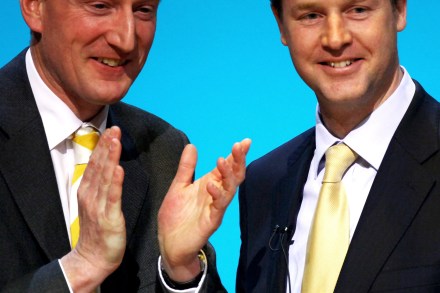
A striking aspect of the Liberal Democrat conference is how discussion of cooperation with Labour takes place in public while talk of any future work with their current coalition partner happens in private. Tonight, Paddy Ashdown told an Observer fringe meeting that the Liberal Democrats’ long-term goal should still be to become the dominant party of the centre-left in Britain. I must admit that I struggle to see how this is possible. The steps that the coalition needs to take to deal with what Nick Clegg calls the ‘invisible crisis’ of the deficit will alienate the party from the centre left. But then again, as one liberal Liberal Democrat said to me last night, of the party’s MPs only half a dozen are authentic liberals.

A lot done – and a lot still to do – for Nick Clegg

From our UK edition

There’s always an after the Lord Mayor’s show feel at conference the today, after the leader’s speech. Adding to this feeling today is that the programme is relatively light; Simon Hughes and Chris Huhne are the star attractions.   Last night at the various parties one sensed a certain satisfaction among those close to Clegg at how the conference has gone. They feel they have got though it without any serious trouble and that the leader’s speech has warned the party of what is to come. But I do think that it is next year’s conference, when the cuts are biting, that will be the real test of what the membership is prepared to accept.

Why David Miliband is the most dangerous candidate for the coalition

From our UK edition

Now how's this for an opinion? Writing for Labour Uncut, Dan Hodges announces that David Miliband has won the Labour leadership contest. His piece starts: "This Saturday David Miliband will become leader of the Labour party. He will have won a majority of his Parliamentary colleagues and the wider membership, along with sufficient support from unions and other affiliates to secure not just victory but  an overwhelming mandate. The New Labour era will be over." To most other observers, myself included, it still looks too close to call. But the more I think about it, the more I feel that David Miliband is best equipped to win this contest. If the Labour party has its eyes on government, then the Hodges prediction should translate into reality on Saturday.

Clegg’s little bit of political S&M

From our UK edition

Nick Clegg is making life horribly difficult for those of us on the right who spent the last few things portraying him as a figure of fun. He is now delivering the best speeches of anyone in the Cabinet, characterised by a quiet sense of urgency and direction. He’s in the business of making the case for cuts. He spoke to a party that spent much of the last decade attacking Labour from the left. For those delegates, it was a little bit of political S&M. It must have hurt - but they liked it. “We haven’t changed our liberal values,” he said - and then went on justifying Conservative policies in a classic liberal context. And he did it so much better than many Tories have been able to.

Clegg speaks to the hall

From our UK edition

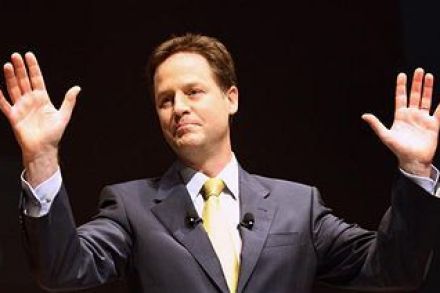
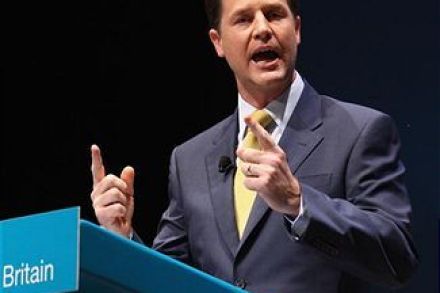
Nick Clegg chose to speak to his party not the country today. His address was a justification of his decision to go into government with the Tories and a plea for his party to stick together over the next five, difficult years.   The crucial bit of the speech came when Clegg said of his party ‘maybe we got used to [being against every government that came along] ourselves’ but ‘imagine if we had turned away. How could we ever again have asked the voters to take us seriously?’ Clegg’s point was that opposition was not an option and ‘this country could not have borne five more years of Labour’. So, coalition with the Tories was the only option.

Answering The Lib Dems’ Scottish Question

From our UK edition

Pete mentions Tim Montgomerie's suggestion that a Labour-Liberal Democrat coalition at Holyrood could be the most likely result at next year's Holyrood elections. As Tim puts it: One thing I've worried about for sometime is the implications for the Coalition of bad results for the LibDems in next year's Scottish elections but it is perfectly possible that Labour - like in 1999 and 2003 - will go into another Holyrood coalition with the LibDems. This double coalition deal could be an important tool for Clegg to keep his Left happy and for the new Labour leader to open the door to a future LibLab deal at Westminster. Well, anything is possible but I'm not sure how probable this is.

The Lib Dems’ Scottish question

From our UK edition

If you're looking for a spot of LibCon strife that might actually mean something, then how about Tavish Scott's interview in Scotland on Sunday? Judging by what he says about David Cameron, the leader of the Scottish Lib Dems clearly isn't one for coalition niceties: "I suspect that (David Cameron) doesn't even think about Scotland. It is not even remotely on his radar screen. He has a Scottish Secretary, and that's that." With the Scottish general elections drifting into view, there's little doubt that Scott is dissociating his Lib Dems from a Tory party that is unpopular and – as Alex has frequently noted – inept north of Carlisle. But the question for the Scottish Lib Dems is how far they want to take that process.

Balls, McBride and off-the-record briefings

From our UK edition

John Rentoul has already pulled the best passage from this preview of a forthcoming radio series on Gordon Brown. But I reckon that the testimony of Spencer Livermore, the former strategy chief in No.10, deserves a spot in the Westminster scrapbook: "Mr Livermore, who was Downing Street's director of political strategy, regrets not warning about the downside of scrapping the election when Team Brown got cold feet as polling in marginal seats suggested only a slim Labour majority. 'I don't think it's possible. Does anyone?' the Prime Minister told his inner circle at the crucial meeting. The mood was 'very, very sombre', according to Mr Livermore.

Don’t Worry About the Opinion Polls

From our UK edition

I've suggested that the current crop of opinion polls are meaningless. That's not true. As a friend pointed out, they measure public opinion and that can't be considered wholly meaningless. So let me put it another way: the "meaning" of the opinion polls is, at present, greatly over-valued by the Westminster Village. Happily, uber-expert Philip Cowley is on hand to act as an expert witness in this case: Several of my Labour-supporting friends have a spring in their step – level in the polls at last, as revealed by yesterday’s Reuters/Ipsos-MORI poll. How rubbish this new coalition government must be. It took New Labour years to lose its poll lead after 1997. At the risk of being a party pooper, the trouble is that the experience after 1997 is atypical.

The Labour leadership contest, all over bar the voting

From our UK edition

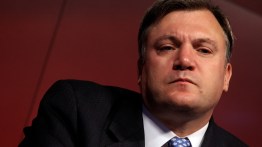
The Labour leadership hustings are over, tonight’s one on Question Time was the last one. As has been the case at so many previous hustings, Ed Balls was the most intellectually forceful of the contenders. Whatever you think of his arguments on the economy (and I disagree with them), he puts them across with a clarity and directness that none of the other candidates can match. It was revealing how when Ed Balls took issue with Andy Burnham’s accurate statement that there would have been ‘significant job loses’ under Labour, the others all backed away.

How the unions oppose the achievement of more for less

From our UK edition

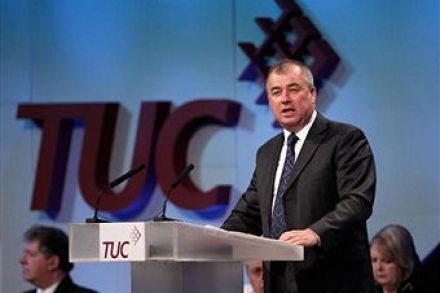
The TUC’s attack on a leading public sector reformer, reported today, was designed to embarrass him and discredit the idea of reforming the public sector.  In fact, it has shown that they will oppose any change to the public sector workforce, even if it results in a better service for the public.   According to reports (here and here), TUC staff yesterday handed out copies of the transcript to Reform’s conference on public sector productivity.  They highlighted a quote from the presentation by Tony McGuirk, the chief fire officer of the Merseyside Fire and Rescue Service (FRS), that, “we’ve got some bone idle people in the public sector”.  Tony McGuirk apologised for the tone of his remarks this morning.

Ed Miliband is No Abraham Lincoln but David Miliband is a Little Like Hillary Clinton

From our UK edition

Are Labour really going to make Ed Miliband their next leader? Tea leaves and whatever passes for momentum in this race suggest that this is quite possible. If the younger Miliband - the one who, allegedly, can speak "normal" - does prevail then what hesitant conclusions may be drawn? 1. David Miliband's support at Westminster may have hurt his chances in the other constituencies. Miliband Major ran - in as much as this strolling leadership contest ever amounted to a race - on experience, authority and the sense that he was the inevitable victor. But as Hillary Clinton can tell you, experience, authority and inevitability don't count for as much as they once did. 2.

PMQs live blog | 15 September 2010

From our UK edition

Stay tuned for live coverage of today's Cameron vs Harman clash from 1200. 1200: A prompt start. Cameron begins with condolences for the fallen in Afghanistan. Clegg grabs the PM by the elbow as he sits down - making sure there wasn't an embarrassing lap-sitting moment, I think. 1201: Julian Smith asks whether it is "irresponsible" of Labour to back union strikes. Cameron says it is, natch, 1203: A dignified start by Harman. She passes on her congratulations for the Cameron's new baby, and her condolences for the death of his father. Her question is about what progress the government is making on tackling human trafficking. 1204: Cameron quips that Harman is "by far the most popular" Labour leader he's ever faced across the dispatch box.

Harman’s last hurrah

From our UK edition

Today is Harriet Harman’s last PMQs as acting Labour leader. I suspect that Harman, who has performed far better than people expected she would, might well go on the story in The Times this morning about how the coalition is cutting a review into how rape cases are handled to save money. Immediately after the coalition was formed, Harman had considerable success at PMQs pressing David Cameron on the coalition agreement’s commitment to granting anonymity to rape suspects, something that had made it into the coalition agreement by mistake. If Harman went with the shelving of the rape review today, she would again put Cameron on the back foot. This cut also plays into Labour’s alarmist rhetoric about how the cuts are dangerous and will put people at risk.

YouGov has Labour and the Tories at their closest since October 2007

From our UK edition

Factor in the usual caveats about polling so soon after a change of government, but the latest Sun/YouGov poll is still pretty eyecatching. It has the Tories on 40 percent, Labour on 39 and the Lib Dems on 12 – the smallest gap between the two main parties since the election-that-never-was in October 2007. Here's a graph of the the two parties' positions since the beginnning of the general election campaign: The Pollmaster General, Anthony Wells, suggests that Labour will overtake the Tories any day now.

The Pope might be coming but the Milibands are still Topic A at Westminster

From our UK edition

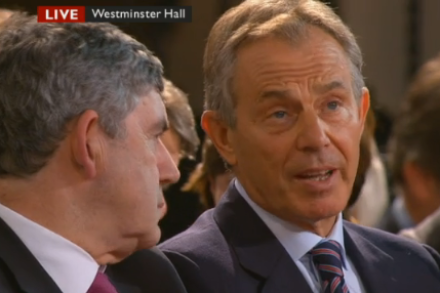
Parliament is busy preparing to receive the Pope, the red carpet has been put down in Westminster Hall and the Commons authorities have announced that they are closing all the bars down from 2pm on Friday. But it is earthly matters that are still preoccupying people here. As you walk through the gothic arches, you see little clumps of people gathering together trying to work out which Miliband will be the next leader of the Labour party. At the moment, the race really does seem too close to call. But it is just worth reflecting for a second how crucial the new leader’s first few weeks will be. 3 days after the result is announced, the leader will need to give the leader’s speech at conference.

There Will Be A Tory-Lib Dem Pact (Of Some Kind)

From our UK edition

Sunder Katwala is not convinced by Nick Boles' suggestion that the coalition should fight the next election on a joint-ticket. He sniffs a Tory ploy: What [Boles] is offering the Liberal Democrats is simply the chance to lash themselves to the mast of the Coalition's austerity agenda - and to collude in an attempt to keep it going even if the voters don't want it - with little in return beyond losing their political identity to become a semi-permanent National Liberal wing of a new Tory-dominated alliance. Over at Platform 10, however, David Skelton is open to the notion: The coalition has worked so far because it has caught into the zeitgeist that disdains tribalism and looks to politicians to work together in the national interest.

Barber, Blanchflower and the fake debate on double dip

From our UK edition

Watch or read much of the economics coverage in Britain and you sometimes get the sense that we're entering the final round of a peculiar game. Let's call it 'Russian Roulette for Economists'. The rules are simple: teams of academics and economically-literate politicos line up on either side of an issue and hurl abuse at one another. The winner will be declared when something significant changes in the macro-economic position of the UK. The game was played when Britain entered the ERM (those who said it would be a disaster won). The current double dip debate is another example. This time, the principal players on one side are the former Bank of England policymaker Professor David Blanchflower and the TUC general secretary Brendan Barber. On the other, is George Osborne.