Labour party

The Balls equation

From our UK edition

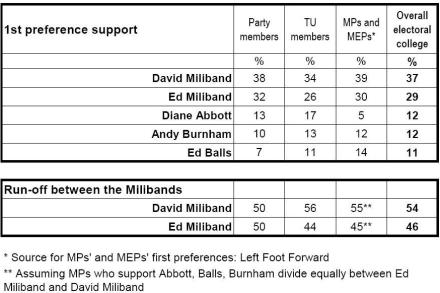
One of the few things that could briefly enliven the Labour leadership contest is if Ed Balls stood down and gave his backing to another candidate. True, it didn't happen when it probably should have – that is, when all the big unions gave their backing to Ed Miliband. But as the summer advances without any slip in the Mili-lead, then maybe – just maybe – Balls might start reconsidering his options. In which case, this insight from Philip Collins' latest article in the Times (£) is worth noting down: "In 1999 Mr Balls and David Miliband used to meet regularly in Churchill’s, a café opposite the Treasury on Whitehall, in a forlorn attempt to join up the Government.

Party time | 19 August 2010

From our UK edition

Utterly incredible. Over at ConHome, Alex Deane has highlighted something that is just utterly incredible – Team David Miliband's guide to hosting a "house meeting" in his honour. You really have to read the 6-page pdf to take in the full, fastidious horror of it all. But this tip for, erm, "building accountability" into the guest-list deserves pulling out: "Remind your guests the day before – try and build accountability into the relationship. If someone confirms then they should be there and you need to let people know you are disappointed if they don’t turn up… even if it’s just your mates!" What fun. UPDATE: By way of a hat-tip, this was first spotted by Jess Freeman over at the Total Politics blog.

Ed Miliband’s backhanded offer to the Lib Dems

From our UK edition

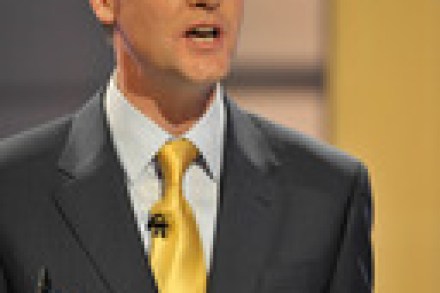
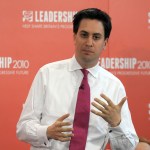
As Channel 4 reminds us, there have been two major trends in recent opinion polls. First, the precipitous decline in the Lib Dem vote share. And, second, a solidification of the Labour position, such that some polls even have them as the biggest party in a hung parliament. Predictably, this has stirred the omnipresent Simon Hughes, and some other folk around Westminster, into talking about a LibLab coalition. Which is why Ed Miliband's comments in the New Statesman today are so eyecatching. He tells Jason Cowley and Mehdi Hasan that he couldn't go into the coalition with the Lib Dems if they were led by Nick Clegg. He's got problems with "what [Clegg] is supporting," you understand. This is a new approach from one of the Labour leadership candidates.

This Parliament’s key dividing line?

From our UK edition

They may have faded from the front pages, but middle class benefits are still one of the most important stories in town. What we are witnessing here could be the birth of this Parliament's defining dividing line – a cuts vs investment for the new decade. In truth, the birthing process began before the election, with this Ed Miliband interview in the Guardian. In it, he made a distinction between a "residual welfare state that is just for the poor, which is the Tory position," and a "more inclusive welfare state" that encompasses the middle classes. His point was that the former goes against "all the evidence of maintaining public support [for the welfare state]" and, ergo, the Tories have got this wrong.

Exclusive: Gordon Brown launches his public speaking career

From our UK edition

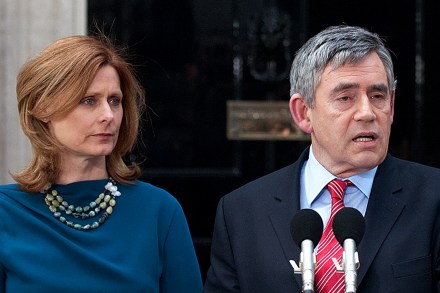
While Tony Blair has been pledging a slice of his massive post-PM earnings to The Royal Legion, a tale reaches me – from an impeccable source – about what Gordon Brown is up to. He once indicated he'd devote his post-PM life to modest good works, but it appears he is also trying to build up a large nest egg of his own: in the world of public speaking, with six-figure fees. He's asked a London speaking agency to tout for speaking engagements for him in the Middle East and Asia. And the price? He's been offered at $100,000 a pop and is promising to speak on areas covered by his new book, The Financial Crisis, which is due out soon. That should have 'em roaring in the aisles.

The Tories Need A Good Labour Party. And Vice-Versa.

From our UK edition

A terrific Five Books discussion about conservatism, liberalism and libertarianism with Cato's Brink Lindsey in which BL quotes a few essential lines from JS Mill: ‘In politics, again, it is almost a commonplace, that a party of order or stability, and a party of progress or reform, are both necessary elements of a healthy state of political life; until the one or the other shall have so enlarged its mental grasp as to be a party equally of order and of progress, knowing and distinguishing what is fit to be preserved from what ought to be swept away. Each of these modes of thinking derives its utility from the deficiencies of the other; but it is in a great measure the opposition of the other that keeps each within the limits of reason and sanity.

Darling’s Revenge on Brown and Balls

From our UK edition

Not many Labour minister enhanced their reputations during the Last Days but, at least as far as the non-payroll vote was concerned, Alistair Darling was a rare exception. He seems to think so too, if today's Donald Dewar Lecture at the Edinburgh Book Festival is any indication. Some extracts from his address: "Labour lost because we failed to persuade the country that we had a plan for the future. What is important now for our party is we take stock and be honest about what went wrong. "We rather lost our way. Rather than recognising that the public were rightly concerned about the level of borrowing, we got sidetracked into a debate about investment over cuts.

Osborne emerges from the shadows

From our UK edition

George Osborne has been quiet these past few weeks, tussling with ministers desperate to preserve some of their budget from his spending review. Today though, Osborne will emerge from the Treasury's recesses to launch a political attack on the ‘deficit denying’ opposition. Come on, Osborne will ask Darling et al, where are these £44bn of cuts you planned?   And answer comes there none, not even an incredible one. Labour’s refusal to countenance a spending review in government means it has very little to offer the spending debate in opposition.

Simon Hughes and the deputy leader’s pulpit

From our UK edition

My, what a busy character Simon Hughes is at the moment. Seems like hardly a day goes by without some fresh observations from the Lib Dem deputy leader – and he doesn't even rest on a Sunday. Today, there are two Hughesbites worth noting down, both from an interview with Sky. The first: "We should have no preference at the next election between the Tories and Labour and other parties. We are going to stand on our own." And the second: "Our party is committed constitutionally to standing in every seat. We will be standing in every seat at the next election. There will be no deals, there will be no pacts…" So, no ruling out a LibLab coalition and no electoral pacts.

Readying the bombardment

From our UK edition

Westminster might be in holiday mode, but behind the scenes the coalition is preparing to take on the new Labour leader. As I say in the Mail on Sunday, the coalition is determined to hit whichever Miliband wins early and hard. The Cameroons believe that Tony Blair’s decision not to attack Cameron straight away in 2005 was crucial in allowing him to present himself to the public on his own terms. By contrast, both Hague and Duncan Smith were made to look like losers by the Labour attack machine within months of becoming leader of the opposition. The result of the Labour leadership election will be announced on the 25th of September.

The return of Alan Milburn

From our UK edition

Frank Field, John Hutton and now Alan Milburn – the red tinges to the coalition mix are like a Who's Who of reforming Labour politicians. Milburn, we learn today, is to return to government as an adviser to David Cameron on social mobility. It's a role he should be accumstomed to, as he was tasked with writing a report on the issue under Brown. That time, his suggestions were buried by a government which didn't want to face up to the sorry facts. This time, you hope they meet with a more constructive response. But why wasn't a Conservative (or conservative) appointed? That's the question which Iain Dale asks over at his blog – and you can see his point. There are plenty of people on the right who could have stepped into the role, not least someone like Jill Kirby.

Livingstone the insurgent

From our UK edition

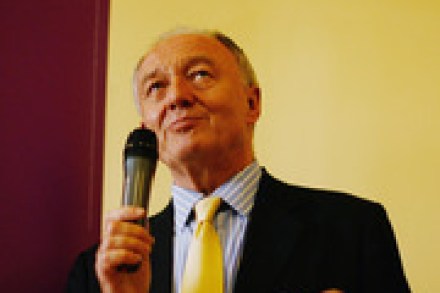
Ken Livingstone’s long reign as a Labour London Mayor was predicated on his supposed insurgency against New Labour’s orthodoxy. Well, he remains intent on dissociating himself from his party. For instance today, he has endorsed Eric Pickles’ abolition of the Audit Commission. ‘This is one Tory cut I support,’ he said. This contradicts John Denham’s position. Perhaps Livingstone recognises that Labour cannot give the public sector unqualified support; there are fat cats protecting vested interests in Whitehall, just as there are in the City.

Whelan suggests Brown will turn up to Labour conference

From our UK edition

A poll in today’s Daily Mail might have the Tories down to 29 percent (in part due to a very large number of undecideds) but it is Charlie Whelan’s interview blaming Peter Mandelson for Labour’s election debacle that is getting all the attention. In a fit of campaign nostalgia, CCHQ has tweeted out a bunch of lines from it. But I suspect it is the last Whelan quote in the piece that has them smacking their lips.  Whelan says, 'Labour has not fallen out of love with Gordon. Quite the reverse. If he tips up at the Conference - which I think he will - he'll go on stage and he'll be cheered to the rafters. This is hardly going to help the new leader of the Labour party, who’ll be announced on the eve of conference.

What to do with the defeated?

From our UK edition

One of the challenges facing the next Labour leader will be what to do with Ed Balls. Balls, as he demonstrated in the last few months, has the right mentality for opposition. Labour will need his appetite for the fight in the coming year. But if a new leader makes Balls’ shadow Chancellor, he’ll have a shadow Chancellor whose position on the deficit is simply not going to seem credible to the public; Balls has already said that he thinks the plan Labour went into the election with for the deficit was too ambitious. The Tories are convinced that if Balls is shadow Chancellor, they’ll have the dividing lines they want on the economy. A better department for Balls to shadow would be the Home Office.

Was Labour’s spending irresponsible?

From our UK edition

An eyecatching claim from Ed Miliband, interviewed by Channel 4's Krishnan Guru-Murthy: "I don't think our spending was irresponsible." And here's a graph in response: I'll let CoffeeHousers draw their own conclusions.

The Fall and Rise of the Brownites

From our UK edition

At Labour Uncut, Dan Hodges has written a very good, very interesting piece on the demise of the Brownites and how, when the end came, Brown was compelled to rely upon Peter Mandelson and Alistair Campbell to scramble a strategy by which Labour might miraculously cling to power. As Hodges portrays it: As the battlements yielded, what of his own praetorian guard? Where were his champions, his own retinue of advisors? The collapse of the Brownite inner-circle, as a political event distinct from the fall of Brown himself, is one of the strange untold stories of the Labour government.  If, as is generally perceived, Gordon was one of the two  pillars of New Labour, then those around him were fundamental to New Labour’s success.

David Miliband reinforces his monetary advantage

From our UK edition

I can't work out what's stranger: that anyone, let along the author Ken Follett, should donate £100,000 to Ed Balls' leadership campaign, or that the Liverpool footballer Jamie Carragher ("Mr Liverpool") should give £10,000 to the devoted Evertonian Andy Bunrham. Either way, they're probably the two stand-out entries in the latest list of Labour leadership donations. But the real story is the same as the last time the donations were published: David Miliband's monetary advantage. Even with Ed Balls raising £103,000 in July, the elder Miliband brother still comes out on top with £138,835 – adding to an overall war chest which dwarfs those of all the other contenders.

Jack Straw backs David Miliband

From our UK edition

The Labour party’s very own Vicar of Bray has made his choice. Jack Straw is backing David Miliband for leader. Straw is a politician who has always had a canny sense of which way the wind is blowing. Barbara Castle, who Straw worked for as a special adviser, once famously said that she hired him for his ‘guile and low cunning’. Straw’s move from the Blair camp to the Brown one was a sign that Blair was running out of road. Say what you like about Straw—Tony Blair was once caught calling him a ‘tart’—but he has a record of picking winners in Labour contests.  His endorsement of David will be seen as a sign that the elder Miliband is still the brother who the smart money is on to be the next leader of the Labour party.

To Labour’s successors…

From our UK edition

Following this morning’s coalition press conference, the Tories’ have released this video: Labour’s Legacy. It’s effective, especially in view of Labour’s continued refusal to acknowledge that Gordon Brown did to Britain what Peter Ridsdale did to Leeds United, albeit on a grander scale.

The coalition gets political

From our UK edition

The joint Tory Lib Dem press conference to attack Labour’s legacy was a sign of how comfortable the two parties are becoming together. Chris Huhne and Sayeeda Warsi’s message was that the ‘unavoidable cuts that are coming are Labour’s cuts’ and that Labour is ‘irrelevant’ until it admits its responsibility for the deficit. The message was essentially the one that Chris Huhne and Michael Gove set out at the political Cabinet at Chequers last month. In a move that is bound to generate some headlines, Warsi has written to those Labour leadership contenders who were ministers asking them to forfeit their severance pay and to ask the ex-ministers supporting them to do the same.