Labour party

Dramatic cut in pension relief

From our UK edition

The coalition is not afraid of the moneyed classes, or Peter Mandelson's 'filty rich'. Tax relief on pension contributions is to be dramatically cut.  The allowance will be decreased from £250,000 per annum to £50,000 and the pension cap will fall from £1.8m to £1.5m and retiring workers could be taxed at 55 percent on any sum above that sum. These changes will save the Treasury £4bn per annum, mainly by limiting how much of a bonus pot or a windfall can avoid income or capital gains tax. The Telegraph describes the move as a ‘raid’ on the 'squuezed middle', which is not strictly true. The previous governnment made similar plans and this is a re-worked formula designed not to penalised middle Britain.

Cameron’s government has been brave so far; it must not flinch at the finish

From our UK edition

The spending review’s actors are jostling for position at the final curtain call. Bit-part players are stealing for the prominence of the centre, Whitehall’s bigger beasts fight to preserve their dwindling limelight and the leadership try to direct and subjugate the warring egos. Defence seems more or less settled, with the navy’s grandiose element apparently securing its two super-carriers. Doubts remain over the education budget’s final reckoning and welfare is unsettled as yet. Après child benefit, le deluge – so to speak. An attack on the principle of universal benefit would have predictable consequences. Questions have arisen about the government’s commitment to the winter fuel allowance and the cold weather payment.

Boles: the coalition is David Miliband’s natural home

From our UK edition

Nick Boles is fast becoming ubiquitous. He wrote an article for this morning’s Guardian, urging Labour’s wounded Blairites to join the coalition, where ‘there is room for everyone inspired by the desire to transform the way that government works and give people more control over their lives.’ He writes: ‘If President Obama can keep Republican Robert Gates as secretary of state for defence, does Britain have to forfeit the remarkable talent of David Miliband? Can the coalition afford to do without the passionate expertise of Andrew Adonis as it completes his quest to connect Britain's great cities with high-speed rail?

Miliband starts with a bang

From our UK edition

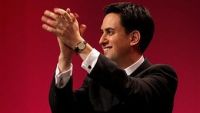
Score the first round to Ed Miliband. In his debut PMQs performance, Miliband comfortably got the better of David Cameron, forcing him onto the defensive for most of the session. Miliband’s first question was a long and worthy one about the death of Linda Norgrove, the UK aid worker, in Afghanistan last week. Then, he moved to the proposed child benefit changes, asking Cameron to justify the anomaly where a single earner family on £45,000 a year would lose it while a two earner household on £80,000 would keep it. Cameron’s problem was that nine days after the policy was announced, he still has no answer to his point. (Although, I suspect that the number of households that fall into this category is fairly small).

PMQs live blog | 13 October 2010

From our UK edition

VERDICT: Well, who would have thought it? In his first PMQs performance, Ed Miliband not only put in a solid showing – but he got the better of David Cameron. I certainly don't agree with the Labour leader's central argument: that it is unfair to restrict child benefit. But he put his point across in measured, reasonable tones – and Cameron seemed flustered by comparison, as he wagged on about the size of the deficit. Make no mistake, the argument and the public's sympathies will unwind themselves over the course of the entire Parliament. They will not be resolved in one session of PMQs. But in presentational terms, MiliE will have the more flattering clips on the news later – which is more than he could have expected going into today.

Miliband versus Dave – round one

From our UK edition

Well, here it is. Ed Miliband will meet David Cameron for the first time at PMQs today. For all his determination and tactical sense, Miliband has his work cut out. Neither gave vintage speeches at the recent party conferences, but, in terms of presentation, Cameron’s easy wit trumps Miliband’s adenoidal drone. This will be Westminster's final act of posturing before next Wednesday’s spending review, a vanity soon to be forgotten. However, Labour has to fertilise its barren economic policy, and quickly. PMQs is the best opportunity to start.  Labour's strategy is clear: the government has made no plans for growth; in fact, their cuts are inimical to growth and squeeze hard-pressed middle earners.

Ed Miliband calls for humility – now let’s see some

From our UK edition

So Ed Miliband told the Parliamentary Labour Party that he and they need to show humility. He is right, but this is easy to say and much, much harder to do. We shall see whether he has managed it at the despatch box tomorrow when the tackles David Cameron at his first PMQs. The feeling power gives politicians seeps into their bones and they get used to the trappings of deference. Ed Miliband has been close to significant power for most of his adult life, as have many of the people around him.  They need to realise that for a while - about 18 months probably - no one will be seriously interested in what Ed Miliband's vast new team of shadow ministers has to say. The lobbyists have long gone and soon the hacks, once so sycophantic, will start postponing lunches.

The Postie’s twinkle

From our UK edition

The Postman's eyes twinkled as he met George Osborne across the dispatch box for the first time this afternoon. With the air of an apologist who isn't remotely contrite, Alan Johnson told the House of his 'vast experience in this job' and gave the impression he was having a blast. This jolly masque hid an insubstantial performance. Johnson latched on to Chris Huhne's vow that he would not be 'lashed to the mast' of needless spending cuts - Johnson wondered if the deficit might not be eradicated within one parliament. Osborne said that it would. Then Johnson repeated the substance of his attacks of the weekend.

Alan Johnson, from affable to aggressive  

From our UK edition

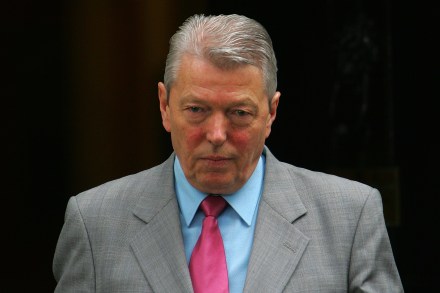
If Alan Johnson continues as he has started, then he may be a surlier, snarlier shadow chancellor than many of us expected. He's got an article in today's News of the World and an interview in The Observer – and, in both, he's on unusually combative form. Osborne's cuts are labelled as "deep and irresponsible," and the VAT rise is highlighted as a measure that will affect "those on middle and low incomes the most." Johnson even claims, with Balls-like stridency, that the coalition could drag us screaming into double-dip. And there's more. With a disingenuousness that would impress even Gordon Brown, Johnson glowers that the coalition's cuts are deeper than those during the Thatcher years. Depending on which metric you use, that's true enough.

Abbott caps Miliband’s defensive reshuffle

From our UK edition

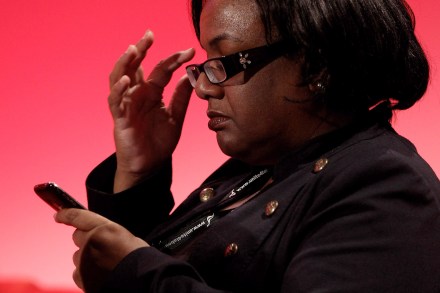
Those months of campaigning have finally paid off for Dianne Abbott. She has been made a Shadow Health Minister – which resembles a proper job. She was against the Blair-Milburn reforms in the NHS, regarding them as too pro-market – so let’s see if she keeps this position in opposition, thereby throwing more soil on the grave of New Labour. One can imagine the fear running down Andrew Lansley’s spine at this new team: John Healey and Abbott. It’s just baffling. In the bars at conference last week, I met many Tories who are increasingly worried at the pace and preparedness of Lansley’s proposed NHS reforms. But instead of marking him with some forensic, vicious attack dog (or his wife), Miliband chooses someone, well, rather less than forensic.

Theresa May the target

From our UK edition

I wonder if Theresa May felt faintly apprehensive this morning. It must bad enough to awake and remember that you’re the Home Secretary, held responsible for every immigrant, every strike and every crime committed in Britain. Northern Ireland is more poisoned ministerial chalice, just. Now, she is being shadowed by Ed Balls, a ravening attack-dog liberated by the opposition. Balls has re-invented himself as a traditional Labour politician, casting himself as the champion of the working class. He says, accurately, that the poor are the victims of crime and the victims of unbridled immigration and social dislocation and his opposition will be ardently authoritarian. May will have to cut police numbers: Balls will attack her.

Shadow Cabinet or Cabinet of the Weird?

From our UK edition

The real problem for the Labour Party with the election of Ed Miliband is not the man himself, who is easy to like and, by instinct, a centrist politician from the New Labour tradition (however hard he tries to disown it now). No, the difficulty is the oddness of it the whole business. If the brother versus brother leadership contest had not been enough to cause the nation to raise a collective eyebrow, now we have the bizarre spectacle of a husband and wife taking the jobs of shadow home and foreign secretaries. This is just dead weird.  Every professional couple knows how difficult it is to hold together two careers and a family life.

Ed Miliband may have just made the defining choice of his leadership

From our UK edition

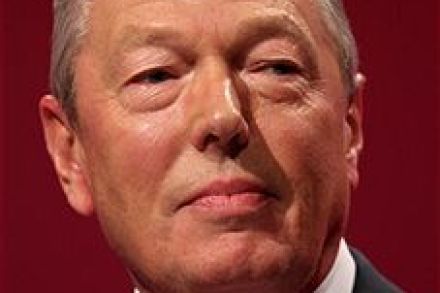
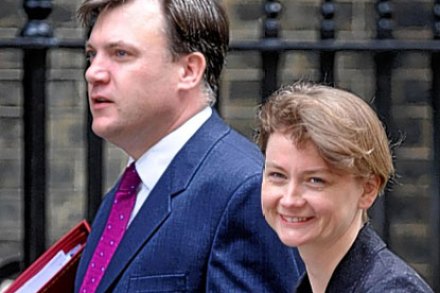
There are several eyecatching appointments in Ed Miliband's shadow cabinet. Ed Balls at Shadow Home puts Labour's most vicious scrapper up against a wobbly government department. Yvette Cooper as Shadow Foreign Secretary is a suitable reward for her showing in the elections, but it is a counterintuitive use of her background in economics. MiliE loyalists Sadiq Khan and John Denham have duly received plum jobs in Justice and Business, respectively. But perhaps the most surprising appointment is also the most important: Alan Johnson as Shadow Chancellor. On a purely presentational level, you can see what Ed Miliband is thinking.

Breaking: Alan Johnson is shadow chancellor…

From our UK edition

...and Yvette Cooper is shadow foreign secretary. Ed Balls gets shadow home. So, looks as though Ed Miliband has bypassed the family psychodrama with an appointment that few expected, or even thought of, until this morning. Johnson was 16/1 with Ladbrokes for the shadow chancellorship going into today. UPDATE: Paul Waugh has the full list. Here it is: Leader of the Opposition --- Rt. Hon.

How should Miliband respond to the child benefit reform?

From our UK edition

Daniel Finkelstein and Philip Collins’ email exchanges are always enlightening. This week, they discussed child benefit. Both think it has altered the markings on the playing field of politics. Ed Miliband is yet to respond: how should he? ‘From: Daniel Finkelstein To: Philip Collins If you were Ed Miliband, where would you go now on child benefit? First option: total opposition to the Government’s plan. You get to hoover up discontent but you don’t look much like a governing force, do you? And it seems hypocritical. Plus, you said you were going to support the Government on many cuts. If not this, then what? Second: you go with it. You look big, you look grown up, but lots won’t like it.

Cameron sells the Big Society to the public sector

From our UK edition

David Cameron clearly wants us to waltz into the weekend with the Big Society on our minds – so he's written an article on the idea for the Sun. It rattles through all the usual words and phrases, such as "responsibility" and "people power", but it strikes me how he applies them just as much to the public sector as to the general public. This is something that he did in his conference speech, describing the "Big Society spirit" of a group of nurses: "It's the spirit that I saw in a group of NHS maternity nurses in my own constituency, increasingly frustrated by the way they were managed and handled, who wanted to set up a co-op to use their own expertise, their ideas, their contacts to provide a better serice for the mums in their area.

Osborne has a laid a trap

From our UK edition

One of the most intriguing questions about the decision to take child benefit away from households with a higher rate taxpayer in them is whether it marks the beginning of the end for universal benefits. The quotes today from Michael Fallon, the Tory vice-chairman, certainly suggest that it does. Fallon ridicules Ed Miliband with the line: “He wants to tax the poor to give benefits to the better off.” Now, if you accept that the poor are currently being taxed to provide child benefits for the rich (a slight exaggeration given that higher rate taxpayers contribute far more than they take out in services) then this argument applies with equal force to all other universal benefits.

Hutton points the way forward on pensions

From our UK edition

John Hutton's interim report on public sector pensions today will go down as one of the most important moments in the public service reform story.  John Hutton doesn't just set out the principles for putting public services on a sustainable footing, although he does do that (by explaining the inadequate levels of contributions into these schemes).  More importantly, he confronts head-on the problem that public sector pensions pose for the opening up of public services to competition. One of the key reasons that many companies have waited on the sidelines of the public sector for years is the disparity between public and private pensions.