Labour party

Jim Murphy for Shadow Chancellor?

From our UK edition

Good stuff from Iain Martin: [Ed Miliband will] have to deal with Ed Balls and Yvette Cooper. Balls is an impressively robust “big beast” who wants to be shadow Chancellor, but Ed Miliband may not fancy sub-contracting his economic policy to someone so tricky to control. Subverting Lyndon Johnson’s famous rule, keeping Ed Balls inside the tent makes no difference - he’ll probably still urinate on his colleagues. Indeed. The Balls Problem is a tricky one. Ed Balls is a fine attack dog perhaps the best, certainly the most ferocious, Labour have. But if Miliband gives Balls the Treasury brief there's every chance that the Shadow Chancellor will eclipse the Leader of the Opposition.

Waiting for the shadow cabinet

From our UK edition

You can say what you like about Labour's penchant for internal elections, but at least it makes for good, political entertainment. Tonight, the results of the shadow cabinet elections will be released, and we'll discover which of the 49 nominees made it into the final 19. Then it will fall to Ed Miliband to force some very square pegs into the round holes on his party's front bench. Good luck with that, Mr Miliband. According to most observers, Yvette Copper is favourite to come top – a forecast supported by a readers' poll published on Left Foot Forward today. In the same poll, Ed Balls finished second. It rather encapsulates the toughest choice facing Ed Miliband: who to pick as shadow chancellor?

Delaying the cuts

From our UK edition

Put aside all the post-match analysis of David Cameron's speech: the most intriguing story in the papers this morning is this one in the FT. It claims that the Treasury is working on plans to "reprofile" the spending cuts, which basically means "delay" them. The idea would be to push the bulk of the cuts back to the end of this Parliament. And the underlying concern is, apparently, that early cuts could trigger various financial penalties, such as those for breaking contracts. The paper even suggests that ministers are worried that, "deep deficit reduction in 2011-12 could undermine the fragile recovery." The Treasury have firmly denied the story, and I'd certainly be surprised if we saw significant delays in the cuts.

Boris well ahead in the first Mayoral poll

From our UK edition

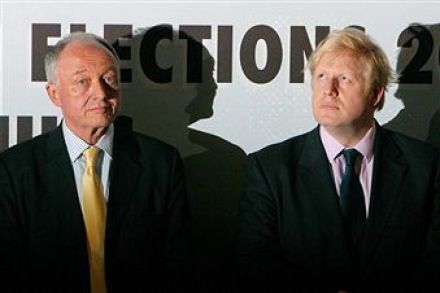
The first Boris vs Ken poll of the season carries an obvious health warning: there are other candidates to come, not to mention another one-and-half years of the current mayoral term. Yet Tories might still be pleased that their man is 9 points ahead of his predecessor and main rival at this stage. And that's even with Labour beating out the Tories, in the same poll, when it comes to London's general election voting intentions. Andrew Gilligan puts two and two together to create a striking parallel: Boris is more popular than the Tory party in London, whereas Ken is less popular than Labour. Stir in the fact that Livingstone is polling lower than he did in the 2008 election, and his enforced spell on the sidelines has clearly done little to bolster his reputation.

This is not a 10p tax moment

From our UK edition

Last night, one minister came up to me nervously and asked, ‘is this our 10p tax moment?’ He was talking, obviously, about the decision to take child benefit away from households with a higher rate taxpayer in them.   My answer was no. The comparisons with Brown’s removal of the 10p tax rate miss a crucial point: Brown tried to hide what he was doing. In his final Budget statement to the Commons, the abolition of the 10p rate wasn’t even mentioned. Instead Brown boasted about a 2p reduction in the basic rate, to huge cheers from the Labour benches.   By contrast, the Tories have been upfront about the fact that there are losers from this change.

Searching for the Big Society

From our UK edition

I had been hoping for some answers at the Policy Exchange fringe meeting last night, helpfully entitiled "The Big Society, What does it really mean?" Unfortunately, I wasn't alone at Conservative Party conference in my search for some clarity on this issue and it was quite impossible to get into the event. Note to my friends at PX, the Big Society needs more room to breathe. Everyone here is scrambling to get a piece of the Big Society action. There is something a little unseemly about it. This is because there is business to be had as the functions of the state are further contracted out. For the fragile organisations of the voluntary sector being inside or outside the Big Society marquee is a matter of life and death.

The beginning of the end of universal benefits

From our UK edition

The most important line in George Osborne’s speech was this one: “It’s very difficult to justify taxing people on low income to pay for the child benefit of those earning so much more than them.” Logically, this argument applies equally to all other universal benefits. Why should someone on £12,000 a year be paying tax to help cover the cost of Ken Clarke’s pension? Personally, I’m quite happy to see universal benefits go. The end of universal benefits would, though, change the nature of the welfare state. Quite rapidly, it would become a safety net not a contributory system. This is why Labour will oppose so vigorously taking child benefit away from those on the higher rate of tax.

Osborne takes to the stage, armed with cuts

From our UK edition

Rewind the tape to last year's Tory conference, and David Cameron was assuring us that, "It will be a steep climb. But the view from the summit will be worth it." Today, it falls to George Osborne to tell us more about both the arduousness off the ascent and the beauty of that view – although I expect that there will be a heavy empasis on the former. Already, the main passages are spilling into the papers and, as you'd expect, it's mostly cuts and debt. On that front, the main argument seems to be similar to that made by Nick Clegg in Liverpool: that the longer it takes us to pay down our debts, the more money we waste thanks to interest payments and the like. Or as Osborne will put it, "Delay now means pay more later. Everyone knows it's the most basic rule of debt.

What to do with Balls?

From our UK edition

Ed Balls is adept at opposition – making a case throughout the recent leadership hustings for immigration controls that he knows are unworkable in practice. Mike Smithson reports than a senior Lib Dem thinks Ed Balls would be an ideal opponent for Liam Fox, the man to exploit the coalition’s most obvious weakness. It’s a salivating prospect for the independent observer – confrontation between two skilled and principled communicators – and if anyone can damage a Conservative-led government on defence it is Balls. But there’s the rub. In their ideal worlds, Balls and Fox don’t differ on the broad principles of defence policy.

Many Lib Dems want to be part of the New Generation

From our UK edition

Politics tends to ruin an evening in the pub. On Wednesday, I came across a friend who had been a card-carrying Lib Dem prior to the coalition's formation. He confessed that he'd been impressed by Ed Miliband's speech and had joined the Labour party. Several other Lib Dem supporters attending agreed that Ed Miliband is a more attractive option than David Cameron and Nick Clegg. Everyone else in this small band (mostly unaffiliated voters with the odd furtive Tory) believed that Labour has probably elected the wrong Miliband, but were antagonistic to Labour in any case.

A small step for Labour, not a giant leap

From our UK edition

I had expected Ed Miliband to do pretty well in the polls. He's unknown, and voters haven't had a chance to dislike him yet. That's not an insult – familiarity breeds contempt in politics, and the public are normally quite quick to give a new guy the benefit of the doubt. Witness the Clegg bubble. But tomorrow's Guardian shows precious little sign of a conference bounce. The two parties were level before the conferences – a remarkable achievment for a leaderless party. The Tories took three years to do the same. It was one of many reasons that inspired our cover story last week, "Labour leaps forward". The illustration, by Morten Morland, was a horse without a rider. What might Labour achieve with a jockey?

Cameron road tests his anti-Ed message

From our UK edition

After Fern Britton's triumph over Gordon Brown a couple of years ago, we should know that This Morning interviews can have a certain bite to them. But if you needed more convincing, then how about David Cameron's appearance on the show this morning? Lurking behind all the talk of baby Florence and the Obamas, was a sprightly discussion of both defence cuts and the new Labour leader. Cameron was combative on both. Most noteworthy were Cameron's attacks on Ed Miliband. I imagine they will set the template for how the anti-Ed operation is conducted in future. The main aim, it seemed, was to defuse Miliband's talk of an optimistic New Generation – a woefully specious phrase, to be sure, but one that some Tories fear might gain traction.

Smutty Hattie closes the conference

From our UK edition

Those earnest, pale and dimpled young men who staff the Labour party need to watch their drinks: Ed Miliband’s ‘New Generation’ is a haven for a well-heeled cougar. Inspired by Lady Bercow of Easy Virtue, Harriet Harman closed the Labour conference with a soliloquy in lust.   A cynic would say it was HRT talking, but Hattie was in playful and coquettish mood, as she often is - you know, young at heart and all that. More importantly, she was effective. Though I cringed through bits of her homily of the bordello - praying she’d segue into less alarmingly evocative subjects like gender equality, VAT and rape anonymity - she put nationalised train-set gags into relief, and didn’t sound like a human adenoid.

When Brown beat Blair in an election

From our UK edition

With the merry dance of shadow cabinet elections upon us, it's a good time to look back on the last time Labour went through all this. There's a useful list of all the results from the 1992 Parliament here, but here's my summary of some of the more eyecatching outcomes: 1) Gordon Brown, from hero to zero (to Chancellor). In 1992, Gordon Brown came top of the shadow Cabinet rankings. By 1996, he had dropped to 14th. And bear in mind that the number of MPs standing fell from 53 to 26 over the same time. As we all know, though, he still made it to the Chancellorship.   2) Blair less popular than Prescott.

Farewell David Miliband

From our UK edition

There we have it, David Miliband has announced that he is standing down from frontline politics. In his statement just now, he fluted all the anticipated notes. "The party needs a fresh start from its new leader," he started, before adding that, "I genuinely fear perpetual, distracting and destructive attempts to find division where none exists, and splits where they don’t exist, all to the detriment of the party." He said he will stay on as an MP, although he wants to do further work in the areas of education, the environment and foreign policy. It puts something of a fullstop under his career at the top of the Labour party, although I'm sure that new paragraphs will be written in future. How will he be judged? With a mixture of respect and mockery, I expect.

David Miliband keeps the door ajar

From our UK edition

The list for the shadow Cabinet elections shows that no David Miliband supporter who was going to stand for the shadow Cabinet has decided not to run following Ed Miliband’s victory. It’ll be intriguing to see what the party balance of the shadow Cabinet is following these elections. There is an expectation that Yvette Cooper will top the poll now that David Miliband is not standing. David Miliband’s decision not to stand was as expected. As one fellow hack pointed out to me the other day, if David had stayed on the public would never have worked out which Miliband was which and the press would have constantly looked for a split story.

Balls spills the beans

From our UK edition

File David Miliband's decision not to stand in the shadow Cabinet elections in the folder marked "Worst kept secrets in Westminster". Here's what Ed Balls has just told ITV: "I don't think David Miliband is leaving because of reasons of politics or ideology or policy. I don't think this is a political divide, I think this it's a personal decision. He's decided, and it seems he's decided in the last few days if he has, that for personal reasons he doesn't want to serve with his brother. I understand that because it must have been incredibly difficult to have lost to your brother in that way ... If as a brother you've decided that it's too difficult I think people would understand that. I don't think it's fair to find some big political split or divide here.

Miliband’s dilemma

From our UK edition

The day after the leader’s speech is always a slightly flat time at a party conference. But Manchester today feels particularly flat. Everyone knows that the two big political stories are happening down in London: David Miliband’s expected announcement that he is not standing for the shadow Cabinet and the Fox flap. One of the challenges for Ed Miliband is going to be asserting his authority with his parliamentary colleagues, most of whom didn’t vote for him. Added to this is the fact that many of them remember him as a young bag-carrier. Members of the shadow Cabinet were openly mocking his ‘new generation’ line last night. All this is going to make his performances in the Commons chamber more important than usual.