Labour party

PMQs live blog | 20 October 2010

QUICK VERDICT: More heat than light today, but Cameron easily got the better of Ed Miliband. Now to the Spending Review live blog. 1230: Cameron says that as cuts are made, the government will have to reform the way it does criminal justice. This is a prelude for the deep cuts that the Home Office and Justice department are expected to face in the spending review. 1228: The Lib Dem MP asks whether Cameron believes that better-off graduates should bear more for their university costs. Cameron says that he agrees on principle, and claims that “everyone in the House” wants the “same thing”: a fair and well-funded university system. 1226:

How we got here – and where we’re going

With the Spending Review less than two hours away, I thought CoffeeHousers might like to be armed with a few graphs that set the scene. What follows is by no means the complete picture of the fiscal landscape, but these are certainly some of most prominent landmarks. First up, real terms spending (aka Total Managed Expenditure) from 1966 to 2015: So, yes, all the fuss is about that small dip at the end of the blue line – a dip, as it happens, of about four percent. But don’t think that the fuss is entirely unwarranted. What the government is trying to do here is curb a trend of ever-increasing

The slog starts today

Welcome to Stage Two of the government’s life. The first stage was the Budget, which established the size of the fiscal mountain looming over the coalition. The third stage will be the difficult, four-year slog up to the top. But today – the Spending Review – is all about determining the route for that ascent. In just a few hours we will know when, where and why the pain will come. Don’t forget to pack sandwiches. Of course, with this roadmap being drawn out in Westminster, we already know some of the details. This morning’s papers major on the fact – snapped from Danny Alexander’s hands yesterday – that almost

Alan Johnson’s economic gamble

The most shameless line of Alan Johnson’s big speech came at the beginning. “Being in opposition does not mean pretending to be in government,” he averred, “we will not be producting a shadow spending review.” Which would be fair enough, were it not for one simple fact: the Brown government didn’t produce a spending review when one was due, last year, either. In which case, Labour’s new economic policy is much like their old one. They are sticking by the Alistair Darling plan to halve the deficit over this Parliament, which is encouraging given some of the alternatives. Yet there is still not much detail about how this might actually

The presentational battle begins in earnest – as the double-dip warnings wind down

Rule 97 in the Practitioner’s Guide to Westminster Politics: if you want to get a message out pronto, then corral a bunch of impressive names into writing a letter to a national newspaper. We saw the tactic used by both Labour and the Tories before the election. And we see it again today, with a letter in the Telegraph, drafted by the Tory peer Lord Wolfson and signed by 35 business leaders, pushing George Osborne to “press ahead with his plans to reduce the deficit”. And you know what? He may just do that. In truth, these kinds of letters are hardly a bad thing for the government, however stage-managed

Why the Tories didn’t win

Courtesy of John Rentoul, Tim Bale, professor of politics at the University of Sussex, offers this appraisal of the 2010 election: ‘For all the talk in opposition of decontaminating the Tory brand, of making the party more tolerant and inclusive and less ‘nasty’, the key task facing Cameron when he took over in late 2005 was reassuring voters that the Conservatives could be trusted on welfare and public services.  All the market research suggested that this was the sine qua non — a necessary if not a sufficient condition — of a return to office. When the global financial crisis hit and Britain’s budget deficit ballooned, however, this task remained

Labour to propose raising the top rate of income tax?

Peter Hain is wizened counsellor to young king Ed, or gives that impression at least. The two are close, which makes Hain’s recent comments on tax noteworthy. Hain describes universal benefit as ‘non-negotiable’, adding: “If you start driving a coach and horses through universality you’re effectively saying to middle Britain, ‘you’ve got no stake in the welfare state.’ I think the Tories and Liberals are making a very big mistake on child benefit. There’s an answer to people on higher incomes and that’s they pay higher taxes. And that is the answer to squaring that circle.” Miliband is determined to defend universal benefit regardless of cost and he also favours a

Left out

New Labour Islington is no more – it is now an area for Tory-voting bankers When I grew up in Islington in the 1980s and 90s, there was a reliable election ritual: the bigger the Georgian villa, the more likely the resident barrister was to put up a Labour poster in his sash window. If they weren’t barristers, they were senior Labour politicians. Some were both. The poster in the window in the rambling terraced house in Canonbury belonged to Charlie Falconer, later lord chancellor. Nearby was Malvern Terrace, home to Brenda Dean, later Lady Dean, former general secretary of the print union Sogat. Next door was Margaret Hodge. A

Labour’s economic credibility goes on tour to Brussels

Bill Cash’s amendment to the EU budget bill may not have been the victory that the signatories to Douglas Carswell’s more incendiary effort hoped for, but it is significant. It is exactly in line with government policy that seeks to cap the EU budget and search for cuts. As Treasury Minister Justine Greening put it in the debate last night: ‘I will not hide from the House the Government’s frustration that some of our partners – and those in EU institutions – do not seem to understand how bizarre it is, when national budgets are under such extraordinary pressure, that the EU should be immune from that.’ The EU Commission

Dramatic cut in pension relief

The coalition is not afraid of the moneyed classes, or Peter Mandelson’s ‘filty rich’. Tax relief on pension contributions is to be dramatically cut.  The allowance will be decreased from £250,000 per annum to £50,000 and the pension cap will fall from £1.8m to £1.5m and retiring workers could be taxed at 55 percent on any sum above that sum. These changes will save the Treasury £4bn per annum, mainly by limiting how much of a bonus pot or a windfall can avoid income or capital gains tax. The Telegraph describes the move as a ‘raid’ on the ‘squuezed middle’, which is not strictly true. The previous governnment made similar

Cameron’s government has been brave so far; it must not flinch at the finish

The spending review’s actors are jostling for position at the final curtain call. Bit-part players are stealing for the prominence of the centre, Whitehall’s bigger beasts fight to preserve their dwindling limelight and the leadership try to direct and subjugate the warring egos. Defence seems more or less settled, with the navy’s grandiose element apparently securing its two super-carriers. Doubts remain over the education budget’s final reckoning and welfare is unsettled as yet. Après child benefit, le deluge – so to speak. An attack on the principle of universal benefit would have predictable consequences. Questions have arisen about the government’s commitment to the winter fuel allowance and the cold weather

Boles: the coalition is David Miliband’s natural home

Nick Boles is fast becoming ubiquitous. He wrote an article for this morning’s Guardian, urging Labour’s wounded Blairites to join the coalition, where ‘there is room for everyone inspired by the desire to transform the way that government works and give people more control over their lives.’ He writes: ‘If President Obama can keep Republican Robert Gates as secretary of state for defence, does Britain have to forfeit the remarkable talent of David Miliband? Can the coalition afford to do without the passionate expertise of Andrew Adonis as it completes his quest to connect Britain’s great cities with high-speed rail? Must we try to build the “big society” without the

Miliband starts with a bang

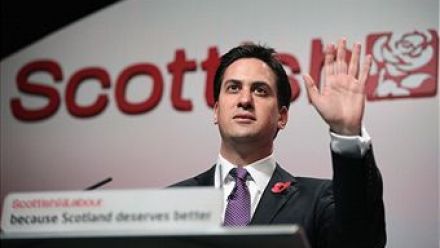
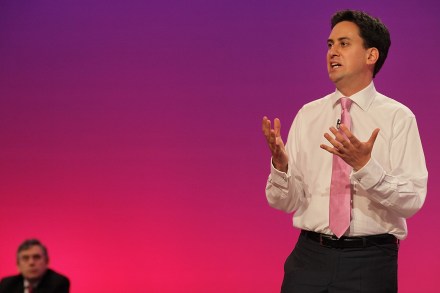
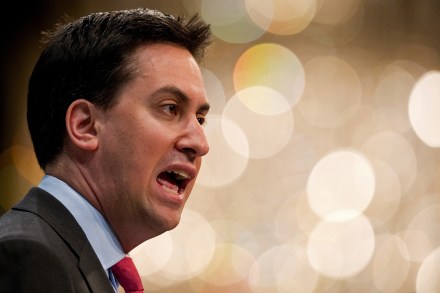
Score the first round to Ed Miliband. In his debut PMQs performance, Miliband comfortably got the better of David Cameron, forcing him onto the defensive for most of the session. Miliband’s first question was a long and worthy one about the death of Linda Norgrove, the UK aid worker, in Afghanistan last week. Then, he moved to the proposed child benefit changes, asking Cameron to justify the anomaly where a single earner family on £45,000 a year would lose it while a two earner household on £80,000 would keep it. Cameron’s problem was that nine days after the policy was announced, he still has no answer to his point. (Although,

PMQs live blog | 13 October 2010

VERDICT: Well, who would have thought it? In his first PMQs performance, Ed Miliband not only put in a solid showing – but he got the better of David Cameron. I certainly don’t agree with the Labour leader’s central argument: that it is unfair to restrict child benefit. But he put his point across in measured, reasonable tones – and Cameron seemed flustered by comparison, as he wagged on about the size of the deficit. Make no mistake, the argument and the public’s sympathies will unwind themselves over the course of the entire Parliament. They will not be resolved in one session of PMQs. But in presentational terms, MiliE will

Miliband versus Dave – round one

Well, here it is. Ed Miliband will meet David Cameron for the first time at PMQs today. For all his determination and tactical sense, Miliband has his work cut out. Neither gave vintage speeches at the recent party conferences, but, in terms of presentation, Cameron’s easy wit trumps Miliband’s adenoidal drone. This will be Westminster’s final act of posturing before next Wednesday’s spending review, a vanity soon to be forgotten. However, Labour has to fertilise its barren economic policy, and quickly. PMQs is the best opportunity to start.  Labour’s strategy is clear: the government has made no plans for growth; in fact, their cuts are inimical to growth and squeeze hard-pressed middle earners. This

Ed Miliband calls for humility – now let’s see some

So Ed Miliband told the Parliamentary Labour Party that he and they need to show humility. He is right, but this is easy to say and much, much harder to do. We shall see whether he has managed it at the despatch box tomorrow when the tackles David Cameron at his first PMQs. The feeling power gives politicians seeps into their bones and they get used to the trappings of deference. Ed Miliband has been close to significant power for most of his adult life, as have many of the people around him.  They need to realise that for a while – about 18 months probably – no one will

The Postie’s twinkle

The Postman’s eyes twinkled as he met George Osborne across the dispatch box for the first time this afternoon. With the air of an apologist who isn’t remotely contrite, Alan Johnson told the House of his ‘vast experience in this job’ and gave the impression he was having a blast. This jolly masque hid an insubstantial performance. Johnson latched on to Chris Huhne’s vow that he would not be ‘lashed to the mast‘ of needless spending cuts – Johnson wondered if the deficit might not be eradicated within one parliament. Osborne said that it would. Then Johnson repeated the substance of his attacks of the weekend. The government lacks a

Alan Johnson, from affable to aggressive  

If Alan Johnson continues as he has started, then he may be a surlier, snarlier shadow chancellor than many of us expected. He’s got an article in today’s News of the World and an interview in The Observer – and, in both, he’s on unusually combative form. Osborne’s cuts are labelled as “deep and irresponsible,” and the VAT rise is highlighted as a measure that will affect “those on middle and low incomes the most.” Johnson even claims, with Balls-like stridency, that the coalition could drag us screaming into double-dip. And there’s more. With a disingenuousness that would impress even Gordon Brown, Johnson glowers that the coalition’s cuts are deeper

Abbott caps Miliband’s defensive reshuffle

Those months of campaigning have finally paid off for Dianne Abbott. She has been made a Shadow Health Minister – which resembles a proper job. She was against the Blair-Milburn reforms in the NHS, regarding them as too pro-market – so let’s see if she keeps this position in opposition, thereby throwing more soil on the grave of New Labour. One can imagine the fear running down Andrew Lansley’s spine at this new team: John Healey and Abbott. It’s just baffling. In the bars at conference last week, I met many Tories who are increasingly worried at the pace and preparedness of Lansley’s proposed NHS reforms. But instead of marking