Labour party

Brendan Barber’s champagne habit, and other stories

From our UK edition

The Tory conference was so forgettable that it’s hard now to remember it took place earlier in the week. But, for what it’s worth, here are my conclusions from the whole conference season: 1. The search for Osborne’s growth strategy has been called off. This ‘leadership’ theme was short for ‘leadership in the crisis, which we’ve now decided is inevitable’. Printing £75 billion will be  prelude to printing £400 billion, the inflation tax is back. Osborne perhaps thinks this new magic gold will bring economic recovery. So did the Emperor in Faust, when the devil suggested that printing money would avert fiscal crisis.

Miliband tries to re-energise the Opposition

From our UK edition

The Labour reshuffle is an attempt to bring more energy and aggression into Ed Miliband's top team. It is also a recognition that the party has failed to cut through on public service reform, hence new shadows at both health and education. Chuka Umunna's rapid promotion to shadow Business Secretary will, I suspect, dominate coverage of the reshuffle. Having been an MP for less than 18 months, Umunna now finds himself up against Vince Cable. If he succeeds in this role, he'll rapidly become the leader in waiting. But there's also a danger that it might all be too much, too soon for him. Umunna is one of five new MPs to make the shadow Cabinet.

How bad is it, Mervyn?

From our UK edition

Remember when Alistair Darling said that we faced the worst financial crisis for sixty years? Now Mervyn King has trumped that piece of doom-mongery by telling Channel 4 last night that "This is undoubtedly the biggest financial crisis the world economy has ever faced" (see video above, three minutes in). The Governor of the Bank of England saying that this is the worst crisis ever? On the day that he rushed another £75 billion into the economy? As mood music goes, it is a particularly dreadful symphony.       It is also the sort of situation that Ed Balls will relish, especially with the Pre-Budget Report approaching. And it is true: George Osborne is in a tight spot, both politically and economically.

Healey and Denham depart the shadow Cabinet

From our UK edition

John Healey and John Denham have resigned from the shadow Cabinet ahead of Ed Miliband’s reshuffle. Healey is, officially, departing for family reasons. But I doubt that many of those closest to Miliband will particularly mind his departure. I expect that Miliband may also take this chance to move Andy Burnham, who knows the health brief from his time in government and is an effective if one dimensional media performer, from education into the health brief. These two resignations free up a couple of the big shadow Cabinet jobs as Miliband prepares to shuffle his pack. It is almost certain that the Labour leader, who has just won himself complete control over shadow Cabinet appointments, will promote members of the 2010 intake to the full shadow Cabinet.

Cameron does enough

From our UK edition

There were three big themes to David Cameron’s speech. The first was that decline is not inevitable, an attempt to tackle the mood of pessimism that is gripping the nation. The second was an attempt to reassert the Conservatives’ compassionate credentials, hence the emphasis on how the Liberal Democrats would have cut the NHS and the section explaining why conservatives should support gay marriage. The third was leadership, Cameron’s biggest advantage over the other party leaders. The attack on the idea of Britain’s decline being inevitable was powerful in places. But because Cameron has a non-ideological approach to growth it is hard for him to make a stirring argument about how the economy can be revived.

Cameron’s leadership pitch

From our UK edition

Leadership, leadership, leadership. You couldn't miss it. Leadership wasn't just the clearest theme of David Cameron's speech to the Tory conference just now, but also one of its most common words. By my count, it popped up around 30 times. "I'm proud to lead this party," he said in the very first paragraph. "It is leadership we need," he continued. The aim, I'm sure, was to paint an even stronger contrast between David Cameron the Prime Minister and Ed Miliband the Sub-Prime Ministerial. But Cameron wasn't just talking about his own leadership. As he put it himself, "success will come: with the right ideas, the right approach, the right leadership. Leadership from government: to set out the direction we must take, and the choices we must make.

What Osborne got right

From our UK edition

After being mean about Osborne’s sub-prime corporate debt policy, I should say that he got a lot right in his speech earlier today. His delivery was the best I’ve seen: he looked relaxed, and sounded conversational. This suits him: he’s not a hell-and-brimstone kind of politician. He dealt with the dire subject matter in a confident way and was not in the least defensive. And he showed a glimpse of the sunlit uplands, so conspicuously absent from Vince Cable’s doom-laden speech a fortnight ago. That said, it seemed apparent from the rest of his speech that he is bracing himself – and us – for a downward surge on the economic rollercoaster.   “Leadership for a better future,” said the words on the podium.

Osborne’s serenade

From our UK edition

As James said, Osborne’s speech was a potent blend of economics and politics. One passage in particular stood out politically: when Osborne referred to those who booed when Ed Miliband mentioned Tony Blair during his speech. He said: ‘You know, there was a time when Labour seemed briefly to realise that to win elections it had to accommodate itself to the real world, stop being anti-business, make peace with middle Britain. Not now. It's over. Once they cheered Tony Blair, now they boo him. I fought three elections against Tony Blair, and I know the damage he did to our country. But it wasn’t just him they were booing last week. They were booing the millions of voters who once turned to Labour because they thought Labour had changed.

Hague does his leader’s bidding

From our UK edition

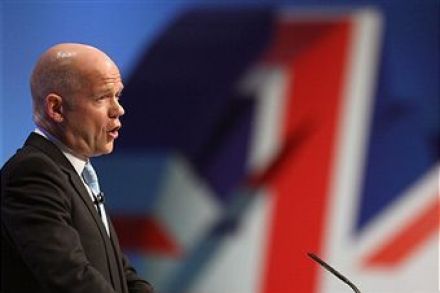
William Hague’s speech to conference today wasn’t the barn-burner of years past. It did include some jabs at Balls and Miliband. Hague joked that “their shadow Chancellor was Gordon Brown’s right hand man. And their leader was right hand man to the right hand man.”  But the overall tone was serious. Politically, two things struck me as significant about the speech. First, Hague showed how determined the Tories are to play the Cameron card. The speech ended with a long tribute to the Prime Minister which called him “the leader for a better future”. The Tories are convinced that of the three party leaders, Cameron is the only one who strikes the country as a plausible PM.

Is the health budget falling or not?

From our UK edition

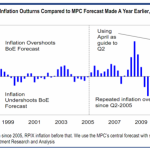
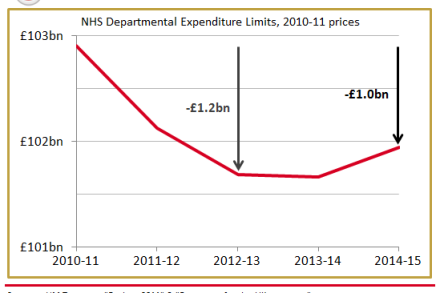
Before the election, the Conservatives promised they'd "protect" the NHS, which they defined as increasing its real-terms budget year-on-year. This is a rather dangerous promise because it makes ministers hostage to inflation. Now that inflation has surged, expectations have been revised upwards, and it looks like the NHS budget will suffer a real-terms cut. In its monthly update of City consensus forecasts, the Treasury has released new figures for inflation over the next five years.Apply the latest inflation figures to health spending in the last budget and it implies a £1bn shortfall . The graph below shows the change over five years: Back in March, the IFS said that the government was in danger of breaking that pledge.

Osborne and tax cuts

From our UK edition

“Top Conservative despairs of Cameron growth plan,” says The Times’ front page today. While The Daily Telegraph’s reads: “No tax cuts before the next election, says Osborne”. The two stories are related. British economic growth is evaporating, and more than a few Tory MPs are worried that the Chancellor doesn’t have a coherent growth strategy and that he doesn’t seem to care. Osborne’s cheery interview with Robert Winnett and Ben Brogan will do nothing to allay such fears. He repeats his position on tax cuts: that, while desirable, they are likedessert once the nation has eaten its main course of cuts and tax rises. He appears to rule out using tax cuts as a tool to stimulate growth.

Lansley’s trials

From our UK edition

Andrew Lansley will arrive in Manchester having been chased up the M6 by a flurry of negative stories about his NHS reforms. The Guardian has gone to town on the news that the Lords Health Committee has expressed concern about Lansley’s plan. Their reservations stem from Shirley Williams’ concerns about the diminished role of the secretary of state; she worries that this will dilute accountability over the health service, which she views as unacceptable given the vast sums of money the secretary of state controls. The Lords will debate these matters later this month and amendments are expected to be tabled. Elsewhere, the British Medical Association has also fired another salvo at Lansley, calling for the Bill to be scrapped.

Cameron and Osborne respond to Miliband

From our UK edition

Senior Tories are saying that there won’t be many attacks on Ed Miliband from the party’s big hitters at conference. They are concerned that aggressive assaults on him could win him public sympathy. But both Cameron and Osborne respond to one of the central arguments of Miliband’s speech in their pre-conference turns. Cameron writes in the Mail that ‘the role for government is not to single out good and bad industries, it’s to make it easy as possible for all industries, all businesses, to grow, invest and take people on.

Ed Miliband, closet Glee fan?

From our UK edition

  What to make of Ed Miliband’s disclosure yesterday that Journey’s Don’t Stop Believin’ is his favourite song? Ben Brogan smells a rat: “If he's a Journey fan, then I'm a football expert”. But here’s the thing: you don’t have to be a Journey fan to like Don’t Stop Believin’. You just need to be a fan of Glee. For the uninitiated, Glee is an American musical TV series about (impossibly glamorous) nerds in an Ohio high school, who join an after-school music club and are intensely bullied by the cool, sporty kids in the school. But they stick to what they believe in, overcoming the bullies. Don’t Stop Believin’ (here) is the anthem of the series: the first and arguably best Glee cover song.

Rehsuffle rumours

From our UK edition

Those now leaving Liverpool are indulging in some shadow Cabinet reshuffle speculation. This chatter has been sparked both by the fact that Miliband has now abolished shadow Cabinet election and by how many of the media rounds in the past few days have been done by members of the 2010 intake notably Stella Creasy, Chuka Umanna and Rachel Reeves. Expect them to be in line for rapid promotion. To make way for them, some of the under-performing members of the shadow Cabinet will have to be sacked. One name touted as being in the frame is John Healey, the health spokesman. Healey has long infuriated some in the leader’s office who think that he spends more time wondering how he could become deputy leader of the party than on how to attack Andrew Lansley.

A Unionism That Does Not Deserve to Prevail

From our UK edition

Regarding Mr Miliband's hapless interview with BBC Scotland David, like James Kirkup, expresses what is the conventional view in London: But, as James Kirkup notes, the Scottish Labour Party is a serious issue. It is the only check on Alex Salmond, which makes it essential to the future of the union. And it’s important for Labour’s electoral recovery, not that you’d realise that listening to the senior party. As I revealed on Sunday, Labour shadow minister Ivan Lewis displayed extraordinary complacency about Scotland at a fringe event, implying that Labour will return to power in Holyrood as a matter of course, no effort required. Miliband’s ignorance only compounds that sense...

Red flag at half-mast

From our UK edition

Labour conference has now closed with the traditional singing of the Red Flag. Ed Miliband appeared to know all the words as he sang along as one wag put it, ‘you don’t grow up in the Miliband household without knowing all the words to the Red Flag.’ But what was really striking about the end of conference was how downbeat it was. As the delegates streamed out of the hall, the atmosphere was palpably flat. Harriet Harman declared in her closing speech that Labour are now done with statements of contrition about their record in office. She told the hall that: ‘…the two Eds both acknowledged – what we all know – that not everything we did in government turned out right.

Ed Miliband Comes to Scotland

From our UK edition

I suspect it can only be bad news for poor old Tom Harris that he's the only candidate to lead Scottish Labour whose name Ed Miliband can a) remember and b) pronounce correctly: Another reminder that Scotland is already and semi-formally a semi-detached part of the United Kingdom.

Miliband meets the public, and a lot of Labour members

From our UK edition

Ed Miliband has just finished an hour and twenty minute long question and answer session. The audience was meant to be a mix of the general public and Labour members, but there seemed to be far more Labour members than anybody else. It would be easy to take the Michael out of the whole event. The questioner who walked out as the Labour leader was trying to answer his question, Miliband’s tendency to stare into the bleachers with his hand above his eyes and the technical glitches. One could also, rightly, say that the vast majority of questions were classic lefty fare. But there was the glimmer of something important here. There were flashes of the humour that comes across in private but not in public. In short, Miliband seemed far more himself than he did yesterday.

The paymasters’ conference

From our UK edition

What a lot of unions there are. I walked around the exhibition stands at the Labour conference yesterday afternoon and counted 10 stalls devoted to trade unions: 10 displays out of the 72 that weren’t directly associated with the Labour Party in one of its guises. The unions' stands were unlike the ramshackle boxes of lesser campaigners that clung to the walls of the conference centre; as the pictures above and below attest, they took centre stage to match the grand baronial pavilions at a medieval fair. This tells you all you need to know about who is lobbying the Labour Party at present. Although perhaps lobbying is the wrong word, given that the Brothers’ fill roughly 85 per cent of Labour’s coffers.