Labour party

Miliband’s Message: Neoliberalism is Dead. But What Comes Next?

From our UK edition

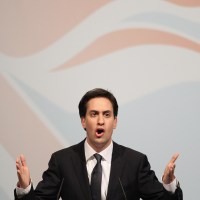
I know one isn't supposed to say this but there was an idea somewhere in the middle of Ed Miliband's confused speech to the Labour party conference. Unfortunately it was smothered by 4000 words of contradictory waffling that, accompanied by Miliband's desperate delivery, made the whole thing almost unbearable. If the Labour leader lacks presence that can't be helped, but nor was he assisted by the tired format of these conference addresses. That is something he could have done something about, so to speak. And the idea was simple: the neoliberal age has ended. He could, even should, have been clearer about this. Had he been so, his speech would have been more coherent and, for that matter, gracious.

Miliband’s three mistakes

From our UK edition

Three things puzzled me about Ed Miliband’s conference speech yesterday. First, I didn’t understand why Miliband did not attack Cameron for having talked about the need for ‘moral capitalism’ and then have not delivered it. It would have been far harder for Miliband’s speech to be caricatured as left wing if he had pointed out that Cameron had promised ‘to place the market within a moral framework - even if that means standing up to companies who make life harder for parents and families’ - and then not delivered on that pledge. The second thing was the absence of any policy at all.

What Fleet Street made of Miliband’s speech

From our UK edition

Ed Miliband has been across the airwaves this morning, explaining that the values outlined in his speech yesterday will inform Labour’s policy direction over the next four years – a statement that calls to mind a crude saying regarding Sherlock Holmes. He is doing this because most commentators agree that his speech was incoherent. Here is a selection of the reaction in this morning: The Times’ leading column (£): ‘Generally he did better with his attacks than with phrases that sought to describe his vision. His larger problem — that people have difficulty seeing him as prime minister — is unlikely to have been affected much by this performance.

The Polish Invasion Was A Good Thing

From our UK edition

It seems typical of Labour's reaction to being removed from office after 13 frustrating years in power that it should have decided to disown one of its braver, better, bolder decisions: the decision to permit unfettered movement from Poland and other EU-accession countries to the United Kingdom. It takes a special kind of malignancy to disown your most benign moment in power. But this is where Labour are; trapped in equal measure by their search for populism and their weakness for authoritarianism. First it was Ed Balls, then it was Yvette Cooper and then Ed Miliband himself. Each apologised for decisions that did their party - and their country - credit.

Miliband v Clegg: now it’s personal

From our UK edition

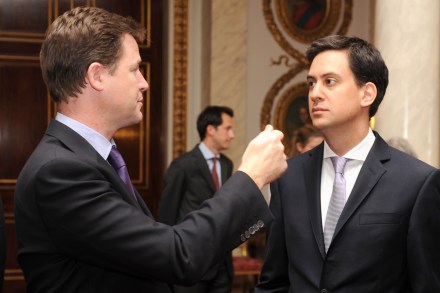
It's safe to say that Ed Miliband and Nick Clegg don't get on. Even before he was elected leader, Miliband told the New Statesman he would never work with the Lib Dem leader: "Given what he is supporting, I think it is pretty hard to go into coalition with him." He refused to share a platform with Clegg in the AV campaign, and then attacked him in Newcastle with a list of promises he accused the Lib Dems of breaking. All along, the plan has been to turn those who voted Lib Dem in 2010 against Clegg and lure them over to Labour. Whether it's working is hard to tell. In the latest Ipsos MORI poll, 52 per cent of 2010 Lib Dem voters said they were "dissatisfied" with Nick Clegg, but then only 23 per cent are "satisfied" with Ed Miliband.

Labour turns up the heat on health reform

From our UK edition

The exodus from Liverpool has begun, following Ed Miliband’s speech. This means that there will be scant coverage of the events that occur hereafter. Shadow Health Secretary John Healey recognised this and gave an interview to this morning’s Guardian in order to highlight the speech he will make tomorrow. Healey is clear, as Ed Miliband was earlier this afternoon, that the government’s NHS reforms are a costly disaster and betrayal of the British people. Healey adds that they also threaten David Cameron, who has made “promises he is now breaking”. It’s good political posturing on a ‘Home’ issue for Labour.

Miliband’s empty promise

From our UK edition

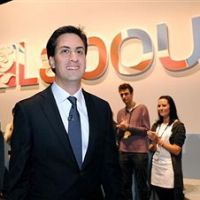
Miliband's speech was meant to reach beyond the hall. "I aspire to be your Prime Minister," he told country, "to fulfil the promise of Britain." But, after an hour long speech, it is not wholly clear what the "promise of Britain" is. Miliband offered the hand of partnership to small businesses, the ordinary working family, those who want a cheap further education, working mothers, but it was not clear what they would obtain from the Labour leader. This was a speech virtually bereft of policy direction or a coherent theme. We have a clear idea of what and whom Miliband is against, but very little idea of what he is for. For instance, he declared himself a believer in people but was reluctant to talk about devolving power from the state.

Why all the apologies, Ed?

From our UK edition

The Labour Conference 2011 has turned into a horrible misery-fest. What a daft idea to make the theme of the conference: “We’re really sorry, we won’t do it again”. At least it’s not the slogan, although it would have been more honest than “Fulfilling the Promise of Britain”. I agree with Steve Richards in the Independent that the pessimism is self-fulfilling. This does not feel like a platform for re-election I spent most of the New Labour era criticising Tony Blair and his government. I thought he was too cosy with the ultra-rich, cynical about criminal justice policy, disingenuous about the use of the private sector in providing public services and over-cautious about redistribution.

How’s Miliband doing?

From our UK edition

In a word: badly. Ed Miliband has now led Labour for a full year, but has made no progress with regards to its standings in the polls. When he took over, the Labour party was at 37 per cent in the polls, according to Ipsos MORI. Considering that 60 per cent give the Coalition government the thumbs down, he's had ample opportunity to improve this figure. And yet he's failed. In their latest poll, MORI again have Labour on 37 per cent.   When it comes to his own personal ratings, the picture is even worse. As Miliband has become more well-known and more people have formed an opinion of him, the number "satisfied" with his performance has actually decreased. This month, it hit its lowest point to date at 31 per cent.

Ivan Lewis’s Comedy Act

From our UK edition

So the shadow Culture Secretary thinks journalists should be licensed (by whom?) and rotten hacks guilty of "serious misconduct" (how is that to be defined?) should be "struck-off". Well, that's a proposal guaranteed to go down well with the press corps! Ignore the fact that it's unworkable in the internet age and that it's perhaps only meant as a signal to the party faithful that Mr Lewis doesn't like that nasty brute Murdoch any more than the rest of them. Nevertheless signal matter, not least since they often reveal what a politiican or a party really believes. This is one such instance: the answer to any problem, however trivial it may be, is in more centralisation, more regulation, more interference. It misses the wider point too: too many trades are licensed as it is.

Labour wants to be the party of law and order

From our UK edition

Andy Coulson was right to worry about the coalition’s law and order policies: Labour is trying to outflank the government from the right. Sadiq Khan and Yvette Cooper have cut assured figures at fringe events at this year’s conference, sensing that the government’s cuts to the law and order budget will imperil one of Labour’s positive legacies: substantially reducing reported crime (by 43 per cent according to Sadiq Khan) between 1997 and 2010. A strange atmosphere pervades the law and order fringe: the name ‘Tony Blair’ is spoken of with something approaching respect and it is met with scattered applause. Blair’s memory is profane to this incarnation of the Labour Party, a grinning devil to be exorcised.

Labour won’t look on the bright side

From our UK edition

Walking around the Labour conference and its fringes, it sometimes feels like the party suffered not just a defeat but a lobotomy. There are no great arguments about the future of socialism, the uses and limits of the market etc. There is no spark, no protest, not even dissent. No debate, no tension. That's not to say there aren't any clever people: Ed Miliband has some real brainboxes behind him and some of his ideas show the result of hard thinking. There are plenty of bright young Labour things, and  it will be a party worth listening to when the 2010 intake starts to ascend the ranks. But now? Last night's receptions felt more like a wake than a rally. Jurassic union leaders roam around with a proprietorial air.

Ed’s “something for something” society

From our UK edition

Fraser’s already commented on the welfare angle of Ed Miliband’s keynote speech to the Labour party; the welfare proposals are part of a broad analytical sweep that can be reduced to the catchphrase, ‘the something for something society’. Miliband’s vision of society will reward those who work and abide by the rules at the expense of those who do not – those who loot, who fiddle expenses, those who pursue short-termism in business. According to the Guardian, he will also emphasise the importance of social mobility and equality. To that end, he will encourage universities to take more people from disadvantaged backgrounds.

Miliband woos the strivers

From our UK edition

Finally, a good idea from the Labour conference. In his speech tomorrow, Ed Miliband will say he'd give workers priority over the jobless for social housing. This is the dividing line he was reluctant to draw when asked to by Andrew Marr on Sunday. It's a clever move, and one that recognises the resentment felt by the strivers against the welfare dependent. He will say: "The hard truth is that we still have a system where reward for work is not high enough, where benefits are too easy to come by for those who abuse the system." So councils dolling out housing should not only take need into account, but whether applicants "are working, whether they look after the property and are good neighbours." I can't see why IDS would oppose this, and perhaps consensus can be reached.

Balls’ Brownies

From our UK edition

In his speech today, Ed Balls proved himself worthy of the "Son of Brown" tag, slipping in more than a few "Brownies". I thought CoffeeHousers would be interested in some of the figures behind his claims... Balls claimed that "we went into the crisis with lower national debt than we inherited in 1997". That is flatly untrue. Public sector net debt when Labour took over was £350 billion. In 2006-07 it was £500 billion. Even adjusting for inflation, Brown and Balls had added £62.8 billion in today's money to the national debt they "inherited" by the time the crisis started: Balls' defenders will say that he meant "debt ratio" – and, to be sure, debt did not rise as fast as GDP over those years so the ratio fell (from 42.5 per cent to 35.

Miliband admits immigrant workers in pole position

From our UK edition

So, like squeezing blood from a stone, Labour has at last admitted that unconstrained immigration from what was once called Eastern Europe made life a lot harder for many British people. Ed Miliband said the following: “What I think people were worried about, in relation to Polish immigration in particular, was that they were seeing their wages, their living standards driven down. Part of the job of government is if you are going to have an open economy within Europe you have got to give that protection to employees so that they don’t see workers coming in and undercutting them." Of course, one of the things you are not supposed to do if you are the Labour Party is drive down the wages and living standards of the very people you were set up to represent.

It’s not Brown, it’s Balls

From our UK edition

Ed Balls’s speech to Labour conference just now was a typically Ballsian performance. There was intellectual aggression, dividing lines with the Tories and a bit of class warfare from this privately educated Oxbridge graduate. The meat of Balls’ address was a Brown-style five point plan. The new elements of this were a National Insurance holiday for new workers and a reduction in Vat to five percent for home improvements and maintenance. The former struck me as a classic bit of opposition politics, work out what the government might try and do and announce it first.