Labour party

Miliband fails to connect

From our UK edition

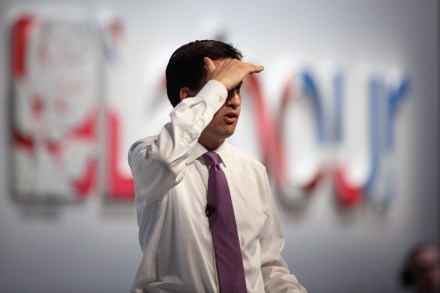
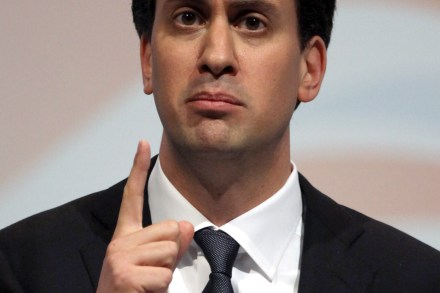
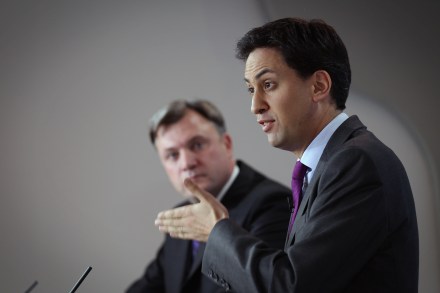
Easy-peasy at PMQs today. All Ed Miliband had to do was slice open the Coalition's wounds on Europe and dibble his claws in the spouts of blood. But his attack had no sense of bite or surprise. And his phraseology was lumpen. He used all six questions gently stroking the issue of Europe rather than driving a nail through it.  He asked about growth. He asked about the '22 committee. He asked about Nick Clegg's "smash-and-grab" phrase to describe the repatriation of powers. He asked about the social chapter. He asked about everything he could think of, and it was clear he couldn’t think of the right thing to ask. At the climax he sounded like a nursery-assistant scolding Cameron for "pleading not leading" on Europe. Desperately flaccid oratory.

The Spending Review, one year on

From our UK edition

It's been a year since the Coalition's Comprehensive Spending Review, but the public is in no mood to celebrate its anniversary. As the economy has failed to recover – GDP was no higher in June this year than at the time of the Review – sentiment has turned against the government. The latest YouGov polling shows that just one-in-three think the government is handling the economy well, against 58 per cent who say "badly". At the time of the Spending Review, the public was split evenly on this question. Similarly, just 33 per cent think the government's spending cuts are good for the economy, while half say they're bad. But people do think the cuts are necessary – by a two-to-one margin.

Europe bubbles to the surface in PMQs

From our UK edition

A particularly fractious PMQs today. Ed Miliband started by asking questions about Liam Fox which, frankly, seemed rather out of date given that Fox has already resigned. Cameron swatted them away fairly easy, mocking Miliband with the line "if you’re going to jump on a bandwagon make sure it is still moving". But when Miliband came back on the economy, Cameron was far less sure footed. The Labour leader had one of those great PMQs facts: despite the government having issued 22 press releases about the regional growth fund in the last 16 months only two firms have received any money for it. A visibly irritated Cameron then said that all Miliband "wants to do is talk down the economy" which drew hoots of derision from the Labour side.

Miliband’s challenge

From our UK edition

One of the striking things about politics at the moment is that Ed Miliband is proving adept at spotting issues that are going to become big — think the squeezed middle, energy prices — but is failing to drive home this advantage. There’s scant evidence that, for instance, the voters regard Miliband as the solution to the problem of rising energy bills. I suspect that the coalition’s plans to make it easier for people to switch tariff and supplier will cut through with the public more than Miliband’s speeches on the issue. In part, this is the natural advantage of incumbency — governments can actually do things. But the challenge for Miliband’s operation is to make him appear a more effectual figure.

Overreacting to Werritty

From our UK edition

The Werritty case has made everyone who believes that government is controlled by lobbyists and tycoons slaver. The Guardian screams that Ministers held more than 1,500 meetings with corporate representatives in the first 10 months of the coalition, which presumably the newspapers’ readers know to disapprove of. But how many unionists did Labour meet after a year in office — and how many corporations? The party that declared itself "relaxed" about profit-making presumably met one or two profit-makers. Or did Ed Balls, when he was City minister, stay away from the Square Mile?

This will Occupy Boris

From our UK edition

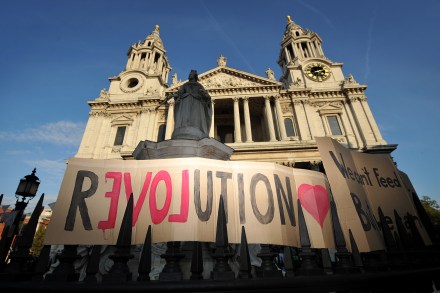
A few months ago I hosted a debate at my think tank with one of the key Tahrir Square leaders. After his talk about Egypt, he warned the audience: the protests that toppled Hosni Mubarak were not just an Egyptian or Middle Eastern phenomena; it could – and, he said, would – spread to the West. For the youth of today, he argued, feel disempowered, empoverished and betrayed. As protests spread from New York to London and other European capitals, it seems that Egyptian protester may have been right. Today's efforts to occupy the London stock exchange failed but protesters remain on the grounds of St Paul's Cathedral. Whatever happens in the next days, protests like these are likely to appear, disappear and appear again.

Voters support lower immigration, but not the government’s policies

From our UK edition

A major new survey of public opinion on immigration, published today by the recently-established Migration Observatory, should prove troubling reading for realists inside the Conservative party. As yet, the opposition are not threatening them on the issue – Labour still find it easiest to get noticed when they are apologising for their own record – and the general thrust of the Conservative approach, that immigration has been too high and must be reduced, is clearly very popular. But they have two problems. First, hardly anyone believes the government will actually deliver on their promises. A recent YouGov poll found 78 per cent believe it unlikely they would succeed in reducing annual net migration "from the hundreds of thousands to the tens of thousands".

Labour failing to regain economic credibility

From our UK edition

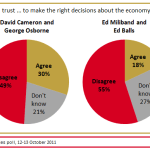
Labour may have a narrow leads in the polls, but they continue to lag behind the Tories on the public's number one issue: the economy. Today's ComRes poll finds that just 18 per cent trust Eds Miliband and Balls "to make the right decisions about the economy", compared to 30 per cent for Cameron and Osborne. Worse, the two Eds don't even have the confidence of the majority of Labour voters: only 48 per cent trust them on the economy. YouGov also find Labour behind when it comes to the economy. 30 per cent think the Conservatives would handle it best, while just 26 per cent think Labour would. And that's despite the fact that 58 per cent of the public think the Coalition is managing the economy badly.

Liam Fox, the morning after

From our UK edition

It is as you'd think: a sea of news coverage and commentary about Liam Fox's departure. Some of its currents are merciless, such as the Mirror's front cover. Some are more circumspect, such as an excellent pair of articles by The Spectator's own Matthew Parris (£) and Charles Moore. But, on the whole, there is a strange absence of finality about this story. A Defence Secretary has resigned – and rightly so, I think – but we still cannot be completely sure why. Maybe it is just the "appearance of impropreity," as Philip Stephens puts it, that killed this Fox. Or maybe there is something more poisonous waiting to emerge in the next few days. The dots are still being connected, the knots of Adam Werritty's business dealings still being untangled.

Miliband and Balls, in tandem

From our UK edition

So, CoffeeHousers, are Eds Balls and Miliband a gruesome twosome or the most sparkling partnership since Torvill and Dean? I ask only because they're really pushing the double-act shtick today. There's their first-ever joint interview in the Evening Standard, for instance, in which they reminisce about the Shadow Chancellor's 30th Birthday party, among other things. And then there was their joint appearance to officially launch Labour's 'plan for growth' campaign this afternoon. They were talking policy, but there was also a strong emphasis on their personal relationship: eye contact, anecdotes, that sort of thing. Blair and Brown we are not, they seemed to be saying. As for the policy, if you heard Ed Balls' speech to the Labour party conference, then you've heard it before.

The Voters, Damn Them, Refute the Tory Right

From our UK edition

At the risk of careering round an old argument, Jonathan, the graphs you've produced on political affiliations are yet another reminder, if ever one were needed (and it is) that the Tory right's argument that Cameron would have won a majority if only he'd run a blue-meat campaign is dreadfully mistaken. As you can see, more voters identify with the left than the right. This was Tony Blair's legacy and the ground upon which Cameron was compelled to fight. I suppose it is possible that Cameron could move right without alienating voters who consider themselves - accurately or not - centrists but I suggest this is not probable.

The centre ground’s there for the taking

From our UK edition

YouGov recently repeated its occassional exercise of asking people where they'd place themselves, the parties and the leaders on the left-right spectrum. Anthony Wells reported some of the findings on Saturday: Cameron is seen as slightly less right-wing than his party, while both the Tories and Labour appear to have moved away from the centre-ground since the election. One thing these YouGov numbers allow us to do is see where on the spectrum the parties get their support from. First, how people voted in 2010 and then how they say they'd vote now: This looks broadly as you'd expect, with Labour dominating among left-wing voters and the Tories doing likewise on the right.

What is Labour’s foreign policy these days?

From our UK edition

As William Hague found before last year’s election, getting your voice heard on foreign policy is difficult for an Opposition. You are, at best, reduced to providing commentary to on-going events, vying not with the government for access to the media but with an array of better-informed foreign policy experts. Having a distinctive take on the changes in the world and practical ideas for how to affect change is harder still. You don’t have a 1,500-person strong Foreign Office.   For Labour, there is a different set of problems. Does the party opt for Blairite interventionism, tempered by the fiscal and political realities? If so, what’s the difference to what David Cameron is doing?

Three Cheers for the House of Lords | 12 October 2011

From our UK edition

As a general rule complaints that the opposition are too beastly for words should not be taken too seriously. They reflect a sense of entitlement on the part of the governing party that, whenever it may be modestly frustrated, quickly becomes peevish, sour and silly. If this is true of parliamentarians it is even truer when considering the bleatings of partisan pundits cheering on Team Red or Team Blue. Again, if you judge these squabbling teams by different criteria then you forfeit some right to be taken seriously. So it's depressing to see a commentator as urbane and generally sensible as Benedict Brogan make such an ass of himself in this piece about how nasty Labour types and "organised" Crossbenchers are - the beasts - frustrating the government in the House of Lords.

The poverty of the poverty measure

From our UK edition

‘400,000 children will fall into relative poverty by 2015, says IFS’ we read on The Guardian’s front page today — yes, one of the most pernicious ideas of recent years is back. It’s the definition of ‘poverty’ as being figures on a spreadsheet, households deemed to fall beneath an arbitrary threshold. It’s almost entirely meaningless, and diverts energy and resources away from a real fight against poverty. I really do believe that, as ideas go, this one has damaged Britain more than almost any other over the last two decades — and it’s high time it was confronted.

Fox would lead anti-coalition Tories

From our UK edition

So far, the Prime Minister seems to be playing down any potential fallout from the crisis dogging Liam Fox. No 10 seems to be saying "if the Defence Secretary goes, it won’t be such a big issue". Much remains to be seen about the Defence Secretary’s career – and he may survive the crisis that is currently engulfing him. But it looks increasingly hard for him. Evidence is emerging daily that Adam Werritty was somehow a member of the Defence Secretary’s team, closer to Fox even than junior ministers. And there may be more trips to be uncovered and more meetings that he joined. He was, for example, spotted at the Tory conference last week. To survive the next 48 hours, Fox will need to show enormous contrition at the despatch box.

Fox on a knife edge

From our UK edition

Another deluge of awkward news stories for Liam Fox this morning, with almost every paper providing new details for our consideration. The Observer has video footage and emails which suggest that Adam Werritty was indeed a close participant in the Defence Secretary's meetings with foreign dignitaries and businessmen. The Sunday Telegraph quotes Fox as saying that "I have absolutely no fear of complete transparency in these matters," but adds a warning from Whitehall sources that he "could be gone within days". And, perhaps most concerning of all, a senior MoD type tells the Independent on Sunday that "[Werritty] appears to have been involved in arms contracts all over the place". The story is now taking on a dangerous, two-tone complexion for Fox.