Labour party

In PMQs, a preview of next week’s battles

From our UK edition

Today's PMQs was a preview of the debate we'll be having after next week's autumn statement. Miliband, struggling with a bit of a cold, tried to pin the economy's problems on Cameron. The Prime Minister's retort was 'who would want to put the people responsible for the current mess back in charge'. It was a simple message and one that carried him through the session. The other feature of today's joust was also a preview of next week: a tussle over the strikes. Cameron said strikes were the 'height of irresponsibility'. He also made sympathetic noises when Tory MPs asked about imposing minimum thresholds for strike ballots.

Party funding reforms won’t happen

From our UK edition

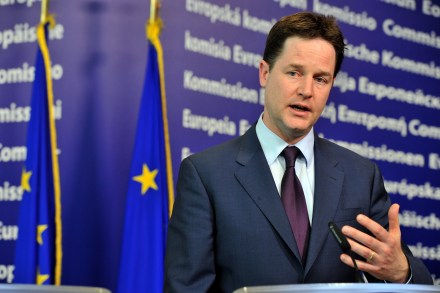
The recommendations of the Committee on Standards in Public Life's review into party funding are not going to happen. Both the Labour and Tory members of the review have issued notes of dissent to it. Nick Clegg has, on behalf of the government, issued a statement gently rolling the report into the long grass. Interestingly, the Tory party - which was for a while attracted to additional state funding - has now ruled it out completely. Unlike Clegg's statement saying it shouldn't be done while economic times are so tough, the Tory rejection of it is not time limited. One other thing worth noting is that Labour, via Margaret Beckett's dissent, has not set itself against trade union members having to opt in to pay the political levy.

Are the Lib Dems pro-EU?

From our UK edition

This might seem a very odd question. A pro-EU position is part of the party's internationalist DNA. Listen to any EU-related speech by the likes of Nick Clegg or Paddy Ashdown and heartfelt support for the European project is apparent. The Liberal Democrats have also made a virtue of reining in Tory euroscepticism, for example rejecting a call for repatriation of powers in the Coalition Agreement. The Deputy Prime Minister remains, in private and public, pro-EU. And to many activists and MPs, the party's European stance is what makes it different to the Tories – and is the reason why they are Lib Dems. They see in Tory euroscepticism a boorish Little Englanderness they abhor and find out of synch with the way of the modern world.

Miliband’s ‘responsible capitalism’ requires deregulation

From our UK edition

Despite yesterday’s gloomy unemployment figures there is, it turns out, good news for the government buried in current labour patterns: the total number of hours worked in the last three months has risen by three million. The bad news is that employers are currently filling this demand by getting current employees to work longer hours (average weekly hours over this time period rose by 0.3 to 31.5), rather than taking on new workers. Presumably this is because it is so much cheaper, and less risky, to do so.   This should come as an encouragement to the government, as they search for ways to bring about growth.

Miliband finds his niche

From our UK edition

I spent this morning with Ed Miliband on a trip to a factory in Sunderland. Miliband was visiting the Liebherr plant there, which manufactures cranes. The centerpiece of the visit was a Q&A with the workforce. Now, a factory in the North East is not the toughest venue for a Labour leader to play. But Miliband appeared far more comfortable in this setting than he does when giving a traditional speech from behind a podium.   Unlike Miliband’s Q&A at Labour conference, the questions were not softballs or traditional left-wing fare. One set of three questions were: why don’t we close the borders, bring back national service and do more to clamp down on benefit cheats.

Why are the SNP Talking Scotland Down?

From our UK edition

These days "Talking Scotland down" is both the gravest sin imaginable and the standard SNP response to any suggestion there might be even the occasional or minor drawback to independence. Thus when Philip Hammond makes the obvious point that Rump Britannia might not build warships on the Clyde he's being "anti-Scottish". Thus too when George Osborne suggests some firms might want the constitutional questions - including EU-access - clarified to assist their long-term planning he too is guilty of "talking Scotland down". It is true, as Joan McAlpine says, that we have been here before and the sky did not fall.

Halfon seeks to cool the inflationary fires

From our UK edition

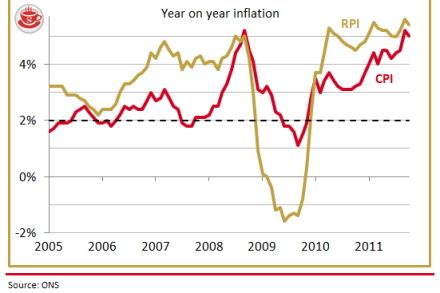
Don't whip out the cava just yet, CoffeeHousers. Inflation, in both its CPI and RPI incarnations, may be down on last month's figures, but the latest numbers are hardly cause for jubilation. At 5.0 per cent in October, CPI is still over double the Bank of England's target figure, and it's far outpacing the average growth in people's wages. The truth is that living costs remain constrictive, and at a time when the economy could teeter back into cataclysm at any moment.      Hence Robert Halfon's motion on fuel prices, which will be debated in the Commons today. It's another one of those motions triggered by an e-petition (112,189 signatures and rising), and it makes a simple plea: people are struggling, so how about doing more to cut the cost of fuel?

Alexander drags Labour closer towards the Tories on Europe

From our UK edition

You know, having read through Douglas Alexander's Guardian article a couple of times now, and listened to his appearance on the Today programme earlier, I'm still not sure how Labour's new stance towards Europe is particularly different from the official Tory one. The shadow foreign secretary tries to suggest that Dave and George's position is reckless — ‘they seem worryingly complacent about the prospect of a two-speed Europe’ — but he goes on to echo much of it himself. And so, he suggests, ‘We should engage now with the fact that Germany is seeking treaty change and seize this opportunity to safeguard the rights of non-euro members.

Son of Brownies

From our UK edition

How generous of Ed Balls to publish a transcript of his interview on the Politics Show earlier, so that we can amble through it on a Sunday evening. It contains, as you'd expect, more disagreeable parts than agreeable, and nothing more so than his comments about the national debt, deficit and all that. Two of his arguments, in particular, are worth alighting on because they're Brownies in the classic mould, and will probably be served up again and again: 1) ‘After the Second World War we took a number of years to repay our much higher level of debt. The government and Vince Cable have tried to get this done in one Parliament and it is backfiring.

Labour start attacking the NHS reforms – but did they need to?

From our UK edition

So, the Labour Party has finally woken up to the idea that there might be some mileage in opposing the Government's health reforms. Throughout much of this year a predictable alliance of the perennially opposed – doctors, health unions, Liberal Democrats, among others – has maintained a barrage of malice and misinformation against the Health and Social Care Bill. Nothing in their tactics, from their arrogant assumption of a monopoly of concern for 'patients' to their endless whining about 'privatisation', has come as much surprise.  The only remotely unusual thing about their campaign has been Labour's near-total absence from it. Andy Burnham, who was made shadow health secretary last month, clearly wants to change this.

Miliband’s immigration attack no threat to Cameron

From our UK edition

Ed Miliband broke with his post-conference policy of always asking about the economy at PMQs to devote all six questions to the whole Brodie Clark/Theresa May border dispute. Miliband, though, had no new killer fact or question. Instead, he stuck to general criticisms of the government’s approach. This gave Cameron an easy ride. He simpy backed the Home Secretary unequivocally before turning on Labour's immigration record. By the end, Cameron was at his most disdainful towards Miliband. Indeed, the most interesting element of the exchange was how the Liberal Democrats looked at their feet as Cameron rattled off the coalition's greatest hits on immigration. The rest of the session was relatively quiet.

Cameron defends the IMF

From our UK edition

David Cameron's statement to the House of Commons on the Cannes summit was dominated by the question of increasing Britain's dues to the IMF. Cameron stressed that his message to the Eurozone countries was "sort yourselves out and then we will help". He also tried to offer reassurance that the IMF would not contribute to any eurozone-specific bailout fund. But after Ed Miliband's response, the Prime Minister tried to counter-attack. He began by saying of the Labour leader's speech, "I don't know who writes this rubbish" which drew one of Ed Balls' infamous calm down gestures. Cameron then offered an aggressive defence of the IMF, calling it an "organisation that rescued us from Labour in the 1970s".

Which Miliband?

From our UK edition

Don't be too hard on the Independent leader writer and proof readers. Ed or David Miliband? It's an easy mistake to make. John Humphrys got it wrong on the Today programme back in May, and even Ed's own deputy, Harriet Harman, slipped up. "I hope we will have David, er, Ed, Ed Miliband elected as Prime Minister at the next election," she told Woman's Hour during the Labour conference in September. At least Harman corrected herself, as the Independent now have on their website. This Daily Mail article from June still carries the wrong caption. But this affliction is even more widespread than that. Back in July, YouGov showed 1,265 people a picture of Ed Miliband. 80 per cent correctly identified him and 8 per cent said they weren't sure who it was.

A belaboured EU position

From our UK edition

While the Coalition is split over Europe, Labour does not look like they are in a much better position. Ed Miliband told the BBC that he was in favour of the Euro; Ed Balls would presumably tackle anyone to avoid that becoming the party's policy. Meanwhile Douglas Alexander, Labour's brainy Shadow Foreign Secretary, has yet to make a game-changing intervention. Their predicament is obvious. Should Labour accept the narrative of renegotiation but opt for different areas to opt out of than those favoured by the Tories? Or should they, like William Borroughs, stand astride history and scream "stop", arguing for a pro-European position? Seemingly caught between the two views, the party's criticism of the government is like those two old-age pensioners in Woody Allen's joke.

Cameron versus Balls

From our UK edition

The real clash at PMQs today was between Ed Balls’ heckling and David Cameron’s temper. Balls was in a particularly chirpy mood. He started off his impression of an Australian slip fielder as soon as the Prime Minister arrived at the despatch box. The flat lining gesture made an early appearance, along with his signals telling Cameron to calm down.   But the moment when Balls seemed to really get under Cameron’s skin was when he pointed at the overwhelmingly male Treasury bench as Cameron talked about the importance of getting more women on boards. Two questions later, Cameron responded to a Balls’ heckle by saying that ‘the shadow Chancellor is wrong, even when he’s sitting down.

Breaking: Ed Balls has a point

From our UK edition

The games have started a day early, folks. The latest quarterly growth figures are set to be released tomorrow morning, but already Ed Balls is waxing insistent about what they have to be: "Simply to stay on track for the Office for Budget Responsibility’s most recent forecast, already downgraded three times, we will need to see growth in the third quarter of 1.3 per cent. And to reach the OECD’s latest and more pessimistic forecast, we will need to see a figure next week of 0.9 per cent." To be fair — and this is not something you'll read often on Coffee House — the Shadow Chancellor has a point, although he's not making it explicitly. When he says that growth needs to hit 1.

The politicisation of poppies

From our UK edition

Dave Wooding rightly upbraids one Labour MP, Alex Cunningham, for trying to make political capital out of the fact that MPs on the government benches were not wearing poppies at PMQs yesterday. In another sign of how politicised our symbol of rememberance has become, the Defence Secretary Philip Hammond has written to his Cabinet colleagues providing guidance on when it is appropriate to start wearing a poppy. The note informed ministers that while there was no definitive view on when it was appropriate to start wearing one, that Thursday from noon would be a good time as that would coincide with the launch of the Royal British Legion’s campaign. Obviously, none of this detracts from the remarkable and important work that the Royal British Legion does.

Labour aren’t capitalising on the government’s woes

From our UK edition

Ipsos MORI's latest monthly political monitor is just out, and it doesn't bring much good news for either the government or the opposition. 63 per cent of respondents are dissatisfied with the government and 54 dissatisfied with David Cameron — both the highest proportions since the election. On the public's number one issue — the economy — just 36 per cent say the government's done a good job. And even wose, a whopping 77 per cent say they've done a bad job of keeping unemployment down — hardly surprising considering unemployment has risen by 100,000 since the election. But while all this presents a great opportunity for Labour, other numbers show how bad a job they're doing at taking advantage of it.