Labour party

The Tories are extending their lead on the economy

It looks like Dave’s still made of Teflon. Even after the economy shrank by 0.2 per cent and the unemployment rate rose to its highest point since 1995, the public still think his party is better at handling the economy than Labour. And the Tories’ lead on what is by far the most important issue to voters hasn’t just survived all this bad economic news — it’s actually grown. Before Christmas, 31 per cent said the Tories would best handle the economy, against 27 per cent for Labour. In today’s YouGov poll, that four point lead has trebled to become a 12 point lead — the biggest since autumn 2010:

Miliband the eurosceptic? Not yet

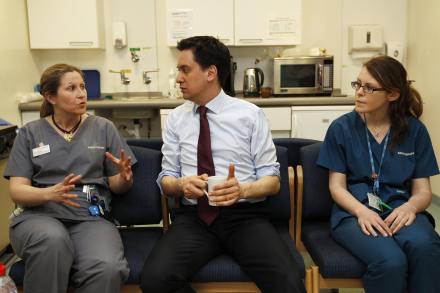
Ed Miliband is not naturally a eurospectic, but he certainly sounded like one during his appearance on ITV’s Daybreak show earlier. ‘I’m very concerned about what David Cameron has done,’ he said in reference to the PM’s equivocation over Europe yesterday. ‘He’s sold us down the river.’ Whether this is Miliband committing towards the sort of euroscepticism that is being urged on him by some of his colleagues, it’s too early to say. It’s only words, after all. But my guess is that — just as when Miliband attacked Cameron for not signing up to the latest treaty, but couldn’t say whether he’d have signed it himself — this is

Cameron softens his stance on Europe — but who benefits?

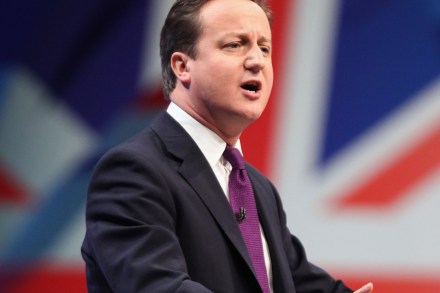
‘We will insist that the EU institutions — the court, the commission — that they work for all 27 nations of the EU.’ So said David Cameron, back in December, suggesting that he’d block Europe’s ‘fiscal compact’ countries from using EU-wide institutions to enforce their, er, fiscal compact. But now this component of his ‘veto’ appears to have come to naught, and that veto is looking all the thinner for it. On the Today Programme this morning, William Hague confirmed that Britain wouldn’t block the use of EU institutions, such as the court, for the fiscal union. ‘We’re not intending to take action about that now,’ is how he put

The tuition fee effect, revealed

The coalition’s tuition fee rise will put young people from poor backgrounds off applying to university — or so we were told by Labour and the National Union of Students. But now we can actually put that claim to the test. UCAS today revealed how many of that first year group to be affected by the rise have applied to university. So what does those number tell us? Looking at the headlines resulting from the release, you’d be forgiven for thinking that Team Miliband have been vindicated. ‘University applications plunge 9% after tuition fees are trebled,’ proclaims the Daily Mail. ‘Thousands give up on university because of tuition fees,’ says

Labour seizes on Hester’s bonus

The issue of Stephen Hester’s bonus is going to carry on hurting the government. Labour has now announced that it will use an opposition day debate on 7 February to hold a parliamentary vote on the issue. The coalition will either have to lose, an admittedly non-binding vote, or whip its MPs to go through the lobbies in defence of Hester’s bonus. As Labour showed when it used the threat of a Commons vote to push Rupert Murdoch’s News Corp to abandon its bid for full control of BSkyB, the bully pulpit of Parliament can be extremely effective. These votes also bring out tensions within the two coalition parties. I

Alexander identifies Labour’s problem

Douglas Alexander may sometimes hide the meaning of what he says under a layer of jargon but he remains one of the more interesting political strategists on the Labour side. Alexander, a Brown long-marcher turned Blairite, saw before many of his colleagues the need for Labour to level with the public on cuts. He privately thought that Gordon Brown’s attempt to fight the last election on a reprise of the investment versus cuts strategy of ’01 and ’05 was a mistake. So, it is no surprise that Alexander, now shadow Foreign Secretary, is trying to use the opportunity created by Ed Balls’ acceptance of the need for a public sector

Miliband hopes to put a cap on his welfare policy problems

A-ha! Labour have hit on a line on the benefits cap, and Liam Byrne is peddling it in the Daily Telegraph this morning. ‘Now, there are some people who are against this idea altogether,’ he writes, ‘Neither I, nor Ed Miliband are among them.’ The way he sees it, he goes on to explain, is that there should be a cap but it should be set locally, so that it could be higher than £26,000 in more expensive areas such as London, and potentially less in other areas. Bryne adds that there should be an ‘an independent body like the Low Pay Commission to determine the level at which it

A matter of honour

Condemnation’s coming from all sides for the £963,000 bonus awarded to RBS’s Stephen Hester, on top of his £1.2 million salary. The most prominent denunciation came from Lib Dem Foreign Office minister Jeremy Browne on last night’s Question Time: ‘I think there’s a sort of question of honour. Even if there is a contractual opportunity for him to have a bonus, it doesn’t mean he has to accept it. He’s already being paid more than £1 million a year. His total package now, means he gets paid in about three days what a soldier risking his life in Afghanistan gets paid in a whole year. And I think he should

Ed Miliband Surpasses Himself

Miliband Attacks Cameron Over Chocolate Oranges might win a prize for the headline that best summarises Ed Miliband’s stewardship of the Labour party. In case you still can’t believe this is the case, let me repeat it: Miliband Attacks Cameron Over Chocolate Oranges. It is so dire, so naff, so excruciatingly hilarious that I thought it had to be a joke. But no, this is the BBC not the Daily Mash. Here’s what Brave Sir Miliband told the House magazine: Ed Miliband has attacked David Cameron for failing to stop the sale of cut-price Chocolate Oranges – something the PM complained about in opposition. In 2006, Mr Cameron criticised WH

Let’s talk about Qatar

The rise of Qatar has been one of the most remarkable developments in the recent history of the Middle East. How this small, oil-rich Gulf state built Al Jazeera and parleyed the TV station’s influence into a diplomatic role across the region is an insufficiently explored issue. The list of the monarchy’s achievements is impressive, even putting aside how they secured the football World Cup for 2022. Qatari diplomats have mediated in Lebanon, helped rejuvenate the Arab League, led condemnation of Bashir al-Assad and joined the fight against Libya’s Muammar Gaddafi. In a way, Qatar has become one of the region’s lynchpins, second only to Saudi Arabia as the West’s

Abbott quits abortion talks, but will her contributions be missed?

Diane Abbott has, the BBC reports, walked away from the all-party talks on abortion because of the government’s proposals on counselling services. But others involved in the talks claim that Labour’s public health spokeswoman was not a particularly active participant. Abbott, who is not always the easiest of people to work with, had already irritated some of those involved in these talks. In the first meeting she, allegedly, took the opportunity to rest her eyes. She then apparently turned up half an hour late for the second meeting before missing the third one completely. When I put these claims to Abbott’s office, they said that they doubted they were true but

Miliband delivers for once, but Cameron’s left unharmed

Incredible events in the chamber today. An absolute sensation at PMQS. For the first time since last summer, Ed Miliband got through the session without triggering talk of a leadership crisis. There was gloomy news aplenty to dwell on. Debts soaring; growth flat-lining; dole queues snaking back through blighted high streets and bankrupt business parks. The Labour leader chose to wallop Cameron with a well-prepared attack on the NHS. Quoting the prime minister’s vow, ‘to take our nurses and doctors with us’, he asked why the government had stopped listening. The prime minister’s reply was frivolous and desperate. He giggled and smirked like a teenager at the despatch box and

Europe gives Osborne the context he needs

The political implications of today’s growth numbers are complex. On one level, a contraction in the economy should provide Miliband and Balls with an opportunity to make their economic case against the government. Indeed, Balls is already out with a statement calling the GDP figures a ‘damning indictment of David Cameron and George Osborne’s failed economic plan’. I suspect that Miliband is also looking forward to PMQs rather more than normal.   But on the other hand, as long as Cameron and Osborne enjoy a big lead on the economy — 18 points in the last ICM survey — bad economic news will reinforce voters’ tendency to stick close to

Bad news doesn’t have to be surprising

I’m still of the mind that Westminster fusses too much about these quarterly growth figures, particularly when parts of the country have been in economic decline for decades. But there’s no doubting that they have the capacity to shift the political mood, both here and around the country. There is something disheartening about the idea that the economy returned to shrinkage in the final quarter of last year (even if today’s preliminary figure of -0.2 per cent might be revised upwards, or downwards, in due course). You can expect Ed Miliband to make much of it in this afternoon’s PMQs. The politics of the situation are not stacked entirely against

Osborne owes Darling an apology

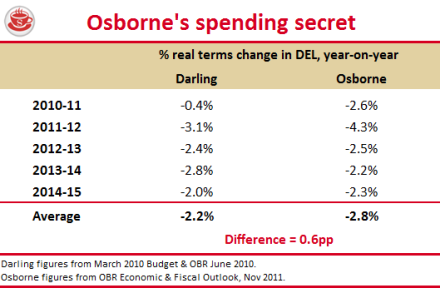
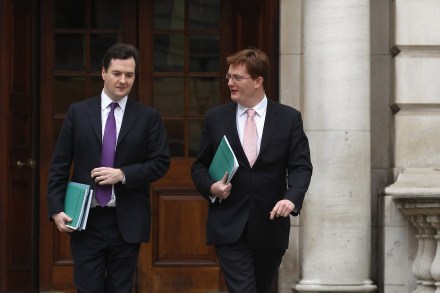
Britain’s national debt rose to over £1 trillion last month, and will never return below this threshold. George Osborne is increasing net debt by 61.5 per cent in real terms over this parliament, more than the 59.9 per cent which Labour proposed when it fought the last election. Here’s how the OBR’s current projections for debt contrast with what Darling proposed in his last Budget: At the time, Osborne said Labour’s debt plan was reckless and unsustainable. I think he owes Alistair Darling a generous apology. Then, Darling said he’d halve the deficit over four years. Too slow, said Osborne. Now, he’s taking five years to do it – as the

A defeat that delights the Tories

Rarely can a government have been so pleased to have been defeated. The Tories are, privately, delighted that the Lords have voted to water down the benefit cap, removing child benefit from it. The longer this attempt to cap benefit for non-working households at £26,000 stays in the news, the better it is for the government. It demonstrates to the electorate that they are trying to do something about the injustices of the something for nothing culture. The matter will now returns to the Commons where the coalition is confident it can be reversed. I understand that Nick Clegg remains solid on the issue, despite the fact that Ashdown and

Bringing the squeeze into focus

The ‘word of the year’ for 2011 is already featuring prominently in 2012. Yep, the ‘squeezed middle’ is the focus of the Resolution Foundation’s latest report, which they launched in central London earlier today. It’s a fascinating and nicely presented study, and I’d recommend you read it in full: this think tank really is very good at choosing the most revealing metrics to bring some clarity to an often vague debate. But, in the meantime, here are some of the things that stood out to me from today’s event:   1. The squeeze started long before the recession. Talk of the ‘squeezed middle’ often focuses on the impact of the

Cable teaches Umunna a lesson about the past

If you were in a particularly soggy mood, you’d almost feel sorry for Chuka Umunna. He’d managed to force Vince Cable into the House this afternoon, to announce the coalition’s plans for curbing executive pay a day earlier than planned, and he must have been feeling pretty swell about it. This was, on paper, the initiative seized; a chance to prise open the Business Secretary’s differences with his Tory colleagues. But, in practice, it was something completely different. In practice, Cable dispatched his opponent with ruthless ease. You might even have found yourself in the unthinkable position of cheering him on. A large part of it was Umunna’s petty, needling