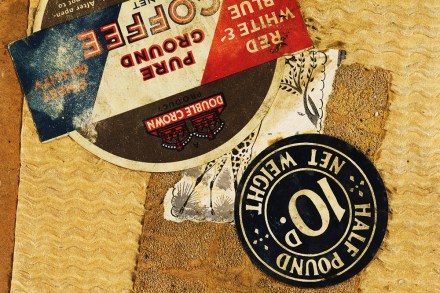
Witty, lyrical and abstract: the art of Kurt Schwitters
Aged ten, Jennifer Potter moved to Ambleside in the Lake District and was soon aware that one of the giants of modern art, Kurt Schwitters (1887-1948), had lived there some years earlier. He was a German artist associated with Dadaism, the anarchic movement that ushered in Surrealism, who developed his own brand of anti-rational art called ‘Merz’. He assembled urban detritus into two or three dimensions (collages and objects). His work was witty, lyrical and abstract, but also organic. He called art ‘structure’ or ‘creative evidence’, as natural as a plant or a crystal, but reliant, too, on the action of the artist’s imagination. He was a large man, somewhat shambolic in appearance.